
Search

House Capuchin 3

An historical recreation household centered on the Central Oregon Coast (households are not official groups of the Society for Creative Anachronism and do not represent the views or policies of SCA, Inc. )

Archives

Activities through 7/18/21

House Capuchin Shield2

*

Herbs and potluck and garden and food and links, oh my! It was a busy week, even with a migraine clobbering Anja in the middle of it. No Herbs Workshop this week or this past week, next will be 7/29. 

Project Day is now open for in-person meet-ups as well as in the Virtual Realm! Potluck this month will be Virtual and Real-World! Herbs Workshop meets next on 7/29. All other meetings are on hold for the moment.

When will the rest of these open up in person? We’ll probably keep right on with the virtual ones side-by-side with the actual. 

  • Herb Bunch – At Ancient Light, Thurdays, 6am-9pm, starts this week!
  • Sewing Time – At Ancient Light, Saturdays, 3-5pm
  • Project Day – At Ancient Light, Sundays, 1 to 5pm
  • Cheese and Wine happens irregularly, usually announced with little notice on our Facebook group.
  • Next Virtual Potluck – 8/15, 9/19, 10/17
  • No Winter Feast in 2021. We’ll revisit for one in 2022 sometime in the next two months.

Here is the direct Portfolio link which has all the past Project Day reports and various projects, original here:  https://housecapuchin.wordpress.com/portfolio/  and new one here:  https://housecapuchin2.wordpress.com/portfolio/ and number three is here: https://housecapuchin3.wordpress.com/portfolio/

Crown Tournament of the Middle Kingdom | SCA Midrealm Heavy Fights including FinalsLynne Fairchild – Welcome to the Crown Tournament of the Middle Kingdom, which is an event (typically) held twice a year to determine who the new Heirs are to the Dragon Throne by fighting in heavy combat with swords, shields, spears, bucklers, and other weapons. The winner of the tournament and their consort become the new Prince and Princess for 6 months (typically) and then, after their Coronation, become King and Queen for 6 months. After their reign as King and Queen for 6 months, they will step down and the new heirs will step up. I say typically because the pandemic has thrown a wrench into these plans. However, we are on our way to things going back to normal. The new Prince and Princess will be crowned King and Queen in September 2021.

Besides the Crown Tournament, there were also heavy and rapier tournaments, A&S displays, and more at this event. This is a glimpse into this wonderful day!

Congratulations to Duke Ullr Amaranthson and Duchess AnneLyse van Gavere, the new Heirs to the Dragon Throne! Draco Invictus!

Online Education

10/1-10/3 2021 – Daigaku-Ryo: Pan-Asia University = Constantinople to Heiankyō 2021 – October 1, 2021 — October 3, 2021 – http://daigaku-ryou.org/

Other Educational Stuff

A Master List for finding classes, webinars and other things – https://moas.eastkingdom.org/list-of-online-webinars/?fbclid=IwAR20OE8b6vvYKvmwrqwpule27szarZ7EPV-8R72F1eV2CxcdmOXQhZf9ayk

Other Good Stuff

Knowne Worlde Entertainment Guide – KWEG – Entertainment List – https://docs.google.com/spreadsheets/d/1xEZAwCca4IQham3TpxfWnonQscG668mmYgIMA18YZ-E/edit

SCA Iberia put out a whole bunch of videos from their most recent event, and keeps adding more! https://www.youtube.com/channel/UC2RmLGx_KiNzoFiM6GAu5Hg/videos

There’s a YouTubechannel devoted to natural dyes! – HistoryScienceFiber https://www.youtube.com/channel/UCvbKXT6vA-cfcQ4ll3a6-XA/videos

Dance Vids – 

Hearts Ease, a 17th Century English Country Dance | Step by Step Guide for SCA Dancing – Lynne Fairchild – Heartsease (Heart’s Ease) was a dance from John Playford’s 1651 book called The English Dancing Master. This is a 17th century English country dance for two couples (4 dancers). The original dancing instructions and music can be found here: http://www.pbm.com/~lindahl/playford_1651/061small.html

FULL class: 16th century dance – Villanella, Part I – The Creative Contessa – A full class on the cascarda Villanella by Fabritio Caroso (or rather, the first half of the dance – it was a two-part class I taught). Including cultural and historical tidbits to spice up the learning experience.

FULL class 16th century dance: Villanella, part II

Classes – 

NESAT XIII: The Lengberg Finds: Remnants of the Lost 15th Century Tailoring Revolution – This paper, “The Lengberg Finds: Remnants of the Lost 15th Century Tailoring Revolution” was presented on Wednesday, May 24, 2017, at NESAT XIII, by Rachel Case, Marion McNealy and Beatrix Nutz. The presenters would like to thank the NESAT board for allowing them to put it on YouTube.

DIGGING UP ANNE BOLEYN and others | Burials in the Chapel of St. Peter Ad Vincula | History Calling – History Calling – In 1876, the Chapel of St. Peter Ad Vincula in the Tower of London was in need of serious repairs. This meant DIGGING UP ANNE BOLEYN and others who had been buried under its floor, including her brother, George Boleyn, sister-in-law Jane Boleyn and cousin (and fifth wife of Henry VIII) Queen Katherine Howard. In today’s History Calling video we’re going to look at what happened when the Victorians disturbed the burials in the Chapel of St. Peter Ad Vincula and at what the detailed description left of what were supposed to be Anne Boleyn’s remains can tell us about the woman herself, including some physical traits her daughter Elizabeth I may have inherited from her. In particular her skull will provide some tantalising extra details about the appearance of Anne Boleyn, for whom no contemporary portraits survive. We’ll also look at the evidence which suggests that this excavation was not the first to disturb the remains of the fallen queens and the others who lie beneath the chapel and at why no exhumation has taken place in the years since, nor is one likely. Finally we’ll consider how likely it is that the correct remains were identified and explore why Katherine Howard’s bones were not found. Other details about Anne Boleyn’s skeleton will also include a discussion of her height and even her finger bones. This video serves as a sequel to my previous videos entitled ‘Anne Boleyn’s execution: Hollywood vs History’ and ‘The death of Katherine Howard and Jane Boleyn’.

What Medieval Animal Bones Teach Us – Medievalists – Digging up animal bones can teach us a lot about the Middle Ages – in fact, zooarcheologists are able to make them speak! Today’s guest is Erin Crowley-Champoux, a PhD candidate in anthropology at the University of Minnesota Twin-Cities. She talks with Lucie Laumonier about zooarchaeology and how animal remains of the past can speak to social changes. Get the show notes at https://www.medievalists.net/2021/07/medieval-animal-bones/

Researching Your Persona in the SCA by Suvia filia Heriberti – Barony of Terra Pomaria – learn useful tools with Suvia filia Heriberti for creating and developing your persona in the SCA. Links on the YouTube (click through)

Make a Lavender Stalk Basket – Sally Pointer – After you have harvested your lavender for the fragrant flower buds, why not make use of the stalks by using them as the core in this simple coil basket. A quick craft project for a summers day.

Early Week – Some potluck planning happened. Monday evening a bunch of garden stuff got worked on and then on Tuesday Anja went down with a migraine “siege” that ate Herbs Workshop, as well as other things that had been planned for Tuesday/Wednesday.

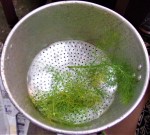
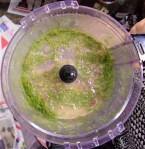
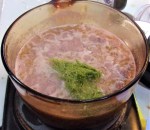
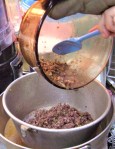
Cookery – The pork roast got put by for the potluck and the pottage (barley and greens) started. The cacik was waiting for sour cream and got it and was consumed immediately. 🙂 So, of course, we had to make another batch. 🙂 Early Saturday morning, Anja set up the pottage from the greens that were harvested Friday evening. Anja did a bunch of set-up Saturday night to make things go more easily on Sunday, which is covered below….
Rosamonde Sherwood – It’s from this site… he has a YouTube video of him making these. The rising time on the video is much more realistic… up to 3 hours 1st rise , 1-2hours for 2nd rise. I added extra vanilla to everything. Make the topping in a zip loc…. Way less mess!

Eulalia’s paper on grains and flours – Grains and Flours of Medieval England https://medievalyork.files.wordpress.com/2018/01/grainsandfloursofmedievalengland.pdf

Eggs Poached in Wine – Medieval Recipe – Historical Italian Cooking – Today we prepare medieval poached eggs from Maestro Martino’s Libro de Arte Coquinaria, called ova sperdute in the original text. This source dates back to the 15th century.

Ingredients:

  • eggs
  • sweet wine
  • verjuice
  • rose water
  • sugar
  • spices (ginger, nutmeg, cloves)

Other videos

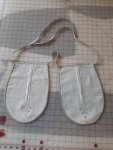
Sewing – Anja was mostly working on mundane stuff this week, but did another installment on the tiny favor bags for the next feast, whenever it happens.

Weave Along with Elewys, Ep 19: Hochdorf 39 – Elewys of Finchingefeld – A look at a piece of weaving that dates back 2500 years, near Hochdorf an der Enz in Baden-Württemberg, Germany. This piece is one of several found in the Celtic Chieftain burial mound, along with a collection of riches–gold, furnishings, dishware, jewelry and more! Note: this is not a twist-neutral pattern, but I suspect that you can weave in reverse, as I showed in a previous video. Flip all your cards (S to Z or Z to S), and start weaving from line 32 (or 36–wherever you start) and work your way down to row 1. (Links on the YouTube)

Stinging Nettle Sprang Bag #3nettlechallenge 2021 – Sally Pointer – For my first go at the #3nettlechallenge 2021 I’m revisiting the flint scrapes, unretted, spliced, prehistoric style nettle cordage I demonstrated last year and seeing how this style of yarn holds up to sprang braiding. How far will three nettles go? There are other videos in my playlists that go into more detail about splicing and also sprang.
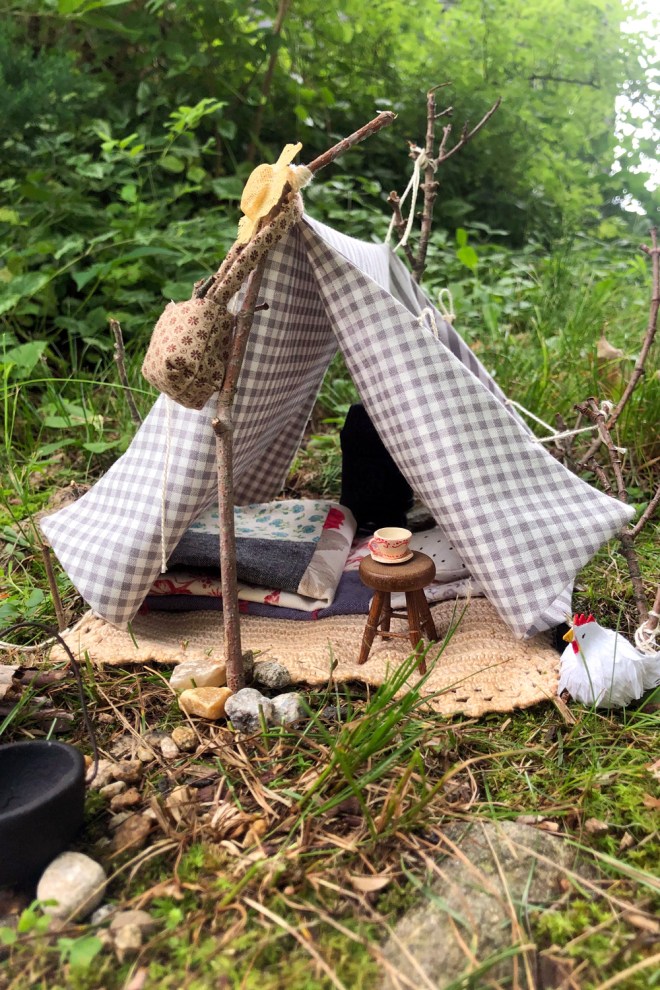
make a miniature camping scene with this doll tent diy –  https://www.annwoodhandmade.com/doll-tent-sewing-pattern/

Sundials, etc. – 

There’s a YouTubechannel devoted to natural dyes! – HistoryScienceFiber https://www.youtube.com/channel/UCvbKXT6vA-cfcQ4ll3a6-XA/videos

Castle Kirk page on Facebook. They’re building a castle! https://www.facebook.com/groups/469786296420688/user/100003583787838/

https://www.facebook.com/groups/469786296420688/user/100003583787838/

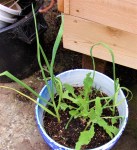
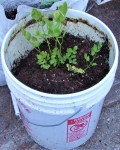
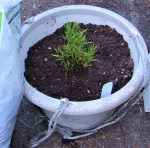
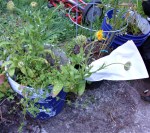
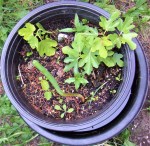
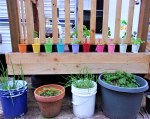
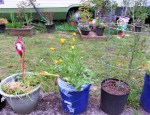
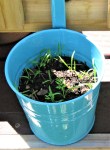
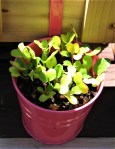
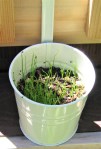
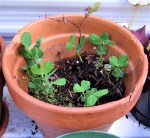
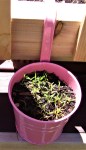
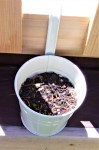
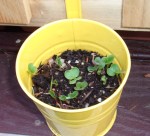
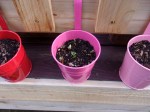
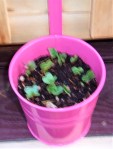
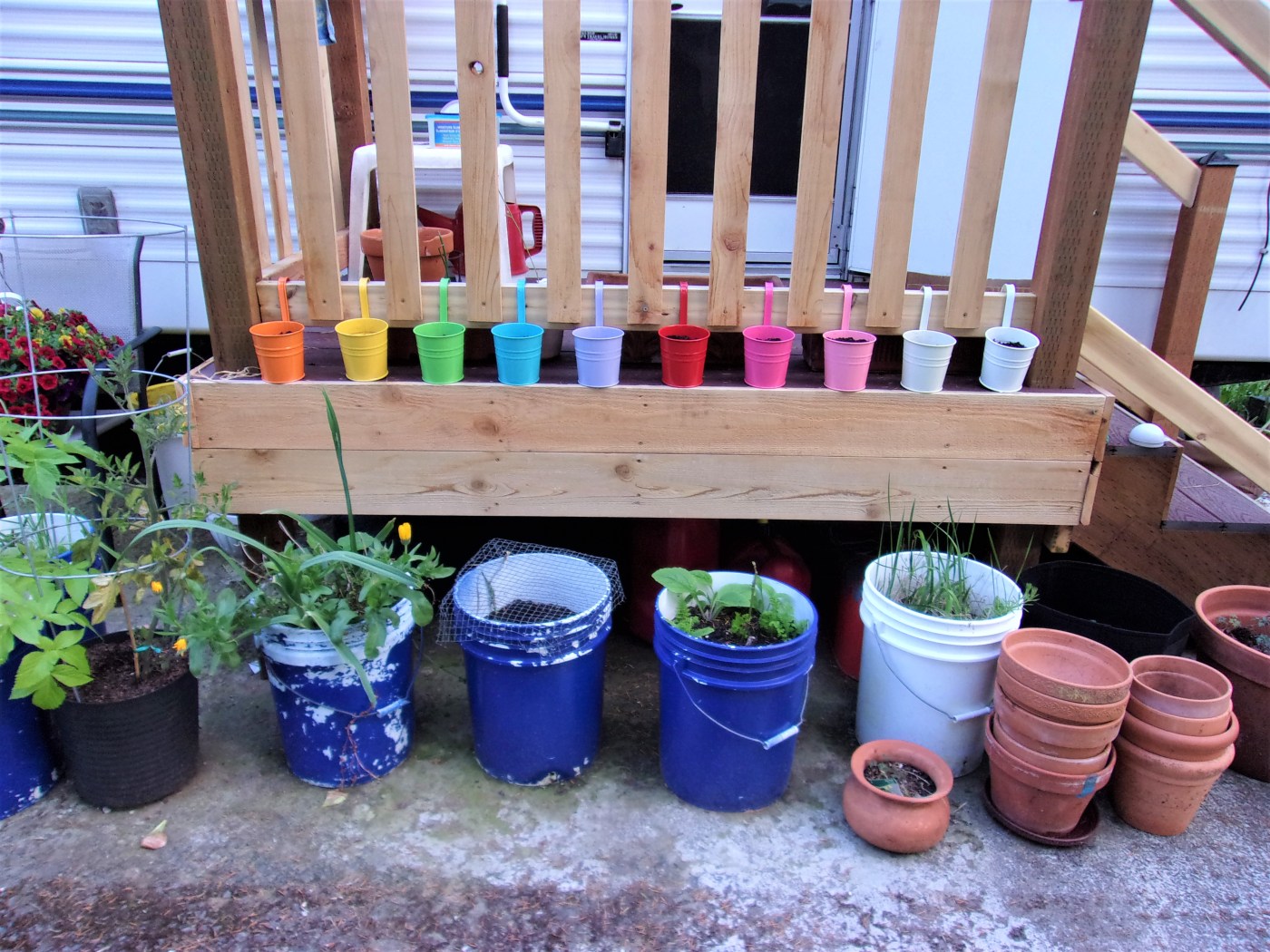
Herb Bunch – No workshop this week due to migraines. None next week, either. We’ll resume on 7/29. Most progress this week was garden tending. Some of the potted stuff is ready for sale, so we’ll be getting tags into those and getting a display ready.

Anja was doing some research on broomcorn and corn brooms, having been sparked off by the thatching and culinary discussion on the Medieval Gardening group. There’s a date for north/central Europe. “The beginning of broomcorn millet cultivation in this region is dated to 1230–1160 cal BC (68.2% probability) or 1260–1140 cal BC (95.4% probability).” She found a wiki on sorghum (who knew broom “corn” was sorghum?) https://en.wikipedia.org/wiki/Sorghum_bicolor and a how-to here: https://www.motherearthnews.com/diy/tools/how-to-make-a-broom and history…. “According to our preferred model, broomcorn millet was probably first cultivated in central Europe in the mid-fifteenth century cal BC (1470–1400 cal BC [68.2% probability] or 1490–1330 cal BC [95.4% probability]), soon after its appearance in the Carpathian Basin. It seems to have appeared almost simultaneously in southern Poland, the Czech Republic and southern Germany.”  https://www.nature.com/articles/s41598-020-70495-z
Friday

Broom corn in North/Central Europe! “According to our preferred model, broomcorn millet was probably first cultivated in central Europe in the mid-fifteenth century cal BC (1470–1400 cal BC [68.2% probability] or 1490–1330 cal BC [95.4% probability]), soon after its appearance in the Carpathian Basin. It seems to have appeared almost simultaneously in southern Poland, the Czech Republic and southern Germany.” “https://www.nature.com/articles/s41598-020-70495-z
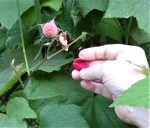
Eleanor De Bolton wrote a bit about modern vs. tradition wheat and thatching over on the gardening group. When I asked some questions she recommended this good article about wheat. – https://www.masterclass.com/articles/essential-guide-to-wheat#what-is-wheat

Project Day – Went entirely over to potluck since everyone was busy except for Gudrun, who is working on some mundane projects. We had a good chat, though.
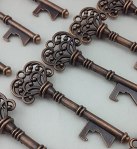
Anja – Oh, goodness. I thought I checked in here first thing? Must have nuked the link before I did. Well, I’m here. I’m threading small pouches with drawstring ribbon. I’m leaving them untied, yet, because I had a brainstorm. These are the “feast” pouches that are supposed to get some spices, sugar, salt, that kind of thing, but it occurred to me that having one of the key bottle openers on each, actually using it as the pull for the tie, would be a good idea! …ok why can’t I find the pic for those?… Copied from Amazon, instead….

Anja – I’m doing *really* well this week. I thought I had put an event page together for this week’s stuff? Well, I have one, now.
Anja – We have a bunch set up for largesse, already.

Anja – Heading in back to set up cookery.

Anja – Parry of pesoun started. Pottage warming. Carrots are next.

Anja – All of these are ready and the pork roast just needs to be warmed.

Anja – Nibble tray is being consumed.

Anja – Trying to work out dessert. I’m getting tired…. Lotsa customers today.
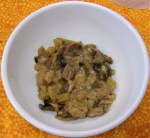
Pottage

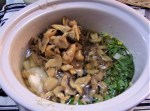
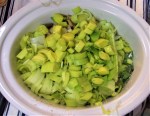
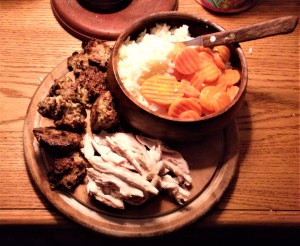
Anja – Barley and Greens Pottage – Barley, pork broth from the roast, de-greased, greens from the garden (turnip top, lettuces, dandelion, plantain, radish thinnings, marjoram, carrot tops, onion greens) onion, canned mushroom, salt, caraway, leeks.

Anja – Perrey of Pesoun – Peas, butter, saffron, salt

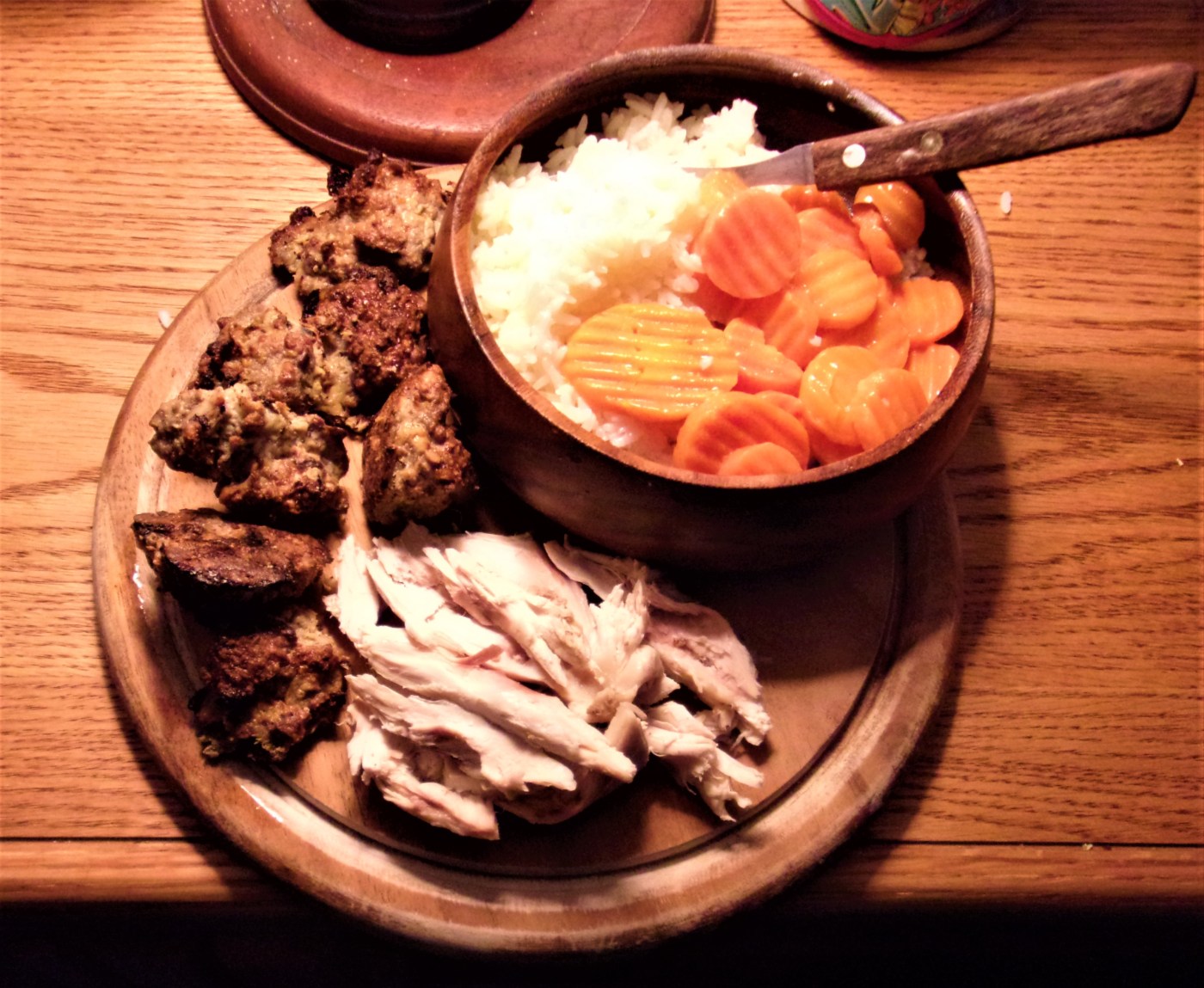
Anja – Sweet Carrots – Carrots, honey, salt, nutmeg, butter

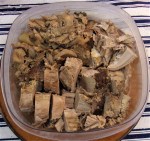
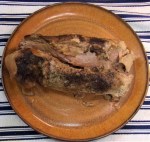
Anja – Pork Roast (from last Sunday) – Pork tenderloin, onion, mushroom spice, salt.

Anja – Gonna be AFK. We’re eating.

Anja – Food was really good! Too full for the afters. We’ll have them as a midnight snack. Pix later. We’re going to bed.

Helen Louise – Very cool!!!

Potluck

Nibbles
Main dishes

Afters
Potluck Menu

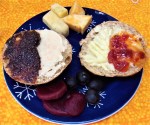
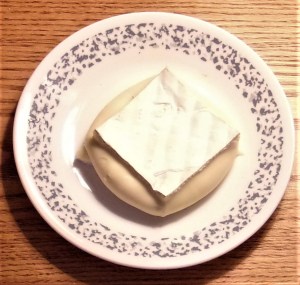
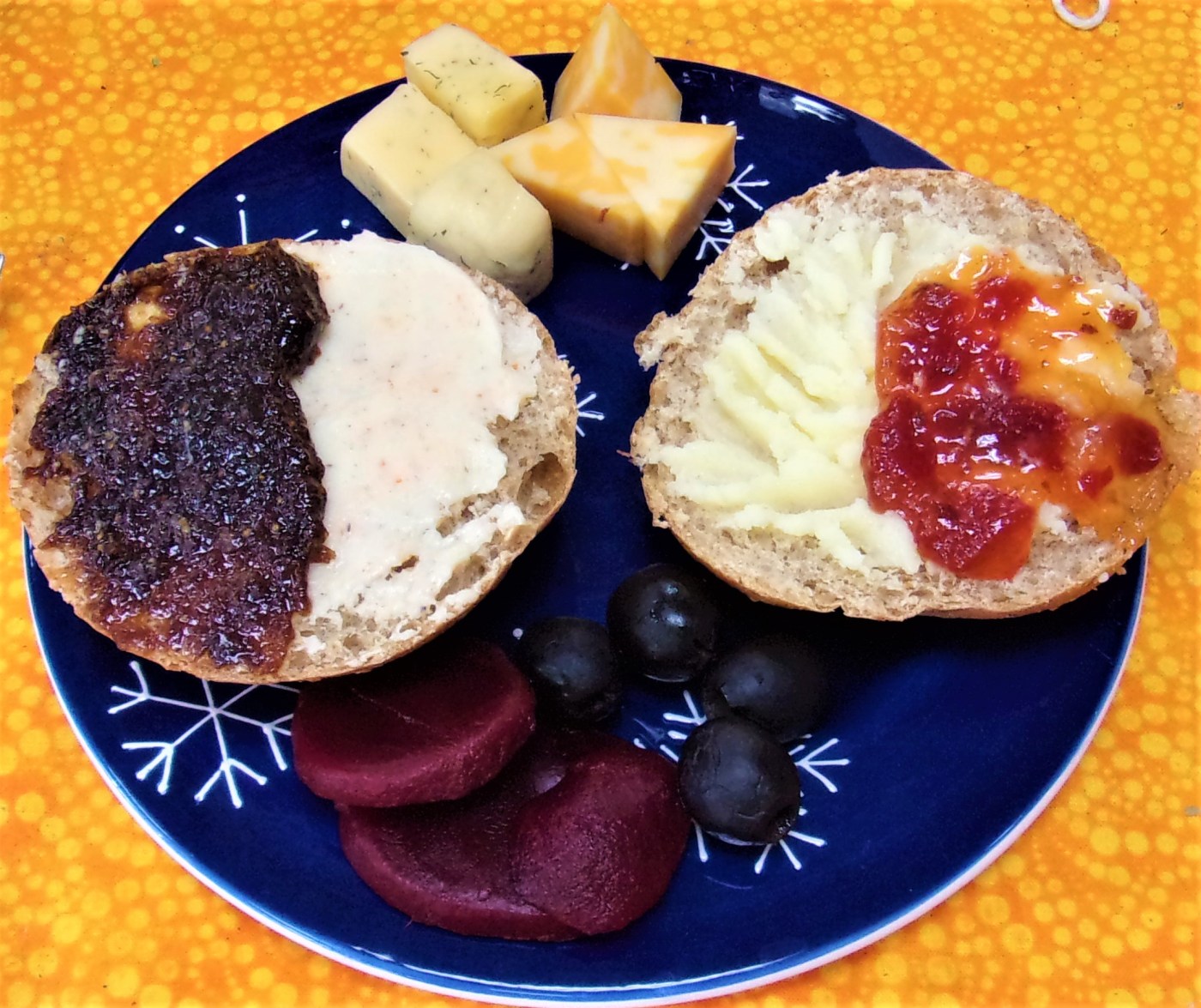
Nibbles – Clkws, starting left, honey butter and honey/fig jam on a roll, dill havarti, “sharp” cojack cheese, roll with garlic butter and hot pepper jam, black olives, pickled beets

Nibbles

  • Bread
  • Garlic butter
  • honey butter
  • Dill Havarti
  • Cojack cheese
  • Black olives
  • Pickled Beets
  • Honey/Fig jam
  • Hot pepper Jam

Starters

  • Barley and Greens Pottage

Drinkables

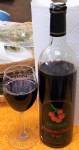
  • Cherry Wine
  • Spring Water

Main

  • Pork Roast
  • Sweet Carrots
  • Perry of Pesoun

Afters

  • Comfits
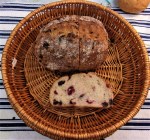
  • Red, white and blueberry bread with honey-butter
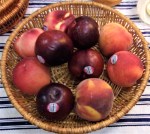
  • Fruit basket

Process pix and descriptions

Bread rolls

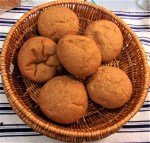
Bread was purchased rolls

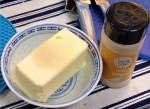
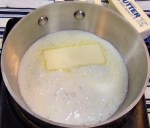
Garlic butter & honey butter – Same process for both. Put a stick of butter in the bowl, add spices/honey/salt/whatever, nuke for 20 seconds, stir really well until the butter creams. Garlic butter had TBSP garlic powder, tsp onion powder 1/2 tsp salt (because Loren likes it salty!) Honey butter had blueberry blossom honey, 1/2 TBSP freshly ground nutmeg and orange sanding sugar, so that it would be obvious which was which!
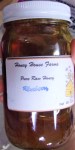
Dill Havarti, Cojack cheese, Black olives, Pickled Beets, Honey/Fig jam, Hot pepper Jam all in the nibbles tray above.

Starters

  • Barley and Greens Pottage

Drinkables

  • Cherry Wine
  • Spring Water

Main (some pix above)

Pork Roast

Sweet Carrots

Perry of Pesoun
Afters

  • Comfits
  • Red, white and blueberry bread with honey-butter
  • Fruit basket

Miscellaneous pix

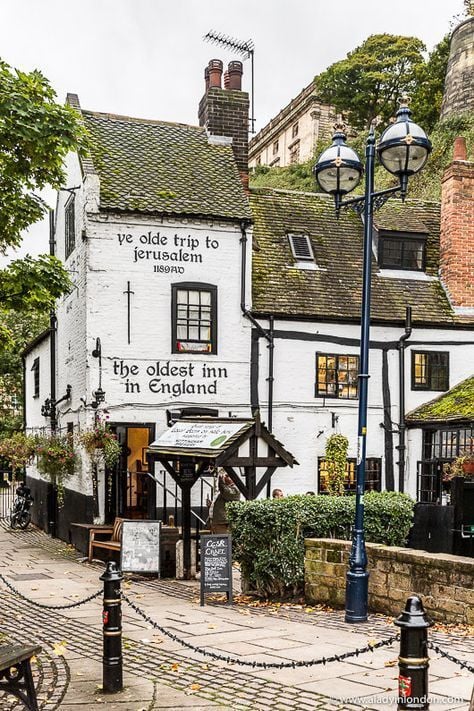
Betty Milton – Ye Olde Trip to Jerusalem Pub in Nottingham, England is one of the oldest pubs in the UK. This historic pub is worth a special trip.

Music

Printemps des plaisirs au Moye-Age – Musica Medievale

Ensemble: Perceval & Sanacore

Album: Printemps des plaisirs au Moye-Age: Lyrique courtoise XIIIème Siècle Video: Livre de la chasse (XIVth cent.) http://www.facebook.com/musicamedievale

Printemps des plaisirs is a musical evocation of a spring day in May in the Middle Ages. In feudal times spring gave rise to all sorts of popular celebrations (popular » in the broadest sense of the term). Such fétes de mai were obviously associated with love, amusement and dancing. Many courtly works were devoted to the subject. The troubadours of Southern France and, more especially, the trouvères of Northern France (non-clerical intellectuals) were often inspired by the exuberance of nature at that time of year. The chansons de mai (‘May songs’) take many forms, including dances, reverdies, motets and pastourelles. They are all descriptive in character and inspired by popular and rural subjects. In this they differ very clearly from the rest of the courtly repertoire, which is generally introspective and devoted to the sentiments.

  1. Anon. (danse de Mai): A l’entrada del temps clar
  2. Anon. (pastourelle): Quant voi la flor nouvele
  3. Jean Erard (reverdie sur une chanson de gaite): En pascour un jor erroie
  4. Guillaume le Viniers (reverdie avec des refrains): En mi mai quant s’est la saison partie
  5. Anon. (motet à 2): Au tans pascor
  6. Colin Muset / Jehan de Lescurel (chanson de jongleur): En mai, quant li rossignolet
  7. Anon. (motet à 2): Quant voi la fleur en l’arborie
  8. Anon. (motet à 3): Biau dous amis / Au douz tans
  9.  Raimbaut de Vaqueiras (estampie): Calenda maya
  10. Anon. (reverdie à refrain / motet à 2): En mai, quant florissant prey
  11.  Moniot d’Arras / Lescurel (reverdie): Ce fu en mai
  12.  Anon. (motet à 3): Tuit cils / Li jalous
  13. Anon. (danse): Quan lo gilos er fora
  14.  Châtelain de Coucy (reverdie avec des refrains): Quant voi esté et le tens revenir
  15.  Anon. (motet à 2): Hui main au doz mois de mai
  16. Perrin d’Angicourt (canso): Quant voi le felon tens fine
  17.  Anon. / Lescurel (pastourelle à refrain): Au douz mois de mai joli
  18. Jean Erard (reverdie avec des refrains): El moi de mai par un matin
  19.  Adam de la Halle (motet à 3): L’autre jour / En mai, quant rosie

Performers – Perceval: Katia Caré (voice, recorders), Jean-Paul Rigaud (voice), Gisela Bellsolà (voice), Alain Barré (flute), Jean-Pierre Dubuquoy (vielle, rebec), Jean-Luc Redureau (shawm), Christophe Tellart (symphonia, bagpipe), Vincent Richard (percussion), Guy Robert (recitation, harp, guitar, psaltery); Sanacore: Anne-Eléonore Bovon, Anne Garcenot, Christine Laveder, Tania Pividori (chorus, bird songs)

This image has an empty alt attribute; its file name is download.png

Links

Derbyshire cave house identified as ninth-century home to exiled king – Anchor Church cave is thought to be one of the oldest intact domestic interiors found in the UK – https://www.theguardian.com/science/2021/jul/15/derbyshire-cave-house-identified-as-ninth-century-home-to-exiled-king

This image has an empty alt attribute; its file name is download.png

Video Links

Castell Caernarfon / Caernarfon Castle – cadwwales

Funnies 

Michael MacLeod – That moment when you’re about to get mad at your wife for using your spare rapier gauntlets to prune her garden and you realize that they are actually… ahem … her leather gardening gauntlets that you found at the hardware store and thought, “Hey, these would make great spares for my rapier gauntlets…”
cough
Sorry, honey.
divider black grey greek key
Largesse, Gifts and Auction items
·         ASXLVII = 24
·         ASXLVIII = 88
·         ASXLIX = 794
·         ASL = 2138
·         ASLI = 731
·         ASLII = 304
·         ASLIII = 146
·         ASLIV & ASLV = 230
·         ASLVI = 176 plus 4 puppets, 4 powder fort, 8 cheese spice and 9 powder douce packets, 1 kiss-lock pouch, 9 tiny bobs, 7 pincushions, 3 pins, 3 snip case w/snips, lucet cords, 25 pouches for block-printing, 2 medium pouch, 4 small pouches, 12 bookmarkers, 14 unfinished pincushions, 1 sewing kit (except for bone needle), varnished stuff (124), 2 emery strawberries, 1 woolen spool-knit cord, 48 key bottle openers
Total as a Household = 4237 handed off


moving writing pen motif
In ministerio autem Somnium! Anja, graeca doctrina servus to House Capuchin
Page Created 7/16/21 & published 7/19/21 (C)M. Bartlett
Last updated 7/19/21

Activities through 7-11-21

House Capuchin Shield2

*

Summer is rough in a tourist town. After last week’s crazy crowds, this week was still nuts, but a lot closer to sanity. 🙂 There’s mostly Herbs Workshop, garden and links stuff in here this week, a few cookery things and we did have a good bunch for Project Day!



Meetings are starting to happen in the real world. Project Day and the Herbs Workshop are back to in-person, but the Virtual Project Day is still going.

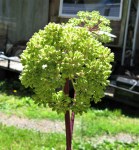
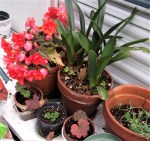
Coneflower/Echinacea

Potluck is this coming Sunday! Again it will be both in-person and online. Herbs Workshop Thursday night will be starting beeswax. This week will be information about the material, cleaning and de-sugaring and we might get far enough to start up the candle dipping. Anja is also going to have to check materials to find out if we can do batches of wood butter.
  • Herb Bunch – At Ancient Light, Thurdays, 6am-9pm, starts this week!
  • Sewing Time – At Ancient Light, Saturdays, 3-5pm
  • Project Day – At Ancient Light, Sundays, 1 to 5pm
  • Cheese and Wine happens irregularly, usually announced with little notice on our Facebook group.
  • Next Virtual Potluck – 7/18, 8/15, 9/19, 10/17
  • No Winter Feast in 2021. We’ll revisit for one in 2022 sometime in the next two months.

Here is the direct Portfolio link which has all the past Project Day reports and various projects, original here:  https://housecapuchin.wordpress.com/portfolio/  and new one here:  https://housecapuchin2.wordpress.com/portfolio/ and number three is here: https://housecapuchin3.wordpress.com/portfolio/

Misc – (Used with permission) ODNilsson – Last Saturday, a brand new Viking exhibition opened at Nationalmuseet in Copenhagen, Denmark. This is the story of the man from Galgedil. The first time I heard the story it almost sounded like a saga. But it is all true. Some 1 100 years ago there were two half- brothers living in Denmark, in the era we call the Viking period. Violent times; and the two brothers both took part of this. One brother went over to England. He was buried in a mass grave in Oxford, together with a huge number of his Viking friends. The other brother surely might have been abroad taking part in Viking raids; he was a quite heavy set man with a number of marks from violence/battle on his skeleton. But he died in Galgedil, Denmark, where his bones were found some 20 years ago. His DNA was registered in the Atlas database, as was the DNA from his brother buried in Oxford. A database with ancient DNA can produce great surprises…like a DNA match. The skeleton in Oxford, England, had a DNA match with the skeleton in Galgedil, Denmark!!!The family relationship between them, according to DNA, is half brothers, or uncle and nephew. So, after 1 100 years apart the two brothers lie side by side at the National museum in Copenhagen. Science, saga and family joined together. Moving. I had the honour to reconstruct one of them, the man found in Galgedil. Unfortunately the facial skeleton of the man found in Oxford was not complete, and therefore not suitable for making a reconstruction. But this guy from Galgedil was a delight to work with. And many thanks to my superb collegue Cathrine Abrahamsson, helping me in this project!

Online Education

10/1-10/3 2021 – Daigaku-Ryo: Pan-Asia University = Constantinople to Heiankyō 2021 – October 1, 2021 — October 3, 2021 – http://daigaku-ryou.org/

Other Educational Events

A Master List for finding classes, webinars and other things – https://moas.eastkingdom.org/list-of-online-webinars/?fbclid=IwAR20OE8b6vvYKvmwrqwpule27szarZ7EPV-8R72F1eV2CxcdmOXQhZf9ayk

AUG 1 AT 9 AM PDT – AUG 8 AT 12 PM PDT – Virtual Known World Arts & Sciences Display  https://www.facebook.com/events/1839225482915695/

Other Good Stuff

Knowne Worlde Entertainment Guide – KWEG – Entertainment List – https://docs.google.com/spreadsheets/d/1xEZAwCca4IQham3TpxfWnonQscG668mmYgIMA18YZ-E/edit

SCA Iberia put out a whole bunch of videos from their most recent event, and keeps adding more! https://www.youtube.com/channel/UC2RmLGx_KiNzoFiM6GAu5Hg/videos

Early Week – Mostly photos and some herb tending. Anja was also doing some mundane sewing.

Cookery – Not much until the end of the week when we pulled out a pork roast to thaw and then bake and started some cacik. Potluck cooking….

Gent KANTL 15, volume 1 (cookbook from the Netherlands) – https://coquinaria.nl/kooktekst/KA15Gent01.htm?fbclid=IwAR25rVKtF5UcztqQv5e5Q7c6T4297iTpJuMj02-9Vw3Nuh4OTO9j0WE2o4w

These Beautiful Medieval Wafer Presses Are Where Waffles Come Fromhttps://www.smithsonianmag.com/smart-news/these-beautiful-medieval-wafer-presses-are-where-waffles-come-180963809/

Sugar Plums and comfits – https://www.historicfood.com/Comfits.htm

Lombard EggsRoyal University of the Midrealm – RUM – Baroness Lote Winterborn discusses a recipe for Lombard Eggs, and her recreation of the recipe. She also demonstrates cooking them!

Sohla Bakes an Apple Pie Recipe from 1796 America (& Medieval England!) | Ancient Recipes With Sohla – HISTORY – It’s a culinary reenactment of the American Revolution as Sohla makes two historic versions of apple pie, pitting the US vs. the UK. First up, Sohla recreates the oldest known recipe for apple pie from 1390 England, then bakes up a 1796 recipe for apple pie from the first ever American cookbook.

1796 American Apple Pie (from American Cookery):

For the pie crust:

  • 1-2 egg whites
  • 8 ounces all-purpose flour, plus more for rolling
  • 6 ounces cold, salted, European-style butter

For the filling:

  • 5 to 6 pounds of small, mixed, market apples
  • zest of 1 lemon
  • 1 tablespoon rose water
  • granulated sugar to taste

For the pie crust:

  1. Whisk the egg white until just frothy. (This is just to break it up so it’s easier to add to the dough.)
  2. Add the flour to a medium bowl. Cut the butter into thin slices and add to flour. Using your hands, rub the flour into the dough until you have peas sized pieces of butter running throughout the flour.
  3. Drizzle in the egg white a little bit at a time, stirring with a spoon until the mixture mostly comes together. Gently knead to bring together into a ball, cover with a towel, and set aside in a cool place to rest for 30 minutes.
  4. Roll the dough out to ⅛-inch thick, dusting the surface with flour as needed. Use the dough to line a pie pan, trimming any excess dough so 1-inch of the dough hangs off the rim of the pan. Crimp the dough, cover with a towel, and set aside in a cool place to rest.
  5. For the filling: Cut the apples into quarters, keeping the seeds and skins intact. Add to a medium pot and add enough water to come ½-inch up the side of the pot. Cover, bring to a simmer, and reduce heat to medium-low. Cook, stirring occasionally, until the apples are completely tender. Cool slightly, then mash the apples through a coarse mesh strainer or colander. Add lemon zest, rose water, and sugar to taste. Set the filling aside to cool.
  6. To bake: Scrape the filling into the prepared crust and bake at 375 until the crust is golden brown.

1390 English Apple Pie (from The Forme of Cury)

For the crust:

  • 300 grams all-purpose flour
  • 60 grams bread flour
  • 150 grams lard, melted
  • 150 mL boiling water
  • 1 teaspoon kosher salt

For the filling:

  • 4 pounds of small, mixed, market apples
  • 3 medium pears
  • ½ cup roughly chopped dried figs
  • ½ cup raisins
  • 2 teaspoons ground cinnamon
  • 1 teaspoon ground ginger
  • ¼ teaspoon nutmeg

Steps:

For the crust: In a medium bowl, stir together the all-purpose and bread flour. Add the melted lard, boiling water & salt to the flour mixture. Use a wooden spoon to stir until combined.

Tip the dough onto the counter and knead until smooth.

Cut off about ⅓ of the dough, cover, and set aside. (This will be for the top) Form the remaining dough into a ball, then flatten slightly. Using a pie dolly, jam jar or your hands, mold the still warm dough into a pie shell with straight sides. Try to make sure the dough is the same thickness on the sides, that the dough on the base is not too thick and that there are no holes. Flatten the reserved dough into a thin disk slightly wider than the top of the pie shell. Chill for at least 30 minutes or until really firm.

For the filling: Peel, quarter, and core the apples and pears. Add the apples and pears to a food processor and pulse to roughly chop. Add the dried figs, raisins, cinnamon, ginger, and nutmeg and process into a coarse puree. Or you can do it the medieval way & crush them all together in a large barrel.

Scrape the mixture into the chilled pie shell, top with crust and crimp. Use a dowel to poke a hole in the top of the dough to release steam while baking.

Bake at 400F until deeply browned.

Ancient Recipes with Sohla takes the food you know and love and traces it back to its origins. In each episode, Sohla El-Waylly details the surprising history of some of our favorite dishes as she attempts to recreate the original version using historical cooking techniques and ingredients. Along the way, Sohla highlights the differences between the ancient recipe and how we would prepare the modern version today.

MMMK Cherry Pie ver 1. – My Modern Medieval Kitchen – My Modern Medieval Kitchen Making Cherry Pie – Source: Middelaldermad by Bi Skaarup og Henrik Jacobsen

“Imagine a zoo …” Show and surprise dishes in (German) medieval Cuisine – Oxford Food Symposium Online

16th Century Tudor Table Etiquette – Lynne Fairchild – Learn about the expected table etiquette during the Tudor era, as well as suggested meals and fasting days. What did the Sumptuary Laws dictate regarding the number of dishes allowed for your meal? What time of day were the meals scheduled for?

Mead – an ancient beverage that is even better today!Nick Saint-Erne – DRINK MORE MEAD! Mead traces have been found in remnants of 7000 year old pottery in China, it was named for the honey beverage brewed in India, was revered by the Vikings, and was an important component of Medieval feasts. Now it is your turn to make some mead at home – one of the easiest alcoholic beverages to brew – and Party like a Viking!

The Talking Cows of Ancient Rome – Tasting History with Max Miller

The first 100 people to go to https://www.blinkist.com/tastinghistory get unlimited access for 1 week to try it out. You also get 25% off if you want the full membership. Watch Invicta dream up an ancient Roman hamburger:

Sewing – Anja was working on mundane projects this week, although during the A&S night she got a few licks in on a couple of UFOs. No pix

A Five-Minute Guide to Medieval Fabricshttps://www.medievalists.net/2015/06/a-five-minute-guide-to-medieval-fabrics/

Sundials, etc. – 

Centre for the Study of Medicine and the Body in the Renaissance – CSMBR added 3 new photos to the album: Medical Technology.

Medical Technology Series 8:The Invention of Rivet Spectacles, c. 13521) Portrait of Hugh of Saint-Cher by Tommaso da Modena (1352) in the Chapter House of the Seminario in Treviso, Italy2) Replica of Rivet Spectacles, London College of Optometrists3) Replicals of Rivet Spectacles (1400-1600) kept at Ocular Heritage Society, London.The earliest type of spectacles had no sides. They secured to the face by clamping the nose between two rivetted lens rims. Even then the wearer could only keep them in place by remaining relatively still. Sometimes it was necessary to tilt the head back a little to prevent them falling off. All of these spectacles contained convex lenses for the correction of presbyopic long-sightedness. They were generally suited only to those few who lived beyond their forties and had the ability to read. Several names and places are associated with the supposed ‘invention’ of spectacles though the truth is they were probably invented anonymously and developed over a period of time. It is now generally accepted that spectacles were ‘invented’ (more likely improvised) no later than the last quarter of the thirteenth century by the Italians (rather than the Dutch or even the Chinese) and that their specific area of origin centred possibly on the Veneto region, rather than Pisa or Florence.It thus makes sense that the earliest depiction of spectacles [eyeglasses] in a painted work of art occurs in a series of frescoes dated 1352 by Tommaso da Modena (1326-1379) in the Chapter House of the Seminario attached to the Basilica San Nicolo in Treviso. Cardinal Hugo of Provence [Hugh de St. Cher] is shown at his writing desk wearing a pair of rivet spectacles that appear to stay in place on the nose without additional support. Of note that, the Cardinal actually died in the 1260s and could never have worn spectacles! Across the room Cardinal Nicholas of Rouen is depicted using a monocular lens in the style of later quizzing glasses. The artist has even tried to represent the physical effort of straining to see the book through the lens. It is notable that visual aids are portrayed as devices for the use of literate men as well as aesthetes – they had, after all, commissioned this important work of early Renaissance art.

Herb Bunch – THe first in-person in most of 1 1/2 years was Thursday evening. There were just two. We spent the time prepping dried herbs for storage and harvesting new and prepping that to dry.

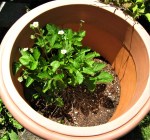
Food plants

Herbs

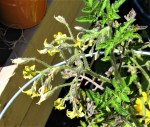
Flowers and general

Shop (Saturday)

Home (Saturday evening) – finally got these potted up and otherwise attended to (Thyme garden purchase)

Project Day – 

Tamra Prior – I’m in the middle of the woods. 🙂  … Well…the first day and half were hot, buggy and gross. But I “sacrificed” good views (not really) to go back to the car on day 2 instead of go forward and then took the car to the north end. Most of my weekend’s backpacking was on a hot dusty road but I missed the worst mosquitos and I got a shower and pizza. And determined my newer car is comfy to sleep in. And still got a good view on day 3.

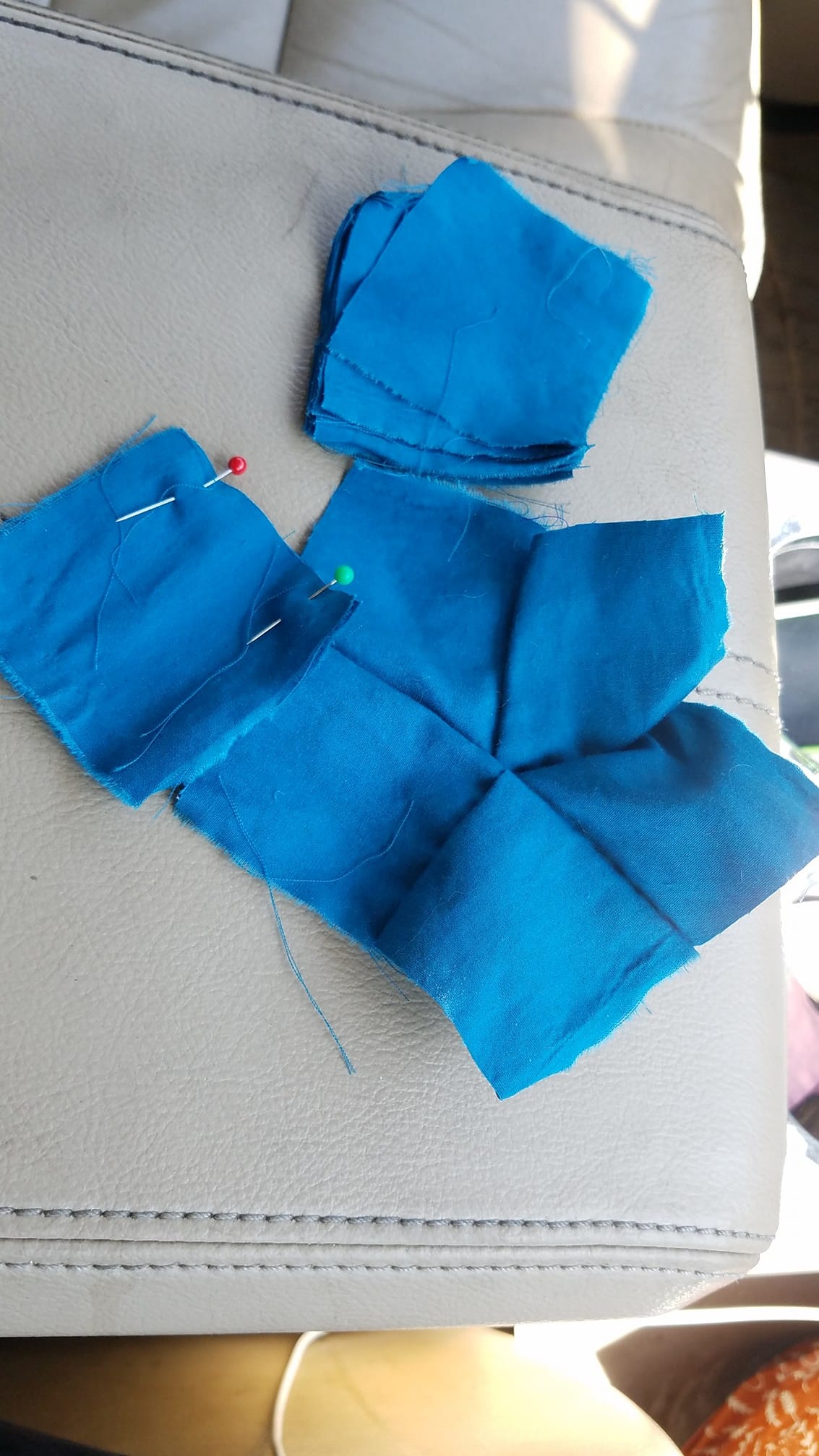
Isabeau – Using the pin cushion pattern as inspiration, I’m making a pattern weight. I’m sewing together 10 squares instead of 15.

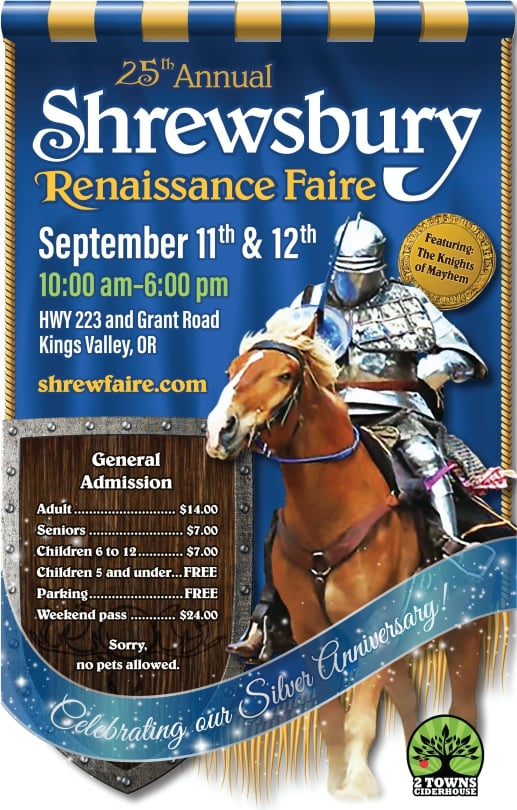
Helen Louise – Finished 2 little girl shifts and 2 kirtles today… on to little boy garb… getting ready for Shrewsbury Renaissance Faire’s 25th Anniversary


Recipes

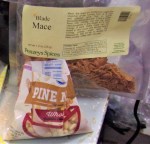
Trysenet (spice mix) from Heidelberg Cod. Pal. Germ. 511 (makes about a pint)

  • 4 TBSP ground ginger
  • 4 TBSP ground cinnamon
  • 3 TBSP ground mace
  • 3 TBSP ground nutmeg
  • 1 1/2 TBSP ground cloves
  • 1/2 TBSP ground galingale
  • Sugar (amount varies, but less than two cups)

Method

  1. Measure spices into a pint glass canning jar.
  2. Add sugar to taste (which for most will fill the jar).
  3. Mix thoroughly.
  4. Using good quality 2 inch plastic bags, bag up the spice in tablespoon amounts.
  5. Pack back into the jar. This keeps the mix fresher or if you wish to gift some, makes it easy to count.

If you would prepare a good tryesenet (spice mixture), take two pounds of sugar, pound it, and searce it through a sieve. Afterwards, take four lot of ginger, four lot of cinnamon, three lot (each?) of mace and nutmeg, one and a half lot of cloves and half a lot of galingale and pound each separately. Searce the ginger, the cloves and the galingale through a sieve together. You must not searce (? on account of oiliness or fibrousness?) the cinnamon and mace. If you would have it stronger (?), make it as it seems good to you.

Miscellaneous pix

Museum of London –
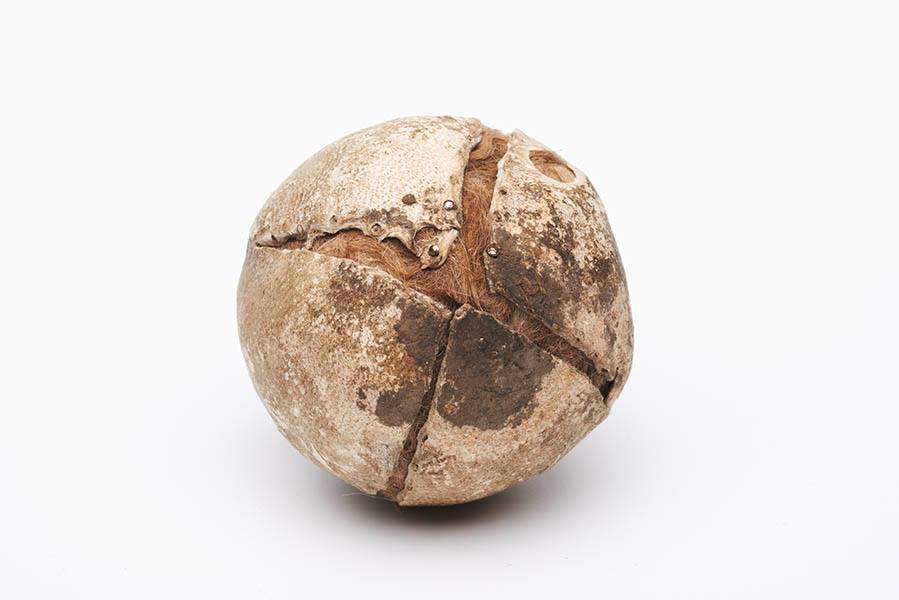
A ball for ‘real’ or ‘royal’ tennis, fashioned from leather with a stuffing of compacted dog’s hair. The leather has been cut into quarters and the segments are stitched together along the seams. Most of the stitching has come apart and there a several holes in the leather. This ball was discovered in the rafters of Westminster Hall in the 1920s. There is no evidence that real tennis was played at Westminster after c.1520 and so this ball almost certainly dates to the late 15th or very early 16th century.
The earliest tennis balls were made of soft materials because the ball was struck by hand. English players preferred French made balls which were crafted by specialist paumiers who used wool wadding and good hide. Some £1699 worth of ‘Balls for tennis’ are listed in ‘The Particular Value of certain necessary and unnecessary Wares brought into the Port of London’ in 1559.
The game of tennis underwent a number of significant changes during the course of the 16th century, and by the late 1500s rackets were commonplace. In consequence, tennis balls were constructed with a tougher core made from tightly wound cloth

Music

Medieval Music Besalú
Newest is Cantigas de Santa Maria – https://www.medievalmusicbesalu.com/medieval-music-library-online/

In Praise of Chocolate – Passamezzo – 17th century ballad extolling the virtues of chocolate. From Chocolate, or an Indian Drinke, 1652. Richard de Winter: tenor Robin Jeffrey: guitar Alison Kinder: treble viol http://www.passamezzo.co.uk

This image has an empty alt attribute; its file name is download.png

Links

Love, Sex, & Marriage in Ancient Rome – https://www.worldhistory.org/article/1592/love-sex–marriage-in-ancient-rome/

A Quick Guide to Medieval Literature – https://www.medievalists.net/2020/07/guide-medieval-literature/

Medieval Silkworm Farming: A Global Perspective – https://www.medievalists.net/2020/07/medieval-silkworm-farming/

Labyrinths in Medieval Manuscripts: The Liber Floridus (ca. 1121) – https://www.medievalists.net/2021/07/labyrinths-medieval-manuscripts/

Věstonice – archeological heritage – https://czech-archaeology-news.estranky.cz/articles/history-of-czech-archaeology/vestonice—archeological-heritage.html

This image has an empty alt attribute; its file name is download.png

Video Links

Great Medieval Books: A Shakespearean Decameron – The Creative Contessa – A Shakespearean version of the tales from the Decameron! Leather-bound, beautifully gilt, and translated into English by John Florio in 1620 (see below for links). We will also be publishing several costumed readings from this delightful version, so stay tuned!

What Medieval Animal Bones Teach Us – Medievalists – Digging up animal bones can teach us a lot about the Middle Ages – in fact, zooarcheologists are able to make them speak! Today’s guest is Erin Crowley-Champoux, a PhD candidate in anthropology at the University of Minnesota Twin-Cities. She talks with Lucie Laumonier about zooarchaeology and how animal remains of the past can speak to social changes.

From Moneylending to Hell – Medievalists – Moneylending was serious business in the Middle Ages. You could be risking your very soul! Lucie Laumonier talks with Sama Mammadova, a PhD candidate at Harvard University, who studies the history of usury and moneylending in fourteenth and fifteenth-century Italy. How did medieval moneylenders reconcile their business with the fear of sin?

Faire Play – Episode One: Rosalie, a Modern-Day Medieval Tailor – St Ives Medieval Faire – Welcome to our brand new video series,”Faire Play”, where we take a look into the lives of living history heroes all around Australia. In Episode One we head to Brisbane to experience a day in the life of Rosalie Gilbert, a modern 14th Century medieval re-enactor and historical clothing enthusiast. Video: Lowanna Daoud-Opit & Dani Marsland for St Ives Medieval Faire.

Funnies 

Probably public domain, but posted by Eric Knibb on Facebook on SCA KNOWNE WORLD HUMOR. I remember a story about an SCA event. Two fighters were getting ready when one of them discovered that the hose clamp on his basket hilt was broken. The two of them, in armor, jump into the one guy’s truck and drive to a local hardware store. When they enter the store all Conversation stops. They quickly find the needed hose clamp and take it to the counter to pay. The clamp was a dollar and some change so the one fighter put two one dollar coins on the counter. The poor girl behind the counter just stares at the coins for several seconds before she says “oh right” takes the coins and gives the man his change.

divider black grey greek key

Largesse, Gifts and Auction items
·         ASXLVII = 24
·         ASXLVIII = 88
·         ASXLIX = 794
·         ASL = 2138
·         ASLI = 731
·         ASLII = 304
·         ASLIII = 146
·         ASLIV & ASLV = 230
·         ASLVI = 176 plus 4 puppets, 4 powder fort, 8 cheese spice and 9 powder douce packets, 1 kiss-lock pouch, 9 tiny bobs, 7 pincushions, 3 pins, 3 snip case w/snips, lucet cords, 25 pouches for block-printing, 2 medium pouch, 4 small pouches, 12 bookmarkers, 14 unfinished pincushions, 1 sewing kit (except for bone needle), varnished stuff (124), 2 emery strawberries, 1 woolen spool-knit cord, 48 key bottle openers
Total as a Household = 4237 handed off


moving writing pen motif
In ministerio autem Somnium! Anja, graeca doctrina servus to House Capuchin
Page Created 7/5/21 & published 7/12/21 (C)M. Bartlett
Last updated 7/12/21

Activities through 7-4-21

House Capuchin Shield2

*

Disruptions happened that were particularly unwelcome this week. On Saturday, Loren was in an accident that totaled the car. He’s fine, just stiff and sore, but the mess nuked getting much of anything done those two days and we hadn’t managed photos earlier in the week because it was too dark and the photos didn’t turn out. So Anja and Loren’s stuff is kinda skimpy, but there are lots of links!

Project Day is now open for in-person meet-ups as well as in the Virtual Realm! Potluck this month will be Virtual and Real-World! Herbs Workshop will re-start, in person, this week on Thursday. All other meetings are on hold for the moment.

When will the rest of these open up in person? We’ll probably keep right on with the virtual ones side-by-side with the actual. 

  • Herb Bunch – At Ancient Light, Thurdays, 6am-9pm, starts this week!
  • Sewing Time – At Ancient Light, Saturdays, 3-5pm
  • Project Day – At Ancient Light, Sundays, 1 to 5pm
  • Cheese and Wine happens irregularly, usually announced with little notice on our Facebook group.
  • Next Virtual Potluck – 6/20, 7/18, 8/15, 9/19, 10/17
  • No Winter Feast in 2021. We’ll revisit for one in 2022 sometime in the next two months.

Here is the direct Portfolio link which has all the past Project Day reports and various projects, original here:  https://housecapuchin.wordpress.com/portfolio/  and new one here:  https://housecapuchin2.wordpress.com/portfolio/ and number three is here: https://housecapuchin3.wordpress.com/portfolio/

Misc – Interview with our Queen! – Branch of Laurels with HRM Helene, An Tir – rauokinn

Online Education

7/6, 6pm – Voices of Color: SCAdian Stories – Remember to join us Tuesday, July 6th at 6pm PDT for our first interview. Our featured guests are Maestra Giada, OL and Her Excellency Zahra Tesfaye. The event link will be made public the morning of the event.We will do our best to provide closed-captioning. If you require additional assistance, have requests, or would like to submit a question to the panel, please email GenvieveChoue@gmail.com.We hope to see you all there as we begin our journey.

7/8-7/11, 2021 – Wishes and Waiting: A Hopeful Hybrid on July 8-11, 2021. Hoping for in-person and online both, depending on local regulations.

10/1-10/3 2021 – Daigaku-Ryo: Pan-Asia University = Constantinople to Heiankyō 2021 – October 1, 2021 — October 3, 2021 – http://daigaku-ryou.org/

Other Educational Events

A Master List for finding classes, webinars and other things – https://moas.eastkingdom.org/list-of-online-webinars/?fbclid=IwAR20OE8b6vvYKvmwrqwpule27szarZ7EPV-8R72F1eV2CxcdmOXQhZf9ayk

 Other Good Stuff

Knowne Worlde Entertainment Guide – KWEG – Entertainment List – https://docs.google.com/spreadsheets/d/1xEZAwCca4IQham3TpxfWnonQscG668mmYgIMA18YZ-E/edit

SCA Iberia put out a whole bunch of videos from their most recent event, and keeps adding more! https://www.youtube.com/channel/UC2RmLGx_KiNzoFiM6GAu5Hg/videos

RUM, Royal University of the Mid-Realm added 9 new video classes this week. https://www.youtube.com/c/RoyalUniversityoftheMidrealmRUM/videos

Classes – 

Playing the Game of the Goose | 15th Century Gambling Game – Lynne Fairchild – The Game of the Goose first gained popularity in Italy near the end of the 15th century and later continued its popularity in various European countries during the 16th century thanks to the Medici family. This fun board game can be played as either a gambling or a non-gambling game. If you enjoy playing Chutes and Ladders or Candy Land, then you will most likely enjoy playing this board game! Over the centuries, this game has appeared with variations of rules and illustrative designs. Some historical game board illustrations reflected the political or social situations of the time. (More info on Youtube)

Early Week – The garden got worked on quite a bit on Tuesday, and there was a substantial harvest, mostly trimming overgrowth to get things to not be so spindly.

Cookery – A chicken soup with lots of harvested greens happened.

How to Cook Medieval Vegetables http://www.godecookery.com/how2cook/howto01.htm

Roasted Root Vegetables – how to cook parsnips, turnips, beets, and onions grown in the garden. – Nick Saint-Erne – Medieval gardens grew lots of root vegetables (but NOT potatoes, as they were brought to Europe from America after 1500!). Here is an easy and tasty way to roast them to make a side dish for your next Medieval Feast.

Medieval Herb Tart from 1393 France – Nick Saint-Erne – This is a modern recreation of a recipe that comes from the 1393 manuscript Le Menagier de Paris, called in English, The Goodman of Paris. This recipe is for an tart that contains a variety of fresh greens, with cheese and eggs, much like a quiche.

Medieval Cheesecake Tart – Monk’s Modern Medieval Cuisine – Perfect for a glorious summer day, my medieval elderflower cheesecake tart will have you salivating while reaching for your apron. It’s pretty easy to make even the part where I make my own curds. The cheesecake tart is based on Sambocade, a recipe from the 14th-century cookery book of King Richard II… with a few modern twists.

Sewing – … was just a few bits of mending…

15th century fashion resources – Rachel Lorenz – The Creative Contessa reviews five must have books for individuals who are interested in broadening their horizon when it comes to fashion of the 15th century.

Dressing the Renaissance Contessa – FULL LENGTH – The Creative Contessa – Italian Renaissance (ca. 1480) ladies’ clothing, layer by layer!

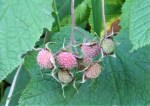
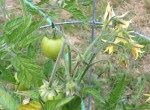
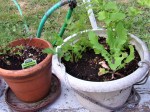
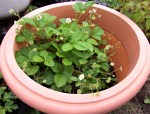
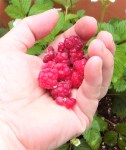
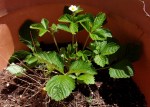
Herb Bunch – Early in the week quite a lot of weeding happened. We got the tomato cages on Wednesday, so those went in around two tomatoes and two of the large pots of peas. The beans are going to be left to drape off the porch rail. The raspberry is in full fruit and should have been picked on Friday, but we ran out of time and no pictures happened …and then the accident happened so we didn’t get back home. …and didn’t get back Saturday evening or Sunday morning. Loren made a trip with a friend out to pick up some food and clothing and snapped two pix of our first strawberries.

Sundials, etc. – 

Project Day – We didn’t really have a Project Day the way we usually do on Sundays. There was a lot of catching up and cleaning up from the mess that the accident created.

James called and we had a good chat about the newer recipes. I’ve sent him a few to try.

Amy stopped to check up on Loren.

Helen Louise sent this pic. “Saw this painting hanging in the lobby of Mcmenamins Grand Lodge… thinking this outfit might be fun to make… happy Sunday and hope you all have a great one…”

Recipes – This is the recipe I sent to James

Transylvanian Cherries in Wine dish – Anja’s Version – 4 servings

  • 1 can of sour cherries
  • 1/2 cup white wine
  • sprinkle of cinnamon
  • 1/4 cup honey
  • Loaf of white bread (or better still, 4 of the diamond-shaped sweet rolls from Fred Meyer’s Bakery.
  • butter
  • Sugar to taste

Method

  1. Take a can of cherries and strain(reserve juice).
  2. Put the wine, honey and cinnamon in a quart canning jar and heat enough to dissolve the honey into the wine.
  3. Add the strained cherries and put into the fridge, overnight, or at least 4 hours….
  4. Cut your bread into bite-sized cubes.
  5. Melt butter in a medium (high-sided) frying pan and fry the cubes in it.
  6. When they’re crispied divide into bowls.
  7. Warm the cherry stuff in the nuker (1.5 minutes)
  8. Add sugar once they’re in bowls, if necessary. (ours didn’t)
  9. Garnish with sweet cicely, fennel fronds or 100’s of 1000’s.

Miscellaneous pix

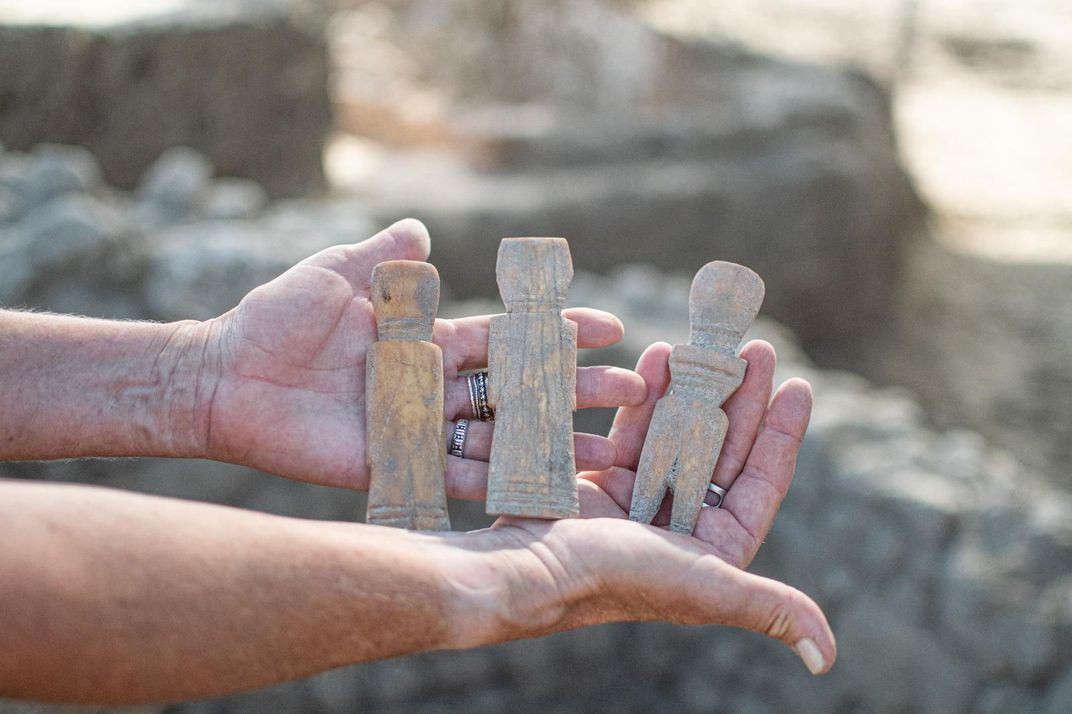
The team also found three bone dolls in the cesspit. (Yoli Schwartz / Israel Antiquities Authority) – https://www.smithsonianmag.com/smart-news/intact-1000-year-old-chicken-egg-found-israel-180977970/

MusicCARMINA BURANA: songs from the original manuscript c1300 – Musica Medievale – Ensemble: Studio Der Frühen Musik Album: Carmina Burana Vol I (1964) & Vol II (1968) Video: Codex Buranus, XI/XIII cent. http://www.facebook.com/musicamedievale

This is the first record ever of the original songs from the medieval Codex Buranus, it was made in 1964 by Thomas Binkley and his Studio der Frühen Musik. Personally, I really enjoyed the way that the songs were interpreted; I love the minimalist arrangements that scrupulously stick to the original melodies and I think that, thanks to these choices, the songs are much more pleasant and believable than many others (maybe too much?) orchestrated interpretations of this ancient repertory.

Thomas Binkley (1931 – 1995) was an American lutenist and early music scholar. He studied at the University of Illinois and the University of Munich. He taught at the Schola Cantorum Basiliensis in Basel. He was then founding director of the Indiana University Early Music Institute at Bloomington, Indiana from 1979 till his death from cancer at the age of 63. For twenty years he led the Studio der Frühen Musik in Munich with Andrea von Ramm and Sterling Jones, producing an extensive discography of medieval music.

CD I

  • 1 Fas et nefas, CB19
  • 2 Veris dulcis in tempore, CB85
  • 3 Estivali Sub Fervore, CB79
  • 4 In Gedeonis Area, CB37
  • 5 Dulce Solum, CB119
  • 6 Iove Cum Mercurio, CB88a
  • 7 Nomen A Solemnibus. CB147a
  • 8 Sic Mea Fata Canendo Solor, CB116
  • 9 Vite Perdite, CB31
  • 10 Tempus Transit Gelidum, CB153
  • 11 Fulget Dies Celebris, CB153
  • 12 Exlit Diluculo, CB90
  • 13 Conspexit, CB90
  • 14 Dic Christi Veritas, CB131
  • 15 Procurans, CB12
  • 16 Plante Ante Nescia
  • 17 Chramer gip…, CB107
  • 18 Diu Werlt Frovt Sih Uber Al, CB161
  • 19 Dum Iuventus Floruit, CB30
  • 20 Sage, Daz Ih Dirsm CB147a
  • 21 Chramer gip Diu Varwe Mier, CB107

CD II

  • 1 Homo Quo Vigeas (C.B. No. 22)
  • 2 Ecce Torpet (C.B. No. 3)
  • 3 Licet Eger Cum Egrotis (C.B. No. 8)
  • 4 Vite Perdite (C.B. No. 31)
  • 5 Crucifigat Omnes (C.B. No. 47)
  • 6 O Varium Fortuna (C.B. No. 14)
  • 7 Celum Non Animum (C.B. No. 15)
  • 8 Dum Iuventus (C.B. No. 30)
  • 9 Axe Phebus Aureo (C.B. No. 71)
  • 10 Ecce Gratum (C.B. No. 143)
  • 11 Tellus Flore (C.B. No. 146)
  • 12 Tempus Est Iocundum
  • 13 Nu Gruonet Aver Diu Heide (C.B. No. 168a)
This image has an empty alt attribute; its file name is download.png

Links

Holásky – Hallstatt burial mounds – https://czech-archaeology-news.estranky.cz/articles/history-of-czech-archaeology/holasky—hallstatt-burial-mounds.html

This image has an empty alt attribute; its file name is download.png

Video Links

Education in the Middle Ages – Medievalists – It’s the most wonderful time of the year – time to go back to school! This week on The Medieval Podcast, Danièle takes a quick look at medieval education. Get the show notes at http://www.medievalists.net/2019/09/e…

Tudor Talk: Live Chat with Nikki Clark – The Howard Women – The Tudor Travel Guide – Tudor Talk: Live Chat with Nikki Clark – The Howard Women Join me in live conversation with Nikki Clark, Senior Lecturer in Late Medieval and Early Modern History, as we chat about the endlessly fascinating Howard women of the Tudor age. Do make sure to bring along your questions and join in the chat!

Funnies 

divider black grey greek key

Largesse, Gifts and Auction items
·         ASXLVII = 24
·         ASXLVIII = 88
·         ASXLIX = 794
·         ASL = 2138
·         ASLI = 731
·         ASLII = 304
·         ASLIII = 146
·         ASLIV & ASLV = 230
·         ASLVI = 176 plus 4 puppets, 4 powder fort, 8 cheese spice and 9 powder douce packets, 1 kiss-lock pouch, 9 tiny bobs, 7 pincushions, 3 pins, 3 snip case w/snips, lucet cords, 25 pouches for block-printing, 2 medium pouch, 4 small pouches, 12 bookmarkers, 14 unfinished pincushions, 1 sewing kit (except for bone needle), varnished stuff (124), 2 emery strawberries, 1 woolen spool-knit cord, 48 key bottle openers
Total as a Household = 4237 handed off


moving writing pen motif
In ministerio autem Somnium! Anja, graeca doctrina servus to House Capuchin
Page Created 7/2/21 & published 7/5/21 (C)M. Bartlett
Last updated 7/5/21

Activities through 6-27-21

House Capuchin Shield2

Tourist season is ramping up and the hot temps in the Valley didn’t help this week. We didn’t hear much from anyone, but there are a bunch of garden pix, links to classes and cookery (how’s ancient cheesecake grab you?) and other articles and so on below. Here’s hoping that nobody has completely melted and will be back soon.

Project Day is now open for in-person meet-ups as well as in the Virtual Realm! Potluck this month will be Virtual and Real-World! Herbs Workshop will re-start, in person, July 8th. All other meetings are on hold for the moment.

When will the rest of these open up in person? We’ll probably keep right on with the virtual ones side-by-side with the actual. 

  • Herb Bunch – At Ancient Light, Thurdays, 7pm-9pm
  • Sewing Time – At Ancient Light, Saturdays, 3-5pm
  • Project Day – At Ancient Light, Sundays, 1 to 5pm
  • Cheese and Wine happens irregularly, usually announced with little notice on our Facebook group.
  • Next Virtual Potluck – 7/18, 8/15, 9/19, 10/17
  • No Winter Feast in 2021. We’ll revisit for one in 2022 sometime in the next two months.

Here is the direct Portfolio link which has all the past Project Day reports and various projects, original here:  https://housecapuchin.wordpress.com/portfolio/  and new one here:  https://housecapuchin2.wordpress.com/portfolio/ and number three is here: https://housecapuchin3.wordpress.com/portfolio/

Misc – Custom Roman Chariot Car Drives on Freeway

Online Education

7/8-7/11, 2021 – Wishes and Waiting: A Hopeful Hybrid on July 8-11, 2021. Hoping for in-person and online both, depending on local regulations.

10/1-10/3 2021 – Daigaku-Ryo: Pan-Asia University = Constantinople to Heiankyō 2021 – October 1, 2021 — October 3, 2021 – http://daigaku-ryou.org/

Other Educational Events

This image has an empty alt attribute; its file name is sq-knotb.jpg

 Other Good Stuff

Knowne Worlde Entertainment Guide – KWEG – Entertainment List – https://docs.google.com/spreadsheets/d/1xEZAwCca4IQham3TpxfWnonQscG668mmYgIMA18YZ-E/edit

SCA Iberia put out a whole bunch of videos from their most recent event, and keeps adding more! https://www.youtube.com/channel/UC2RmLGx_KiNzoFiM6GAu5Hg/videos

Dance Vids – FULL LIVE CLASS – Medieval/Renaissance dance footwork drills, April 25 – Rachel Lorenz

Classes – 

Floral Vinegar: An Essential Ingredient In The Tudor Kitchen – The Tudor Travel Guide

Saint Audrey’s Feast Day | the Medieval Origin of the Word ‘Tawdry’ – Lynne Fairchild

Intro to Viking Age Plaiting – Royal University of the Midrealm – RUM – Sergeant Hjalmr discusses and demonstrates the process of plaiting wire to create arm bands like those found from the Viking era.

Early Week – Was all eating up leftovers and working in the garden. A little bit of hand-sewing happened, too.

Cookery – After the day we had chocolate cake with raspberries we just didn’t do more than regular meals. It got too hot later in the week to cook, although we had still planned to do some pickles or something, but the time just got away.

How ancient people fell in love with bread, beer and other carbs – https://www.nature.com/articles/d41586-021-01681-w

A 1000-year-old egg – https://www.medievalists.net/2021/06/a-1000-year-old-egg/

Researchers learn about what they ate in medieval Sicily from cooking pots – https://www.medievalists.net/2021/06/researchers-learn-about-what-they-ate-in-medieval-sicily-from-cooking-pots/

Confraria Gastronômica do Barão de Gourmandise – The Nonnette: the mythical pain d ‘ epices of Dijon.
It must be said that nonnette, originally made in nun conventions, has enough to seduce the most ungodly palaces and would dismiss an entire seminar in the middle of Lent. Imagine: first the crunchy of the cover, then the soft anise of the pain d ‘ epices and finally the lush heart and melting full of orange jelly.
Recognized specialty of Dijon and Burgundy, it is also found in Champagne-Ardenne, in particular in the Reims region, Lorraine in Baccarat and even in Lyonnais and even in further southern regions.
In the Middle Ages, nuns made this cake at their monastery, which explains its name: it takes the name of nuns (nonnette = ′′ little nun ′′)
This specialty was often sold to travellers in diligence and then trains in the th century.
In the Middle Ages, the pain d ‘ epices was called a boichet. Marguerite from Flanders is crazy about this!
The wife of the Duke of Burgundy Philippe le Bold made this cake, already well known in Belgium, in her adoption region, Burgundy, trending.
Agnès Sorel, the beautiful lady from the heart of King Charles VII, was supplied with these cookies by a baker chef from Bourges.
In the th century, Mme de Sévigné adored them and ordered them to dispatch Reims: they were the nonnettes à la reine, made of rye flour, decorated with large sugar nuggets and flavoured with neroli. Louis XIII loved them too.
The 1732 Mercure de France indicates that at its time the entire court had at least one in its pocket, that a cupcake like this was always shared among friends, that one could even buy it everywhere public.
We then know two basic types of pain d ‘ epices:
The ′′ pavé de santé “, a dry pain d ‘ epices that eat in slices with butter or jam;
The nonnette, a soft pain d ‘ epices topped with confectioner sugar, sometimes decorated with nonpareilles, these tiny, fragrant sugar pearls.
But did you know that to taste this cupcake you’d have to go to the Paris epic pains fair?
It was held every year on Easter at the Throne barrier (now Place de la Nation).
Dijon, Reims and Alsace’s pastry bosses would always present their creations to the gourmets for 15 days. This was the ancestor of the current Throne Fair!
The best witness to all the agitation reigning at the fair was done by Alphonse Daudet in Les rois en exil (1879):
′′ And everywhere, every step, the king of the party, gingerbread in all aspects, all shapes, in his shops draped with red and gold frogs, dressed in satin paper with pictures, knotted with favors, decorated toasted sweets and almonds, flat man gingerbread, […] gingerbread carried on baskets, flying establishments, spreading a good taste of honey and fruits baked through the slow, tightly tight crowd , where traffic starts to get very difficult. ′′
(And everywhere, at every step, the party king, the pain d ‘ epices in all aspects, all forms, in their stores draped in red and gold, dressed in satin paper with images, tied with freebies, decorated with sweets and toasted almonds, the pain d ‘ epices on sleepers, […] the pains of epices taken in baskets, flying countertops, spreading good taste like honey and baked fruit… amongst the slow, well packed crowd , where the traffic starts to get really hard. ))
In 1455 they would cause a Scandal! Catherine de Châteauneuf has been charged with murder. She had poisoned her second husband, Jacques d ‘ Haussonville. And evenen her husband with the help of her lover, Giraud de Parmentier… The murder weapon? A tasty boichet! Do you know? The ancestor of nonnette.
The crime took place at the Montureux-le-Sec castle in Champagne. They found out when a greedy servant chewed on a piece of the cake and died too. This was the end of our devilish lovers. Catherine was arrested, locked in Conciergerie (Paris) and burned alive on March 13, 1456.
Nonnette
Ingredients
120 g wheat flour
100 g rye flour (use wheat only if you prefer)
120 g of water
150 g honey
80 g of sugar mascavo
65 g semi-salted butter
8 g sodium bicarbonate
½ teaspoon of the 4 spice mix (india carnation, cilantro seeds, ginger, starry anise – if you don’t have starry anise use green anise, better known as sweetgrass seeds)
½ teaspoon cinnamon powder
Orange jelly
Glaze:
4 tablespoons confectioner sugar
1 tablespoon orange juice (or lemon juice or rum)
Prepare: Preheat the oven to 180° C. In one pot, pour the water, chew sugar, honey and butter previously cut into cubinhos. Let it boil until the butter melts and remove from the fire. Gather the spices, caps and let it cool. In a bowl, mix the flour and sodium bicarbonate. Open a well and evict the mixture of honey butter and spices. Mix delicately with a spatula until you get a homogeneous texture (don’t mix too much). Pour the dough into formines or muffin (previously butter and tucked up) at half height. Bake for about 15-20 minutes or until a toothpick inserted into the cake comes out clean. Leave the cakes in the shapes for about 15 minutes before unforming. Stuff with the jelly (use a confectioner bag for this or just pour a little hole over it and put some jelly on). Prepare the topping by mixing the confectioner sugar and juice. Brush it on the nonnettes surface and let it dry completely before putting them in an airtight box. Wait at least 24 hours before tasting.

Brodium Theutonicum – Teutonic Hen – Medieval Recipe – Historical Italian Cooking

MMMK Sops with chicken and horseradish – My Modern Medieval Kitchen – My Modern Medieval Kitchen making sops with chicken and horseradish

Coca de Sant Joan & the Fires of Saint John’s Eve – Tasting History with Max Miller

Sewing – Working on the doll again and a mask from the same embroidered piece that a bunch of tissue covers were made of. Pix didn’t turn out.

Suffering for fashion: The pain of medieval pointy shoes – https://www.medievalists.net/2021/06/suffering-for-fashion-the-pain-of-medieval-pointy-shoes/

Sundials, etc. – Busy on mundane mending tasks.

Chess | History and Instructions on this Medieval Modern Board Game – Lynne Fairchild – Modern day chess can trace its origins to the ancient Indian game of Chaturanga. This game was first recorded around the 6th century AD. This game was popular through the Middle Ages, into the Renaissance, and is still a popular game to play today! Learn about the different pieces and the directions they can move in.
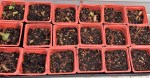
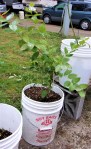
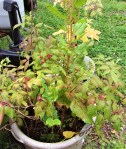
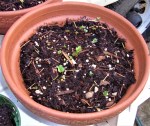
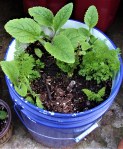
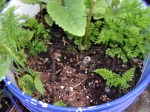
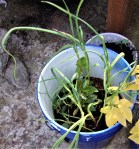
Herb Bunch – A bunch got done on Tuesday/Wednesday: more planting of seeds and the bulbils from the garlic, moving plants to better spots, weeding, watering. Some of the geranium starts have obviously taken and were sorted apart from the others.

Tuesday

Wednesday

Later in the week

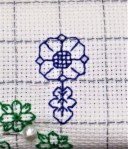
Project Day – Started very slowly and a touch late because Anja overslept, from under-sleeping! She started in with a blackworked piece of fabric, adding some lining to turn it into a pouch and then re-thought and started turning it into a mask! No one else chimed in until later. I guess everyone melted!

Recipes

Tetiromeni Plakountes (Fritelle de Rodi) – Timachida di Rhodes’s recipe for making Tetiromeni Plakountes confirms the existence and use of ricotta in the kitchen as early as 400 years before Artemidorus. (I am not confident of the conversions. Have extra flour/water/cheese/almond flour on hand to adjust as necessary.)

Ingredients

  • Phyllo Paste (Placenta)
  • Fry oil (suggest olive)
  • 7/8 cup/200 g almond flour (Crushed Phyllis Fruits)
  • 8 ½ cups/about 1000 g (2 Mine) of ricotto goat’s milk cheese (ricotta)
  • 2 eggs
  • 1 tsp ground cinnamon (Crushed cinnamon)
  • 10 tablespoons Honey
  • the zest of 1 lemon

Method

  1. In a bowl, prepare a mixture with the ricotta, chopped almonds, honey, grated lemon zest and cinnamon.
  2. Cut from your phyllo paste that you have prepared very thin many small moons (a little under 3 inches or about 7 cm diam.) And in the center of each moon you will place a little of your mixture (1 tablespoon of filling).
  3. Now fold them in a half moon (in half), closing the edges well.
  4. Then beat the eggs and cover the half moons with them.
  5. Then, one after the other, gently pour them into the bubbling oil.
  6. When you see your Tetiromeni Plakountes well golden, remove them from the pot, drain and serve them to your guests still hot and covered with crushed cinnamon powder (cinnamon)

How to make your own Phyllo Paste (placenta)

Ingredients

  • 4 ¼ cups / g. 500 (1 mine) of good flour
  • 2 eggs
  • ½ cup/100 g. (A cup of fresh water)
  • ½ cup/100 g. Olive oil
  • (2 tsp) Sea salt

Method

  1. In a saucepan over low heat, heat the water with the oil and a part of the salt.
  2. Prepare the flour in a bowl with the other part of salt and pour over the warmed water and oil.
  3. After mixing everything well, make a very smooth dough without lumps of flour.
  4. Use your hands to form small balls that you will rest in a cool and clean place (for about half an hour).
  5. Now you will roll out your phyllo paste until they are very thin with the shape you need and more you like.

Miscellaneous pix

Earning the title of the oldest pub in Ireland, and perhaps soon the oldest pub in the world, Sean’s Bar’s history is a fascination tale.
Athlone, marks the site of what was once a great ford across the Shannon, known as the Ford of Great Antiquity. At around 900 AD, there lived a man called Luain Mac Luighdeach – Luain son of Lewy. It is known that he established an Inn close to “Ath Mor – The Great Ford”. This Inn is today known as Sean’s Bar!..Luain acted as a guide to travellers who had to venture across the rapid torrent of the Shannon. A settlement soon grew up around the crossing point and in time the place came to be known by his name. “Athlone – Ath Luain, the Ford of Luain. Later King 👑 Turlough O’ Connor built the first wooden 🏰 castle here in 1219 to protect this settlement.
Sean’s Bar has a detailed and documented history right back to 900 AD. During renovation in 1970, the walls of the bar were found to be made of “wattle and wickers” dating back to the ninth century. Old coins which were minted by various landlords for barter with their customers were also found. The walls and the coins are on display in the National Museum. One section remains on display in the pub!..💕
Sean’s Bar has been researched thoroughly by the Guinness Book of Records and proudly holds the record for “The Oldest Pub in the World”!..💕
It is known that the ancient population have been brewing beer for at least 6,000 years!..💕

Music

Ramon Llull, chronicle of a medieval journey – Musica Medievale

Ensemble: Capella de Ministrers, Carles Magraner
Album: ARS ANTIQUA, Crònica d’un viatge medieval
Video: Gaston Phébus, livre de la chasse (XIV century) http://www.facebook.com/musicamedievale

This first album of the trilogy dedicated to Ramon Llull , “Conversion, study and contemplation,” illustrates the youth of Ramon Llull, devoted to sensual pleasures to profane love and the cultivation of the troubadour lyric, seen through the prism of the convert who has left the vanities of the world. It includes a selection of representative pieces of some of the main musical genres that were current at the time of Ramon Llull as well as some of its most representative authors. A musical journey that accompanies the early stages of the life of Llull from the moment he begins to unfold the radical change that will take you to the intellectual illumination, which attributed a divine origin, and that will lead to the Ars offers.

  1. Veris dulcis in tempore – Carmina Burana 85
  2. Ben volgra, s’esser poges – Guiraut d’Espanha
  3. Je muir d’amourete – Adam de la Halle
  4. Plany de la Verge – Anònim català/occità
  5. Alta Trinità beata – Laudario di Cortona 32
  6. Quant je parti de m’amie – Codex Montpellier 200
  7. Los set gotxs recomptarem – Llibre Vermell
  8. Non sofre Santa Maria – Cantiga de Rocamadour
  9. Dregz de natura comanda – Matfré Ermengau
  10. Mundi renovatio – Adam de Saint-Victor
  11. Dansse real 12 Mayre de Deu e fylha – Cantiga 159
  12. Amis, amis – Trouvère anònima
  13. On doit plaindre – Adam de la Halle
  14. Fi, maris – Adam de la Halle

Carles Magraner – viella, violas
Aziz Samsaoui – sas çura, ud, qanun
Jota Martínez – viola de rueda, organistrum, laúd otomano, laúd medieval, cítola, setar, guiterna, baglama, añafil, pedal organetto
José Luis Pastor – laúd medieval, cítola
Eduard Navarro – duduk, oud, cornamusas, chirimía, chalumeau
Miguel Ángel Orero salterio, percusiones
Pau Ballester – tintinnabulum, percusiones
Spyros Kaniaris – Lyra de Pontos, bouzouki
David Antich – flautas
Manuel Vilas – arpa Ignasi Jordá – exaquier, organetto

This image has an empty alt attribute; its file name is download.png

Links

Mikulčice the Center of the Great Moravian Empire – https://czech-archaeology-news.estranky.cz/articles/history-of-czech-archaeology/mikulcice-the-center-of-the-great-moravian-empire.html

What are Merlin’s Prophecies? – https://www.medievalists.net/2021/06/what-merlins-prophecies/

How Large were Medieval Peasant Families? – https://www.medievalists.net/2021/06/large-medieval-peasant-families/

Medieval treasures you can see at the Cleveland Museum of Art – https://www.medievalists.net/2021/06/medieval-treasures-cleveland-museum-of-art/

This image has an empty alt attribute; its file name is download.png

Video Links

Podcast – Reynard the Fox with Anne Louise Avery –

Funnies 

divider black grey greek key

Largesse, Gifts and Auction items
·         ASXLVII = 24
·         ASXLVIII = 88
·         ASXLIX = 794
·         ASL = 2138
·         ASLI = 731
·         ASLII = 304
·         ASLIII = 146
·         ASLIV & ASLV = 230
·         ASLVI = 176 plus 4 puppets, 4 powder fort, 8 cheese spice and 9 powder douce packets, 1 kiss-lock pouch, 9 tiny bobs, 7 pincushions, 3 pins, 3 snip case w/snips, lucet cords, 25 pouches for block-printing, 2 medium pouch, 4 small pouches, 12 bookmarkers, 14 unfinished pincushions, 1 sewing kit (except for bone needle), varnished stuff (124), 2 emery strawberries, 1 woolen spool-knit cord, 48 key bottle openers
Total as a Household = 4237 handed off


moving writing pen motif
In ministerio autem Somnium! Anja, graeca doctrina servus to House Capuchin
Page Created 6/21/21 & published 6/29/21 (C)M. Bartlett
Last updated 6/29/21

Activities through 6-20-21 Coronet Potluck

Potluck week is always a bit nuts. Since we didn’t have anyone coming in-person, Anja and Loren did their stuff over 2 weeks. They’ve got a lot in the freezer still, when folks decide to start showing up.

Ancient Light’s Herbs Workshop is going to re-start on Thursday, 7/8, from 7-9pm. We’ll be beginning with stuff about beeswax and candles and how to make infused waxes. This is a free workshop, held once a week. No sign-up. No registration, just come to Ancient Light 145 NW Highway 101. If you want to take product home there might be a small fee for materials.

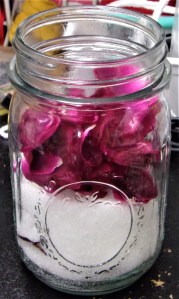
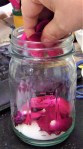
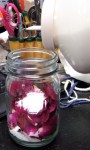
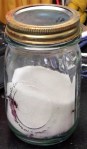
Rose sugar step 2

Project Day is now open for in-person meet-ups as well as in the Virtual Realm! Potluck this month will be Virtual and Real-World! Herbs Workshop will re-start, in person, around the beginning of July. All other meetings are on hold for the moment.

When will the rest of these open up in person? We’ll probably keep right on with the virtual ones side-by-side with the actual. 

  • Herb Bunch – At Ancient Light, Thurdays, 6am-9pm
  • Sewing Time – At Ancient Light, Saturdays, 3-5pm
  • Project Day – At Ancient Light, Sundays, 1 to 5pm
  • Cheese and Wine happens irregularly, usually announced with little notice on our Facebook group.
  • Next Virtual Potluck – 6/20, 7/18, 8/15, 9/19, 10/17
  • No Winter Feast in 2021. We’ll revisit for one in 2022 sometime in the next two months.

Here is the direct Portfolio link which has all the past Project Day reports and various projects, original here:  https://housecapuchin.wordpress.com/portfolio/  and new one here:  https://housecapuchin2.wordpress.com/portfolio/ and number three is here: https://housecapuchin3.wordpress.com/portfolio/

Misc – Novestiture and Summer Coronet was on Saturday. Anja went to the Court, the financial committee meeting and the Moot.

Short court. Adiantum is holding the in-person Coronet in September, barring weirdness with mundane stuff. (Was supposed to be Mountain’s Edge.) More info coming as soon as details sort out.
There’s going to be a Largesse competition. 6 items each for individuals. The group (Shires and Baronies) the brings the most will have a banner to display.

Not much to report on financial or anything else other than Glyn Dwyn is working on polling for Baronial Status, officers are asking for successors and more about Coronet, (since we don’t have any fighters).

Membership numbers have dropped, drastically, during the pandemic. Please re-up!

This image has an empty alt attribute; its file name is madrone.png

Greetings An Tir! Athenaeum is only 1 week away! On the weekend of Saturday, June 26th and Sunday, June 27th you can chat with the artisans whose work is now viewable on the Athenaeum site here:(https://athenaeum.baronyofmadrone.net/exhibits/. ) and you can leave comments for the artisans at the bottom of their exhibit. We are pleased to announce that the appointment booking tool is live as of today and you can request a one-on-one chat with any of the artisans whose work catches your interest! Please sign up to be a “participant” in order to schedule a time to chat with the artisan on either the 26th or 27th. You can register as a participant here:(https://athenaeum.baronyofmadrone.net/participant…/). If you signed up to participate in one-on-one chats in 2020, you won’t need to sign up again, your 2020 login info is still valid to participate in Athenaeum 2021.There are 53 amazing portfolios of work you can peruse that cover a while range of topics, we definitely have something for everyone! But that’s not all! There are also salons covering a broad spectrum of interests where you’ll be able to hang out and chat with other similarly curious enthusiasts throughout both days of the event. So mark your calendars, we’d love to see everyone back who made last virtual Athenaeum such a success, and we are excited to be able to offer more of all the things you enjoyed! And we are equally excited to see new faces and introduce even more of the populace to Athenaeum!~Athenaeum Event Team 2021~ https://athenaeum.baronyofmadrone.net/participant-registration/?fbclid=IwAR2FxQy_J_R8lCET0zSVrAp5iwrwJWmQ1HkFrdVuBRf_7jdL43B4X51pZ4E

Other Educational Events

This image has an empty alt attribute; its file name is sq-knotb.jpg

 Other Good Stuff

Knowne Worlde Entertainment Guide – KWEG – Entertainment List – https://docs.google.com/spreadsheets/d/1xEZAwCca4IQham3TpxfWnonQscG668mmYgIMA18YZ-E/edit?fbclid=IwAR3UAXblIOd9u-N5IKtJNLzLFS52KPibZEAuwoDHjWzFoCtN_gDHETI9iCo&fbclid=IwAR3zne1DsdAtuMBtK0qmaRI5jf1HVc-rOFaokhJTLkYYGY49iRnFZBJbzjo#gid=0

SCA Iberia put out a whole bunch of videos from their most recent event, and keeps adding more! https://www.youtube.com/channel/UC2RmLGx_KiNzoFiM6GAu5Hg/videos

Sisters Interview with HL Tessina, Summits, An Tir!

Dance Vids – Danse de cleves, part I – Rachel Lorenz – My reconstruction of the extremely elegant, flirtatious Danse de Cleves, from the collection of bassedanses attributed to Marguerite d’Autriche.

5 Must-Have Medieval/Renaissance Dance Resources – Rachel Lorenz – Want to delve into the world of medieval and Renaissance dance? Then here are five essential resources for understanding the form and the context in which dance was performed in the late Middle Ages/early Renaissance.
The various songs heard are Cancon Di Pifari, Phoebus, Damnes, and Principessa by Gaita; they can be found on their various music releases and are available via Spotify, their website at http://www.gaita.co.uk, or by email at info@gaita.co.uk

Classes – 

Heraldry for the non Herald with Cormac Mor

What Real VIKING Brooches are Like! Viking Jewellery Part One – The Welsh Viking – The Vikings loved jewelry! And one of the most popular forms of jewelry in the Viking Age was brooches. They were made specially, cast, hammered, recycled from sword fittings, book bindings and coins, and they came in a bewildering range of shapes and sizes. We have literally thousands of early medieval brooches and pins to choose from and take inspiration from, and because it’s 2021 lots of them are online! But it’s a difficult game finding good, authentic looking Viking (or Anglo-Saxon, or Briton, or Frankish, or Irish) jewelry for your reenactment outfit. Luckily, this is a walkthrough! So join me as we look at some of the most popular types of Viking age brooches, and discuss what to buy, what to avoid, and what will make you the fanciest Viking in town whether it’s in iron, bronze, silver or gold! Also I filmed this in self-isolation as I was recovering from actual COVID-19, so apologies for being a sweaty mess of a Welsh Viking. And for the coughing.
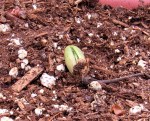
Court as Theater

Early Week – Anja and Loren were busier at the shop than they expected in the early week and it put off stuff that they had been trying to work on.

Cookery – We tried Sunday night (no ingredients) and then on Monday (no energy) to do the stuffed game hen. Finally, it was Tuesday (not enough sleep!) and really necessary if we weren’t to “lose” the hen. Quenelles came first, because I could cook the filling and bakes the quenelles at the same time. …and we started at 6pm….

It took 20-25 minutes per batch for 8 batches. …and then the hen was yet to go. It went in just before 11pm. …and came out just before midnight… 10 til, actually… almost Wednesday….

Anja didn’t get back to cookery until Sunday due to her fall. That’s all under potluck, below.

Toad in the Hole & the Cows of Scotland – Tasting History with Max Miller

MMMK Sops with mushrooms – My Modern Medieval Kitchen – My Modern Medieval Kitchen making a modern version of ‘Sops with mushrooms’ Source The Opera of Bartolomeo Scappi (1570) Recipie: Book III v. 262 (page 371 in my edition of the book)

Ingredients

  • Mushrooms: 453 grams
  • Spinach: 14 grams
  • Oil
  • Verjuice
  • Cinnamon
  • Safron (I left that out)
  • Salt
  • Peber
  • Fresh Herbs

Preserving Lime (Linden) Leaves to use in Dolmade Style Wraps – Sally Pointer – Lime (tilia x europa, Linden) leaves are delicious when young in sandwiches and salads, but they are also easy to preserve in brine to use as a substitute for vine leaves in parcels inspired by dolmades. Easy suburban foraging, this is a delicious way to extend the lime leaf season a little.

Sewing – Anja did a little designing in the early part of the week and then took a tumble into gravel, which meant hands weren’t working for the rest….

Icelandic Double Weave Tablet Weaving – Elewys of Finchingefeld – Experimenting with a pattern called Icelandic Double Weave, 2Z, found in Claudia Wollny’s book, Tablets at Work. Failing to understand the directions, I came up with a method of getting the right result, even if it isn’t following the directions exactly.

Sundials, etc. – 

Alquerque | How to Play this Medieval Game – Lynne Fairchild – Alquerque is a historic two player war board game, played through the Middle Ages and Renaissance, that was documented in Libro de los Juegos in 1283. This book was commissioned by Alfonso X of Castile in Spain. Prior to that, this game was mentioned as Quirkat in the Arabic ‘Book of Songs’ in the 10th century. The object of the game is to capture all of your opponent’s pieces. One of the most famous descendants of Alquerque is Draughts.

Herb Bunch – Watering wasn’t necessary in the early week and the big porch planter got filled, a fennel planted and then filled some more.

More pictures from the shop on Saturday.

G.R.H. Routiers
Today is another adventure with herbs, this time a common nun called a doctor – Taraxacum officinale.
In medicine already described by Arabow in the th century, called bitter herb.
For health purposes we use leaves, roots, and the whole plant, depending on destination.
Properties:
anti-diabetic effects by lowering the glycemic index and absorption of sugars,
prevents obesity
it works diuretically,
supports with kidney disease and gout,
strengthens immunity,
stem milk relieves warts and warts,
it works bile and anti-camic,
aids digestion,
the inulin present in the dandelion restricts appetite,
anticancer works,
regulates ovarian work and menstrual cycles,
Consumption:
We pick leaves and flowers in early spring before they bloom. On the other hand, we collect roots in autumn.
We can use the dandelion raw, Leaves and flowers are perfect as an addition to salads. Fresh milk squeezed from stems is used to lubricate skin lesions.
From dried plants, we usually make infusions from leaves or flowers. The root brew requires cold water to be flooded overnight, and only heat treatment in the morning.
Another interesting way to use the dandelion is dandelion reviews-1 part of fresh leaves, roots and flowers we pour 1,5 apple cider vinegar. We close tightly and put it away for 2 weeks in a dark place. After this period we overshadow and have vinegar for salads.
Another nun product is syrup – ok. We pour 200 g of dried flowers and leaves with 3 liters of water and boil on a small fire about 20 minutes. Then we put it away for the night, and in the morning we cross and print it. We add 1,5 l of honey and heat for 5 more minutes. We add 6 tablespoons lemon juice or apple cider vinegar and spill it into bottles. This syrup is ideal for coughing, respiratory and digestive complaints.
Similar to syrup, we make ′′ honey ′′ dandelion – about 500 flower baskets we pour 1 liters of cold water, add 1 kg of sugar and add juice of 1 lemon. We heat the whole thing on a small fire for about 1,5 hours stirring frequently. We leave it to cold and put it into airtight jars / wets.
The last of the dandelion products is wine 🙂
It has detoxifying properties, stimulating the digestive system, supports liver function. Additionally, it can be used for oral and throat disorders and prophylactic as a means of strengthening the body.
Method of preparation: 250 g flowers, 1 kg of sugar, 2 litres of water and 50 g of wine yeast. All ingredients should be mixed and left in a warm and dark place for 3-4 weeks.
When the flowers fall down, we pour the wine into dark bottles. Drink after a small glass three times a day before each meal.

Project Day – Started slowly. It was just Anja for quite some time. Loren had other things he was working on, so she worked on figuring out what we have for largesse.

Helen Louise posted a picture and this, “Wow, the day has gotten away from me… just finished the shift and now going to start bread dough for dinner. Dinner is cheese ravioli with pesto (made from carrot tops, favas leaves, garlic, olive oil, green olives and walnuts) and hummus from favas beans… maybe a spice cake too… all washed down with homemade cherry wine from last year.

Arlys posted – “Spent the morning doing mail, a Pel meeting, and writing out some notes for a NIWA talk I’m giving Tues night. Spent the afternoon mostly napping. Have a nasty headache that started last night, is unresponsive, and still ongoing. Not so much an inside the head thing; acting like it’s arthritis related. Yay.”

Potluck – The nibbles had been out all day. We just noshed as we worked. Around 5pm, Anja started cooking with Loren’s help and by 6pm we were eating. The Sunday dish was swimming sausage, reduced to crumbs in the cooking for Anja (and the rest will be filling for handpies) and Italian Sausage patties with mushroom gravy for Loren. We made up some things to bake in the oven at home and headed that way, not too long after.

Potluck Menu

Pic of the Brie after sitting for 2 hours. 🙂 Only nibble pic that we got!

Nibbles

  • Brie
  • pickles
  • bread
  • butter
  • jam
Served

Main

  • Beef roast with leeks and mushrooms
  • Stuffed game hen with quenelles
  • Carrots in butter sauce
  • Swimming sausage
  • Italian sausage patties with mushroom sauce.

Afters

  • Marzipan
  • Comfits
  • Cheesecake

Recipes

Swimming Sausage Filling

  • 1 pound ground pork
  • 1/2 Tsp ground cloves
  • 1 tsp blade mace, run through the food processor with the pine nuts.
  • 2 Tbsp chopped fennel fronds
  • 1/2 cup of ground pine nuts
  • 1 fifth Burgundy
  1. Start the liquid cooking in a sauce pan.
  2. Add spices, fennel and pine nuts, after running them through the food processor.
  3. Add meat and keep stirring, so it doesn’t clump.

This can be eaten as is on a trencher or wrapped in dough and baked, or even made into handpies with the addition of a mild cheese (mozzarella? cream cheese?) 1/4 cup of chopped dates and 1/2 cup of Craisins.

From War in the Trees, several years ago – Photos by Celeste Thorn

Music

Cantigas De Santa MariaMusica Medievale – Ensemble: Ensemble Unicorn Album: Cantigas De Santa Maria Video: Alfonso el Sabio, Virgin Mary and musicians (XIII cent.) http://www.facebook.com/musicamedievale

This 2021 is the anniversary of the 800 years from the birth of Alfonso X El Sabio. To celebrate him, this year I’ll share many versions of his Cantigas! This is the fifth video about it, you can find the others easily on the channel.

Alfonso X was born in 1221, he was King of the Romans, of Castile and León. His father was Ferdinand III, a liberal man called “the Saint” and the “King of religions” as during his reign he managed to make Christians, Muslims and Jews coexist in peace. His mother was Elisabetta Hohenstaufen, nephew of Frederick Barbarossa. From the sources that speak of his life we ​​know that in his youth Alfonso was surrounded by numerous paramours and politically helped his father in many military campaigns, but it was his love for Art that made him immortal with the nickname “El Sabio”.

In 1254 Alfonso endowed with many privileges the school of Salamanca, founded by his grandfather, and thanks to Pope Alexander IV, he obtained permission to make the school an international university allowing its graduates to teach anywhere, except Paris and Bologna. Alfonso tried to bring together all the knowledge of his time in the language spoken by his subjects by founding the School of Translators of Toledo; the Muslim and Jewish sages of his court translated ancient Arabic and Hebrew works into Castilian. His scientific, historical and literary work was fundamental; promoted the drafting and publication of a series of authoritative texts in various fields of artistic and scientific culture such as the Alfonsine Tables: astronomical tables capable of providing the positions of the Sun, planets, stars and the dates of eclipses. He was also an excellent poet and even the author of one of the first treatises on chess. However, it was Music that handed it over to legend thanks to the collection of the famous Cantigas de Santa Maria, monophonic songs of the XIII cent. now preserved in Madrid and Florence, containing an enormous number of compositions and representations of musical instruments and players. The outset of these compositions can be traced back to the troubadour art, which were so successful as to induce Alfonso X to use both the language and the form.

Marian devotion was particularly in vogue in this century, the collection sees the participation of aristocrats and courtiers, bourgeois, friars, clerics and jesters of humble origins, but protected in the courts. King Alfonso himself composed cántigas, some of which incite poets and jesters to dedicate their efforts and inspiration to the “Santa Dama”. In addition to the Cantigas de Santa Maria, the Cantigas de Amigo, popular, melodious and melancholic, also spread in that period, showing some contact with the Mozarabic kharge in Arabic-Hebrew composed in the XI cent.. The work has great importance from a triple point of view: literary, musical and pictorial. Alfonso X inherited from his father Fernando III his musical chapel which brought together interpreters and composers of various cultures and who formed part of the alphonsine court, similar to his School of translators or scriptorium regio.

  1. Prologo (CSM 60)
  2. Por Nos De Dulta Tirar (CSM 18)
  3. Instrumental (CSM 259)
  4. Quen Serve Santa Maria (CSM 213)
  5. Rosa Das Rosas (CSM 10)
  6. Que Por Al Non Devess (CSM 295)
  7. Entre Av’e Eva (CSM 60)
  8. Instrumental (CSM 361)
  9. Virgen, Madre Gloriosa (CSM 340)
  10. Instrumental (CSM 206)
  11. A Virgen, Que De Deus Madre (CSM 322)
  12. Aquel Que De Volontade (CSM 249)
  13. \ Epilogo (CSM 60)

Composed By – Alfonso X “El Sabio”

  • Bass Drum, Idiophone (Lithophone), Goblet Drum (Darbuka) – Wolfgang Reithofer
  • Bass-Baritone Vocals – Colin Mason
  • Countertenor Vocals – Bernhard Landauer
  • Fiddle (Keyed Fiddle), Baglama (Saz), Daf, Shawm, Bagpipes, Recitation – Marco Ambrosini
  • Harp (Gothic Harp), Hurdy Gurdy, Bagpipes, Liner Notes, Recitation – Riccardo Delfino
  • Oud, Fiddle, Vihuela, Rebec, Gittern – Thomas Wimmer
  • Recorder, Gemshorn, Flute (Reed Flute, Bamboo Flutes) – Michael Posch

Song of Ximena and Clovis – Barony of Terra Pomaria – Song of Ximena and Clovis by Clovis de Walton (Contrafactum: Song of Exile Joseph Riverwind / Laralyn Riverwind)


<!– /* Font Definitions */ @font-face {font-family:Calibri; panose-1:2 15 5 2 2 2 4 3 2 4; mso-font-charset:0; mso-generic-font-family:swiss; mso-font-pitch:variable; mso-font-signature:-469750017 -1073732485 9 0 511 0;} /* Style Definitions */ p.MsoNormal, li.MsoNormal, div.MsoNormal {mso-style-unhide:no; mso-style-qformat:yes; mso-style-parent:””; margin:0in; margin-bottom:.0001pt; mso-pagination:widow-orphan; font-size:11.0pt; font-family:”Calibri”,”sans-serif”; mso-ascii-font-family:Calibri; mso-ascii-theme-font:minor-latin; mso-fareast-font-family:Calibri; mso-fareast-theme-font:minor-latin; mso-hansi-font-family:Calibri; mso-hansi-theme-font:minor-latin; mso-bidi-font-family:”Times New Roman”; mso-bidi-theme-font:minor-bidi;} .MsoChpDefault {mso-style-type:export-only; mso-default-props:yes; font-family:”Calibri”,”sans-serif”; mso-ascii-font-family:Calibri; mso-ascii-theme-font:minor-latin; mso-fareast-font-family:Calibri; mso-fareast-theme-font:minor-latin; mso-hansi-font-family:Calibri; mso-hansi-theme-font:minor-latin; mso-bidi-font-family:”Times New Roman”; mso-bidi-theme-font:minor-bidi;} @page WordSection1 {size:8.5in 11.0in; margin:1.0in 1.0in 1.0in 1.0in; mso-header-margin:.5in; mso-footer-margin:.5in; mso-paper-source:0;} div.WordSection1 {page:WordSection1;} –>
Land of Boar and Land of Bear
 Land that give us puns and apples
Land that called us ever homeward
We have come home across the mountains
We have come home, we have come home
We have come home across the mountains
We have come home, we have come home
We have come home across the mountains
Land of children land of heroes
Land that gives us lore and legends
Hear our singing hear our laughing
We have come home across the mountains
We have come home, we have come home
We have come home across the mountains
We have come home, we have come home
We have come home across the mountains
Land of food and land of feasting
Land that give us joy and blessings
Land that give us love and laughter
We have come home across the mountains
We have come home, we have come home
We have come home across the mountains
We have come home, we have come home
We have come home across the mountains
When the land is there before us
We have come home across the mountains
We have come home, we have come home
We have come home across the mountains
This image has an empty alt attribute; its file name is download.png

Video Links

What Made the Viking Longship So Terrifyingly Effective – https://www.smithsonianmag.com/videos/category/history/what-made-the-viking-longship-so-terrifyingl/

Of Silk Gordian Knots: A Humorous Creative Contessa Tale – Rachel Lorenz – A witty Creative Contessa parable of silk thread to amuse and educate! If you enjoyed this content and wish to benefit from exclusive perks, you can support the Creative Contessa via Patreon: https://www.patreon.com/thecreativeco… Music is Le Haut et le Bas by Gaita Medieval Music and be purchases on Spotify, from their website http://www.gaita.co.uk, or via email chris@gaita.co.uk

Story time with the Contessa – Fox in Socks! – Rachel Lorenz – The Creative Contessa reads Fox in Socks for her newly born nephew and her sister who need a little fun!

Funnies 

divider black grey greek key

Largesse, Gifts and Auction items
·         ASXLVII = 24
·         ASXLVIII = 88
·         ASXLIX = 794
·         ASL = 2138
·         ASLI = 731
·         ASLII = 304
·         ASLIII = 146
·         ASLIV & ASLV = 230
·         ASLVI = 176 plus 4 puppets, 4 powder fort, 8 cheese spice and 9 powder douce packets, 1 kiss-lock pouch, 9 tiny bobs, 7 pincushions, 3 pins, 3 snip case w/snips, lucet cords, 25 pouches for block-printing, 2 medium pouch, 4 small pouches, 12 bookmarkers, 14 unfinished pincushions, 1 sewing kit (except for bone needle), varnished stuff (124), 2 emery strawberries, 1 woolen spool-knit cord, 48 key bottle openers
Total as a Household = 4237 handed off


moving writing pen motif
In ministerio autem Somnium! Anja, graeca doctrina servus to House Capuchin
Page Created 6/15/21 & published 6/21/21 (C)M. Bartlett
Last updated 6/21/21

Activities through 6-13-21

House Capuchin Shield2

Some weeks are unexpectedly quiet, just keeping on with projects. Anja is almost done with the gift exchange set and hopes to be finished and have it sent off this week. Next week potluck! Anja and Loren have already started cooking.

We’re going to be restarting Herbs Workshop somewhere late this month or early next!

Project Day is now open for in-person meet-ups as well as in the Virtual Realm! All other meetings are on hold for the moment, although the Monthly Potluck is being held in the Virtual Realm.

Fern

When will the rest of these open up in person? We’ll probably keep right on with the virtual ones side-by-side with the actual. 

  • Herb Bunch – At Ancient Light, Saturdays, 1pm-3pm
  • Sewing Time – At Ancient Light, Saturdays, 3-5pm
  • Project Day – At Ancient Light, Sundays, Noon to 6pm
  • Cheese and Wine happens irregularly, usually announced with little notice on our Facebook group.
  • Next Virtual Potluck – 4/18, 5/16, 6/20 
  • No Winter Feast in 2021. We’ll revisit for one in 2022 sometime in the next two months.

Here is the direct Portfolio link which has all the past Project Day reports and various projects, original here:  https://housecapuchin.wordpress.com/portfolio/  and new one here:  https://housecapuchin2.wordpress.com/portfolio/ and number three is here: https://housecapuchin3.wordpress.com/portfolio/

COVID-19 CLOSURE UPDATE 06-01-21

Post by: Attia Prima in Announcements

An Tir COVID Re-opening Policies and Procedures (current – June 1, 2021)

OFFICIAL SCA ACTIVITIES

Vaccination and Symptoms:SCA branches may NOT require proof of vaccination.

Society member owned sites (home owners) requiring proof of vaccination are responsible for asking for and documenting that proof.

In the case that a contracted site owner asks for proof of vaccination, please contact the Kingdom Seneschal to help you work with Society on compliance with site regulations.

The SCA INC has developed signage for events addressing symptomology, recent exposure and adherence to the rules.  These signs CANNOT be turned into a waiver.  COVID Event Language.

Activities:

All Events:‎
‎●‎ Must comply with prevailing local health regulations
‎●‎ Masks required pursuant to local mandates
‎●‎ Masks (if required) may be briefly removed while eating and drinking only
‎●‎ Branches / Events may not provide food or drink.‎
‎●‎ Feasts are not permitted at this time.‎
‎●‎ Pre-registration for camping event attendance is required. A sign in sheet can be used for practices (waivers for rapier, heavy etc like normal), meetings, A&S meetings etc.

Events and Activities Permitted in the Kingdom of An Tir:
Starting July 1, 2021:‎

Small Local Meetings & Practices
Gathering numbers as per local health authority rules

Starting August 1, 2021:‎
‎Local Events and Large or Multi-Branch Meetings and Practices
Gathering numbers as per local health authority rules
Events must be scheduled through the Kingdom Calendar Deputy ‎‎(calendar.deputy@antir.org) and published within the Crier‎

Kingdom and Inter-Kingdom Events:‎
The re-opening of larger events within the kingdom is still TBD. This will be ‎reviewed upon removal of restriction by regional governmental bodies. Tentatively ‎to coincide with removal of international border restrictions for personal travel.‎

Demos and Specialty Events:‎
‎Follow the same rules as Local Events and Activities ‎

Virtual Events:

Virtual Events must be scheduled through the Kingdom Calendar Deputy (calendar.deputy@antir.org) and published within the Crier

Virtual events that include court must be published in the Crier.

●     As required by the Society Senechal and Society President:

There shall be NO live, virtual youth focused events/activities/classes. There is no way of following our SCA Youth rules such as 2-deep in a live virtual setting.  We cannot control information going into the chat and similar factors.

Please direct questions about this policy to the Kingdom Seneschal (seneschal@antir.org).

  • Youth are permitted at general interest live virtual events just as they would be permitted to be around general parts of the SCA subject to their parents’ supervision.
  • Branches may post pre-recorded youth classes such as to YouTube.  Content should be reviewed by an appropriate youth officer. Instructors should not include direct personal contact information in instructional videos targeted at youth.

The intent of these policies and procedures is to enhance participant safety and aid the purpose of modern public health directives

It is expected that all will attempt to follow both the letter and the spirit of these policies in the intent to protect their fellow attendees in a manner which presents the honour and integrity that all are expected to conduct themselves within our Society.

The Crown and the Seneschalate are empowered with the right to enforce these policies and procedures as to ensure the safety of Our Kingdom

Those found not to be in compliance may be subject to sanctions and further administrative action.

All dates and policies are subject to change upon review by the Crown and Seneschal of the Kingdom of An Tir.

Revision and policy change will be provided via the Kingdom webpage in supplementary announcements.

Greetings An Tir! Athenaeum is only 2 weeks away! On the weekend of Saturday, June 26th and Sunday, June 27th you can chat with the artisans whose work is now viewable on the Athenaeum site here:(https://athenaeum.baronyofmadrone.net/exhibits/. ) and you can leave comments for the artisans at the bottom of their exhibit.We are pleased to announce that the appointment booking tool is live as of today and you can request a one-on-one chat with any of the artisans whose work catches your interest! Please sign up to be a “participant” in order to schedule a time to chat with the artisan on either the 26th or 27th. You can register as a participant here:(https://athenaeum.baronyofmadrone.net/participant…/). If you signed up to participate in one-on-one chats in 2020, you won’t need to sign up again, your 2020 login info is still valid to participate in Athenaeum 2021.There are 53 amazing portfolios of work you can peruse that cover a while range of topics, we definitely have something for everyone! But that’s not all! There are also salons covering a broad spectrum of interests where you’ll be able to hang out and chat with other similarly curious enthusiasts throughout both days of the event. So mark your calendars, we’d love to see everyone back who made last virtual Athenaeum such a success, and we are excited to be able to offer more of all the things you enjoyed! And we are equally excited to see new faces and introduce even more of the populace to Athenaeum!~Athenaeum Event Team 2021~ https://athenaeum.baronyofmadrone.net/participant-registration/?fbclid=IwAR2FxQy_J_R8lCET0zSVrAp5iwrwJWmQ1HkFrdVuBRf_7jdL43B4X51pZ4E

Other Educational Events

 Other Good Stuff

Knowne Worlde Entertainment Guide – KWEG – Entertainment List – https://docs.google.com/spreadsheets/d/1xEZAwCca4IQham3TpxfWnonQscG668mmYgIMA18YZ-E/edit?fbclid=IwAR3UAXblIOd9u-N5IKtJNLzLFS52KPibZEAuwoDHjWzFoCtN_gDHETI9iCo&fbclid=IwAR3zne1DsdAtuMBtK0qmaRI5jf1HVc-rOFaokhJTLkYYGY49iRnFZBJbzjo#gid=0

SCA Iberia put out a whole bunch of videos from their most recent event https://www.youtube.com/channel/UC2RmLGx_KiNzoFiM6GAu5Hg/videos

Danish PSA for wearing bicycle helmets is the best Viking movie in 63 years

Award Series – This is just one of the many posts over the last few weeks! You can find these on the An Tir Facebook group!

Wondered why that “hand” is in the header of the reports? House Capuchin was awarded a Bountiful Hand many years ago!

An Tir Awards Series! Learn about ALL THE AWARDS!! Award : Bountiful Hand

The Bountiful Hand is bestowed by the Crown to the many individuals and groups who contribute to the word fame of the Kingdom through donations of time, treasure, and service in the creation of largesse, clothing for the Crown, Kingdom scrolls, Kingdom regalia, and anything else created on behalf of the Crown or Kingdom.

First Given : Barony of Dragon’s Laire – Jan 7, 2012 (AS XLVI)
Last Given : 247 Maeve Cunningham (Adiantum) Dec 14, 2019 (AS LIV)
Number of Award recipients : 247
Recommend someone for this award or another!?!
GO HERE!! https://www.antir.org/our-people/award-recommendation
Largess giving is a common reason someone will get a Bountiful Hand but not the only one! […and definitely why we were given one!]

Dance – Elegant Italian Renaissance dance: Fia Guielmina – Rachel Lorenz – A complex Italian Renaissance dance from the 1450s, Fia Guielmina for two was choreographed to fit to the music of a very popular tune from the era (“A Florence, la Joyeuse Cite”). This demonstration illustrated how to dance an otherwise expansive dance in a relatively tight space, presented from eye-level and from above!

Classes – 

SCA Iberia has added 10 new classes to their list! – https://www.youtube.com/channel/UC2RmLGx_KiNzoFiM6GAu5Hg/videos

Medieval playing cards: The next level – Rachel Lorenz – Discover the quirks of medieval playing cards through an extant deck from 1470!

More Veil Pins: a CosTutorial Sequel! Making Medieval Wire-worked Pins Miss Philomena – Hello everyone! A couple days ago Opus Elenae posted a tutorial on how to make easy veil pins with a bead head, and she was very encouraging when I talked to her about filming this video. Here I go through two easy styles of pin that can be used either for veils or for clothing, especially the style without the bead. Opus Elenae’s Veil Pin Video https://www.youtube.com/watch?v=HiyciumLdjs&t=0s


Early Week – Marzipans for the Glen Dwyn auction prizes started going out on Monday. Waiting on an address for the last one. Wouldn’t you know, not a single pic got taken!

Cookery – Made Rose Sugar on 6/10 (Thursday). Sunday was a start on Stuffed Chicken and Quenelles.

Tudor & 17th century Experience – Vegetarian Tudor dish ! I love it, husband was less keen.“Fried meat of Turneps”THE ITALIAN BANQUET (Epulario) English translation of 1598, Second booke. Original recipe text:To make a fried meat of Turneps.“Rost the Turnops in the embers, or else séeth them whole, then cut or slice them in péeces as thicke as halfe the haft of a knife, which done, take chéese and cut it in the same form and quantity, but some what thinner, then take Sugar, Pepper, and other spices mingled togither, and put them in a pan vn∣der the péeces of chéese, as if you would make a crust vnder the chéese, and on the top of them likewise, and ouer it you shall lay the péeces of Turneps, couering them ouer with the spices aforesaid, and plenty of good Butter, and so you shall doe with the said chéese and Turneps till the pan bée full, let∣ting them fry the space of a quarter of an houre, or more, like a Tart, and this would be one of your last dishes”

Fygey – a Dessert made with Figs, from 1393. – Nick Saint-Erne – Fygey – a Dessert Recipe number 89 from “The Forme of Cury” (1393, England)

  • 1/2 cup Blanched Almonds (peeled)
  • 1 cup Figs – chopped
  • 1 cup Raisins
  • ½ cup Water
  • ½ cup Wine
  • ¼ cup Honey
  • ¼ teaspoon Salt
  • 1 teaspoonful Powdered Ginger

Primrose Tart Recipe: A Tudor Springtime Treat – The Tudor Travel Guide – Primrose Tart Recipe: A Tudor Springtime Treat

Sewing – 

Ye Olde Sports Bra: A Plus Size Medieval Supportive Shift – Latina Living History – Tell you what, this thing might be better than a modern sports bra! Medieval supportive undergarments are a new endeavor for me and I couldn’t be happier with how it’s going. It’s all thanks to:
Faye Sterling – https://www.youtube.com/channel/UCHSC7Wguj-N0yYuL7Ha-LhQ
Faye’s supportive shift video: https://www.youtube.com/watch?v=-nAX-vR2LTc&t=0s
Katafalk’s Lengberg bra info: https://katafalk.wordpress.com/2013/03/14/lengberg-castle-brassiere/

Sundials, etc. – London Mudlark: Lara Maiklem Mudlarking – It turns out the silver Elizabethan coin I found on the foreshore last week isn’t a penny as I thought, it’s a three farthing coin (worth three quarters of a penny). The obverse reads E.D.G.ROSA SINE SPINA, ‘Elizabeth by the Grace of God a Rose without a Thorn’ and the reverse shows the Royal Arms over a cross with the legend CIVITAS LONDON. Three farthing coins were notoriously thin as Shakespeare in King John (I,i,143) quotes:..my face so thin,
That in mine ear I durst not stick a rose,
Lest men should say,
“Look, where three-farthings goes!”

These little coins were minted between 1561 and 1582 and this one is dated 1561. This was the year that Francis Bacon (English philosopher, scientist, and statesman) was born, the spire of Old St Paul’s was struck by lightening and destroyed by fire, and Madrid was declared the capital of Spain.

This image has an empty alt attribute; its file name is blue-knot-div.jpg

Herb Bunch – A lot more seeds planted and more coming up! Transplanted peas, too.

Bottle Gourds: seed to supper per 16th Cent. English techniques – https://athenaeum.baronyofmadrone.net/exhibit/bottle-gourds-seed-to-supper-per-16th-cent-english-techniques/

Project Day – Helen Louise posted some more of her current projects. “Just finished pockets and working on bum roll and a new shift.”

Anja posted these from earlier in the week, but never got back to them!    and didn’t get all the way to making up the quenelles and chicken…, but got the ingredients pulled out…partly…. we discovered that we were missing some ingredients! Namely the chestnuts and pine nuts! 

Recipes

This is a partial recipe from our French Feast of 2019. Mostly it’s here because of the “eggs” and the stuffing that went into a cornish game hen.

Chicken Stuffing and golden egg mix

  • 2lbs mixed ground beef and pork
  • 6 eggs, beaten
  • 1 cup snack chestnuts (crunched)
  • ½ cup pine nuts
  • 1 1/2 cup grated mozzarella
  • 4 tsp. Salsa Fina
  • few thread saffron
  • ·  2 cup chopped onion
  • ·  5 cups cooked barley or rice
  • 1 teaspoon dried tarragon
  • 2 tsp. salt (or to taste)

Mix all of these together, well. Take about ½ of the mix and set aside for the eggs.

Chicken

  • ½ the stuffing mix
  • 2 roaster chickens
  • Olive oil
  • Salt
  • Glaze (recipe below)
  • Edible gold glitter (we used American Gold from www.ohsweetart.com ) It does not have any sugar in it!

Note – If doing this the morning of your feast, skip steps two and three.

  1. Cook the stuffing mix in the microwave, first for about 3 minutes and then 2 minutes at a time until no pink shows, breaking up lumps as you go.
  2. Drain (reserving juice for thigh sauce) and freeze in ziplock, shaking to keep it from clumping.
  3. About 30 minutes before you start assembling the chickens to bake, zap the stuffing 1 minute at a time until it’s slightly warm.
  4. Trim off extra skin and fat around the opening, leaving the tail stub.
  5. Stuff your chickens with the mix. Really pack it in. Any that is left over should be put back into the mix for the Dragon eggs and mixed in, well. Make sure the “tail” is still free.
  6. Rub the chickens all over with olive oil, then salt, lightly, and sprinkle with Salsa Fina.
  7. Lay belly down on foil on baking sheet or in a roaster.
  8. Using a bamboo skewer cut to size, prop the tail up so that it is sticking straight out. Cover the delicate areas of the legs, tail, and wings with foil to prevent overcooking.
  9. Place the bird in a 350° F oven and bake just until the skin begins to turn golden brown. Try not to overcook as the bird will fall apart if it becomes too tender.

Glaze for Dragon and Golden Eggs

  • 3 egg yolks
  • Edible gold glitter

Golden Dragon Eggs – Are made of the remainder of the raw stuffing for the chicken, molded into eggs (meatball sized), placed in a foil pan and baked at 350F. You may add bread crumbs to the mix, if it is too moist to mold well. When the eggs are up to temperature (about an ½ hour, depending on size) brush with the glaze, sprinkle with glitter and return to the oven just long enough to set the glaze.

Red Dragon Eggs – Swimming Sausages

  • 1 pound ground pork
  • Tsp whole cloves and mace, mixed
  • 2 Tbsp chopped fennel fronds
  • 1 fifth Burgundy
  • Bundle of fresh herbs (fennel and rosemary)

Miscellaneous pix

Music – 🇩🇪Lieder und Tänze🇫🇷Chants et danses🇮🇹Canzoni e danze🇬🇧Song and Dances – Musica Medievale – Ensemble: Ioculatores Album: Lieder und Tänze des 13. bis 15. Video: BnF Ms-2510 (XIII/XIV cent.) http://www.facebook.com/musicamedievale

  1. Guillaume de Machaut, Paris, Bibl. nat. f. fr. 843: Danse adapted from ballade: Quant je sui mis au retour
  2. Neidhart von Reuental: Sô blôzen wir den anger ligen sâhen
  3. Anon., France, 14th c., Paris, Bibl. nat. f. fr. 844: La sexte estampie royal
  4. Anon., England, 13th c., London, Brit. Mus. Harley 978: Estantipies
  5. Heinrich von Morungen, (text): Bern cod. 260; (melodie): reconstr. by W. Müller-Blattau from Paris, Bibl. nat. f. fr. 1591, 24406, 846: Lanc bin ich geweset verdaht
  6. Anon., France, 14th c., Paris, Bibl. nat. f. fr. 844: La seconde estampie royal
  7. Anon., France, 14th c., Paris, Bibl. nat. f. fr. 844: Dansse real
  8. Anon., England, 13th c., Oxford, Bodley Douce 139: La Vielle
  9. Guillaume d’Amiens Peignour, Rome, Vaticana fond Christ. 1490: Virelai: C’est la fins
  10. Anon., Italy, 14th c., London, Brit. Museum add. 29 987: Tre fontane
  11. Anon., Italy, 14th c., London, Brit. Museum add. 29 987: Trotto
  12. Walther von der Vogelweide, (text): Heidelberg, cod. Pal. Germ. 848, (melodie): Singebuch des A. Puschmann, Göttingen 4 Mus., 3050: Mir hât her Gêrhart Atze ein pfert erschozzen
  13. Anon., Italy, 14th c., London, Brit. Museum add. 29 987: La Manfredina / la rotta della Manfredina
  14. Anon., Italy, 14th c., London, Brit. Museum add. 29 987: Saltarello
  15. Guillaume d’Amiens Peignour, Rome, Vaticana fond Christ. 1490: Prendez i Garde
  16. Anon., 14th c., Rome, Vaticana fond Christ. 1490: Virelai: Lamento di Tristano / La rotta
  17. Oswald von Wolkenstein, Innsbruck, UB, ohne signatur, 1432: Her wiert uns dürstet
  18. Anon., Italy, 14th c., London, Brit. Museum add. 29 987: Saltarello
  19. Oswald von Wolkenstein, Innsbruck, UB, ohne signatur, 1432: Wol auff wir wellen slauffen
  20. Wizlav von Rügen, Jenaer Liederhandschrift, UB Jena: Dance adapted from Der herbest kimpt uns rîche nûch
  21. Susanne Ansorg – fiddle, recorder
  22. Sabine Handschuh – harp, psalterion, recorder
  23. Alexander Dinter – lute, scheitholz, recorder
  24. Veit Heller – cornet, portable organ, trumscheit, crumhorn, voice
  25. Kay Krause – ud, lute, fiddle, voice
  26. Michael Metzler – riq, tar, bells
  27. Sebastian Pank – shawm, recorder, crumhorn, voice
  28. Robert Weinkauf – voice, trommeln
  29. Yves Hermann – voice

Links

Patterned Weaves – Preliminary Datahttp://awanderingelf.weebly.com/blog-my-journey/patterned-weaves-preliminary-data

Chronicle of Fortingall purchased by the National Library of Scotland – https://www.medievalists.net/2021/06/chronicle-of-fortingall-purchased-by-the-national-library-of-scotland/

SAFE PASSAGE TO HEAVEN – http://henrytheyoungking.blogspot.com/2013/06/safe-passage-to-heaven_371.html

The medieval scribe as influencer – https://www.medievalists.net/2021/06/medieval-scribe-influencer/

Appalachian “Apple Hunter” Finds and Rescues 1200 Lost Varieties – https://returntonow.net/2021/06/12/appalachian-apple-hunter-finds-and-rescues-1200-lost-varieties/

Standards and Guidons – https://herald.poore-house.com/display/heraldic-flags/standards/

Prince Hal’s Head-Wound: Cause and Effect – https://www.medievalists.net/2013/05/prince-hals-head-wound-cause-and-effect/?fbclid=IwAR2dwsPJI2rvgSIoBwsQkrLwqUN0ujVdBDowt8Hs1IERMuWxB-u24suK4hs

Tiny dragons and pretty pigs: Decoration in medieval Welsh manuscripts – https://blog.library.wales/tiny-dragons-and-pretty-pigs-decoration-in-medieval-welsh-manuscripts/

Video Links

June 12 – Thomas Cromwell’s quaking hand and most sorrowful heart – The Anne Boleyn Files and Tudor Society – On this day in Tudor history, 12th June 1540, a clearly frightened Thomas Cromwell, who was imprisoned in the Tower of London following his arrest on 10th June for treason, wrote to King Henry VIII regarding his “most miserable state”, asking for mercy, and pleading his innocence. Claire Ridgway, founder of the Tudor Society, shares Cromwell’s letter in today’s talk. It is an eloquent letter but also a very moving one. His fear is palpable. Find out how he fell from power and more about his arrest in this video – https://youtu.be/5SJb-gDqa5E

Also on this day in Tudor history, 12th June 1530, Catherine of Aragon got rather cross with Henry VIII. Find out why in last year’s video – https://youtu.be/bDAdVfUJ1RM

Funnies 

divider black grey greek key

Largesse, Gifts and Auction items
·         ASXLVII = 24
·         ASXLVIII = 88
·         ASXLIX = 794
·         ASL = 2138
·         ASLI = 731
·         ASLII = 304
·         ASLIII = 146
·         ASLIV & ASLV = 230
·         ASLVI = 176 plus 4 puppets, 4 powder fort, 8 cheese spice and 9 powder douce packets, 1 kiss-lock pouch, 9 tiny bobs, 7 pincushions, 3 pins, 3 snip case w/snips, lucet cords, 25 pouches for block-printing, 2 medium pouch, 4 small pouches, 12 bookmarkers, 14 unfinished pincushions, 1 sewing kit (except for bone needle), varnished stuff (124), 2 emery strawberries, 1 woolen spool-knit cord, 48 key bottle openers
Total as a Household = 4237 handed off
moving writing pen motif
In ministerio autem Somnium! Anja, graeca doctrina servus to House Capuchin
Page Created 6/7/21 & published 6/14/21 (C)M. Bartlett
Last updated 6/14/21

Activities through 6-6-21

House Capuchin Shield2

Herbs and other plants took up most of Anja and Loren’s week. Various other projects are going and a pair of bodies got finished, among other things.

…and this week is more of the same, although we have a potluck coming up on 6/20!

Project Day is now open for in-person meet-ups as well as in the Virtual Realm! All other meetings are on hold for the moment, although the Monthly Potluck is being held in the Virtual Realm.

When will the rest of these open up in person? We’ll probably keep right on with the virtual ones side-by-side with the actual. 

  • Herb Bunch – At Ancient Light, Saturdays, 11am-1pm
  • Sewing Time – At Ancient Light, Saturdays, 3-5pm
  • Project Day – At Ancient Light, Sundays, Noon to 6pm
  • Cheese and Wine happens irregularly, usually announced with little notice on our Facebook group.
  • Next Virtual Potluck – 6/20, 7/18, 8/22, 9/19
  • Next In-Person 7/18 (maybe), 8/22, 9/19
  • Winter Feast. We’ll revisit for one in 2022 sometime in the next two months.

Here is the direct Portfolio link which has all the past Project Day reports and various projects, original here:  https://housecapuchin.wordpress.com/portfolio/  and new one here:  https://housecapuchin2.wordpress.com/portfolio/ and number three is here: https://housecapuchin3.wordpress.com/portfolio/

Misc – Branch of Laurels with Viscount Seamus (Summits, An Tir)

Educational Events

 Other Good Stuff

Knowne Worlde Entertainment Guide – KWEG – Entertainment List – https://docs.google.com/spreadsheets/d/1xEZAwCca4IQham3TpxfWnonQscG668mmYgIMA18YZ-E/edit?fbclid=IwAR3UAXblIOd9u-N5IKtJNLzLFS52KPibZEAuwoDHjWzFoCtN_gDHETI9iCo&fbclid=IwAR3zne1DsdAtuMBtK0qmaRI5jf1HVc-rOFaokhJTLkYYGY49iRnFZBJbzjo#gid=0

SCA Iberia put out a whole bunch of videos from their most recent event https://www.youtube.com/channel/UC2RmLGx_KiNzoFiM6GAu5Hg/videos

Classes – 

Plague Doctors — Down the Rabbit Hole – Fredrik Knudsen – CONTENT WARNING: from 5:56 to 6:06 there is an image of a person’s hand affected by the Black Death.  –

Introduction to the Society for Creative Anachronism (SCA): Families with Children – Lynne Fairchild – New to the Society for Creative Anachronism, also known as the SCA? What if you have young children who want to participate? Check out all of the fun medieval-inspired activities that they can participate in, such as heavy combat fighting, fencing, archery, thrown weapons, and more! For anyone curious about what exactly the ‘SCA’ is — The Society for Creative Anachronism is an international, non-profit educational organization that studies and recreates the medieval and Renaissance years of 600-1600AD. For more information and to locate your local branch, please check out http://www.sca.org Introduction to the Society for Creative Anachronism video, by Meisterinne Genoveva von Lübeck: https://www.youtube.com/watch?v=046bs…

Early Week – There was some potluck planning going on, plus a lot of plant tending. Tuesday was a shopping trip for potting soil and for a few plants, including a blueberry to replace the one that didn’t make it …and potluck ingredients.

The beef roast. It was so tender that at the “done” temp it fell apart. Yeah, getting started. Thinking about the Transylvanian cherry dish and a stuffed cornish game hen with quenelles….

Cookery – We picked up a game hen on Tuesday and some leeks and dates, plus 3 sorts of apples for that apple dish. Carrots got cooked and we were chowing on the stew/soup that got made last week. On Thursday we got some more leg bones that we’re going to try roasting again for the marrow, plus some ground lamb, ground pork, and ground beef for making pasties and a lovely big chuck roast that was set going in the big crockpot Thursday night.

MMMK Sops with peas My Modern Medieval Kitchen – My Modern Medieval Kitchen making sops with peas Source The Opera of Bartolomeo Scappi (1570) Recipie III 261 (page 371 in my edition of the book) which refer to Recipie V224 (page 528 in my edition of the book) Ingredients (scalled down since Scappis dish is quite large)

  • Peas: 111 grams
  • Almonds: 28 grams
  • Spring onions: 28 grams
  • Fresh herbs
  • Currants: 28 grams
  • Pepper: 7 grams
  • Cinnamon: 3,5 grams
  • Sugar: 42 grams
  • Safron
  • Bread and butter

Scotch Eggs – Nick Saint-Erne – Scotch eggs are actually British – not Scottish – but are delicious and easy to make. They are hard boiled eggs wrapped in sausage and then coated with a crispy outer layer and baked. The perfect snack for tea time or picnics.

500 Year-Old Pizza VS Today – Tasting History with Max Miller

Three Hot n Spicy Medieval SaucesMonk’s Modern Medieval Cuisine – Who needs chillies? Dr Monk shows you how to make three hot n spicy sauces from three different medieval manuscripts. Travel with him to Denmark/Germany/Iceland, France and England and see how you can still get you hot stuff even as a medievalist.

Sewing – The pouch got drawstrings and then tassels. A couple of partially made pouches got finished and strung. One got coopted by Anja and the other by Loren since they have pears on them. 🙂

gallery

SCA Iberia has put out a whole whacking lot of new videos over the last few weeks. A lot of them are on garb and accessories. You can find more here: https://www.youtube.com/channel/UC2RmLGx_KiNzoFiM6GAu5Hg/videos

A survey of late 16th Century Spanish Women’s Headwear of the Nobility – Isabel Maria del Aguila – SCA Iberia

When Men’s Clothing Had Class: The 1470s Giornea – Rachel Lorenz – A turbo presentation on the test construction and actual wearing of a quintessential man’s overgarment of the 1470s in Italy: the giornea! How it is tailored and sewn, material choices and various methods of wearing! p.s. watch to the very end – you will be pleased you did! :

The Creative Contessa offers a host of workshops and classes on a wide variety of historic and modern dance, arts and crafts and can be found on Facebook at The Creative Contessa: https://www.facebook.com/TheCreativeContessa

The music, biaulte di schatiglia, is composed by Chris Elmes and played by Gaita Medieval Music and can be found on their music releases Queen of Measures. It can be purchased via Spotify, their website at http://www.gaita.co.uk, or by email at info@gaita.co.uk.

Sundials, etc. – Bones came in, but we have to get them roasted. Probably on Tuesday.

Rhubarb Mead – https://practicalselfreliance.com/rhubarb-mead/

The Ancient Magic of Malt: Making Malt Sugars and Ale from Grain Using Traditional Techniques – https://exarc.net/issue-2021-2/at/ancient-magic-malt-making

Herb Bunch – Everything needed watering this week, early on. Tuesday ended up being quite hot, so that was Wednesday’s task, first thing. Pots were found for the plants that we bought on Tuesday, but only the marjoram and the tomatoes ended up really planted, because we didn’t get enough potting soil. The begonias are sitting in their pots, still in their original pots, and the blueberry is waiting. The seeds got soggy, too. Loren didn’t see them sitting under one of the pots… so those are going to need planted, asap.

Pix from 6/3

Pix from 6/4 to 6/6 – Everything got planted some more roses bloomed.

Duchess Eleanor’s Peas – 2nd of the set of vids found here: https://www.youtube.com/playlist?list=PLAioeKw4c7x4sCqT-JWhI3SXPxwcZ14du Hey, Capuchin peas?!!!

Project Day – 

Anja started posting on Saturday, but those pictures are in the Cookery and Garden sections. She was waiting on Sunday to finish the marzipan project, but Loren went yard-sale-ing, so she had to wait! (He got a generator and a new office chair….)

Arlys says, “Hi everyone. I’m working on a redo of one of the Oxburgh Hangings (the cockatrice) but no pics yet because I have like five rows of background color, which is kind of boring, lol! But if you’d like to see the original, google ‘Oxburgh Hangings cockatrice’ “.


Helen Louise – “Finished pair of bodies and now working on Elizabethan cap. Looks like I’ll have enough scrap from this old table cloth to make pockets too!” and “Elizabethan cap almost finished, just a wee bit of finish stitching to do…”

Isabeau posted – “Hemmed up a formal dress and created a little lined clutch purse to go with”

Recipes

Beef chuck roast

  • 1 leek
  • 1 onion
  • salt
  • caraway seed
  • 1 5 pound chuck roast
  • Dried mushrooms
  • water
  • Large slow-cooker

Method

  1. Cut up leeks and onion and put into the bottom of the slow cooker.
  2. Add a double handful of dried mushrooms.
  3. Put the chuck roast on top.
  4. Salt liberally.
  5. Cover thickly with caraway.
  6. Add enough water to cover the mushrooms, but at least 1 inch.
  7. Put on low.
  8. Check temp at 6 hours and flip roast.
  9. Salt and caraway again.
  10. It should reach temperature at between 8 and 10 hours.
  11. Remove to a plate and let stand to firm up. (That didn’t work on this roast!)
  12. Carve and serve hot or cold with the vegetables and mushrooms. Refrigerate leftovers.
  13. The broth and vegetables can be used to make a delicious gravy. Use browned flour, or for a more period gravy, thicken with bread crumbs.

Miscellaneous pix

Music

Musica di festa alla corte dei Visconti – Musica Medievale – Ensemble: Pierre Hamon, Alla Francesca, Carlo Rizzo Album: Istanpitta (Musiques De Fête À La Cour Des Visconti) Video: Offiziolo Visconti by Giovannino De Grassi (XV cent.) http://www.facebook.com/musicamedievale

Pierre Hamon imagines these famous Italian melodies from the XIV cent. played at the court of the Visconti, an important Lombard family of the same period. In the video I used images taken from the Offiziolo Visconti of Giangaleazzo Visconti illustrated by Giovannino De Grassi, painter and illuminator present at his court.

  1. Salterello
  2. Isabella
  3. Salterello (Prélude)
  4. Salterello
  5. Tre Fontane
  6. Non Formo Christi
  7. Principio Di Virtù (Prélude)
  8. Principio Di Virtù (Istanpitta
  9. In Pro
  10. Saltarello (Tradizionale)
  11. Saltarello
  12. Lamento Di Tristano (Prélude)
  13. Lamento Di Tristano
  14. Rotta
  15. Direction, Bagpipes, Recorder, Tambura – Pierre Hamon
  16. Tambourine, Vocals – Carlo Rizzo
  17. Cittern – Michaël Grébil
  18. Gothic Harp – Angélique Mauillon
  19. Psaltery – Begoña Olavide
  20. Recorder – Benoït Toïgo
  21. Vielle – Birgit Goris, Lucas Guimaraes-Peres

Greensleeves – The King’s Singers – Provided to YouTube by The Orchard Enterprises Greensleeves · The King’s Singers · Trad. The King’s Singers Live at the BBC Proms ℗ 2008 Signum Records Released on: 2008-11-24 Auto-generated by YouTube.

Sing along with The King’s Singers: Ave Verum (William Byrd) – The King’s Singers – This is a motet by one of the finest composers of the English Renaissance, William Byrd. It is one which all of us have known since childhood and which we have decided to return to, for this ‘Sing with The King’s Singers’ video (the first in a little series of these). You can enjoy singing along with your part; if you use a piano to help, be aware that we sing it down 1 tone from the printed edition! –

  • Patrick Dunachie – countertenor
  • Edward Button – countertenor
  • Julian Gregory – tenor
  • Christopher Bruerton – baritone
  • Nick Ashby – baritone
  • Jonathan Howard – bass
  • Sound engineering & mixing: Nicholas Girard

Links

https://www.smithsonianmag.com/smart-news/christian-clergymen-may-have-buried-trove-trick-vikings-180977879/

Blood, Stones and Holy Bones – https://www.historytoday.com/archive/history-matters/blood-stones-and-holy-bones

Call the (medieval) Cheesemonger (Genizeh Framents series) – https://www.lib.cam.ac.uk/genizah-fragments/posts/call-medieval-cheesemonger

Video Links

Castell Caerffili / Caerphilly Castlecadwwales – Gosod llwybrau newydd / Laying new paths

Funnies 

divider black grey greek key
  • ASXLVII = 24
  • ASXLVIII = 88
  • ASXLIX = 794
  • ASL = 2138
  • ASLI = 731
  • ASLII = 304
  • ASLIII = 146
  • ASLIV & ASLV = 230
  • ASLVI = 0 plus 176 marzipan, 4 puppets, 4 powder fort, 8 cheese spice and 9 powder douce packets, 1 kiss-lock pouch, 9 tiny bobs, 7 pincushions, 3 pins, 3 snip case w/snips, lucet cords, 25 pouches for block-printing, 2 medium pouch, 4 small pouches, 12 bookmarkers, 14 unfinished pincushions, 1 sewing kit (except for bone needle), varnished stuff (124), 2 emery strawberries, 1 woolen spool-knit cord, 48 key bottle openers

Total as a Household = 4061 handed off

moving writing pen motif

In ministerio autem Somnium! Anja, graeca doctrina servus to House Capuchin
Page Created 6/1/21 & published 6/7/21 (C)M. Bartlett
Last updated 6/7/21

Activities through 5-30-21

THis is a two-week report!

House Capuchin Shield2Last week kinda vanished… people did post on Sunday, although there wasn’t a regular Project Day. Anja was teaching and Loren up to his eyebrows in customers. So this week, a bit more has been happening….. some sewing, lots of garden stuff, a bit of cookery…. and Anja’s class on marzipan on Saturday. 
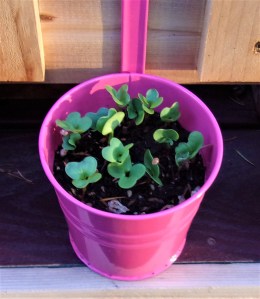
We’re talking about starting up the Herbs Workshop again, now that Anja and Loren have had their shots. Project Day will continue in the virtual realm, but folks are now welcome to bring projects to the shop 1-5pm on Sunday. 

5/31

All meetings are on hold for so long, although Project Day and the Monthly Potluck are being held in the Virtual Realm. Herbs Workshop (in person) will be starting up again during the month of June and folks are now welcome to bring projects to the shop to work on on Sundays 1-5pm! Potlucks will open back up in July. We’re going to keep right on with the virtual ones side-by-side with the actual. 

  • Herb Bunch – At Ancient Light, Saturdays, 11am-1pm
  • Sewing Time – At Ancient Light, Saturdays, 3-5pm
  • Project Day – At Ancient Light, Sundays, Noon to 6pm
  • Cheese and Wine happens irregularly, usually announced with little notice on our Facebook group.
  • Next Virtual Potluck – 4/18, 5/16, 6/20 
  • No Winter Feast in 2021. We’ll revisit for one in 2022 sometime in the next two months.

Here is the direct Portfolio link which has all the past Project Day reports and various projects, original here:  https://housecapuchin.wordpress.com/portfolio/  and new one here:  https://housecapuchin2.wordpress.com/portfolio/ and number three is here: https://housecapuchin3.wordpress.com/portfolio/

Countess Berengaria de Montfort of Carcassonne, OP, 26th Queen of An Tir, 5/27/21

It is with great sorrow that we mark the passing of Countess Berengaria de Montfort of Carcassonne, OP, 26th Queen of An Tir on 5/27. Her husband, Alail Horsefriend was at her side, as were her beloved cats. I snagged the picture above from the “Berengaria updates” group, since we don’t have one in the files. Bera was the queen who inspired, “Tablero de Beregaria”, a simplified Tablero game played with snack bags of M&Ms. We knew her as a “go-to” for information on feast cookery and a teacher of those skills, plus the “PLQ’s” required for peerage. …and the source for the quick mustard and pea soup that we have at feasts. 

Bera’s favorite pic of herself.

Annora de Montfort of Shadowood OL – “Bera was known in the cooking world for her research into period Goan cuisine. She was an enthusiastic feast cook and event steward for literally, decades and co-founder of House de Montfort. We are poorer for her loss.”

Sarah E Yancey Miller – “My friend and one of my Pelicans, Countess Berengaria de Montfort Carcassonne, passed away this morning. She was a force of nature, a whirlwind that you wanted to be caught up in. She encouraged me to try to serve in ways I had forgotten about with baking. She trusted me to represent her in a Rose Tourney. She had the best sense of humor and the biggest heart. I will miss her friendship and guidance.”

Cynthia Ley – An Tir weeps.

I snagged the picture above from the “Berengaria updates” group, since we don’t have one in the files.

May Crown Grand Ithra Final Court 2021 – Kingdom of AnTir, SCA – The court of Christian and Helene

Baron Sir Master Gerhard Kendal of Westmoreland – Lion of An Tir, KSCA, OL, GdS, JdL, GGS, HL, GoA, Founding Baron of Lions Gate, Baron of the Western Court, AoA, Augmentation of Arms, LoM, OSS, MTM, MdO, MI, LI, Havok, RF – November 12, 1936 – December 16, 2003, Anno Societatis XXXVIII – Husband of Amanda Kendal of Westmoreland, father of Melissa Kendal of Westmoreland and Andre Lessard.

Misc – Barbara Millard (Used with permission) – I shared this story in the SCA humour page… My first event…Clinton War 1995. I am wandering around kind of lost, and found out they were having an auction of items abandoned on site more than 2 years before. So I went to watch. This amazingly handsome man wearing the most amazing green velvet Elizabethan costume is trying to figure out what this THING is that he has to sell. So after a few minutes of dithering with many shouted suggestions from the audience, he decided it was a nightcap for a two headed giant. And Baron Gerhard Kendall wore a large woman’s bra on his head…and sold it for 20 bucks…and I fell in love with the SCA.

His AnTir CultureWiki page – http://antir.sca.wiki//index.php?title=Gerhard_Kendal_of_Westmoreland 

Simply because this was priceless (and I got permission to put it here) – Seamus O’Caellaigh – “OMG I don’t remember seeing this picture. Thanks Alexander for catching my Mano’d’oro excitement and horrified ‘OMG I was dressed like this’ 4 years ago! ❤ Egils ❤

Educational Events

  • A Master List for finding classes, webinars and other things – https://moas.eastkingdom.org/list-of-online-webinars/?fbclid=IwAR20OE8b6vvYKvmwrqwpule27szarZ7EPV-8R72F1eV2CxcdmOXQhZf9ayk
  • Jun 5 at 7 AM PDT – Jun 6 at 3 PM PDT – Sparkly and Shiny – https://www.facebook.com/events/467194268026910 
  • June 4-5 Known World Colegio de Iberia II, a Virtual Event, held on the first weekend of June 2021! – The focus of the virtual classes is on the lives and times of the people who dwelt in the lands which we now call Spain and Portugal. The symposium covers the period from the Celtiberians, Roman occupation, the Visigoths, the Muslim Umayyad Conquest, and includes the great Muslim city-states and the four Christian kingdoms (Kingdom of Castile y Leon, Kingdom of Aragon, Kingdom of Navarre and Kingdom of Portugal), ending with death of the Habsburg king Philip II. We also explore some of the worlds who experienced colonization or occupation by these kingdoms, as well as the relationships held by other countries. Website – We have a website which will contain information about classes and our teachers, as well as the schedule. This is getting updated all the time so visit regularly! It is located here: https://scaiberia.com/known-world-colegio-de-iberia-2021/ And you can contact us by email: scaiberia@westkingdom.org
  • Known World Science Symposium – JUN 25, 2021 AT 8 AM PDT – JUN 27, 2021 AT 11 AM PDT – Barony of Gryphon’s Lair – https://www.facebook.com/events/456485881710498/
 Other Good Stuff

Knowne Worlde Entertainment Guide – KWEG – Entertainment List – https://docs.google.com/spreadsheets/d/1xEZAwCca4IQham3TpxfWnonQscG668mmYgIMA18YZ-E/edit?fbclid=IwAR3UAXblIOd9u-N5IKtJNLzLFS52KPibZEAuwoDHjWzFoCtN_gDHETI9iCo&fbclid=IwAR3zne1DsdAtuMBtK0qmaRI5jf1HVc-rOFaokhJTLkYYGY49iRnFZBJbzjo#gid=0

Dance Vids – Gioliva Demo – Rachel Lorenz – The Creative Contessa dances Gioliva with her Condottiero. For those who wish to follow along, she calls the steps for the first time through.

Classes – 

SCA Iberia has 14 new classes from clothes to horses to food posted here: https://www.youtube.com/channel/UC2RmLGx_KiNzoFiM6GAu5Hg/videos

Weave Along: Elisenhof E-417 – Elewys of Finchingefeld – A lovely chain pattern from Northern Germany dated to the 8th-11th century. This pattern is a remastered one from Egon Hansen, from his Tablet Weaving book; and Guido Gehlhaar, a tablet weaver with a blog at steinmaus.de.


Early Week – from 17-20, almost nothing, then from 24-26, most everything was Herbs Workshop stuff. 

Schmaltz (duck fat) Left is from pan juice, right is from boiled carcass.

Cookery – for the week beginning 5/17 it was all eating up leftovers. During the week starting 5/24, Anja was working on marzipan for a class on 5/29, which got done with one student. We’ll be recording at a later date. We got the schmaltz labeled and put by. On Friday we were trying to start a soup, harvested thyme, celery (regrown) carrot and turnip tops and dandelions, but the soup didn’t actually get the rest (cabbage, parsnip, carrots, plus a “soup box”) until Saturday night and it cooked all night. Sunday morning some elderly turnip and onion got added and some spices. 

They didn’t research this well. There are far earlier references, but…. A Pirate Botanist Helped Bring Hot Chocolate to England – https://www.atlasobscura.com/articles/who-invented-hot-chocolate

A Tang dynasty monk and his secret candy recipe – https://www.medievalists.net/2020/05/a-tang-dynasty-monk-and-his-secret-candy-recipe/

Beet Greens from the Medieval Garden – Nick Saint-Erne – Easy way of cooking beet greens and Swiss chard grown in my Medieval garden. Fried in a cast iron pan with onions, mushrooms and salt and pepper. Easy to make and tasty vegetable side dish for your next Feast!


Sewing – Still doing mundane sewing, but also back to work on the needlebook. Coming up with an idea for a mask…. 

The Aalsum Hat – https://ava-s-corner.com/tutorials/the-aalsum-hat/?fbclid=IwAR1tmgymOKUECeZBMx2aiqLZn_4m-n6BVHKTogxkQhPXm_mUi1i0o-jP4l0

Anatomy of a 16th Century Lady’s Clothes | Clothing Identification – Lynne Fairchild – What do you call that 16th century clothing item, such as a farthingale or kirtle? From cauls to partlets and more, this video covers the names (with examples) of different parts of a lady’s clothing ensemble from the Tudor and Elizabethan periods. The main focus is of northern European clothing (English, French, and Dutch). What’s the difference between an attifet and a French hood? How about the difference between a Spanish farthingale and a French farthingale? Please watch and find out.


Sundials, etc. – Board Games & Card Games Played in the 16th CenturyLynne Fairchild – Learn about what board games and card games were played in the Renaissance, specifically around the 16th century during the Tudor era, such as chess and alquerque. Plus, view historic examples of game boards in paintings and museums!

Herb Bunch – During the week of 5/17 and lot of moving, tending and planting happened. Lots of making starts and planting on 5/25, which is this picture set. Talked to Eleanor de Bolton and figured out that the Purple Ruffles Basil that I keep referring to is an oregano. I apparently mis-labeled it right from the start! Also, so that folks know…. we haven’t had a garden for several years. After we moved to Jeanne’s everything had to be tucked in between her plants and then she died and we had nowhere. We’re finally back to having a (containers only) garden and I’m going bonkers with planting and making starts. 

Found a book of cookery and herbs – The Garden of Eden, or, An accurate description of all flowers and fruits now growing in England with particular rules how to advance their nature and growth, as well in seeds and herbs, as the secret ordering of trees and plants / by that learned and great observer, Sir Hugh Plat.
Plat, Hugh, Sir, 1552-1611?, Bellingham, Charles.
London: Printed for William Leake …, 1654. – http://name.umdl.umich.edu/A54994.0001.001

Full Sun area

Porch plants

Table – Many of these will go back to the shop, some for sale. 

Vegetables and herbs in the medium-sun area

Shop plants on 5/30 

Friends

Project Day – On 5/23 Anja was so tied up in her class that she never got online! On 5/30, nobody else showed up during the time. 

On 5/23 Michelle Crocker posted these pix, looking for input. It’s planned to be a Norse Apron Dress.

Recipes

Volker Bach posted in Medieval and Renaiisance Cookery (edited for length & spacing) – Cashew marzipan – Looks like 1722 for the earliest edition. https://en.wikipedia.org/wiki/Jean-Baptiste_Labat

In today’s contribution to the “It’s dangerous to read historical sources when you are bored” category: Massepain du Cacao & de noix d’Acajou selon Père Labat

Jean Baptiste Labat writes in his ‘Nouvelle Voyage’ (vol.6 p.95) ” I have also eaten marzipans made of cocoa and cashew nuts in place of ordinary almonds; aside from the colour, which was brown, they were of very good flavour. The cashew nut is much better than almonds when one makes marzipan paste; It has more flavour, more lightness and delicacy. These marzipans could be made in Europe as well as in the Isles, because cashew nuts can be transported and preserved through a large part of the year without going bad.”

I couldn’t just leave that standing there, could I? The ‘syrup’ version is pliable enough to be moulded, but holds a shape. The ‘dry’ version probably will as well if I process it for long enough. I gave up too early on that. Maybe it would also look good as little bites, with cashew nuts or candied tropical flowers on top for decoration.

Miscellaneous pix

Music – Real Medieval Norse Song (video with musical notation) – Musica Medievale – Ensemble: Mare Balticum – Album: Ice & Longboats  – Video: Codex Runicus, fol.100 (XIV cent.) http://www.facebook.com/musicamedievale 

In this video you can listen to five versions of “Drømde mik en drøm i nat is”, the oldest known secular song in the Nordic countries written around 1300. It is written in Old East Norse and is included in Codex Runicus, a transcript of Scanian Law where it forms a final note. Like the law itself, it is written in runes, and the tune is written on two simple staves in an early form of musical notation.

The text of the song is: Drømde mik en drøm i nat um silki ok ærlik pæl There are several interpretations of the text, as the meaning of the words silki and ærlik pæl is obscure. Traditionally, most interpretations have been variants on these readings: (I dreamt a dream last night of silk and fine fur I dreamt a dream last night of silk and expensive cloth This interpretation takes the 13th-century word silki to mean silk. It may be compared with the medieval song “Palle Boosons visa” which also speaks of “silk and fine fur”: “Han kläder sig i silke, så och i ädel päll…”) This interpretation has been called into question, because it fails to take account of the context of the document.

Codex Runicus is a lawbook that ends with a text of marginal notes. Since the song appears to be written in the same hand that completed the main body of the manuscript, it would seem more appropriate if the lyrics of the song were connected with the content of the document. One would expect a text concerning law and order rather than luxury.

However, there are many examples of similar insertions of unrelated text into medieval European documents, a particularly notable one being the Old Irish poem Pangur Bán. Alternative interpretations that better fit with this understanding of the song’s context are:

“I dreamt a dream last night of justice and fair play
I dreamt a dream last night of equality and honest measure”

The word silki could be seen as related to the old Nordic word slik meaning equality or the same as. Likewise, Ærlik pæl could be “honest measure”, since pæl and pel, are old words for “measure”, cognate with German Pegel.[5] Ærlik is used meaning “honest” (cf. “ærlig” in Modern Danish) on the very first page of the Codex Runicus. (Wikipedia)

Real Ancient Music of ScandinaviaMusica Medievale – Ensemble: Ake & Jens Egevad, Ensemble Mare Balticum – Album: Ancient Music of Scandinavia – Ice & Longboats  – ideo: Codex Runicus (XIV cent.) & GKS 1005 (XIV cent.) http://www.facebook.com/musicamedievale

This work is a collaboration between the University of Huddersfield, Delphian Records and EMAP (European Music Archaeologic Project). The information contained in the booklet is extremely detailed: from the musical history of Scandinavia through the centuries to the explanation of the musical instruments used for this recording, all reconstructed on the basis of archaeological sources. For space problems I limit myself to reporting only the first part of the booklet, the link to purchase the disc is at the bottom of the information. Scandinavia’s archaeologically known prehistory encompasses about 12,000 years or some 360 generations. Until about 13,000 years BC, Scandinavia (which in this context means the region covered by the present-day Nordic countries Sweden, Denmark, Norway and Finland) was an unpopulated area covered by the glaciers of the last Ice Age. The ice cap then began to retreat, and man migrated into the area as soon as he could maintain himself there. The Viking period, most commonly dated to around 800-1050AD (though some definitions prefer the more extended period from 750 to 1103AD), is the last period of this prehistory, and the first from which we have material traces of music-making. Vikings are typically conceived of as shipbuilders, mariners, explorers, traders, warriors, raiders and plunderers. However, they were primarily farmers, and their economy was based on agriculture and animal husbandry. The Norsemen who went off to raid or trade travelled worldwide, as we know. Their travels were facilitated by their advanced seafaring skills and characteristic longboats. The boundary between prehistoric and medieval times is naturally flexible. Standard archaeological practice places it at around 1050AD for southern Scandinavia, and for the more northern parts even later. The continental Middle Ages, by comparison are usually reckoned from 476AD – about 600 years earlier than in Scandinavia. These late Iron Age centuries are sometimes also called Scandinavia’s ‘pre-Middle Ages’. This period saw the gradual creation of the preconditions for true states, the rise of urbanisation, the introduction of Christianity and the use of writing, all in embryonic forms that heralded those we know from Scandinavia’s written medieval history. If one wants to move beyond archaeological traces — preserved musical instruments, sound tools, or pictures of them — to know anything more precise about what was played or sung, then this is the period from which we first have written music notation to inform our picture of Scandinavia’s soundscape. And so the second story told by this recording is that of the early centuries of Christianity in Scandinavia and in its musical life.

  • 1 Drømde mik en drøm i nat (version for medieval bone recorder) – Codex Runicus, ca. 1300
  • 2 Signals to the Aesir Gods
  • 3 In the Village: Musical Pastimes
  • 4 In the Village II: Evening
  • 5 Mith hierthæ brendher (version for voice) – Codex AM 76, ca. 1400
  • 6 Lux illuxit – Sequentia: Eystein Erlendsson, ca. 1170
  • 7 Scribere proposui – Cantio: Piae Cantiones, ca. 1582
  • 8 Drømde mik en drøm i nat (version for bells) – Codex Runicus, ca. 1300
  • 9 Ramus virens olivarum – Piae Cantiones, ca. 1582
  • 10 Drømde mik en drøm i nat (version for voice) – Codex Runicus, ca. 1300
  • 11 Drømde mik en drøm i nat (version for medieval harp) – Codex Runicus, ca. 1300
  • 12 Drømde mik en drøm i nat (version for symphonia) – Codex Runicus, ca. 1300
  • 13 Nobis est natus hodie – Codex Speciálník, ca. 1500
  • 14 Ferro transecuit – Estampie: Piae Cantiones, ca. 1582
  • 15 Pax patrie – Estampie: Decus Ecclesie, ca. 1400
  • 16 Ad cantus laetitiae – Rondellus: ca. 1400
  • 17 Mith hierthæ brendher (version for shawm, symphonia and pellet bells) – Codex AM 76, ca. 1400
  • 18 Melody from Hultebro
  • 19 The Warrior with his Lyre
  • 20 Gethornslåt
  • 21 Grímur á Miðalnesi
  • 22 Jesus Christus nostra salus – Jan of Jenštejn, ca. 1410
  • 23 Nobilis humilis – ca. 1300
  • 24 Gaudet mater ecclesia – Second Vatican Council
  • 25 Hostia grata Deo – Antiphona: ca. 1400
  • 26 Ferro transecuit – Antiphona: Piae Cantiones, ca. 1582
  • 27 Gaudet mater ecclesia – Improvisation: Second Vatican Council
  • 28 Sancta Anna, moder Christ – ca. 1200
  • 29 Diem festum veneremur – Sequentia

Links

Prince Hal’s Head-Wound: Cause and Effect – https://www.medievalists.net/2013/05/prince-hals-head-wound-cause-and-effect/
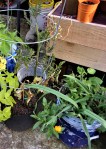
Taking Care of Babies in the Middle Ages https://www.medievalists.net/2020/05/babies-middle-ages/

Video & Podcast Links

[Podcast] The Shocking Arrest of Anne Boleyn: From Greenwich to the Tower, with co-host, James Peacock – The Tudor Travel Guide – 

Funnies 

divider black grey greek key

  • ASXLVII = 24
  • ASXLVIII = 88
  • ASXLIX = 794
  • ASL = 2138
  • ASLI = 731
  • ASLII = 304
  • ASLIII = 146
  • ASLIV & ASLV = 230
  • ASLVI = 0 plus 4 puppets, 4 powder fort, 8 cheese spice and 9 powder douce packets, 1 kiss-lock pouch, 9 tiny bobs, 7 pincushions, 3 pins, 3 snip case w/snips, lucet cords, 25 pouches for block-printing, 2 medium pouch, 4 small pouches, 12 bookmarkers, 14 unfinished pincushions, 1 sewing kit (except for bone needle), varnished stuff (124), 2 emery strawberries, 1 woolen spool-knit cord, 48 key bottle openers

Total as a Household = 4061 handed off

moving writing pen motif

In ministerio autem Somnium! Anja, graeca doctrina servus to House Capuchin
Page Created 5/18/21 & published 5/31/21 (C)M. Bartlett
Last updated 5/31/21

Activities through 5-23-21

This week’s report is going to be short. Your scribe was frantically busy all week, mostly with mundane stuff, but classes two weeks in a row is proving to be “interesting”. Then I got my COVID shot on Friday and since then, although I managed to teach the class and sound ok, I’ve been fighting brain-fog, etc. So… this is just the section that I wrote early last week and I’ll do both week’s stuff in next week’s report. Sorry!

Herbs – Anja’s herb and vegetable garden is getting worked on heavily. It’s still a container garden, but it’s branching out to more vegetables than we had sunny spots to grow. There are plans for this coming week, to lift some of the plants up to where they’re more reachable. 

Largesse, gifts, auctions, etc…. 

  • ASXLVII = 24
  • ASXLVIII = 88
  • ASXLIX = 794
  • ASL = 2138
  • ASLI = 731
  • ASLII = 304
  • ASLIII = 146
  • ASLIV & ASLV = 230
  • ASLVI = 0 plus 4 puppets, 4 powder fort, 8 cheese spice and 9 powder douce packets, 1 kiss-lock pouch, 9 tiny bobs, 7 pincushions, 3 pins, 3 snip case w/snips, lucet cords, 25 pouches for block-printing, 1 medium pouch, 4 small pouches, 12 bookmarkers, 14 unfinished pincushions, 1 sewing kit (except for bone needle), varnished stuff (124), 2 emery strawberries, 1 woolen spool-knit cord, 48 key bottle openers

Total as a Household = 4061 handed off

moving writing pen motif

In ministerio autem Somnium! Anja, graeca doctrina servus to House Capuchin
Page Created 5/24/21 & published 5/26/21 (C)M. Bartlett
Last updated 5/26/21

Blog at WordPress.com.

Up ↑