An historical recreation household centered on the Central Oregon Coast (households are not official groups of the Society for Creative Anachronism and do not represent the views or policies of SCA, Inc. )
Why does life have to get in the way *so* badly? Almost nothing happened this week of what had been planned. Some cooking did during the week, but it’s almost all the tomatoes! We kinda felt like St. Christopher in the gif!
We heard from Brandon and Amor this week, just catching us up on life. …and Amy DeWilde says, “I am knitting a scarf at the moment.”
…and we have a crass commercial plug for a company that we were in no way connected with, except they make *awesome* pewter reproductions, including purse frames and pilgrim badges and yes, there’s an order in. Go check ’em out! https://www.billyandcharlie.com/
This week is going to be all about the potluck and cooking, even if we still have 10 pounds of tomatoes to go…..
All meetings are on hold for the moment, although Project Day and the Monthly Potluck are being held in the Virtual Realm. We’re also doing mini-potlucks, just Anja & Loren and one other “pod” at a time. Let us know if you’re interested!
Herb Bunch – At Ancient Light, Saturdays, 11am-1pm
Sewing Time – At Ancient Light, Saturdays, 3-5pm
Project Day – At Ancient Light, Sundays, Noon to 6pm
Cheese and Wine happens irregularly, usually announced with little notice on our Facebook group.
Next Virtual Potluck – 10/18
Next Winter Feast tentative Date is 2/15/21, Probably not being held….
Ten Minute English and British History #11 – King John and the Magna Carta
How to make an Early Medieval Apron Dress (Smokkr/ Hangerock Viking DIY)
The Easy Way to make Char Cloth
Early Week – Not much going….
Cookery – Pease pottage on Sunday. Earlier in the week was dealing with the tomatoes. …and also roasted chicken. Note – Tomatoes are OoP as far as European cookery goes. They did show up in very late period, but recipes are hard to come by until th 17th century. Nonetheless, that’s part of what we were working on and Anja has been asking around, trying to figure out what foods were the equivalent of green tomatoes in Europe. The chickens were roasted, both for mundane suppers and for ingredients for next week’s potluck.
Ready to roast – stuffed with onions, spices and butter
Roasted
Cutting tomatos
Onions and tomatoes
Salt and let sit for several hours
Starting to cook – SPices and vinegar have been added
COoked and jarred – These weren’t actually sealed since they’re going to be in the fridge.
Silphium: The Lost Aphrodisiac of Ancient Rome
Herencia morisca
A Buttered Loafe | 16th Century Tudor Bread Recipe | SCA Baking
16th Century Fine Bread Recipe | SCA Baking
The Diet of the Roman Legionaries: Buccellatum, Lardum, and Posca
Tudor Pears in Conserve
Sewing – Embroidery pattern creation
3 Basic Hand Stitches for Historical Sewing
Making in hand net
Herb Bunch – Just tending.
Project Day – Anja worked on embroidery patterns and cookery. Loren was asleep other than making bread.
Music – La Fête de L’ Âne – Traditions du Moyen Age
Ensemble: Cleméncic Consort Album: La Fête de L’ Âne http://www.facebook.com/musicamedievale • Introitus 1 Hac In Anni Janua 2 Lux Hodie 3 Orientis Partibus 4 Hec Est Clara Dies 5 Verbum Partis 6 Exultet Hec Concio Ceremonie De La Remise De La Crosse Au Maitre De La Fête 7 Ave Virgo Spetiosa 8 Deposuit Potentes 9 Gregis Pastor 10 En Mai La Messe Des Anes Et Des Buveurs 11 Kyrie Asini – Litanie 12 Graduale Bachi 13 Vinum Bonum 14 Curritur Ad Vocem 15 Dialogus 16 Veritas Equitas 17 Lux Optata Claruit 18 Kalendas Ianuarias 19 Orientis Partibus II 20 Oratio 21 Novus Annus 22 Hunc Diem – Ite Missa Est 23 Orientis Partibus II Procession 24 Buccinate 25 Habemus Episcopum 26 Lux Omni Festa 27 Cavalcade 28 Omnia Tempus Habent
In the past centuries the Unicorn was not only a symbol or a legendary animal, it lived in the common conception, and it was one of the mysterious inhabitants on the borders of the known lands. Before the spreading of christian religion the unicorn was considered a model of strength and virility, then it assumed, in medieval era, a more mistical significance. Its coat was white and pure as the Moon, immaculate, its long and tapered horn instead gave it a direct contact with the divine dimension and also immunity to every poison. Its strength was unparallelled even if its body was small, humility symbol. Valiant knights or entire armies were no use to catch it, since they couldn’t even be able to see the untamed animal. A dame only, noble in spirit and body, could had draw near to it and might had been able to tame it. The unicorn became in fact the epitome for respect, pureness, strength and freedom. Adopted in countless heraldic coats of arms of families or entire countries it became a role model of inspiration. Its death occured when human beings stopped seeking these ideals, feeling as they had reached a point of supremacy over everything, placing themselves even above Nature itself. Inside “La Morte dell’Unicorno” we sing about historical facts, ancient dances, popular legends and medieval songs in which were contained extremely current problems, present still today, but which were faced with a different spirit, resolutive, alive and full of imagination, son of a flourishing historical period in which there was no fear of risking everything for the ideas, the only time in which fantasy and reality could coexist giving life to unrepeatable visual and musical works in History that we still admire and often struggle to understand. A time where fantastic creatures like the Unicorn could still live.
Video Links
The Trans spectrum and the SCA
The Day The Universe Changed – Infinitely Reasonable: Science Revises the Heavens
The Search for Alfred The Great | BBC Documentary
Lucy Worsley’s 12 Days of Tudor Christmas
The launching of Draken Harald Hårfagre 13 of June 2012
ASLIV – 227 (included 3 balls) plus 4 puppets, 3 hippocras mix, 4 powder fort, 8 cheese spice and 9 powder douce packets, 1 kiss-lock pouch, 9 tiny bobs, 7 pincushions, 3 pins, 3 snip case w/snips, lucet cords, 25 pouches for block-printing, 1 medium pouch, 4 small pouches, 12 bookmarkers, 14 unfinished pincushions, 1 sewing kit (except for bone needle), varnished stuff (124), 2 emery strawberries, 1 woolen spool-knit cord
Total as a Household = 4058 handed off
In ministerio autem Somnium! Anja, graeca doctrina servus to House Capuchin Page Created 11/2/20 & published 11/9/20 (C)M. Bartlett Last updated 11/9/20
Life took over this week, and a holiday. We did find a lot of interesting links and there are classes and cookery vids, too. One on the new House members, Rosamonde, has some interesting nål below, and another of the far-away members got hold of us to say she’s setting up a new business.
Amor, Sash and Brandon checked in this week. No House stuff, just checking in.
Anja figured out the camera problem. A button got pushed at some point that set it to “email size”, so the pictures were coming out tiny.
Loren and Anja are starting a lead-up to the potluck, although Anja is up to her elbows in green tomatoes, at the moment. The pease pottage below was the first hurrah. 🙂
All meetings are on hold for the moment, although Project Day and the Monthly Potluck are being held in the Virtual Realm. We’re also doing mini-potlucks, just Anja & Loren and one other “pod” at a time. Let us know if you’re interested!
Herb Bunch – At Ancient Light, Saturdays, 11am-1pm
Sewing Time – At Ancient Light, Saturdays, 3-5pm
Project Day – At Ancient Light, Sundays, Noon to 6pm
Cheese and Wine happens irregularly, usually announced with little notice on our Facebook group.
Next Virtual Potluck – 10/18
Next Winter Feast tentative Date is 2/15/21, Probably not being held….
Black Nag Step by Step Tutorial | 17th Century English Country Dancing
Classes –
The History of Cheesemaking with Duquessa Juana Isabella de Montoya y Ramirez
The Medieval Penanular broach
How to make a leather Gokstad Bag (Viking)
Early Week – Not much happening.
Cookery – It’s coming up on the holidays and Anja started looking at candied nuts and hunting around for some recipes. The most bizzare that came up is a recipe for Pynade that appears to be a chicken meat brittle… There’s another that is almost the modern recipe that she uses, but subbing crystalized honey for sugar and maple syrup. There’s another pine nut one that sounds delicious from the spicing. I dropped a few of these recipes in below.
Late in the week Anja ended up with about 20 pounds of green tomatoes and started with a green tomato soup. Wondering what folks in period had for the “use it or lose it” dishes from harvest?
Pease pottage
Yups, dems split peas in there
Finished pottage. It was a bit thin, so you see some rice in there.
1/2 of the green tomatoes.
A Brief Fascinating History of Cinnamon | Cassia vs. Ceylon
The History of Sugar Part 2 | Victoria Punch
Soul Cakes & Trick-or-Treating – (Late period “cake” recipe)
Sewing – Still working on pouches, trying to get the machine sewing part done. Table runner got pecked at and finally finished on Sunday. Balls got made for kiddos for Halloween.
Finished!Runner on a table
Herb Bunch – Plants before sunset. Angelica and bay (both with garlics) getting dirt and water. Fig, calendula and sage in the other pic with crocosmia and succulents in the box on the right. Some work got done on plants, mostly watering, but the last shallot starts went in with the fern and the fennel.
Angelica, Bay and garlics
Fig, Calendula, Sage, Crocosmia and succulents
Project Day – Started with working on photos and then a surprise! Seamus, Snorri, Jerrick and Alexander stopped by for a visit! A pease pottage got set up for later. (Pix in cookery, recipe below)
Rosamonde Sherwood It’s odd , the driftwood looks rough , but it’s already sanded very smooth, it will be interesting to see the grain after I stain them.
Rosamonde Sherwood 2out of a stick husband brought from the beach , 1from a chunk of cedar shingle… just playing with what I have on hand. Our neighbor just split some oak… I’m going to ask him for a few chunks and I’ll probably trim the myrtle tree soon & dry whatever I cut for use later.
Rosamonde SherwoodA spray on sealer for something this small, I’ll hang from string & spray a few coats. The stain I use is water based , must be sealed. If I had really nice wood I’d try oiling.”
…so we’re mailing her a tin of wood butter to try….
To preserve Orenges, Lemmons, and Pomecitrons. First shave your Orenges finely, and put them into water two dayes and two nights, changing your water three times a day then perboyle them in three severall waters, then take so much water as you think convenient for the quantity of your orenges then put in for every pound of Orenges, one pound & a half of sugar into the water, and put in two whites of Egs & beat them altogither, then set them on the fire in a brasse vessel, and when they boile, scum them very clean, and cleane them through a Jellye bag then set it on the fire & put in the orenges. Use walnuts in like manner and use Lemmons & Pomecitrons in like sort, but they must lye in water but one night. A Book of Cookery, 1591
This preserve is nice spread on cheese or even waffles. Once opened keep in fridge, it goes badspoils quickly once you open it.
Ingredients
* 1 cup of shelled walnuts (whole or pieces) * 2 cups of sugar * 2 egg whites
Directions
1) Soak the walnuts in water for one day, changing water frequently.
2) Strain walnuts and then roughly dry them off with a towel to remove skins.
3) Whisk together 2 cups of water, 2 egg whites, and 2 cups of sugar in a sauce pan and bring to boil, stirring constantly.
4) Pour mixture through wire strainer to remove egg whites.
5) Add walnuts and bring mixture to boil again, stirring frequently.
6) Boil fruit mixture for 5 minutes.
7) Store Pour nuts and syrup mixture into hot, sterile jars, seal and store in a cool, dry place.
This is an excerpt from An Anonymous Tuscan Cookery Book – (Italy, ~1400 – Ariane Helou, trans.) – The original source can be found at Ariane Helou’s website
Honey boiled with walnuts, called nucato. Take boiled and skimmed honey, with walnuts chopped slightly and spices, cooked together; dip your hands in water and spread it out; let it cool and serve it. And you can use almonds and hazelnuts in place of walnuts.
From the Medievalcookery.com site: Sugared Almonds – (E.A.Fleming) Making sugar covered almonds isn’t really difficult, but it does take a surprising amount of time – plan on spending about two hours standing over the stove. Rumpolt uses this same recipe to candy other types of nuts, seeds, and dried fruits.
1 pound almonds, blanched and peeled
2 cups sugar
1 cup water
1 Tbsp. rose water
dash cinnamon
Mix sugar and water in a saucepan and bring to a gentle boil. Simmer until the syrup reaches 225°F, then add the rose water and set heat to low. Then put the almonds into a large pan over low heat. Add the syrup to the almonds a couple of tablespoons at a time, stirring them constantly and allowing them to dry out before adding more. As things progress then shaking the pan may work better than stirring it. When the almonds are completely coated sprinkle with cinnamon and allow to cool.
Source [Ein new Kochbuch, M. Rumpolt, M. Grasse (trans.)]: Almonds coated. […] Of assorted roots that have a welltasting scent/smell. If you wish such comfits to coat with sugar so take a clean copper vessel that has two handholds hang it in the height on a rope at both handholds set a glow kettle with glowing coals thereunder put the comfits into the vessel and make it fine warm pour nice clarified (clean) sugar thereto and stir it often therewith till the confits the sugar takes to it so it becomes nice white and dry. Also coats one assorted grains with sugar and assorted spices so it becomes good and also welltasting.
Mandeln vberzogen. […] Von allerley Wurtzeln die ein wolgeschmackten geruch haben. Wenn du ein solches Confect wilt vberziehn mit Zucker so nim[m] ein sauber töepffern Becken das zwo Handhaben hat hengs in die höeh an ein Strick zu beyden Handhaben setz ein glut Kessel mit glüenden Kohlen darvnter thu das Confect in das Becken vnnd machs fein warm geusz schöen geläeuterten Zucker darzu vnd rüer es offt darmit bisz das Confect den Zucker an sich nimpt so wirt es schöen weisz vnd trucken. Also vberzeucht man allerley Korn mit Zucker vnd allerley Gewüertz so wirt es gut vnnd auch wolgeschmack.
Pynade: Forme of Cury – XXXII. For to Make a Pynade or Pyvade – Source [Two Fifteenth-Century Cookery-Books, T. Austin (ed.)]: Pynade. Take Hony & gode pouder Gyngere, & Galyngale, & Canelle, Pouder pepir, & graynys of parys, & boyle y-fere; than take kyrnelys of Pynotys & caste ther-to; & take chyconys y-sothe, & hew hem in grece, & caste ther-to, & lat sethe y-fere; & then lat droppe ther-of on a knyf; & if it cleuyth & wexyth hard, it ys y-now; & then putte it on a chargere tyl it be cold, & mace lechys, & serue with other metys; & if thou wolt make it in spycery, then putte non chykonys ther-to.
Take honey and good powdered ginger and galingal and cinnamon, ground pepper and grains of paradise, and boil on the fire. Then add pine-nut kernels. Take boiled chicken and chop it up in the grease and add and let cook. Drop a bit on a cold knife and if it clings and gets hard that’s enough. Put it on a plate until it’s cold and [something] and serve with other meats. If you want it spicey, then don’t add chicken. (not too sure about that last bit…..)
Finished pottage. It was a bit thin, so you see some rice in there.
(Anja’s Pease Pottage) – This is the ultimate easy cookery. Chop/dump/leave it to cook…. In period the full crock would have been put into the fireplace, closer or farther from the fire, not *in* the fire, and probably not in a cauldron over the fire, either, since it will burn once it’s full cooked. It can be served hot or cold. If you like a little more substance, stop it cooking at approximately 2 1/2 hours on high or 6 hours on low, or if you like it mushier, 4 on high or 8 plus on low. If you’re planning to serve it cold, use the smaller amount of liquid and once it’s cooked, put it into a container that you can dump, easily, as it will take the shape of the container and can be sliced. Once sliced, it can actually be fried to warm it, on a little butter or in a pan greased with a slice of bacon. You see the “grease with a bacon rind” in many methods…. This is fun one to cook by an open fire during an event and then serve the cold part fried for breakfast. My kids used to complain that I never did this at home. 🙂
2 cups green split peas (in period these would have been field peas…)
6-8 cups water (or broth)
1 medium onion
3 cups frozen carrots (ended up with mixed peas and carrots by mistake)
1 pound bacon ends
2 TBSP ground mustard
2 TBSP horseradish
2 TBSP caraway
2 TBSP salt
1 good shake of celery salt
Method
Put everything in the crockpot, chopping onion, bacon and whatever else needs it as you go.
Give it about 20 minutes before you turn it on, stirring well, so that the frozen stuff starts to thaw. You don’t need a cracked crock….
Put on high, if you’re going to be there to watch it. 2 1/2 to 4 hours, stirring every 1/2 hour. Put on low for overnight or “I’m at work” and stir well before serving.
Knowledge of The Sea Stallion from Glendalough: How to sew a ship
The Viking ship is built like a strong, flexible shell that is shored up inside lengthwise and transversely. The quality of the strakes – the planks – in the bottom and sides of the ship is therefore crucial for the good qualities of the ship. In THE SEA STALLION the planks are made of cloven oak and they are, as in all Viking ships, assembled so that the edges of the planks overlap each other – they are clinker built – and are held together with iron nails. The spaces between the planks are caulked with sheep’s-wool and tar.
In some parts of Scandinavia the Viking-Age clinker-building technique has lived on to the present day, and the technique may go as far back as to the Bronze Age. In the oldest vessels, from the centuries before and around the Birth of Christ, the planks were sewn or lashed together, while iron nails make their appearance in the 2nd century after Christ. The memory of the sewn ships lived on, however. In Viking-Age scaldic poetry the sides of the ships, or even the whole ship, can be referred to as súá, “sewn”, and the rows of iron nails on the sides of the ships are referred to by the term saum “seam”.
Most of the planks on the sides of the ship are radially split. This means that they are taken radially out of a large oak trunk, rather in the way one slices a cake or pie. In this way the cleaving takes place along the oaktree’s silver-grain, the large cells that extend from the bark of the tree in towards its center. Planks made in this way are very strong, but can only be made from very large and well-formed trunks. To make planks that are 33 cm broad you need a trunk that is 1 m in diameter. Such a trunk can give 16-24 strakes. For THE SEA STALLION we used 14 trunks of this thickness, each of them 8-10 m long.
After cleaving, the working up of the planks was done with axes. For these we used copies of finds from the Viking Age. Heavier axes with comparatively short edges were used for roughly hewing the material for the planks. For smoothing the surfaces use was made of a T-shaped broad axe – an axe with a long edge that has only been ground from the one side – as known from the late Viking Age in both Denmark and the British Isles. We have used, among others, a copy of an axe found in Over Hornbæk in Denmark. It is very light and well suited for working up the radially split planks. It is also the T-shaped broad axe that boat builders can be seen using in the Bayeux Tapestry, and in eleventh-century illustrations of the building of Noah’s Ark.
(Excerpt from the book: ‘Welcome aboard! The Sea Stallion from Glendalough A Viking Longship Recreated’)
Draken Harald Hårfagre – The construction of a Viking Dragon Ship
Lanterns and Lighting in the 18th Century – Live in the Nutmeg Tavern! (Some of this applies to period)
Funnies
Life took over this week, and a holiday. We did find a lot of interesting links and there are classes and cookery vids, too. One on the new House members, Rosamonde, has some interesting nål below, and another of the far-away members got hold of us to say she’s setting up a new business.
Amor, Sash and Brandon checked in this week. No House stuff, just checking in.
Anja figured out the camera problem. A button got pushed at some point that set it to “email size”, so the pictures were coming out tiny.
Loren and Anja are starting a lead-up to the potluck, although Anja is up to her elbows in green tomatoes, at the moment. The pease pottage below was the first hurrah. 🙂
All meetings are on hold for the moment, although Project Day and the Monthly Potluck are being held in the Virtual Realm. We’re also doing mini-potlucks, just Anja & Loren and one other “pod” at a time. Let us know if you’re interested!
Herb Bunch – At Ancient Light, Saturdays, 11am-1pm
Sewing Time – At Ancient Light, Saturdays, 3-5pm
Project Day – At Ancient Light, Sundays, Noon to 6pm
Cheese and Wine happens irregularly, usually announced with little notice on our Facebook group.
Next Virtual Potluck – 10/18
Next Winter Feast tentative Date is 2/15/21, Probably not being held….
Black Nag Step by Step Tutorial | 17th Century English Country Dancing
Classes –
The History of Cheesemaking with Duquessa Juana Isabella de Montoya y Ramirez
The Medieval Penanular broach
How to make a leather Gokstad Bag (Viking)
Early Week – Not much happening.
Cookery – It’s coming up on the holidays and Anja started looking at candied nuts and hunting around for some recipes. The most bizzare that came up is a recipe for Pynade that appears to be a chicken meat brittle… There’s another that is almost the modern recipe that she uses, but subbing crystalized honey for sugar and maple syrup. There’s another pine nut one that sounds delicious from the spicing. I dropped a few of these recipes in below.
Late in the week Anja ended up with about 20 pounds of green tomatoes and started with a green tomato soup. Wondering what folks in period had for the “use it or lose it” dishes from harvest?
Pease pottage
Yups, dems split peas in there
Finished pottage. It was a bit thin, so you see some rice in there.
1/2 of the green tomatoes.
A Brief Fascinating History of Cinnamon | Cassia vs. Ceylon
The History of Sugar Part 2 | Victoria Punch
Soul Cakes & Trick-or-Treating – (Late period “cake” recipe)
Sewing – Still working on pouches, trying to get the machine sewing part done. Table runner got pecked at and finally finished on Sunday. Balls got made for kiddos for Halloween.
Finished!Runner on a table
Herb Bunch – Plants before sunset. Angelica and bay (both with garlics) getting dirt and water. Fig, calendula and sage in the other pic with crocosmia and succulents in the box on the right. Some work got done on plants, mostly watering, but the last shallots went in with the fern and the fennel.
Angelica, Bay and garlics
Fig, Calendula, Sage, Crocosmia and succulents
Project Day – Started with working on photos and then a surprise! Seamus, Snorri, Jerrick and Alexander stopped by for a visit! A pease pottage got set up for later. (Pix in cookery, recipe below)
Rosamonde Sherwood It’s odd , the driftwood looks rough , but it’s already sanded very smooth, it will be interesting to see the grain after I stain them.
Rosamonde Sherwood 2out of a stick husband brought from the beach , 1from a chunk of cedar shingle… just playing with what I have on hand. Our neighbor just split some oak… I’m going to ask him for a few chunks and I’ll probably trim the myrtle tree soon & dry whatever I cut for use later.
Rosamonde SherwoodA spray on sealer for something this small, I’ll hang from string & spray a few coats. The stain I use is water based , must be sealed. If I had really nice wood I’d try oiling.”
…so we’re mailing her a tin of wood butter to try….
To preserve Orenges, Lemmons, and Pomecitrons. First shave your Orenges finely, and put them into water two dayes and two nights, changing your water three times a day then perboyle them in three severall waters, then take so much water as you think convenient for the quantity of your orenges then put in for every pound of Orenges, one pound & a half of sugar into the water, and put in two whites of Egs & beat them altogither, then set them on the fire in a brasse vessel, and when they boile, scum them very clean, and cleane them through a Jellye bag then set it on the fire & put in the orenges. Use walnuts in like manner and use Lemmons & Pomecitrons in like sort, but they must lye in water but one night. A Book of Cookery, 1591
This preserve is nice spread on cheese or even waffles. Once opened keep in fridge, it goes badspoils quickly once you open it.
Ingredients
* 1 cup of shelled walnuts (whole or pieces) * 2 cups of sugar * 2 egg whites
Directions
1) Soak the walnuts in water for one day, changing water frequently.
2) Strain walnuts and then roughly dry them off with a towel to remove skins.
3) Whisk together 2 cups of water, 2 egg whites, and 2 cups of sugar in a sauce pan and bring to boil, stirring constantly.
4) Pour mixture through wire strainer to remove egg whites.
5) Add walnuts and bring mixture to boil again, stirring frequently.
6) Boil fruit mixture for 5 minutes.
7) Store Pour nuts and syrup mixture into hot, sterile jars, seal and store in a cool, dry place.
This is an excerpt from An Anonymous Tuscan Cookery Book – (Italy, ~1400 – Ariane Helou, trans.) – The original source can be found at Ariane Helou’s website
Honey boiled with walnuts, called nucato. Take boiled and skimmed honey, with walnuts chopped slightly and spices, cooked together; dip your hands in water and spread it out; let it cool and serve it. And you can use almonds and hazelnuts in place of walnuts.
From the Medievalcookery.com site: Sugared Almonds – (E.A.Fleming) Making sugar covered almonds isn’t really difficult, but it does take a surprising amount of time – plan on spending about two hours standing over the stove. Rumpolt uses this same recipe to candy other types of nuts, seeds, and dried fruits.
1 pound almonds, blanched and peeled
2 cups sugar
1 cup water
1 Tbsp. rose water
dash cinnamon
Mix sugar and water in a saucepan and bring to a gentle boil. Simmer until the syrup reaches 225°F, then add the rose water and set heat to low. Then put the almonds into a large pan over low heat. Add the syrup to the almonds a couple of tablespoons at a time, stirring them constantly and allowing them to dry out before adding more. As things progress then shaking the pan may work better than stirring it. When the almonds are completely coated sprinkle with cinnamon and allow to cool.
Source [Ein new Kochbuch, M. Rumpolt, M. Grasse (trans.)]: Almonds coated. […] Of assorted roots that have a welltasting scent/smell. If you wish such comfits to coat with sugar so take a clean copper vessel that has two handholds hang it in the height on a rope at both handholds set a glow kettle with glowing coals thereunder put the comfits into the vessel and make it fine warm pour nice clarified (clean) sugar thereto and stir it often therewith till the confits the sugar takes to it so it becomes nice white and dry. Also coats one assorted grains with sugar and assorted spices so it becomes good and also welltasting.
Mandeln vberzogen. […] Von allerley Wurtzeln die ein wolgeschmackten geruch haben. Wenn du ein solches Confect wilt vberziehn mit Zucker so nim[m] ein sauber töepffern Becken das zwo Handhaben hat hengs in die höeh an ein Strick zu beyden Handhaben setz ein glut Kessel mit glüenden Kohlen darvnter thu das Confect in das Becken vnnd machs fein warm geusz schöen geläeuterten Zucker darzu vnd rüer es offt darmit bisz das Confect den Zucker an sich nimpt so wirt es schöen weisz vnd trucken. Also vberzeucht man allerley Korn mit Zucker vnd allerley Gewüertz so wirt es gut vnnd auch wolgeschmack.
Pynade: Forme of Cury – XXXII. For to Make a Pynade or Pyvade – Source [Two Fifteenth-Century Cookery-Books, T. Austin (ed.)]: Pynade. Take Hony & gode pouder Gyngere, & Galyngale, & Canelle, Pouder pepir, & graynys of parys, & boyle y-fere; than take kyrnelys of Pynotys & caste ther-to; & take chyconys y-sothe, & hew hem in grece, & caste ther-to, & lat sethe y-fere; & then lat droppe ther-of on a knyf; & if it cleuyth & wexyth hard, it ys y-now; & then putte it on a chargere tyl it be cold, & mace lechys, & serue with other metys; & if thou wolt make it in spycery, then putte non chykonys ther-to.
Take honey and good powdered ginger and galingal and cinnamon, ground pepper and grains of paradise, and boil on the fire. Then add pine-nut kernels. Take boiled chicken and chop it up in the grease and add and let cook. Drop a bit on a cold knife and if it clings and gets hard that’s enough. Put it on a plate until it’s cold and [something] and serve with other meats. If you want it spicey, then don’t add chicken. (not too sure about that last bit…..)
Finished pottage. It was a bit thin, so you see some rice in there.
(Anja’s Pease Pottage) – This is the ultimate easy cookery. Chop/dump/leave it to cook…. In period the full crock would have been put into the fireplace, closer or farther from the fire, not *in* the fire, and probably not in a cauldron over the fire, either, since it will burn once it’s full cooked. It can be served hot or cold. If you like a little more substance, stop it cooking at approximately 2 1/2 hours on high or 6 hours on low, or if you like it mushier, 4 on high or 8 plus on low. If you’re planning to serve it cold, use the smaller amount of liquid and once it’s cooked, put it into a container that you can dump, easily, as it will take the shape of the container and can be sliced. Once sliced, it can actually be fried to warm it, on a little butter or in a pan greased with a slice of bacon. You see the “grease with a bacon rind” in many methods…. This is fun one to cook by an open fire during an event and then serve the cold part fried for breakfast. My kids used to complain that I never did this at home. 🙂
2 cups green split peas (in period these would have been field peas…)
6-8 cups water (or broth)
1 medium onion
3 cups frozen carrots (ended up with mixed peas and carrots by mistake)
1 pound bacon ends
2 TBSP ground mustard
2 TBSP horseradish
2 TBSP caraway
2 TBSP salt
1 good shake of celery salt
Method
Put everything in the crockpot, chopping onion, bacon and whatever else needs it as you go.
Give it about 20 minutes before you turn it on, stirring well, so that the frozen stuff starts to thaw. You don’t need a cracked crock….
Put on high, if you’re going to be there to watch it. 2 1/2 to 4 hours, stirring every 1/2 hour. Put on low for overnight or “I’m at work” and stir well before serving.
Knowledge of The Sea Stallion from Glendalough: How to sew a ship
The Viking ship is built like a strong, flexible shell that is shored up inside lengthwise and transversely. The quality of the strakes – the planks – in the bottom and sides of the ship is therefore crucial for the good qualities of the ship. In THE SEA STALLION the planks are made of cloven oak and they are, as in all Viking ships, assembled so that the edges of the planks overlap each other – they are clinker built – and are held together with iron nails. The spaces between the planks are caulked with sheep’s-wool and tar.
In some parts of Scandinavia the Viking-Age clinker-building technique has lived on to the present day, and the technique may go as far back as to the Bronze Age. In the oldest vessels, from the centuries before and around the Birth of Christ, the planks were sewn or lashed together, while iron nails make their appearance in the 2nd century after Christ. The memory of the sewn ships lived on, however. In Viking-Age scaldic poetry the sides of the ships, or even the whole ship, can be referred to as súá, “sewn”, and the rows of iron nails on the sides of the ships are referred to by the term saum “seam”.
Most of the planks on the sides of the ship are radially split. This means that they are taken radially out of a large oak trunk, rather in the way one slices a cake or pie. In this way the cleaving takes place along the oaktree’s silver-grain, the large cells that extend from the bark of the tree in towards its center. Planks made in this way are very strong, but can only be made from very large and well-formed trunks. To make planks that are 33 cm broad you need a trunk that is 1 m in diameter. Such a trunk can give 16-24 strakes. For THE SEA STALLION we used 14 trunks of this thickness, each of them 8-10 m long.
After cleaving, the working up of the planks was done with axes. For these we used copies of finds from the Viking Age. Heavier axes with comparatively short edges were used for roughly hewing the material for the planks. For smoothing the surfaces use was made of a T-shaped broad axe – an axe with a long edge that has only been ground from the one side – as known from the late Viking Age in both Denmark and the British Isles. We have used, among others, a copy of an axe found in Over Hornbæk in Denmark. It is very light and well suited for working up the radially split planks. It is also the T-shaped broad axe that boat builders can be seen using in the Bayeux Tapestry, and in eleventh-century illustrations of the building of Noah’s Ark.
(Excerpt from the book: ‘Welcome aboard! The Sea Stallion from Glendalough A Viking Longship Recreated’)
Draken Harald Hårfagre – The construction of a Viking Dragon Ship
Lanterns and Lighting in the 18th Century – Live in the Nutmeg Tavern! (Some of this applies to period)
Funnies
ASXLVII = 24
ASXLVIII = 88
ASXLIX = 794
ASL = 2138
ASLI = 731
ASLII = 304
ASLIII – 146
ASLIV – 227 (included 3 balls) plus 4 puppets, 3 hippocras mix, 4 powder fort, 8 cheese spice and 9 powder douce packets, 1 kiss-lock pouch, 9 tiny bobs, 7 pincushions, 3 pins, 3 snip case w/snips, lucet cords, 25 pouches for block-printing, 1 medium pouch, 4 small pouches, 12 bookmarkers, 14 unfinished pincushions, 1 sewing kit (except for bone needle), varnished stuff (124), 2 emery strawberries, 1 woolen spool-knit cord
Life took over this week, and a holiday. We did find a lot of interesting links and there are classes and cookery vids, too. One on the new House members, Rosamonde, has some interesting nål below, and another of the far-away members got hold of us to say she’s setting up a new business.
Amor, Sash and Brandon checked in this week. No House stuff, just checking in.
Anja figured out the camera problem. A button got pushed at some point that set it to “email size”, so the pictures were coming out tiny.
Loren and Anja are starting a lead-up to the potluck, although Anja is up to her elbows in green tomatoes, at the moment. The pease pottage below was the first hurrah. 🙂
All meetings are on hold for the moment, although Project Day and the Monthly Potluck are being held in the Virtual Realm. We’re also doing mini-potlucks, just Anja & Loren and one other “pod” at a time. Let us know if you’re interested!
Herb Bunch – At Ancient Light, Saturdays, 11am-1pm
Sewing Time – At Ancient Light, Saturdays, 3-5pm
Project Day – At Ancient Light, Sundays, Noon to 6pm
Cheese and Wine happens irregularly, usually announced with little notice on our Facebook group.
Next Virtual Potluck – 10/18
Next Winter Feast tentative Date is 2/15/21, Probably not being held….
Black Nag Step by Step Tutorial | 17th Century English Country Dancing
Classes –
The History of Cheesemaking with Duquessa Juana Isabella de Montoya y Ramirez
The Medieval Penanular broach
How to make a leather Gokstad Bag (Viking)
Early Week – Not much happening.
Cookery – It’s coming up on the holidays and Anja started looking at candied nuts and hunting around for some recipes. The most bizzare that came up is a recipe for Pynade that appears to be a chicken meat brittle… There’s another that is almost the modern recipe that she uses, but subbing crystalized honey for sugar and maple syrup. There’s another pine nut one that sounds delicious from the spicing. I dropped a few of these recipes in below.
Late in the week Anja ended up with about 20 pounds of green tomatoes and started with a green tomato soup. Wondering what folks in period had for the “use it or lose it” dishes from harvest?
Pease pottage
Yups, dems split peas in there
Finished pottage. It was a bit thin, so you see some rice in there.
1/2 of the green tomatoes.
A Brief Fascinating History of Cinnamon | Cassia vs. Ceylon
The History of Sugar Part 2 | Victoria Punch
Soul Cakes & Trick-or-Treating – (Late period “cake” recipe)
Sewing – Still working on pouches, trying to get the machine sewing part done. Table runner got pecked at and finally finished on Sunday. Balls got made for kiddos for Halloween.
Finished!Runner on a table
Herb Bunch – Plants before sunset. Angelica and bay (both with garlics) getting dirt and water. Fig, calendula and sage in the other pic with crocosmia and succulents in the box on the right. Some work got done on plants, mostly watering, but the last shallots went in with the fern and the fennel.
Angelica, Bay and garlics
Fig, Calendula, Sage, Crocosmia and succulents
Project Day – Started with working on photos and then a surprise! Seamus, Snorri, Jerrick and Alexander stopped by for a visit! A pease pottage got set up for later. (Pix in cookery, recipe below)
Rosamonde Sherwood It’s odd , the driftwood looks rough , but it’s already sanded very smooth, it will be interesting to see the grain after I stain them.
Rosamonde Sherwood 2out of a stick husband brought from the beach , 1from a chunk of cedar shingle… just playing with what I have on hand. Our neighbor just split some oak… I’m going to ask him for a few chunks and I’ll probably trim the myrtle tree soon & dry whatever I cut for use later.
Rosamonde SherwoodA spray on sealer for something this small, I’ll hang from string & spray a few coats. The stain I use is water based , must be sealed. If I had really nice wood I’d try oiling.”
…so we’re mailing her a tin of wood butter to try….
To preserve Orenges, Lemmons, and Pomecitrons. First shave your Orenges finely, and put them into water two dayes and two nights, changing your water three times a day then perboyle them in three severall waters, then take so much water as you think convenient for the quantity of your orenges then put in for every pound of Orenges, one pound & a half of sugar into the water, and put in two whites of Egs & beat them altogither, then set them on the fire in a brasse vessel, and when they boile, scum them very clean, and cleane them through a Jellye bag then set it on the fire & put in the orenges. Use walnuts in like manner and use Lemmons & Pomecitrons in like sort, but they must lye in water but one night. A Book of Cookery, 1591
This preserve is nice spread on cheese or even waffles. Once opened keep in fridge, it goes badspoils quickly once you open it.
Ingredients
* 1 cup of shelled walnuts (whole or pieces) * 2 cups of sugar * 2 egg whites
Directions
1) Soak the walnuts in water for one day, changing water frequently.
2) Strain walnuts and then roughly dry them off with a towel to remove skins.
3) Whisk together 2 cups of water, 2 egg whites, and 2 cups of sugar in a sauce pan and bring to boil, stirring constantly.
4) Pour mixture through wire strainer to remove egg whites.
5) Add walnuts and bring mixture to boil again, stirring frequently.
6) Boil fruit mixture for 5 minutes.
7) Store Pour nuts and syrup mixture into hot, sterile jars, seal and store in a cool, dry place.
This is an excerpt from An Anonymous Tuscan Cookery Book – (Italy, ~1400 – Ariane Helou, trans.) – The original source can be found at Ariane Helou’s website
Honey boiled with walnuts, called nucato. Take boiled and skimmed honey, with walnuts chopped slightly and spices, cooked together; dip your hands in water and spread it out; let it cool and serve it. And you can use almonds and hazelnuts in place of walnuts.
From the Medievalcookery.com site: Sugared Almonds – (E.A.Fleming) Making sugar covered almonds isn’t really difficult, but it does take a surprising amount of time – plan on spending about two hours standing over the stove. Rumpolt uses this same recipe to candy other types of nuts, seeds, and dried fruits.
1 pound almonds, blanched and peeled
2 cups sugar
1 cup water
1 Tbsp. rose water
dash cinnamon
Mix sugar and water in a saucepan and bring to a gentle boil. Simmer until the syrup reaches 225°F, then add the rose water and set heat to low. Then put the almonds into a large pan over low heat. Add the syrup to the almonds a couple of tablespoons at a time, stirring them constantly and allowing them to dry out before adding more. As things progress then shaking the pan may work better than stirring it. When the almonds are completely coated sprinkle with cinnamon and allow to cool.
Source [Ein new Kochbuch, M. Rumpolt, M. Grasse (trans.)]: Almonds coated. […] Of assorted roots that have a welltasting scent/smell. If you wish such comfits to coat with sugar so take a clean copper vessel that has two handholds hang it in the height on a rope at both handholds set a glow kettle with glowing coals thereunder put the comfits into the vessel and make it fine warm pour nice clarified (clean) sugar thereto and stir it often therewith till the confits the sugar takes to it so it becomes nice white and dry. Also coats one assorted grains with sugar and assorted spices so it becomes good and also welltasting.
Mandeln vberzogen. […] Von allerley Wurtzeln die ein wolgeschmackten geruch haben. Wenn du ein solches Confect wilt vberziehn mit Zucker so nim[m] ein sauber töepffern Becken das zwo Handhaben hat hengs in die höeh an ein Strick zu beyden Handhaben setz ein glut Kessel mit glüenden Kohlen darvnter thu das Confect in das Becken vnnd machs fein warm geusz schöen geläeuterten Zucker darzu vnd rüer es offt darmit bisz das Confect den Zucker an sich nimpt so wirt es schöen weisz vnd trucken. Also vberzeucht man allerley Korn mit Zucker vnd allerley Gewüertz so wirt es gut vnnd auch wolgeschmack.
Pynade: Forme of Cury – XXXII. For to Make a Pynade or Pyvade – Source [Two Fifteenth-Century Cookery-Books, T. Austin (ed.)]: Pynade. Take Hony & gode pouder Gyngere, & Galyngale, & Canelle, Pouder pepir, & graynys of parys, & boyle y-fere; than take kyrnelys of Pynotys & caste ther-to; & take chyconys y-sothe, & hew hem in grece, & caste ther-to, & lat sethe y-fere; & then lat droppe ther-of on a knyf; & if it cleuyth & wexyth hard, it ys y-now; & then putte it on a chargere tyl it be cold, & mace lechys, & serue with other metys; & if thou wolt make it in spycery, then putte non chykonys ther-to.
Take honey and good powdered ginger and galingal and cinnamon, ground pepper and grains of paradise, and boil on the fire. Then add pine-nut kernels. Take boiled chicken and chop it up in the grease and add and let cook. Drop a bit on a cold knife and if it clings and gets hard that’s enough. Put it on a plate until it’s cold and [something] and serve with other meats. If you want it spicey, then don’t add chicken. (not too sure about that last bit…..)
Finished pottage. It was a bit thin, so you see some rice in there.
(Anja’s Pease Pottage) – This is the ultimate easy cookery. Chop/dump/leave it to cook…. In period the full crock would have been put into the fireplace, closer or farther from the fire, not *in* the fire, and probably not in a cauldron over the fire, either, since it will burn once it’s full cooked. It can be served hot or cold. If you like a little more substance, stop it cooking at approximately 2 1/2 hours on high or 6 hours on low, or if you like it mushier, 4 on high or 8 plus on low. If you’re planning to serve it cold, use the smaller amount of liquid and once it’s cooked, put it into a container that you can dump, easily, as it will take the shape of the container and can be sliced. Once sliced, it can actually be fried to warm it, on a little butter or in a pan greased with a slice of bacon. You see the “grease with a bacon rind” in many methods…. This is fun one to cook by an open fire during an event and then serve the cold part fried for breakfast. My kids used to complain that I never did this at home. 🙂
2 cups green split peas (in period these would have been field peas…)
6-8 cups water (or broth)
1 medium onion
3 cups frozen carrots (ended up with mixed peas and carrots by mistake)
1 pound bacon ends
2 TBSP ground mustard
2 TBSP horseradish
2 TBSP caraway
2 TBSP salt
1 good shake of celery salt
Method
Put everything in the crockpot, chopping onion, bacon and whatever else needs it as you go.
Give it about 20 minutes before you turn it on, stirring well, so that the frozen stuff starts to thaw. You don’t need a cracked crock….
Put on high, if you’re going to be there to watch it. 2 1/2 to 4 hours, stirring every 1/2 hour. Put on low for overnight or “I’m at work” and stir well before serving.
Knowledge of The Sea Stallion from Glendalough: How to sew a ship
The Viking ship is built like a strong, flexible shell that is shored up inside lengthwise and transversely. The quality of the strakes – the planks – in the bottom and sides of the ship is therefore crucial for the good qualities of the ship. In THE SEA STALLION the planks are made of cloven oak and they are, as in all Viking ships, assembled so that the edges of the planks overlap each other – they are clinker built – and are held together with iron nails. The spaces between the planks are caulked with sheep’s-wool and tar.
In some parts of Scandinavia the Viking-Age clinker-building technique has lived on to the present day, and the technique may go as far back as to the Bronze Age. In the oldest vessels, from the centuries before and around the Birth of Christ, the planks were sewn or lashed together, while iron nails make their appearance in the 2nd century after Christ. The memory of the sewn ships lived on, however. In Viking-Age scaldic poetry the sides of the ships, or even the whole ship, can be referred to as súá, “sewn”, and the rows of iron nails on the sides of the ships are referred to by the term saum “seam”.
Most of the planks on the sides of the ship are radially split. This means that they are taken radially out of a large oak trunk, rather in the way one slices a cake or pie. In this way the cleaving takes place along the oaktree’s silver-grain, the large cells that extend from the bark of the tree in towards its center. Planks made in this way are very strong, but can only be made from very large and well-formed trunks. To make planks that are 33 cm broad you need a trunk that is 1 m in diameter. Such a trunk can give 16-24 strakes. For THE SEA STALLION we used 14 trunks of this thickness, each of them 8-10 m long.
After cleaving, the working up of the planks was done with axes. For these we used copies of finds from the Viking Age. Heavier axes with comparatively short edges were used for roughly hewing the material for the planks. For smoothing the surfaces use was made of a T-shaped broad axe – an axe with a long edge that has only been ground from the one side – as known from the late Viking Age in both Denmark and the British Isles. We have used, among others, a copy of an axe found in Over Hornbæk in Denmark. It is very light and well suited for working up the radially split planks. It is also the T-shaped broad axe that boat builders can be seen using in the Bayeux Tapestry, and in eleventh-century illustrations of the building of Noah’s Ark.
(Excerpt from the book: ‘Welcome aboard! The Sea Stallion from Glendalough A Viking Longship Recreated’)
Draken Harald Hårfagre – The construction of a Viking Dragon Ship
Lanterns and Lighting in the 18th Century – Live in the Nutmeg Tavern! (Some of this applies to period)
Funnies
In ministerio autem Somnium! Anja, graeca doctrina servus to House Capuchin Page Created 10/26/20 & published ?/??/20 (C)M. Bartlett Last updated 10/28/20
Plant starts happened. Embroidery happened. A little cookery happened. Project Day kinda didn’t because Loren and Anja had so many customers in. We’re thinking it was a last gasp of tourist season in the nice weather.
All meetings are on hold for the moment, although Project Day and the Monthly Potluck are being held in the Virtual Realm. We’re also doing mini-potlucks, just Anja & Loren and one other “pod” at a time. Let us know if you’re interested!
Herb Bunch – At Ancient Light, Saturdays, 11am-1pm
Sewing Time – At Ancient Light, Saturdays, 3-5pm
Project Day – At Ancient Light, Sundays, Noon to 6pm
Cheese and Wine happens irregularly, usually announced with little notice on our Facebook group.
Next Virtual Potluck – 10/18
Next Winter Feast tentative Date is 2/15/21, Probably not being held….
LINEN – Making Linen Fabric from Flax Seed – Demonstration Of How Linen Is Made
The easy to make an early medieval dress (Viking)
Online Class: Resources for Research with Hrodr-Navar Hakonsson, OL, OP
Early Week – Cleanup from the potluck was most of Monday and then doing another trial of the mortar chickens (pictures and amended recipe below). We also made a casserole of some of the onion pies that had been frozen and shattered, with a bit of ham.
Cookery – On Monday we were working on leftovers and discovered that the carrot pudding is pretty good with cheese, too. The re-do on the mortar chickens was a success. They take some careful handling, but very tasty!
Carrot pudding with cheese
Cherry Melomel – Isn’t it a pretty color?
Mortar chickens, all ingredients in food processor
Starting to fry
Neatened up a bit with a spatula
Flipped
Served in a trencher bread that you can barely see peeking out at the bottom left of the patty.
The History of Sugar Part 1 | Medieval Arabian Pistachio and Rose Candy
Alivio de no pocos bolsillos – Castilian Meatballs
Sewing – Finally have a pic of the runner as it’s getting to the last part, the fagot stitch along the other end.
Runner progress 10/19/20…. why is this picture so horrible? Late Sunday’s progress – and that one is equally bad.
Herb Bunch – Starts on Mon/Tues. Watering on Wed. Starts Fri/Sat.
The ‘Pregnant Onion” – Ornithogalum caudatum [or-ni-THOG-al-um] [kaw-DAY-tum] (from https://plantcaretoday.com/pregnant-onion.html )is a bulbous flowering plant belonging to the Asparagaceae family. The family is known famously for the asparagus plant.
Most call caudatum by its common names:
Pregnant onion plant
False onion
False sea onion
Sea onion
Originally found in South Africa, the Ornithogalum caudatum also known as (Ornithogalum longibracteatum and Albuca bracteata) has become popular, thanks to its unique characteristics.
Pregnant onion
babies
Babies that rooted last fall
Babies that are falling off, already
Very sad Christmas Cactus
Some sort of sansiveria?
Project Day – Anja was sewing and Loren carving, but they were so busy with customers that nothing else happened.
Still needs bottom seam
Turning
Turning
TUrned
Fold in the channel
Stitch
…and repeat 50 times!
Recipes
Mortar Chickens, try 2 – Meister Hans 1460 cookbook
Chicken breast, cooked and cooled
1 egg
medium pinch Saffron
1 tsp Horseradish or pepper
1 tsp Aniseed
Fat or oil (used bacon fat)
Method
Muddle the egg.
Sprinkle ground saffron onto egg and let sit for a few (best overnight!) for the saffron to “color”.
Mix egg and spices.
Using a food processor (or a small knife and then a mortar) chop the chicken to mush.
Add egg mix and process until well mixed.
Chill mix if you’re going to try to roll this out.
Divide into 6 sections for patties or 12-15 for “nuggets”.
Roll into balls and smash flat, about 1/2 inch at most.
Heat oil/grease. You need at thin layer and will have to add fat between patties.
Drop patties/nuggets onto oil. Not at a high temp, or they’ll burn to the pan very fast. I used “3” on my dial of 3-8.
Loosen from pan within a minute. AT about 3 minutes it will be browning on the bottom and can be carefully flipped to the other side. These are *very* tender and will tend to fall apart if you handle them like a burger!
Fry until done (check inside temp with thermometer…. 165F-180)
Recipe #62 Von mörser hüner die mach also – Of mortar chickens, make them thus
Take a roasted chicken, dismember it small and take the sheer meat of it. And take a thin batter of eggs and of pepper, anise, pepper and saffron and pound it all together in a mortar. Fry it in a little fat, those are mortar chickens.
ASLIV – 224 plus 4 puppets, 3 hippocras mix, 4 powder fort, 8 cheese spice and 9 powder douce packets, 1 kiss-lock pouch, 9 tiny bobs, 7 pincushions, 3 pins, 3 snip case w/snips, lucet cords, 25 pouches for block-printing, 1 medium pouch, 4 small pouches, 12 bookmarkers, 14 unfinished pincushions, 1 sewing kit (except for bone needle), varnished stuff (124), 2 emery strawberries, 1 woolen spool-knit cord
Total as a Household = 4055 handed off
In ministerio autem Somnium! Anja, graeca doctrina servus to House Capuchin Page Created 10/19/20 & published ?/??/20 (C)M. Bartlett Last updated 10/21/20
Cooking and cooking and cooking this week. Recipes and ingredients earlier and then finished dishes from Wednesday on. There are lots more class links this week and the Collegium schedule is up. …and other links, too. This has been a week for research!
Warm with fresh raspberries on top! Interesting how the red of the peel of those little apples is bleeding into the fruit.
All meetings are on hold for the moment, although Project Day and the Monthly Potluck are being held in the Virtual Realm. We’re also doing mini-potlucks, just Anja & Loren and one other “pod” at a time. Let us know if you’re interested!
Herb Bunch – At Ancient Light, Saturdays, 11am-1pm
Sewing Time – At Ancient Light, Saturdays, 3-5pm
Project Day – At Ancient Light, Sundays, Noon to 6pm
Cheese and Wine happens irregularly, usually announced with little notice on our Facebook group.
Next Virtual Potluck – 10/18
Next Winter Feast tentative Date is 2/15/21, Probably not being held….
Early Week – The report got done earlier than usual, so the monthly pointer post started being put together and was published on Monday.
Cookery – Early in the week Anja was working on recipes. On Wednesday she and Loren did a trial run on carrot pudding, which turned out to be a very soupy batter, but tender and tasty once baked.
On Thursday they did the pork pasties and had them with some of the pickled onions and cukes from the last two weeks. Those were good, but the pie dough that we used had an odd, bitter, oily flavor that Anja didn’t care for. It’s a generic that we won’t buy again. The pickled onion was delicious, but the cukes were already getting soft. Still very tasty!
Friday was the mortar chickens. These were pretty easy, but the batter was a little disappointing since it tended to slide off. Again, quite tasty, and we had them with more of the pickles, barley and oat girdle cakes and finished up with Apple Muse. …and when I posted it in one of the culinary groups? <sigh> I was supposed to pound the chicken in a mortar, not stick it together! <head smack> Although several people posted that I was pretty brave to show how stupid I can be in public. <urple>
Saturday was some additions to the apple muse and then serving it with fresh raspberries. Later we worked on the precedella. The first batch was really yum, just a hint of anise. The 2nd batch got left too long when we got distracted. <sigh>
On Sunday first up was the hard-boiled eggs for the “spoon dish of egg”, then Loren made bread, then Anja got some chicken cooked for a 2nd run at the mortar chickens. The egg ribbons were more like egg rice…. but good. Last thing of the night, we pulled out one of the cherry melomels and had that. One is going flat in the fridge, but the other we drank warm. Not quite enough cherry for me, but tasty!
Photos are all below under Potluck and Recipes…..
Historical Italian Cooking – Emperor’s Fritters – Medieval Recipe
Today we prepare medieval sweet fritters, called by the author frittelle da imperadore magnifici, magnificent fritters for an emperor.
Ingredients: white wheat flour eggs cheese lard sugar pine nuts
Tasting History – Scappi’s Renaissance Torte
Fogones en la Historia – Harina, agua, sal y una sartén – Receta del Siglo XVI de pan Batbût, una delicia mozárabe. (Stoves in History – Flour, water, salt and a frying pan – 16th century recipe for Batbût bread, a Mozarabic delicacy.)
Online Class: Food History Resources With Maestro Eduardo Francesco Maria Lucrezia
Preservation 101: Pickling
Sewing, etc – Still working on the table runner edging.
Herb Bunch – Mid-week we got seeds for alexanders, nettles and shallot starts. Small, inner cloves of garlic have been being collected up and planted for a month. The leeks that we got a couple of weeks back had their root ends re-planted. Ditto, spring onions. Watering and tending had to happen, too. …and a batch of garlic bulbs got processed for roasted garlic, for sauce and butter. Fall garlic, gah…. mold, rotten cloves, urgh….It peels easily, but ook… On Sunday shallots went in around the parsley.
Project Day – Most of the day went just into cookery. Anja was monitoring the Virtual Project Day links, but no one else showed. Loren got some bread made. After we got all the photos together, Anja started in on processing and adding links to this report.
Potluck – Our Virtual Potluck has been going on all week, which gives us room to do a lot more experiments. The mortar chicken is a good example. That got worked on from Wednesday through Sunday.
Carrot pudding (Wed.) Pasteís de Galinha (pork pasties) (Thurs) Von mörser hüner die mach (chicken nuggets) (Fri) Girdle cakes (fri) Aber ein gemüß mach also – Spoon dish of eggs (Sun) Roasted garlic sauce (Sun)
Sweets
Apple Muse (Friday and Saturday) Precedella (Saturday) comfits
Roasted garlic butter and more garlic for egg ribbon sauce
Barley and oat girdle cake batter (with caraway)
Frying girdle cake
The Apple Muse in two incarnations
Gotta use this one up right away!
Apple muse
First try
A few more apples to use up
Ready to cook
Warm with fresh raspberries on top! Interesting how the red of the peel of those little apples is bleeding into the fruit.
Recipes
Carrot pudding
Carrot Pudding, 17th Century, England (adapted from queensmeal.blogspot.com) Divided by 4
Ingredients
1 cup breadcrumbs
1 cup frozen carrots.
2 eggs
¼ stick butter
1 TBSP white wine
1/4 cup? 1/2 cup? milk
1 TBSP sugar
Grated nutmeg
Method
Thaw carrots.
Put breadcrumbs in food processor. Add carrots (drained, if necessary).
Process until both are “crumbs”.
Add eggs and process.
Melt butter, add and process.
Add milk and sugar and process.
Put into a casserole dish that can be covered and bake at 350 until it reads over 165 in the center and is no longer liquid. (1 hour for the 4x.)
Take a twopenny lofe grated; and the same quantity of raw caret grated very small; mix them together; and put to it the yolks of eight eggs, and the whites of 3 beat them well and put them in, then stir in a quarter of a pounde of butter being melted, and a little sack; and grated nutmeg; put in milk enough to make it of a good thickness, about a pinte I believe will be enough; sweeten it pretty sweet to yr tast, mingle all well together; and bake it in a dish, half an hour will do it; when you draw it, poure a little melted butter with Sack in it; one ye top of it. – Bibliography: Wood, Jacqui – Rebecca Price, The Compleat Cook, 1681
Pasties, pickles and pickled onion.
Pasteís de Galinha, Anja’s version (makes 8)
1 pound ground pork
Bacon (didn’t have)
scant sprinkle cloves
1 unit saffron
sprinkle pepper (horseradish)
sprinkle ginger
sprinkle dried coriander
¼ cup broth
¼ cup Butter/bacon fat (use bacon fat since I had no bacon)
1 egg yolk (see optional for egg white)
Two commercial roll-out pie dough
Method
Chop or grind the bacon.
Sauté the pork in butter with the bacon until it’s not clumping.
Optional – to not waste the egg white, whip it into the broth before adding to the meat.
Turn head down. Add spices and broth and let simmer until the meat is cooked through and then turn off and let stand 15 minutes.
Drain and let stand until cool enough to handle.
Optional – Reserve juices for soup.
Take 1 pie crust and cut it into ¼’s.
Add meat to each section and fold dough over.
Pinch closed and set on baking parchment.
Mess up the egg yolk and brush the pastries with it. Any left over can be added to the drained juices.
Bake at 350 for 12-15 minutes until crust is browned well, but not burning.
Serve hot or cold. If serving cold, refrigerate immediately.
Tomem carneiro, alcatra, ou lombo de porco fresco, e uma fatia de toucinho de fumeiro, para dar gosto. Piquem tudo muito bem. Com cravo, açafrão, pimenta, gengibre, coentro seco, caldo de limão ou de agraço, e uma colher de manteiga faz-se o refogado, ao qual se deitam a carne e o toucinho picados. Cozinha-se em fogo brando. Depois de pronto deixa-se esfriar e fazem-se os pastéis, bem recheados; pincele-os com gema de ovo e leve-os a assar em forno quente. Do mesmo modo se fazem os pastéis de galinha. Os pastéis ficarão mais gostosos, se recheados com carne crua. – Um Tratado da Cozinha Portuguesa do Século XV in http://objdigital.bn.br/Acervo_Digital/livros_eletronicos/cozinhaportuguesa.pdf
Take lamb, rump, or fresh pork loin, and a slice of smoked bacon, for taste. Chop everything very well. With the cloves, saffron, pepper, ginger, dried coriander, lemon or sauce broth, and a spoon of butter, sauté the minced meat and bacon. Cook over low heat. Once ready, let it cool and make the pastries, well filled; brush with egg yolk and bake in a hot oven. In the same way, chicken pasties are made. The pastries will be more delicious, if filled with raw meat.
Cooking the meat
Done
Filling the dough
Muddling the egg
Brush on the filled pastie
Ready to bake
Pasties, pickles and pickled onion.
1/2 eaten
Mortar chicken, girdle cake and pickles.
Mortar Chickens
1 Egg
Small pinch Saffron
1/4 tsp Horseradish or pepper
¼ Aniseed
1 chicken breast
Fat or oil (used bacon fat)
Method
Cut the chicken breast into bite-sized pieces.
Muddle the egg.
Sprinkle ground saffron onto egg and let sit for a few minutes for the saffron to “color”.
Mix egg and spices.
Heat oil/grease. You need at least ½ an inch, up to an inch, for this to fry well, so use a small pan.
Dredge chicken in batter and drop into hot fat.
Fry until done (check inside temp with thermometer…. 165F-180)
Leftover batter and grease can be added to girdle cakes.
Recipe #62 Von mörser hüner die mach also – Of mortar chickens, make them thus
Take a roasted chicken, dismember it small and take the sheer meat of it. And take a thin batter of eggs and of pepper, anise, pepper and saffron and pound it all together in a mortar. Fry it in a little fat, those are mortar chickens.
Divide into 8 parts (12 parts for dessert serving)
Roll into ropes, adding flour if necessary, then twist into pretzel shape.
Brush with egg wash.
Put on silpat and bake at 350 for 15-20 minutes, until cookies are browned and crisp.
Formed and ready to bake
The good batch
Oops…..
Onto the whites
A Spoon dish of Egg
16 eggs
1 tsp Flour + 1 tsp Flour
1 tsp Sugar
1 tsp Salt
Pinch saffron
Method
Hardboil eggs, let cool, then separate yolks and whites.
Use a food processor to chop the whites very small.
Add salt, sugar and flour to whites and process until you have a mush. You can add a tiny bit of milk or broth (1/4 tsp at a time) if it doesn’t mush.
Load a potato ricer with the mush. Butter a plate (optional) and then use the ricer to make the “worms”, going back and forth across the plate until it’s all used up.
Wash your ricer out.
Repeat to make the yolk mush, and then reload the ricer and make the worms again going crossways to the whites’ mush.
If you find this too bland, this can be served with gravy or mustard on the side.
Recipe #31 – Aber ein gemüß mach also – Another spoon dish make thus
Item (take) 32 eggs, boil them so they become hard. Take the whites of them, chop them small, grind white flour into it and pass it through a cloth. (Add) sugar and a little salt. You shall pound the yolks separately and add a little flour to it, and add a little saffron and sugar and pass it through a cloth.
For each mush you must have a cup-shaped bowl (becher schal) that has several holes. Put the white into one bowl. Put the yolks into another separately. You must have a lid for each bowl with which you can push it through (the holes). And you should push it so that the little worms become as long as the serving bowl. Draw it away from yourself a little, and the other one towards you, and end with (that) pull. And take a bowl and draw it across even more strongly, back and forth lengthwise. But take the white and after the white, the yolk, as long as you have of that.
Hardboiled and cooled
Split
In process
With flour and sugar added to whites
In the ricer
Ready to go
getting it onto the plate
Reload
All the white
Starting yolks with saffron and salt and flour
After adding a TBSP of cream
Onto the whites
With the sauce and butter
One serving.
Making the roast garlic sauce
The garlic was roasted earlier. It was spun in a food processor with 2 TBSP of butter. 1/2 cup of water went into the fry pan and then the butter/garlic mixed was melted into it and cooked. 1 TBSP of flour was added to thicken and stirred until it thickened.
Death of a Hiberno-Norse. A early 11th century Irishman who was raised by Norse was slain in battle during the Norman Conquest. His father was an Irishman who was enslaved as a thrall as a young boy. This young thrall protected his masters horse and belongings from Welsh during a raid. He was manumitted and thus released from slavery to be a freeman. He still owed allegiance and had to vote like his ex capture but he was able to own land and make a living and raid accordingly. It was on one of these raids that he was a part of that he took a woman to be his partner. She was a Norman of the Frankish territory given to Rolo. She however was Christian as he was still pagan. They made it work and had many children over the years.
This brings us to THL Laurence O’Coileain. He was the mating of a pagan and Christian. His mother’s patron saint was Laurence of Rome. Thus our man got his name from a Christian saint. He himself went plundering and found himself at a pivotal time in Britannia. He was a Norse man for all accounts living in Yorvik.
He however was a tradesman that made leather products in the town of Yorvik. He took a wife from Normandy as well. Like father like son. He built a nice life for him and his family.
Hand sewn tunic of wool with silk embroidery. Wool trousers with leg wraps and over wraps. Leather boots. Several woven belts from loved ones. Tarsoly pouch from the Magyar people of the Carpathian basin and seaux in a leather belt with fittings from Magyar people.
Amber necklace from the Baltic region.
Food for the journey and game of Hnefatafl.
His shield, sword, chainmaille and helm with his ax he broke in his final battle.
His tools of the leather trade that he made a living doing.
His hobby of sorts that he picked up when he was traveling. Illumination pigments and brushes made of feathers and hair.
Finally his personal banner. All laid upon the furs of hunts and trading.
He was a good man. His dog was buried with him to keep him company. Lastly he was known for his wolves that he wore as a cloak upon his back lay at his feet to keep the chill of the midnight breeze off him.
Miscellaneous pix – Some funny beasties!
More kid pix
Bronzino – Giovanni de Medici as a child (1545)
Agnolo Bronzino
Giovanni de Medici as a child (1545) – Florence Uffizi
Filippo Lippi – Saint Stephen is Born and Replaced by Another Child. Detail. 1452 – 1465
Hans Holbein the Younger (1497/8-1543)
Henry Brandon, 2nd Duke of Suffolk
c. 1541. The Royal Collection, London.
Music – Ensemble: Clemencic Consort, Codex Buranus
Kings & Beggars – Tempus Est Iocundum (Totus Floreo)
Kings & Beggars – Tempus Est Iocundum (Totus Floreo)
Between Two Peers Episode 25- Giles and Giuseppe – (episode starts about 1 minute in)
How Harold Godwinson Became King (Anglo Saxon King)
Why did Harold Godwinson rush to Hastings (Anglo Saxon King)
A basic Historical Sewing Kit
Funnies
Alodar Stanson, Visual Storyteller – Knight-time indigestion … it seems to drag-on…. Brian Spents – He had a high plate-let count Matthew Michael Leland Campbell – The Sir Heimlick maneuver?
ASLIV – 224 plus 4 puppets, 3 hippocras mix, 4 powder fort, 8 cheese spice and 9 powder douce packets, 1 kiss-lock pouch, 9 tiny bobs, 7 pincushions, 3 pins, 3 snip case w/snips, lucet cords, 25 pouches for block-printing, 1 medium pouch, 4 small pouches, 12 bookmarkers, 14 unfinished pincushions, 1 sewing kit (except for bone needle), varnished stuff (124), 2 emery strawberries,1 woolen spool-knit cord
Total as a Household = 4055 handed off
In ministerio autem Somnium! Anja, graeca doctrina servus to House Capuchin Page Created 10/12/20 & published 10/19/20 (C)M. Bartlett Last updated 10/19/20
A lot of mundane stuff got in the way this week. Most of the cooking time was taken up with storing harvest foods, mostly new world and modern. The sewing going on was also very mundane, mostly stuff for Anja and Loren’s shop. They’re finally starting to catch up from the summer rush.
Potluck this coming Sunday! Anyone can play! Get pix of some period or perioid food, or your feast gear, or you in garb, or something feast-ish and post the photos on the House Capuchin Facebook group. If you make something, send us the recipe or source! …and eat the yumminess! We’re talking about carrot pudding, some german renaissance “chicken nuggets”, trying more of the mead, pork tarts, maybe getting the mock pear recipe right and so on. 🙂
Pickles – onion on the left, cuke and squash on the right. You can see the red onion on the left and two colors (pickled a week apart) in the right
All meetings are on hold for the moment, although Project Day and the Monthly Potluck are being held in the Virtual Realm. We’re also doing mini-potlucks, just Anja & Loren and one other “pod” at a time. Let us know if you’re interested!
Herb Bunch – At Ancient Light, Saturdays, 11am-1pm
Sewing Time – At Ancient Light, Saturdays, 3-5pm
Project Day – At Ancient Light, Sundays, Noon to 6pm
Cheese and Wine happens irregularly, usually announced with little notice on our Facebook group.
Next Virtual Potluck – 10/18
Next Winter Feast tentative Date is 2/15/21, Probably not being held….
Classes – Online Class: Guide for Newcomers to Retinue with Dame Gorandookht Mamigonian
Early Week – Mostly was plant tending/watering. I did manage to pull the other pickles out to get photos and did a bit of work on both the sampler and the runner.
Pickles – onion on the left, cuke and squash on the right. You can see the red onion on the left and two colors (pickled a week apart) in the right
Cookery – Farmers’ Market on Wednesday again. We picked up at lot of apples, cucumbers, tomatoes and both summer and keeper squash, plus some pumpkins for decor and pie and jack-be-littles for stuffing. I found some more small onions to add to the onion pickle and the dehydrator and soup pot were running for days. Apples were the last on Project Day
MMMK – Barley Porridge
At last! A dessert
Ancient Roman Gourd and Eggs
On Sunday Anja and Loren started talking about foods for the potluck. More below.
Sewing – Anja was pecking away at the border on the runner again and mundane sewing. She’s making toys for the baby contingent at trickortreat!
Arlys is finishing bits for pincushions of her Assisi work.
Sundials, etc. – Via le blog d’Erik Kwakell
Applications in the Middle Ages.., What do you think of this truism: a book is a book, and something that is not a book is not a book. This post will knock you off your chair if you are inclined to agree with this statement, because in medieval times a book could be much more than that. It turned out that tools were sometimes attached to manuscripts, such as a disc, a dial or a button, or even a complete scientific instrument. These “add-ons” were usually mounted on the cover, extending the book’s original function as an object to be read, turning it into a practical object. The addition of such tools was a procedure that involved drilling the wooden binding or drilling holes in the pages. Despite this, they were very popular in the late Middle Ages, especially in the 15th century. This shows that they really served a purpose, adding value to the content of the book: some clarified the meaning of the text, others functioned as a calculator or, surprisingly, allowed the reader to read the time. These fascinating add-ons – which are really not so different from the applications on our smartphones – have transformed a static handwritten book into an interactive object.La Volvelle A volvelle is an instrument that consists of one or more rotating discs mounted on the page. The volvelle allows the reader to make a variety of complex calculations, such as the position of the sun and moon, or the precise date of Easter, or astrological forecasts. The one in the first photo contains no less than three rotating discs, which are pinned on the page at a central point: two show the cycle of the sun and moon (note the charming representations at their tips), and a third shows the Zodiac. Despite its simplicity, the device provides an astonishing wealth of data, which could be read if one knew how to interpret the dials. However, the volvelles were not always crude instruments providing dry data. Some were actually a pleasure to look at, while others added an entertaining touch to the moving parts. The one in photo 2, for example, calculates the date of Easter, a popular application of the volvelle, but in this case, the answer is given by a woman turning. The latest example of an instrument that has been added to a book also has to do with the sun. Like an iPad, the book in the last photo has a smart cover. The front of the sheepskin binding is not filled, as was often the case, with a blind embossed decoration, but rather with a sundial glued on it. The reader could put the book in the sun and place a stylus on the cover, which would indicate what time it was. Although it is not a very practical clock, the cover reveals that it was probably used for this purpose: the ‘prints’ of the stylus are still visible (note the small circle and the black spot next to the letters IHS at the bottom). Also, the severity of the stain suggests that the book was frequently used to read the time. Just like our modern smartphones, the medieval book could be a versatile tool that combined content with countless applications – giving the scriptorium the look and feel of an App Store. – Août 2020
Herb Bunch – Most of the week was watering and tending. A bunch of starts got re-potted early in the week and plant pots got sorted around. On Friday some harvesting was done: feverfew and sweetgrass, mostly. Small garlics got planted around the bay tree and two comfrey plants went into a vacant bucket.
Raspberry – The bush is bearing 5-12 berries per day
A succulent pot with a creeping buttercup that’s escaping the planter and trying to add itself.
Harvest – Sweetgrass, feverfew, another herb and some tools
Project Day – Anja was busy working on this week’s newsletter and starting to think about next week’s potluck. Runner border got worked on, the last zucchini and tomato came out of the dehydrator and the last apples in. Loren was sorting materials. We found some interesting bits of partially carved things, tagua nut, bone and a broken bone spoon, that’s going to get finished and acquire a handle. We also talked about the potluck and getting ingredients. We’re looking at a carrot pudding, some pork tarts, Renaissance chicken nuggets and some other things.
Peggy VlachSo… here is my rendition of the French taxidermy frogs…We
Loren and Anja’s anniversary prezzies.
This was very late (anniversary is 9/20!) but we decided to try one later in the day. We pulled on the Valkyrie’s Choice. It’s a good drinking mead. Not sweet, but not too dry, either.
Carnations
Penny Spencer to The Renaissance Experience Next in my series looking at the meaning of flowers and the way they are depicted in the Renaissance Period we consider the carnation. Self-Portrait with Carnations; Bartholomaeus Bruyn the Elder, 1525, Oil on Panel, University of Michigan Museum. This elegant self-portrait depicts a half-length figure of a man in three-quarters profile with his left arm resting on a stone ledge. The somber colours of his garb, consisting of a white shirt with a dark robe, is offset by luxurious details: the fur collar of his robe, the black ribbon and gold chain around his neck, the embroidered collar and cuffs of his shirt, and the three rings on his right hand. Two pink carnations appear on the ledge before him. The Greek name for carnation, dianthos, means “flower of God,” and for this reason the carnation often appears in paintings of the Madonna and Child. A vase of carnations, indicating divine love, was a popular motif in the Renaissance Period. The carnation could also symbolize earthly love and marriage. Bartholomaeus Bruyn the elder displays his rank as a successful young painter in Cologne through this elegant self-portrait. For the painting he adopted a casual but self-possessed pose that imbues him with an air of confidence that is reinforced by the understated luxury of his garb and jewelry. The gold chain around his neck perhaps refers to his profession as a painter, and the carnations, popular symbols of conjugal love, on the ledge before him suggest that Bruyn might have painted this portrait for his betrothal or marriage.
Angelo Bronzino
Portret van een jongen, vermoedelijk Giovanni de’ Medici.,1570
Hans Holbein the Younger (1497/8-1543)
Portrait of Edward, Prince of Wales, later King Edward VI (1537-1553)
16th century. Oil on panel. 64 x 49,5 cm.
Private collection.
Marcus Gheeraerts the younger
Portrait of Two Brothers
1586 Birmingham Museums Trust
Anonymous,
‘De Dordtse vierling’,
1621 Dordrechts Museum
Anonymous,
Portrait of twins, probably of the Watervliet family,
Auction Sotheby’s London
Four Children of Sir Thomas Lucy III and Alice Spencer Charlecote
Park, Hampton Lucy, Warwickshire
Attributed to Marcus Gheeraerts the Younger (c1561-1635) – Anne of Denmark. Rex Harris / Flickr
Detail from a side panel, Quinten Metsijs, Altarpiece of the Guild of the Joiners. In 1503 commissioned by the Antwerp carpenters’ guild.
Collection of the Royal Museum of Fine Arts Antwerp, Belgium.
Jan Gossaert (active 1503; died 1532)
The Children of Christian II, King of Denmark
1526. Oil on oak panel. 34 x 46 cm.
The Royal Collection, London.
Music – A la Via! – Street music from XIII to XVI cent. Ensemble: Anonymous & Strada
ASLIV – 222 plus 4 puppets, 3 hippocras mix, 4 powder fort, 8 cheese spice and 9 powder douce packets, 1 kiss-lock pouch, 10 tiny bobs, 7 pincushions, 3 pins, 4 snip case w/snips, lucet cords, 25 pouches for block-printing, 1 medium pouch, 4 small pouches, 12 bookmarkers, 14 unfinished pincushions, 1 sewing kit (except for bone needle), varnished stuff (124), 2 emery strawberries,1 woolen spool-knit cord
Total as a Household = 4053 handed off
In ministerio autem Somnium! Anja, graeca doctrina servus to House Capuchin Page Created 10/5/20 & published 10/12/20 (C)M. Bartlett Last updated 10/12/20
The shop wasn’t quite so crazy this week, but Anja and Loren are still trying to catch up and they’re also starting to stock up for the holiday season…if we get one. We’ll see.
WordPress is doing something strange. They’ve shifted over to a block format and it’s difficult to figure out, especially pictures, so some things are a little clunky this week. Hopefully, your scribe will do better next week.
We’re hoping for more “harvest” stuff this week, but also to do a cheese (maybe the cheese for fried cheese?) and more prep of dried herbs. I even have a large amount of thyme that I had forgotten about.
All meetings are on hold for the moment, although Project Day and the Monthly Potluck are being held in the Virtual Realm. We’re also doing mini-potlucks, just Anja & Loren and one other “pod” at a time. Let us know if you’re interested!
Herb Bunch – At Ancient Light, Saturdays, 11am-1pm
Sewing Time – At Ancient Light, Saturdays, 3-5pm
Project Day – At Ancient Light, Sundays, Noon to 6pm
Cheese and Wine happens irregularly, usually announced with little notice on our Facebook group.
Next Virtual Potluck – 10/18
Next Winter Feast tentative Date is 2/15/21, Probably not being held….
I asked Sadb how they’re doing, since they were in the worst of the fire/smoke areas. This is her response (used with permission).
“We’re ok. Ended up being in a hotel 10 days. We have renter’s insurance, so the hotel was completely covered and our neighborhood was spared. My life mostly revolves around Keith’s unpredictable behavior. I haven’t been doing any sewing/art/crafts. When Keith gets angry, he specifically targets my things to throw or stomp, so it honestly just doesn’t feel safe. I have been doing a lot of writing/editing work, and that helps a lot. My husband and I have gotten involved with a meditation community, and that practice allows me refuge. I am proud that our little shire has become a barony, even if i feel like a stranger here. Most of the folks I played with don’t participate any more. So, maybe a little self-pity creeping in here and there, but really, overall very calm and satisfied. “
I reminded her, as I remind all of you, of my father’s famous saying, “It’s perfectly fine to sit on the pity pot now and then. Just remember to flush!” 🙂
Misc – Tudor Medicine with Historian Seamus O’Caellaigh
Kendryth Filia Gerald – Collected on Facebook 10/1/20 – Used with permission. WARNING: Long Post (Duh), but I guarantee no photos of the Plague Mullet So my buddy, Ana De la Sara , posted something really intriguing recently: Historically Adequate vs. Historically Accurate. I have a lot of thoughts on this, as you can probably imagine, and I didn’t want to take up all of her bandwidth in the comments. For those of you not familiar, the term “Historically Adequate” is basically “The 10-foot Rule,” “Reasonable Attempt,” and “The ‘C’ in ‘SCA’” all rolled into one. It’s an umbrella term for all of the non-period short cuts, replacements, alternatives, etc. that a lot of us – particularly newcomers – take in our garb, in our camping, in our accessories and utensils. It’s the Pier One dishes; it’s the moccasin boots; it’s the pickle barrel armor; it’s the fabric blends, etc. “Historically Accurate,” of course, is just that. It is doing something exactly the way they would have done during whatever historical era you favor. It’s growing the flax, weaving the linen, and then hand-sewing your underwear. It’s forging your own armor and weaponry. It’s the stuff of which Laurels are made. In the SCA, we tell folks that we have room for both Adequate and Accurate, but, at least for as long as I’ve been playing, there has always been an unspoken understanding that Accurate is the goal that everyone should be striving for, and Adequate should be a phase out of which one should grow. That unspoken understanding, over the decades, has formed the basis for some pretty cruel behavior: Tent-shaming, for instance. Unrequested seam-checking. Unrequested shoe checking. The rise of the term, “Invested,” as a way to determine someone’s worth to the game. To be clear, not everyone who strives for Accuracy engages in these things. There are plenty of people who strive for absolute historical authenticity who are inclusive, non-judgmental, and just excited to share their passions with others (my buddy, Sharon Rose , being just one example). But they are few in an overarching culture that tells its members that Adequacy must be excused while Accuracy should be exalted. We are, after all, a historical club, and to embrace Adequacy is a slippery slope to folks showing up to events in elf ears and Tolkien names, or in modified Starfleet tunics. And, at that point, we will have lost all that is good and right in the SCA. I am going to be honest, I have a lot of problems with this idea. Yes, Accuracy is great. Yes, it is educational. Yes, it contributes to the wealth of experience the SCA provides, and it is the reason why the SCA went from being considered an amusing pastime by historians to a surprisingly reliable source of information on experimental archaeology. SCAdians are now being taken seriously by members of the historical and archaeological fields, and that is entirely due to those who invest their time, their talents, and their money into trying to achieve absolute historical accuracy. But Adequacy has an important role to play in the SCA as well, and not just as a training-wheels phase for Newcomers. (And not, to be clear, to replace Accuracy.) While the SCA is a historical club, and the folks who join and stay do so because they are interested in history, not every SCAdian has dreams of becoming a Laurel. Nor should that be the default expectation. Some of us want to get into Heavies fighting, which is something SCAdians invented on our own. Some of us want to live our Braveheart/13th Warrior/Game of Thrones/LOTR/Pirate fantasies with our friends, maybe take some classes, maybe discover that we’re also interested in 6th century Byzantium, maybe read some books, but mostly pay our site fee and sing songs around a campfire (when safe to do so). And some of us want to Run Everything, which, after several years of intense experimentation, I have discovered one can do just as effectively in a T-tunic and sweats as one can in full 14th-century rig. Sometimes more effectively, because you don’t have to worry about damaging your T-tunic. Sometimes, too, we just want to have a little irreverent fun. Like Disney-bounding garb. I think when folks hear “Historical Accuracy vs. Historical Adequacy,” they imagine one day having to sit around and judge Who Wore the Torrid Polyester Send-Up of Arwen’s Coronation Dress Best. And that’s not it at all. There is never going to be a time when Historical Accuracy isn’t going to be a goal in the SCA – to try to do so would mean tossing out an entire branch of our society, one that has been around practically since the formation of our group. It just isn’t – and shouldn’t be – the only goal. What those of us who embrace Adequacy (of which I proudly consider myself a member) are asking for is not to be treated as if we haven’t fully developed into our SCA selves, or that our presence is, somehow, holding the SCA back. Accuracy just isn’t our thing. But our thing still contributes to making the SCA awesome. I’ve done a few things in my SCA career. Ran or volunteered at a few events; held some officer positions; raised a bit of money; interviewed some folks; taught or organized some classes; ran some online contests; hosted a few online shows; acted as an visiting ambassador to a couple outside Kingdoms, and then, using Chronicler-speak, soundly kicked their asses. I’ve organized some largesse-creating projects and I’ve made some largesse on my own. I’ve worked to orient newcomers into the fundamentals of what the SCA is, introduce them to members of our group that will be able to guide and inspire them, and try to inspire them myself to becoming volunteers, artisans, fighters, or wherever their interests lead them. I doubt I would have had the time or the energy to do these things if I was also trying to make the Most Absolutely Correct Scythian Jacket. Some other folks might; I just know my limits. Still, for all of my stubborn refusal to hand-sew garb – or even develop a persona – I think I bring something important to the SCA. At least as important as the aforementioned Scythian Jacket. But even if all I was doing was just paying my site fee regularly, that should be enough to grant me welcome in our group. A couple years ago, I was granted an art award from Ana and Jose, and I was visibly confused as to why. Ana explained it was because I made pretty things. Now, the things I make are not historically accurate. Not by a long shot. They are referential, not actual. But to Their Excellencies, it was enough that they served to decorate the site environment and brought happiness to those who saw them. It was clear to Them what I was getting at, even though the items were crafted from household disposables and modern paint. The award I received wasn’t Peerage-level; no one was confusing, for instance, lanterns made from glass yogurt containers and base metal chain with Moroccan chandeliers. But They thought it was nice to have something Adequate that was pretty to look at than, for the lack of Accurate decorations, nothing at all. And they appreciated the fact that someone took time and energy to make things less dull. I think if we were to embrace that viewpoint a bit more in our club, not only would we have a more beautiful and colorful environment to play in, but a happier one, too.
Needles in History | History of Sewing Needles and More
Edward the Elder (Anglo Saxon King)
Early Week – Not much going on. Collecting pieces for various project and putting them away so they’re findable was the most of it. Anja started back in on another pattern on the sampler, after finishing off a couple of other bits on it, mostly ends, but at least one pattern.
Cookery – A set of pickles from cukes and summer squash got set up early in the week.
To Make Leavened Bread” | 16th Century Tudor Puff Pastry | SCA Baking
Un plato que nos acompaña desde la Edad Media (with english subtitles) – A dish that has accompanied us since the Middle Ages (stewed rabbit in sauce)
Precedella | 1500’s Pretzels made with Wine
Medieval Pizza – The Origin of Pizza
Herb Bunch – Some of the outdoor plants are getting raggy from dry and the alkaline smoke that we had for weeks. We got some of them tended on Friday and some on Sunday. On Sunday a bunch of jade plant starts got pulled and replanted. We also planted the biggest of the fig trees. This one is a white fig. The others aren’t looking as happy, so we’re going to give them a little longer. We did some rearranging, too.
We haven’t a clue what got planted in here, but they’re up….
Fall rasperries
Oh, these were tasty!
Celery and dandelion harvested for stew last week, already jumping back up.
Fennel with new leeks from replanted ends coming up! That’s a week ago they were planted.
The rearranged section with parsley, feverfew, oregano, buttercup and some other greens and flowers. I think there’s a garlic in there somewhere, even…..
Fig tree!
Project Day – Loren and Anja did a lot on plants today, described above.
Arlys says, “Assisi bits for pincushions for me! Assuming that I take a break from the break I am currently taking from doing chores I needed a break from.”
Peggy says – “So my Barony’s scribal group has a couple of projects going. First is a 5 scroll exchange with a neighboring Barony. Second is scrolls for Kingdom where we make as many scrolls as we can (blank, with or without calligraphy) in about a 4 month period. The scroll posted here is part of the 5 scroll exchange. For the Barony of Tir Ysgithr, Boar Purpure – All Around Participation by a Long-Time Member.”
Music – Le Roman de Fauvel (historically accurate version)
ASLIV – 222 plus 4 puppets, 3 hippocras mix, 4 powder fort, 8 cheese spice and 9 powder douce packets, 1 kiss-lock pouch, 10 tiny bobs, 7 pincushions, 3 pins, 4 snip case w/snips, lucet cords, 25 pouches for block-printing, 1 medium pouch, 4 small pouches, 12 bookmarkers, 14 unfinished pincushions, 1 sewing kit (except for bone needle), varnished stuff (124), 2 emery strawberries,1 woolen spool-knit cord
Total as a Household = 4053 handed off
In ministerio autem Somnium! Anja, graeca doctrina servus to House Capuchin Page Created 9/28/20 & published 10/5/20 (C)M. Bartlett Last updated 10/5/20
Not nearly as many classes and links this week. I guess people are slowing down…. or maybe I am. Am I not looking as hard? Lots of interviews, but mostly people that I don’t know. Mostly we were busy on harvest stuff.
This is the time of year that Mell-suppers and Kirn-suppers were held in England, at least late in period. Various other countries have other harvest celebrations, but at the least we
Pickled onions
were helping out by hitting the Farmer’s Market and stocking up on various vegetables. Crockpots and dehydrators got a workout! We have more to do, but we’re past the worst. Next up will be the mushroom markets, but we may not do much with those other than making some mushroom soups.
KODAK Digital Still Camera
We’re hoping to get back to some projects this week, although a little got done, at least in the plant tending/harvesting and some experimenting with baby toys.
Finished tagging my largess dragons yesterday. Here is an update on my brickwork project…the stitching is done, just need to cut it out and sew it up.
All meetings are on hold for the moment, although Project Day (being held over both Saturday and Sunday, now) and the Monthly Potluck are being held in the Virtual Realm. We’re also doing mini-potlucks, just Anja & Loren and one other “pod” at a time. Let us know if you’re interested!
Cynthia Ley – Yesterday being one of the two House Project Days, and today being too busy for any work to be done, here’s what I worked on yesterday. Anja inspired me with her talk of pincushions, and I had some little in-progress Assisi motifs laying around, so I am now finishing them and using them as pincushion motifs. This is the one currently being completed. The motif is just slightly over an inch tall.
Herb Bunch – At Ancient Light, Saturdays, 11am-1pm
Sewing Time – At Ancient Light, Saturdays, 3-5pm
Project Day – At Ancient Light, Sundays, Noon to 6pm
Cheese and Wine happens irregularly, usually announced with little notice on our Facebook group.
Next Virtual Potluck – 10/18
Next Winter Feast tentative Date is 2/15/21, Probably not being held….
Craig William Robertson (Used with permission, collected on Facebook on 9/24/20)
UPDATE AND CONCLUSION FOR 51 DEGREES NORTH: It was the Autumn Equinox a couple of days ago, and I was able to put in the final line into the Norse suncompass for ~51 degrees N latitude as well as do a check for accuracy. This has been a project that requires the majority of a year to complete for a single latitude degree starting with the winter solstice, vernal equinox, summer solstice, and ending with the autumn equinox.
I started this over 10 years ago at Lacey/Tumwater, WA at ~47 degrees North latitude where I put in a single line during the Autumn Equinox. The project got shelved after that measurement and got dusted off December 2019 for new measurements at ~51 degrees North latitude.
A noticeable observation can be made between the original AE line at 47 degrees North (it’s the dullest line on the compass face) and the AE line at 51 degrees North. Both lines predictably follow the same arc; however, the 51 degree North arc falls below (closer to the center of the compass) the more Southern 47 degrees North arc.
Here’s some words from the initial post that followed the progress starting last year when I dusted off this 10+ year old project along with the new pictures for the equinox.
“A small project that I began over 10 years ago at Lacey/Tumwater, WA (~47 degrees N latitude) and recently dusted it off this autumn. Attempting to simulate the sunkompass find of Uunartoq Fjord, Greenland. I was able to put in a new curve during the winter solstice (~51 degrees N latitude). Not quite the ~71 degrees N for Uunartoq or ~60 degrees N like Oslo, but the concept is solid. Looking forward to putting in a new curve come the spring equinox.”
If I find myself at a different latitude during the upcoming equinoxes and/or solstices then I might arrange to have new lines drawn. However, until then this project has reached its conclusion after its 10+ year story arc. Thank you to those who followed its progress during this past year.
Classes –
GERMAN RENAISSANCE LANDSKNECHT HAT: Curled Feathers and Absolute Fashion
Viking Helmets (Early Medieval)
Weapons of the Early Medieval Period (Viking)
Early Week – Mostly was picking up and putting things away and eating leftovers.
Pickled onions
Cookery – We made a *big* farmers’ market run on Wednesday. A lot got eaten up fresh, but we set up a chicken and vegetable soup and started dehydrating vegetables for later use. That kept going on Thursday and Friday. Anja went out and harvested some of our own vegetables and re-grown veg ends. We also decided that the lovely small onions that we got were the perfect size for pickling, so a jar of those got set up and into the fridge on Friday. The last of the tomatoes went into the dehydrator on Friday, after the zucchini, Thursday evening.
Slicing
In process
In the dehydrator
Done!
…and jarred. Left is small yellow squash, right is the mondo zucchini
Celery and tomatoes on left, leeks on right.
More happened on Saturday and Sunday.
Stew
Washed greens and leeks
Celery and a plum
Celery and leeks
Leeks
Leeks
Lots of dried stuff – yellow squash, celery and tomato, lemon, cantelope, zucchini, tomato, apple, honeydew.
Anja – I just finished an interesting book, “Anne Boleyn: 500 years of Lies” by Hayley Nolan. The book’s premise is that the marriage of Anne and Henry VIII wasn’t the great love story that it’s been portrayed as, nor the seduction of an unsuspecting king by an horrendous slut, but a political tactic on her part and a typical psychopathic set of actions on his. Interesting. I think she proves her point. I read it on my Amazon Kindle Reader.
A couple of other books were pointed out on a similar topic on the group.
Sewing – The rattle and squeakers came this week, so the experimenting as to how to make them work commenced.
Herb Bunch – Various harvesting and tending happened during the week. On Saturday we got serious about setting up a stew, so greens and onions were harvested for that.
Friday – Feverfew and sweetgrass
Greens and herbs on Saturday.
Washed greens and leeks
Horseradish
Fennel with onion and leeks ends planted around.
Project Day – We’re running the Virtual Project Day from 1pm on Saturday to 5pm on Sunday, now. We started the day with a chicken stew and put the leftover veg into the dehydrator. (Pix in cooking, above) Gudrun contacted us during the afternoon. She’s finally starting in college even if it’s under covid restrictions! She just moved, so she’ll get back to us when she’s settled.
Cynthia Ley – Yesterday being one of the two House Project Days, and today being too busy for any work to be done, here’s what I worked on yesterday. Anja inspired me with her talk of pincushions, and I had some little in-progress Assisi motifs laying around, so I am now finishing them and using them as pincushion motifs. This is the one currently being completed. The motif is just slightly over an inch tall.
Finished tagging my largess dragons yesterday. Here is an update on my brickwork project…the stitching is done, just need to cut it out and sew it up.
Music
Riccardo Cuor di Leone e Blondel de Nesle
Testament: Archangels’ Banquet / Shepherds’ Delight – The Renaissance Players
Arlys found this beautiful piece. “Emilio Villalba is with Lorenzo Cutillas Turpin and 3 others – Last summer, taking advantage of the fact that we met at the Maremusicum de Roquetas de Mar (Almeria) Festival, we met with DeMusica Ensemble, grupo vocal femenino de Música Antigua, to record this song: ′′ Mother of Déus “, CSM No. 422 , live in this beautiful chapel.”
ASLIV – 222 plus 4 puppets, 3 hippocras mix, 4 powder fort, 8 cheese spice and 9 powder douce packets, 1 kiss-lock pouch, 10 tiny bobs, 7 pincushions, 3 pins, 4 snip case w/snips, lucet cords, 25 pouches for block-printing, 1 medium pouch, 4 small pouches, 12 bookmarkers, 14 unfinished pincushions, 1 sewing kit (except for bone needle), varnished stuff (124), 2 emery strawberries,1 woolen spool-knit cord
Total as a Household = 4053 handed off
In ministerio autem Somnium! Anja, graeca doctrina servus to House Capuchin
Page Created 9/2/19 & published 9/28/20 (C)M. Bartlett
Last updated 9/28/20
One of the every-so-often flaps went off early in the week. A letter was published on every kingdom group that many found offensive. We have the letter and a couple of responses, below.
Most of this week was cookery and just a little handiwork. The tourist season is winding down for Anja and Loren, but not done, yet.
All choppitied
We’re hoping to get more projects underway again this coming week. We’ll see.
All meetings are on hold for the moment, although Project Day and the Monthly Potluck are being held in the Virtual Realm. We’re also doing mini-potlucks, just Anja & Loren and one other “pod” at a time. Let us know if you’re interested!
Herb Bunch – At Ancient Light, Saturdays, 11am-1pm
Sewing Time – At Ancient Light, Saturdays, 3-5pm
Project Day – At Ancient Light, Sundays, Noon to 6pm
KODAK Digital Still Camera
Cheese and Wine happens irregularly, usually announced with little notice on our Facebook group.
Next Virtual Potluck – 10/18
Next Winter Feast tentative Date is 2/15/21, Probably not being held….
Seamus O’Caellaigh – Just sent to the BoD in regards to letter that was posted in every Kingdom Page. I do not know Her Excellency personally and she is sending out her letter across the SCA I thought my response should be as well.:
Greetings Board Members,
I wanted to reach out to you and tell you keep up the work you are doing to better our Society and to make the game we play more inclusive.
The letter submitted by Countess Brithwynn Artur of Trimaris is disheartening and makes me a little ill. What she is asking for is to protect those that are running off our membership. I have seen, and talked to, many of those that have stopped playing because those, like Her Excellency, who want to protect those that hate and spread discord. I know you know this, and support our Society and the movements we have made for LGTB, POC, and other Minorities, however, it can become disheartening to receive these missives and I want you to know I thank you for your work and hope you know that you have many people’s support.
I truly believe that we have lost so many more people out of fear and feeling like they don’t belong than we will ever lose for being “Too Inclusive”. Trump Supporters, Christians, and Conservatives are not those being “targeted” and we know that.
I stand with the Board of Directors. You can leave politics at the gate, but no more will we be be asked to leave civil rights at the gate.
Viscount Seamus O’Caellaigh OL
First Consort Heir to a Principality Throne (Because the BoD took a stand, listened to the people of our Society, and understood that inspiration doesn’t know gender, just as you are standing up now to those that speak out against Equality, Inclusion, and Diversity)
Given that I’m sure you are being slammed with a glut of rebuttal messages to Helena-hooter-tooter-what’s-her-name from the barony of East Bigotonia’s post about her fragile caucasity, I’m going to keep this short and sweet and to the point.
She can rest assured I will send her all my thoughts and prayers on how hurt she feels that she and her ilk don’t feel welcomed in the SCA because they want to espouse views we fought a civil war and a world war to invalidate and repudiate. I will bless her heart from now until the end of her days, along with all the other “nice people” that think like her, but the plain cold truth is that we don’t stop being who we are when we don garb and walk into an event, and that colors how we interact with others. There is no “door” to leave politics at.
And further…..basic human decency is not a political viewpoint owned exclusively by one party or another. politics is farm subsidies, road spending bills, school board candidates and sales tax on sodas. Politics is not invalidating the equality of one person by diminishing their human rights and protections under the law because of their race, country of origin, gender identity, or sexual orientation.
So I’d recommend thinking quickly and intently on how you as a board want to be remembered for your term of office when it comes to deciding how proactive you want to be in guiding the SCA through the changing climate that it must coexist within…aka the mundane world. And this is the advantage of being on the right side of an issue, it only took me 320 words to say what you need to hear vs her 1500 word screed about wanting a KKK safe space.
Warmest regards
Baron Aeron Corrino,
Minister of A&S Barony Of Madrone
AnTir
The letter that Seamus and Aeron are responding to.
The time has come to end this hunt against those of differentiating opinions and the only way I can see this happening is to start bringing punitive actions against those people who engage in such activities. As such, I am calling on you, the Board of Directors of the Society for Creative Anachronism to reinforce our rules of engagement and help the general populous regain peace and acceptance from the people who feel these activities are unacceptable. If no change occurs you will continue to see membership decline and lower turn out at events. With a slow death to a once beautiful society.
I have decided to take it upon myself to speak up for a large group of people who have concerns about how things are progressing within the SCA. There seems to be a great deal of tension between those few who regard themselves as Progressive and politically aware and the rest of the participants in the Society who are also aware yet respectfully leave their politics at the door.
It is my hope to impress upon you the fact that every day we have more and more people being harassed and ostracized over their personal and public posts on social media. I have personally witnessed members of the populace attack other members over their social media posts, and I don’t see this as an appropriate, honorable, or a chivalric way for someone in the Society to comport themselves, especially online where there is an implied level of anonymity behind which the aggressor may hide.
For approximately 45 years, the Society flourished by giving all newcomers the universal admonition to keep modern politics and religion out of the game. More recently, and especially since Donald Trump took office, the aforementioned group of players have grown more open and bold with their abuse of other players with whom they do not agree. Indeed, there seems to be little justice for members who get harassed and subjected to ad homonym attacks when it comes to being a Republican, a Trump supporter, a conservative, or a Christian.
I have always been under the impression that the SCA does not engage in these aspects of the modern world and ostracizing players for their personal beliefs or convictions in the modern world has strictly been taboo. It is alarming to see that over the last few years, when this subject has been brought to the attention of the governing body of our Society, the answers we get feel like they are long on excuse and short on results, they are placid at best. As a result, there is a large portion of the Society who no longer feel safe or even welcome in the game and are being pushed out by progressive players. These progressive players have taken it upon themselves to be the SCA police with no repercussion to their unfounded accusations or actions towards other members.
Lately, it seems as though the governing members of the Society are condoning the actions taken by the extreme-left leaning members of our Society. Peers are pressuring their students to either support BLM or risk losing the support they need to gain the next level of achievement in the Society, or worse still, losing their place within their SCA family.
I have seen with my own eyes Peers terminating their protégés and apprentices for a difference of political opinion and stating that while they respect that person they can no longer be associated with them because they voiced their opinions on Facebook, of all places. This is appalling, we have members of Royalty who are being held accountable for the actions of these protagonists, and while some Royals may condone this action, their are also some who feel at a total loss as to what they should do in these perilous times. I myself have seen first hand what kind of derision the populace can cause within itself when factions form. I, and many others like me, feel that this is extremely inappropriate behavior which will likely see the demise of our beloved game.
Facebook and other social media outlets like Reddit have opened up a free for all platform within the members of the SCA to be as toxic as humanly possible, with the remaining players trying to pick up the pieces and make the SCA whole again. This is both due to the ready availability and the relative anonymity it provides. This situation has reached a point where some players have experienced Doxxing by other players. When these doxxed players try to bring these accusing players to some kind of justice within the Society, they are bullied, bashed, and belittled.
I would like to suggest that this no longer be an acceptable behavior and that doxxing be a punishable offense. There is now a stigma towards the heavy fighting community with assumptions that they are somehow responsible for a majority of the racism and white prejudice in our society which also needs to be clearly addressed.
We have had landed Barons using their position to speak out about ridding themselves of conservatives, and with that came the follow up of another suggesting the theft of Knights chains to melt down into political movement paraphernalia.
We have DEI officers encouraging the populace to get involved with political movement groups and Black Mamas Bailout fund on official forums which in itself isn’t wrong but these are issues that should be applied to your personal life outside of the SCA not pressured to the populace through the pulpits of Barons, Peers and Royals.
Activities such as what I have mentioned above, in my opinion, are inappropriate for official gatherings and discussion topics of meeting minutes. These topics further the division that is currently taking hold of our society. The SCA has always stood for Chivalry, Honor, and Integrity and yet somehow we’ve gone astray and now revere virtue signaling and political activism.
The time has come to end this hunt against those of differencing opinions and the only way I can see this happening is to start bringing punitive actions against those people who engage in such activities. As such, I am calling on you, the Board of Directors of the Society for Creative Anachronism to reinforce our rules of engagement and help the general populous regain peace and acceptance from the people who feel these activities are unacceptable. If no change occurs you will continue to see membership decline and lower turn out at events. With a slow death to a once beautiful society.
I thankfully submit these issues to your Board of Directors for deliberation.
Early Week – A lot of cookery got done, early on. Anja’s doing some more experimenting.
l-r – celery and tomato, apple, melon
Cookery – This being potluck week, we started early in the week with the experiments. The first was to dehydrate some vegetables and melon to see how they’ll keep with the reduced bulk. Celery and tomatoes were first (8 hours), melon next (15-23 hours), apple (15-23 hours) and a couple of grapes (15- hours), just to try it.
Next up was “chicken flour”. This is a recipe from the Meister Hans cookbook 1460. (see recipes) We started with boiling some chicken breasts, then picked the two closest in weight. I had tried a little of this before, but wanted pictures, this time. One breast was fork-shredded and the other went into the small food processor, then both onto different trays in the dehydrator. After 8 hours both were dry enough to shatter. Both the food processor and mortar were in the dishwasher, so that had to wait. Late Wednesday they were processed. We couldn’t find the mortar, so it was just the ones for the processor. The ground turned out to be more “flour-like”.
Two equal weight chicken breasts, boiled and cooled.
Starting to fork shred
Mostly done
Starting in food processor (broken up to get fat off)
Ready
Into the dehydrator at 3pm.
Done at 11pm.
Shredded to the left. Crushed with a spoon to the right.
Ground to the left. Crushed with a spoon to the right.
All the jars
Ground, dried and processed. Some of the result is spread across the top of the pic.
Shredded, dried and processed. Some of the result is spread across the top of the pic.
Filled
Almond milk made with 1 cup of boiling broth and 1/2 cup almond meal
Almond milk and chicken flour (shred left, ground right)
whisked and added ginger (shred left, ground right)
(shred left, ground right)
Shred
Ground
Kalamata Chicken
Kalamata Chicken
Kalamata Chicken
The Benes, Yfryed got made Tuesday evening. We ate them with pickles.
Bacon grease and garlic
Adding onion
Drained and rinsed butter beans
Cooking
Powder Douce…that jar was full before the 2019 Winter Feast. 🙂
Finished
Mock Pear
Almond flour, raisins
Being processed
All choppitied
Add ginger and confectioner’s sugar
Processing
Gah, it’s too damp, even with adding!
Tarts & Krapfen
Batters and fills
Egg/Cheese/Bacon Tarts
Egg/Cheese/Bacon Tarts
Egg/Cheese/Bacon Tarts
Peach Tarts
Peach Tarts
Krapfen
Frying
Fried (they got overcooked)
Baking A Medieval Cheesecake – The History of the Sambocade
Sewing – Anja pulled out the table runner again and was trying to work out another pattern for the kisslock pouches. Amy brought in a batch of cords for the largesse pile.
Herb Bunch – Harvested calendula seed on Tuesday and checked up on the plants. Yes, it turns out that those pretty yellow flowers are calendula…. I was fooled by the “marigold” part of the name “pot marigold”.
Did some research on the Egyptian Walking Onions. Weird plant. At the end of the growing season the stems with the bulbils fall over and root themselves, this the name, “Walking onion”.
Growing
Bulbils
“Walking”
Bulbils
Ready to harvest
Project Day – Anja spent a lot of the day working on a pattern, trying to work out how to cross the “twist” so’s to make a lattice. Other than that, she and Loren were pretty busy with the shop.
Beans – 1 can of pre-cooked butter beans (to make this quicker, and because those were the closest I have to broadbeans)
Oil or fat – I used bacon fat about ½ cup (and drained off quite a bit!)
Onion – One half medium onion
Garlic – ½ a dozen small cloves
Powder douce, about a teaspoon
Salt to taste
Method
Drain the can of beans through a colander and rinse well, then let drip mostly dry.
Chop your onion fine and mince the garlic.
Heat your oil or grease in a medium frying pan.
Add the onion and garlic and cook until beginning to get soft.
Add beans and heat thoroughly.
Taste and add salt, if needed.
Sprinkle with powder douce and serve hot.
BENES YFRYED. XX.IX. I. – Take benes and seeþ hem almost til þey bersten. take and wryng out þer water clene. do þerto Oynouns ysode and ymynced. and garlec þerwith. frye hem in oile. oþer in grece. & do þerto powdour douce. & serue it forth.
Beans, fried – Take beans and boil them almost till they burst. Strain off the water. Add chopped onion and minced garlic and fry in oil or grease. Sprinkle with powder douce.
Spoon dish of chicken – from Meister Hans 1460 cookbook – 2 servings
2 chicken breast
water
Salt
1 cup Almond milk (make from the boiling broth)
Sugar (optional)
½ tsp Galingale/Ginger
Method
Boil chicken breast in salted water until cooked through.
Grind in a food processor.
Spread on a dehydrator tray and run for 8 hours.
Grind in the food processor again, so you have “chicken flour”.
Put into a microwave safe bowl or cup.
Add almond milk and galingale and cook in nuker, one minute at a time until it boils and thickens.
Serve hot over bread or rice.
Recipe #130 Ain gemueß von hünern mach also – A spoon dish of chicken make thus
Item you shall take a boiled chicken and when it is boiled, take that boiled chicken and take the white (meat) of the breast and tear it apart finely (zer czaiss das). And when you have torn it apart, lay it in a pan and dry it well over a fire. And when it is dry, pass (zertreib) it through a sieve or pound it small in a mortar so that it becomes like a flour. And (take) pure almond milk and (with) the boiled milk (make/use for) sauce (prüe). If you would have it sweet, add sugar to it and let it boil a little.
A mock pear – This didn’t turn out quite right, as far as the dough. I’m going to repeat next week…..
Gah, it’s too damp, even with adding!
Recipe # 129 Ain essen gestalt als die piern mach also – Make a dish shaped like a pear thus
Item take well-selected Italian raisins and pound them in a mortar. Take blanched almond kernels and pound them together with that. Mix ginger and sugar into it. When that is done, knead it in your hand so that it is shaped like a pear and stick a stalk into it.
Ingredients
1 1/2 cup raisins
1 1/2 cup almond meal
1 tbsp ground ginger
2 1/2 cup of confectioner’s sugar
1/3 cup Rose water
1 whole clove and one that has just the spikes
Method
Put raisins plus ginger into a food processor and pulse until well ground.
Add almond meal and sugar and pulse until well mixed.
Dribble rosewater down the “snoot” of the food processor until contents reach the consistency of marzipan.
Shape like a pear/pears, about 2 inch tall.
Add the broken clove to the bottom with the spikes sticking out and the whole one, ball in, for a stem.
Set on its side in a candy paper.
Miscellaneous pix
BABY NUT
#routiersGotujzKrasnalem
Known and popular in Europe and Asia Minor. It has been cultivated since the th century BC. It was used most often as an addition to sauces, meat and desserts.
Hazelnuts were considered easier to digest than Italian and as an aphrodisiac. In medicine, hazelnuts with honey were prescribed as a cure for cough.
Read more about nuts in the Middle Ages on our blog: https://grhroutiers.wixsite.com/…/orzechy-w-sredniowieczu
Tacuinum Sanitatis 14th
INSIDE PRAGUE CASTLE: Old Royal Palace & The Story of Prague Castle Tours.
LIVE: Reenactment of the Battle of White Mountain
The event commemorates one of the turning points in the history of the Czech lands.
Although the Battle of White Mountain, which took place on November 8th, 1620, lasted only two hours, it had far-reaching consequences for the Czech lands.
The Bohemian uprising had been crushed. It was the triumph of the Habsburgs dynasty and they were punished all those who remained behind it or who had taken part in the revolt.
After this Battle, the Treaty of Westphalia obliterated religious freedom in Europe, the Czech church was outlawed, the diaspora began and Unitas bishop Jan Komensky fled for Poland, London, Sweden, Netherlands. Asked to be President of Harvard, he declined, hoping Sweden would liberate Czech. A pattern of wars and supression was set for the next four centuries. Has it stopped? Komensky, the famed ‘Dali Lama’ of his age, advocated world peace, science education for all children, and tolerance.
Medieval warhorse: Training a horse to carry a knight in armour
ASLIV – 222 plus 4 puppets, 3 hippocras mix, 4 powder fort, 8 cheese spice and 9 powder douce packets, 10 tiny bobs, 7 pincushions, 3 pins, 4 snip case w/snips, lucet cords, 25 pouches for block-printing, 1 medium pouch, 4 small pouches, 12 bookmarkers, 14 unfinished pincushions, 1 sewing kit (except for bone needle), varnished stuff (124), 2 emery strawberries,1 woolen spool-knit cord, lucet cords.
Total as a Household = 4053 handed off
In ministerio autem Somnium! Anja, graeca doctrina servus to House Capuchin
Page Created 9/13/19 & published 9/21/20 (C)M. Bartlett
Last updated 9/21/20
Oh, what a strange time! This whole week has been disrupted by the fires! So far as we can tell, the only House member actually in danger was Sadb and her family who posted this toward the end of the week, “Shawn Holstrum Davis is with Taran Daestingr and 7 others – I’m thrilled to report that Andy was able to go into the house and everything is exactly as we left it. Not looking forward opening the fridge! But very grateful we have one.”
The rest of us are just dealing with smoke. Sash was off work for several days, since he does some time in Lincoln City. Anja and Loren’s shop was closed all week. No one else has reported anything.
All meetings are on hold for the moment, although Project Day and the Monthly Potluck are being held in the Virtual Realm. We’re also doing mini-potlucks, just Anja & Loren and one other “pod” at a time. Let us know if you’re interested!
Herb Bunch – At Ancient Light, Saturdays, 11am-1pm
Sewing Time – At Ancient Light, Saturdays, 3-5pm
Project Day – At Ancient Light, Sundays, Noon to 6pm
Cheese and Wine happens irregularly, usually announced with little notice on our Facebook group.
Next Virtual Potluck -9/20
Next Winter Feast tentative Date is 2/15/21, Probably not being held….
Sewing – Progress on the sampler and some cutting out of small projects. Isabeau has a project listed under Project Day, below.
Sundials, etc. – Loren says, “In the spirit of the day, I do have a virtual project, i.e. one that so far exists only in my head. I have been contemplating on how a medieval sling shot might have been constructed in the absence of true elastics. I do not refer to the sling obviously, but to the Tom Sawyer pull it back and release type of vandalism tool that did not appear until the early 1800’s after vulcanized rubber was developed. I think I have seen a way, though I have never seen mention of it anywhere. Twisted rope springs were well known and used in many applications, from catapults to wagon springs and mouse traps. It seems to me that a couple pulley wheels with a rope spring attached to them and a separate cord running around them in the same manner as a lawnmower starter could make an admirable device, possibly even better than what we are familiar with, and would have been well within the construction capabilities of the time, much the same as the recently developed repeating long bow.”
Herb Bunch – Watering/Tending all week. Outdoor plants are drooping because of the alkaline air.
Project Day – We started the day with Anja being late getting the event page started. <sigh> She spent time with her sampler, talking with people on our group and medieval percussion instruments with a guy on another list.
Amy DeWilde had posted earlier in the week, “Working making a cord with my braiding tool. Wine colored wool yarn. This is my virtual project. I have Thursday and Friday off this week. Happy Virtual project day.”
Peggy Vlach posted, “Took apart a 100% wool skirt to recycle into a project and working on scrolls again. Here is a picture of the latest finished scroll, this one for Kingdom. And yesterday I attended 4 classes at University of Atlantia, and picked up some ideas for future projects.”
Isabeau posted, “It’s 318 AQI here in the valley. I’m bound to the house and working on embroidering a neckline on a tunic. Then in to the assembly of the little pin cushions I had started. They have been found! Lol”
Arlys posted, “Dropping in on Project Day late, because I was working on a cross stitch project! One side is finished save for the background; the other side is being worked in palette reversal. I’m also oddly tickled that my cross stitch backs are much tidier than those of the medallions Mary, Queen of Scots did in cross stitch for the Oxburgh Hangings.”
Amy – Spool Knitting
Amy – Done. Length is just under 1 1/2 yards.
Peggy – Scroll
Isabeau
Arlys – back
Arlys – front
…and Loren posted at about 3pm, “AND I HAVE ARRIVED. THE BATON HAS BEEN PASSED as I have put the poor coughing Herself back to bed with a bowl of soup.”
Recipes
A new post from Volker Bach on one of the cookery groups. From Meister Hans 1460 cookbook. This would be a fun/funny subtlety!
Today: A giant egg – the recipe is rather repetitive, and I am convinced it leaves out a first stage where the yolk is boiled alone. But the intent is clear. Play with your food!
Recipe #260 Von ainem abenteuerign aye des vgiss nit – Of an adventurous egg, do not forget it
Item, take two pig bladders, and one shall be bigger than the other, and make them pretty (clean) with water. Take eggs and separate them nicely from each other, the white separate and the yolk separate, and take the little bladder so that it becomes full, and put the yolks into that. And then take the other bladder and put the small one into that. Then take the white and also put it into the bladder. And cut a hole into the bladder and peel the bladder away from the yolk so that it may also go into the (big) bladder. And sew up the bladder again and beat the whites together and take a funnel and pour the whites in on top of the yolk so that the bladder be full. Then tie it shut and put it into a pot and let it boil again. That way it becomes one egg, and serve that for food.
Miscellaneous pix
Kid busy boxes – I got to thinking that interactive sticker boxes could be made. Get a set of stickers and print strips on light cardstock with pictures of the stickers, so that kids could do the peel and stick. I have a good source on those boxes, btw. Chuck so more ideas in there. I see stickers, buttons and stamps. What else?
L Honesto Essempio of Mattio Pagan 1530s, charted by Kathy Newell
Liber astrologiae of Georgius Fendulus 2nd or 3rd quarter of the 14th century (Seamus found this)
Music – Music In the Time of Shakespeare – Dirk Freymuth
ASLIV – 222 plus 4 puppets, 3 hippocras mix, 4 powder fort, 8 cheese spice and 9 powder douce packets, 10 tiny bobs, 7 pincushions, 3 pins, 4 snip case w/snips, lucet cords, 25 pouches for block-printing, 1 medium pouch, 4 small pouches, 12 bookmarkers, 14 unfinished pincushions, 1 sewing kit (except for bone needle), varnished stuff (124), 2 emery strawberries.
Total as a Household = 4053 handed off
In ministerio autem Somnium! Anja, graeca doctrina servus to House Capuchin
Page Created 9/8/19 & published 9/14/20 (C)M. Bartlett
Last updated 9/14/20
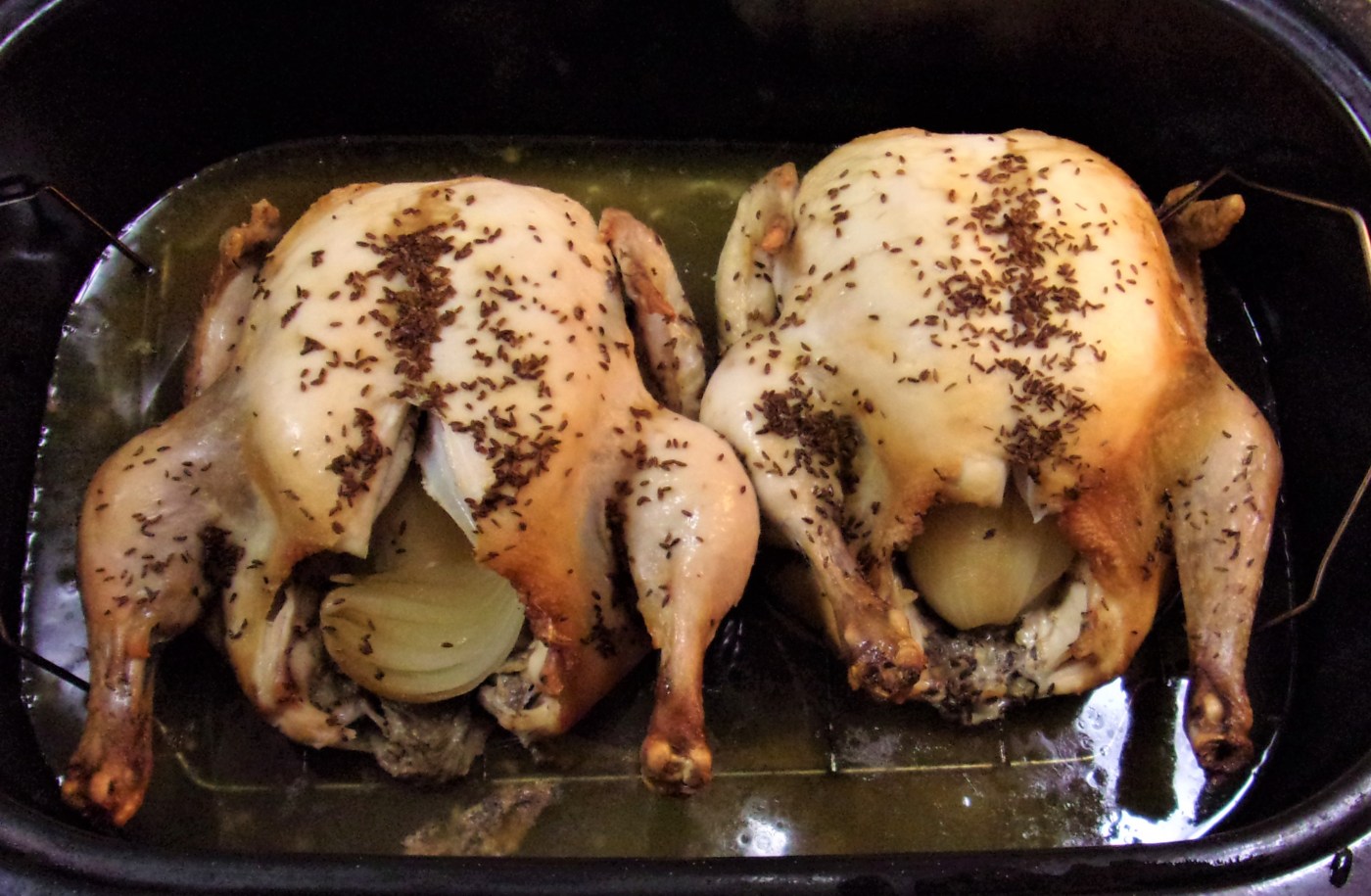

 Why does life have to get in the way *so* badly? Almost nothing happened this week of what had been planned. Some cooking did during the week, but it’s almost all the tomatoes! We kinda felt like St. Christopher in the gif!
 We heard from Brandon and Amor this week, just catching us up on life. …and Amy DeWilde says, “I am knitting a scarf at the moment.”

 *
*







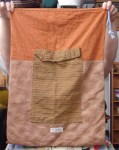

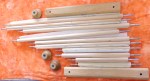




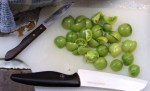

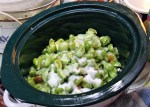
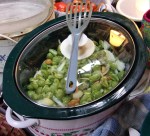
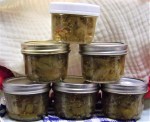




 In ministerio autem Somnium! Anja, graeca doctrina servus to House Capuchin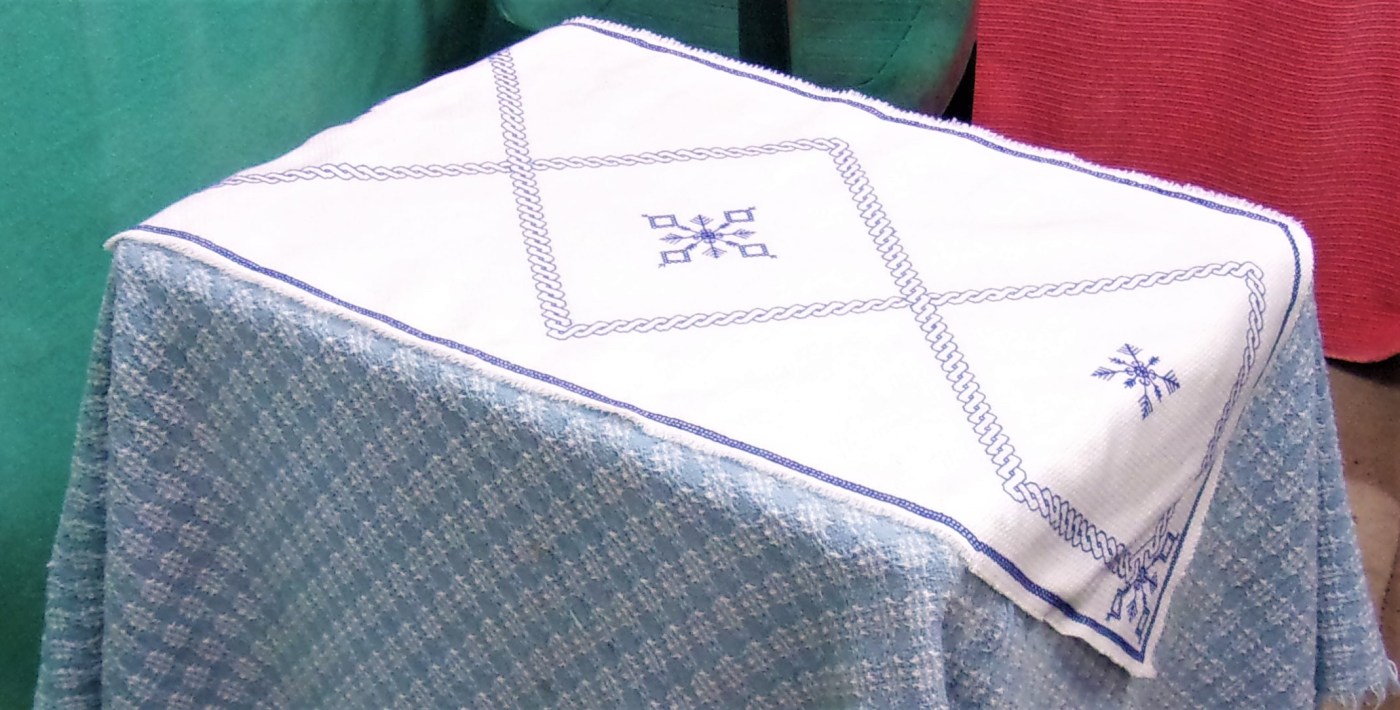
 Amor, Sash and Brandon checked in this week. No House stuff, just checking in.
  Loren and Anja are starting a lead-up to the potluck, although Anja is up to her elbows in green tomatoes, at the moment. The pease pottage below was the first hurrah. 🙂
  All meetings are on hold for the moment, although Project Day and the Monthly Potluck are being held in the Virtual Realm. We’re also doing mini-potlucks, just Anja & Loren and one other “pod” at a time. Let us know if you’re interested!
 Herb Bunch – At Ancient Light, Saturdays, 11am-1pm
 Cheese and Wine happens irregularly, usually announced with little notice on our Facebook group.
 Here is the direct Portfolio link which has all the past Project Day reports and various projects, original here:
 Educational Events
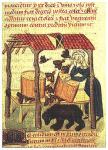 Cookery – It’s coming up on the holidays and Anja started looking at candied nuts and hunting around for some recipes. The most bizzare that came up is a recipe for Pynade that appears to be a chicken meat brittle… There’s another that is almost the modern recipe that she uses, but subbing crystalized honey for sugar and maple syrup. There’s another pine nut one that sounds delicious from the spicing. I dropped a few of these recipes in below.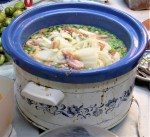


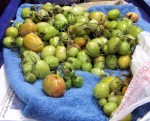
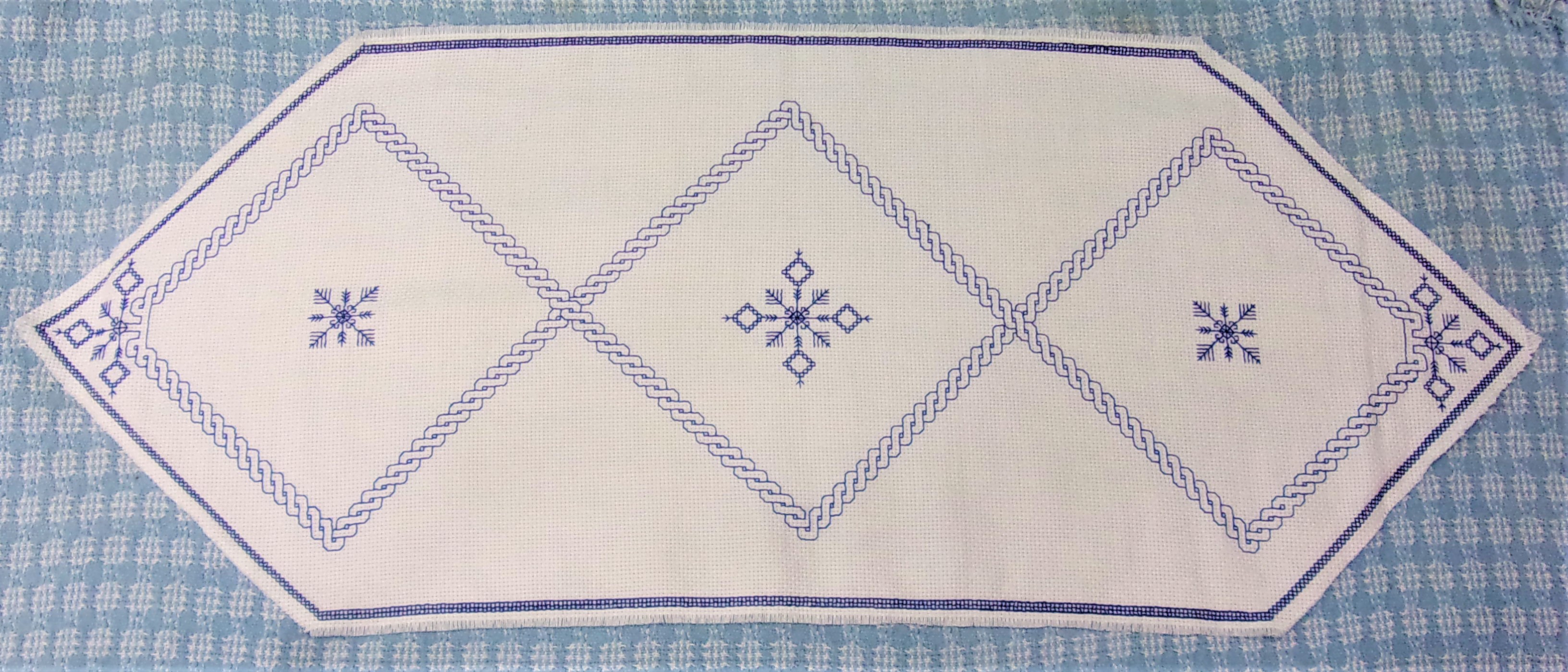



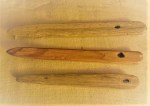








 Plant starts happened. Embroidery happened. A little cookery happened. Project Day kinda didn’t because Loren and Anja had so many customers in. We’re thinking it was a last gasp of tourist season in the nice weather.


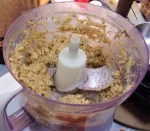
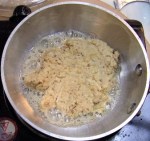
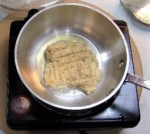
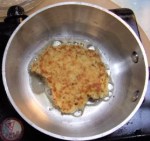
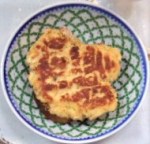

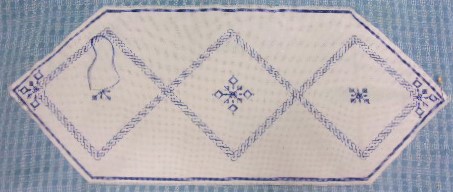

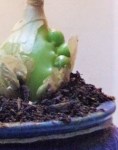
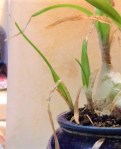


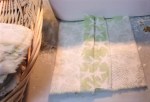





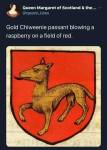




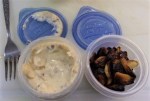

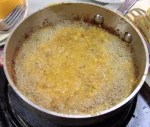

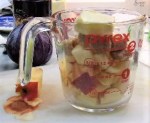
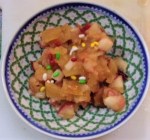


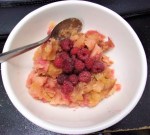


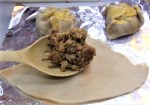

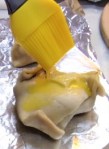
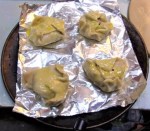


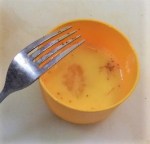


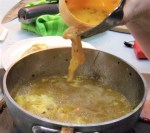
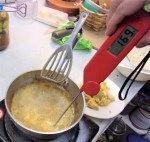
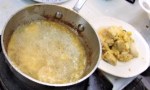

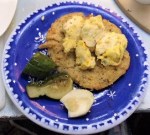
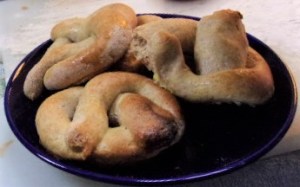


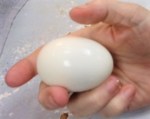

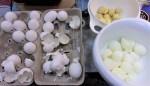

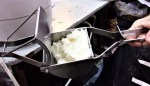
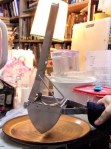


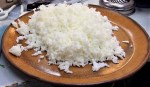
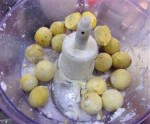
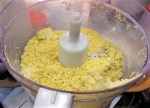


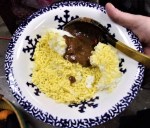


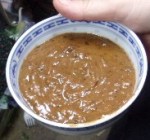


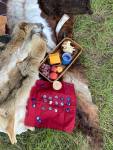





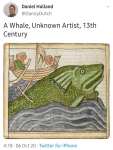
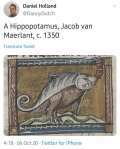
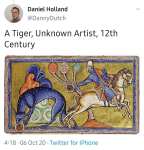


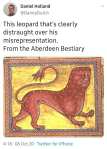
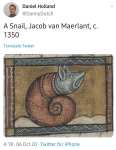




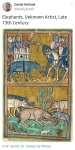



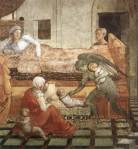
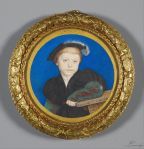





 A lot of mundane stuff got in the way this week. Most of the cooking time was taken up with storing harvest foods, mostly new world and modern. The sewing going on was also very mundane, mostly stuff for Anja and Loren’s shop. They’re finally starting to catch up from the summer rush.


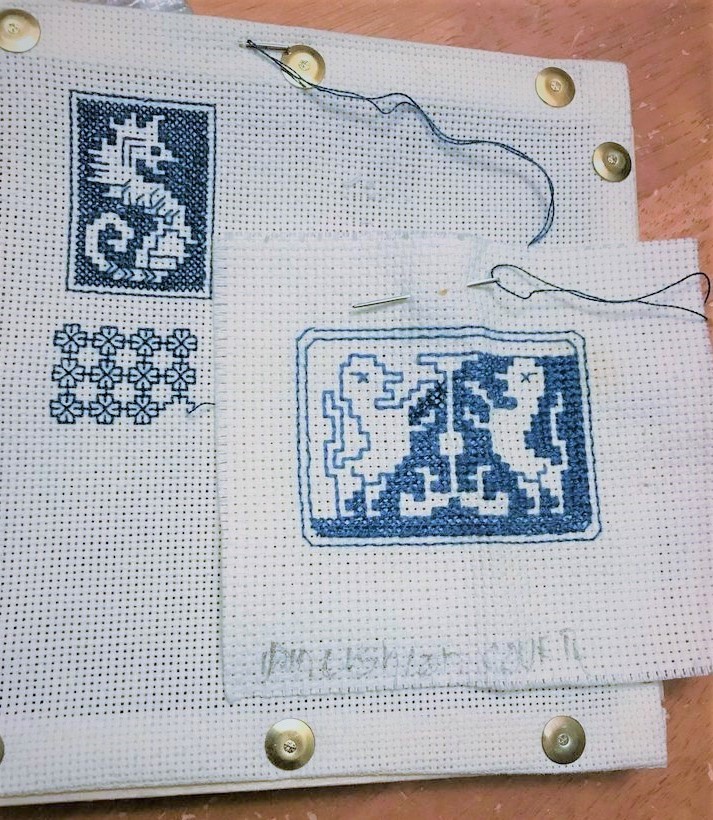
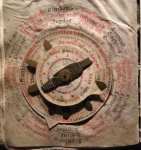

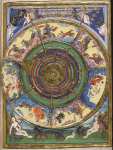
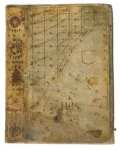


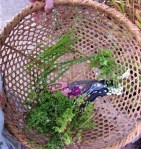
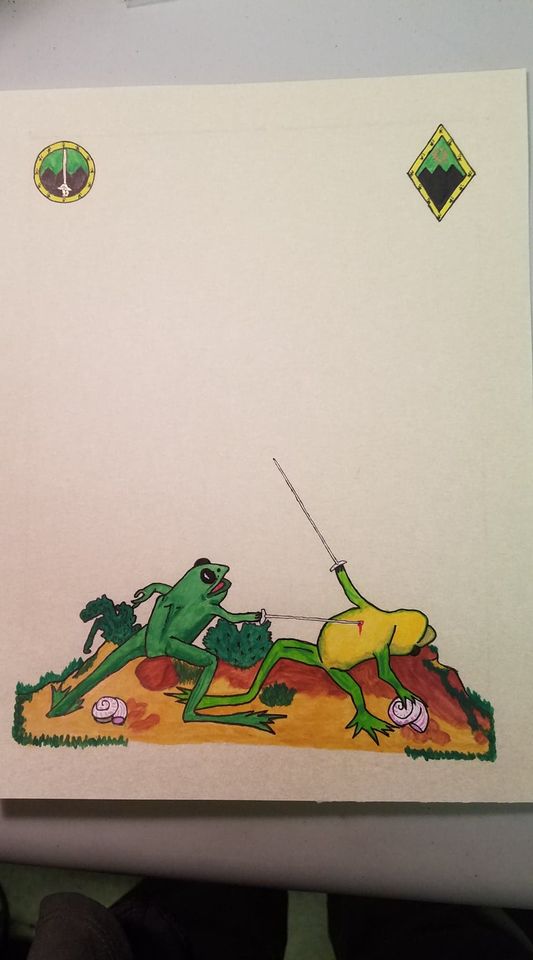
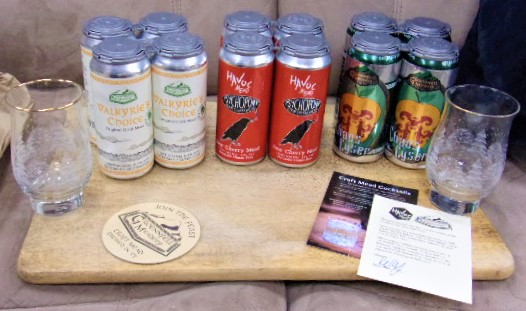
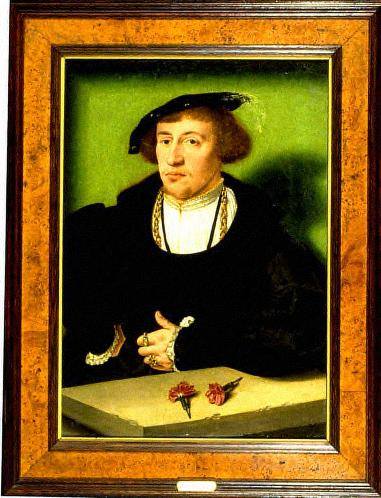












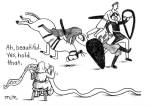




 “
“
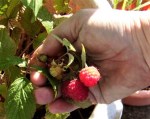




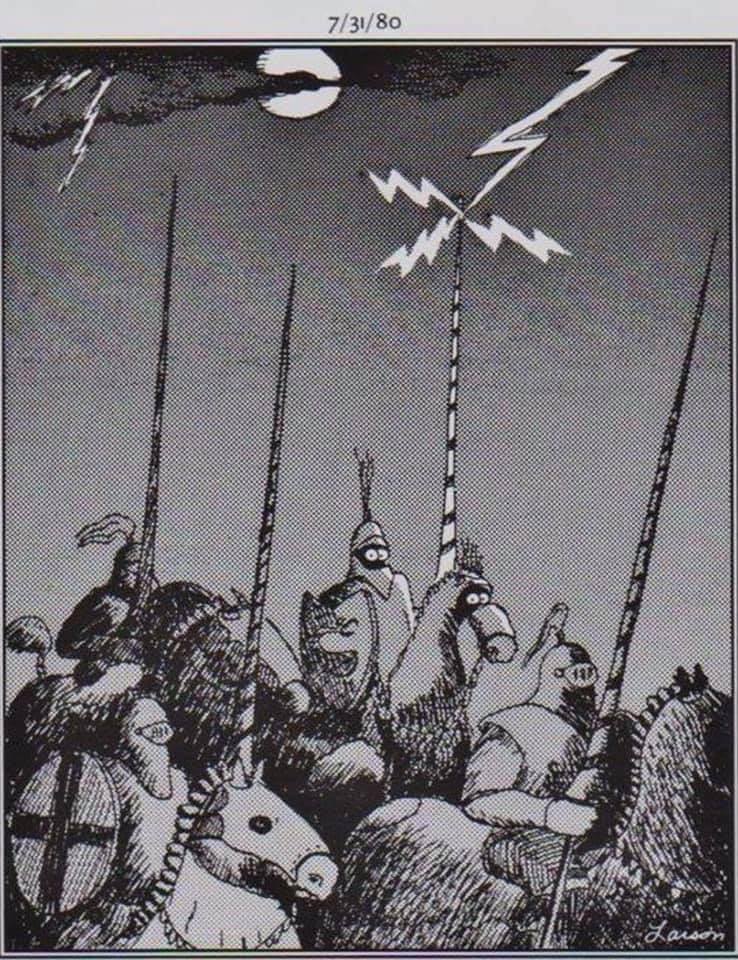


 Not nearly as many classes and links this week. I guess people are slowing down…. or maybe I am. Am I not looking as hard? Lots of interviews, but mostly people that I don’t know. Mostly we were busy on harvest stuff.
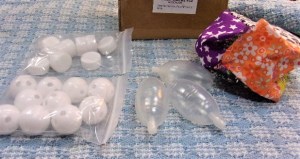
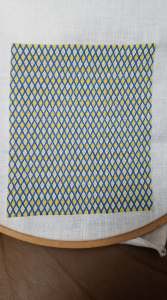
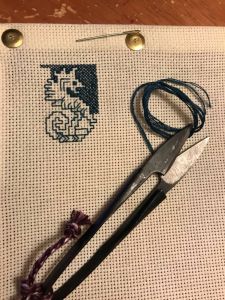
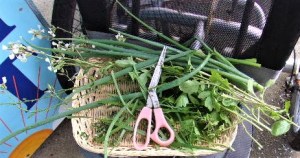






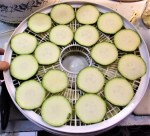
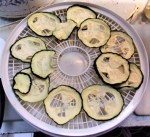

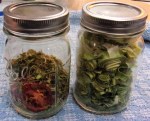

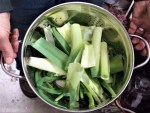
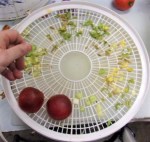

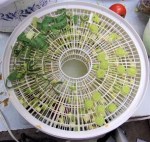
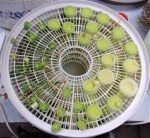
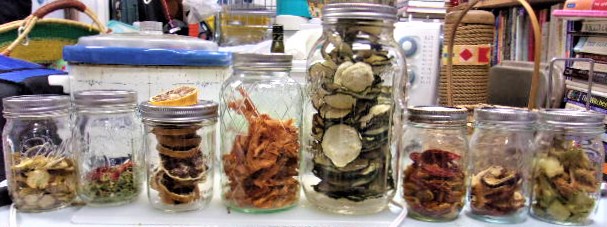

 Anja – I just finished an interesting book, “Anne Boleyn: 500 years of Lies” by Hayley Nolan. The book’s premise is that the marriage of Anne and Henry VIII wasn’t the great love story that it’s been portrayed as, nor the seduction of an unsuspecting king by an horrendous slut, but a political tactic on her part and a typical psychopathic set of actions on his. Interesting. I think she proves her point. I read it on my Amazon Kindle Reader.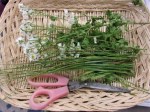
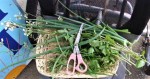

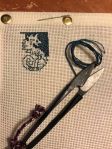


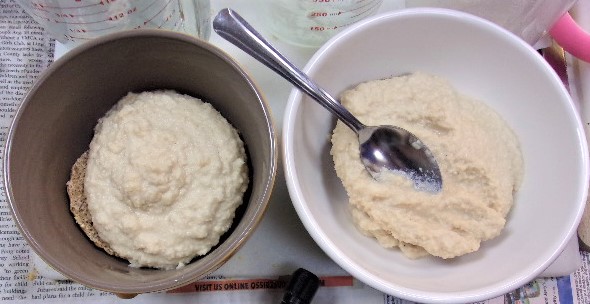
 One of the every-so-often flaps went off early in the week. A letter was published on every kingdom group that many found offensive. We have the letter and a couple of responses, below.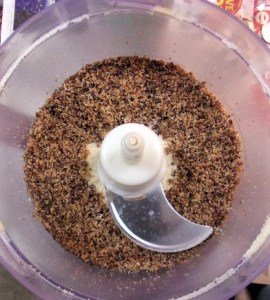
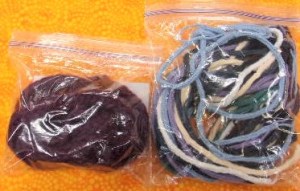

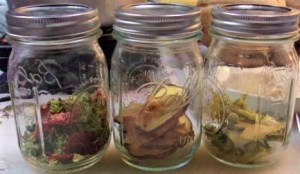

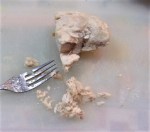


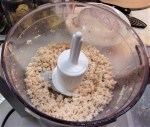
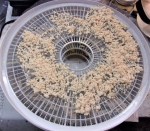


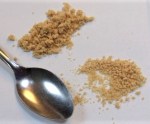




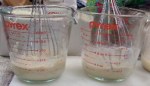
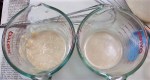


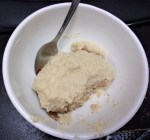
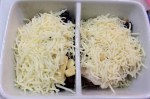
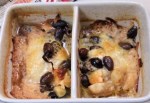

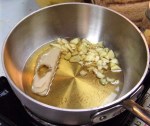
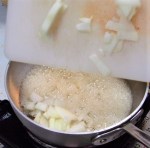


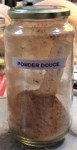


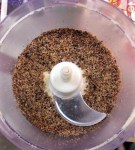


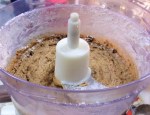




 Baking A Medieval Cheesecake – The History of the Sambocade
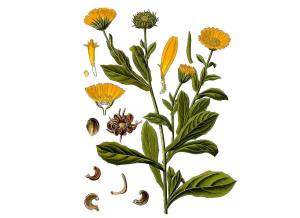 Herb Bunch – Harvested calendula seed on Tuesday and checked up on the plants. Yes, it turns out that those pretty yellow flowers are calendula…. I was fooled by the “marigold” part of the name “pot marigold”.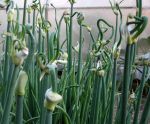

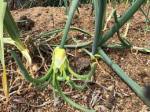

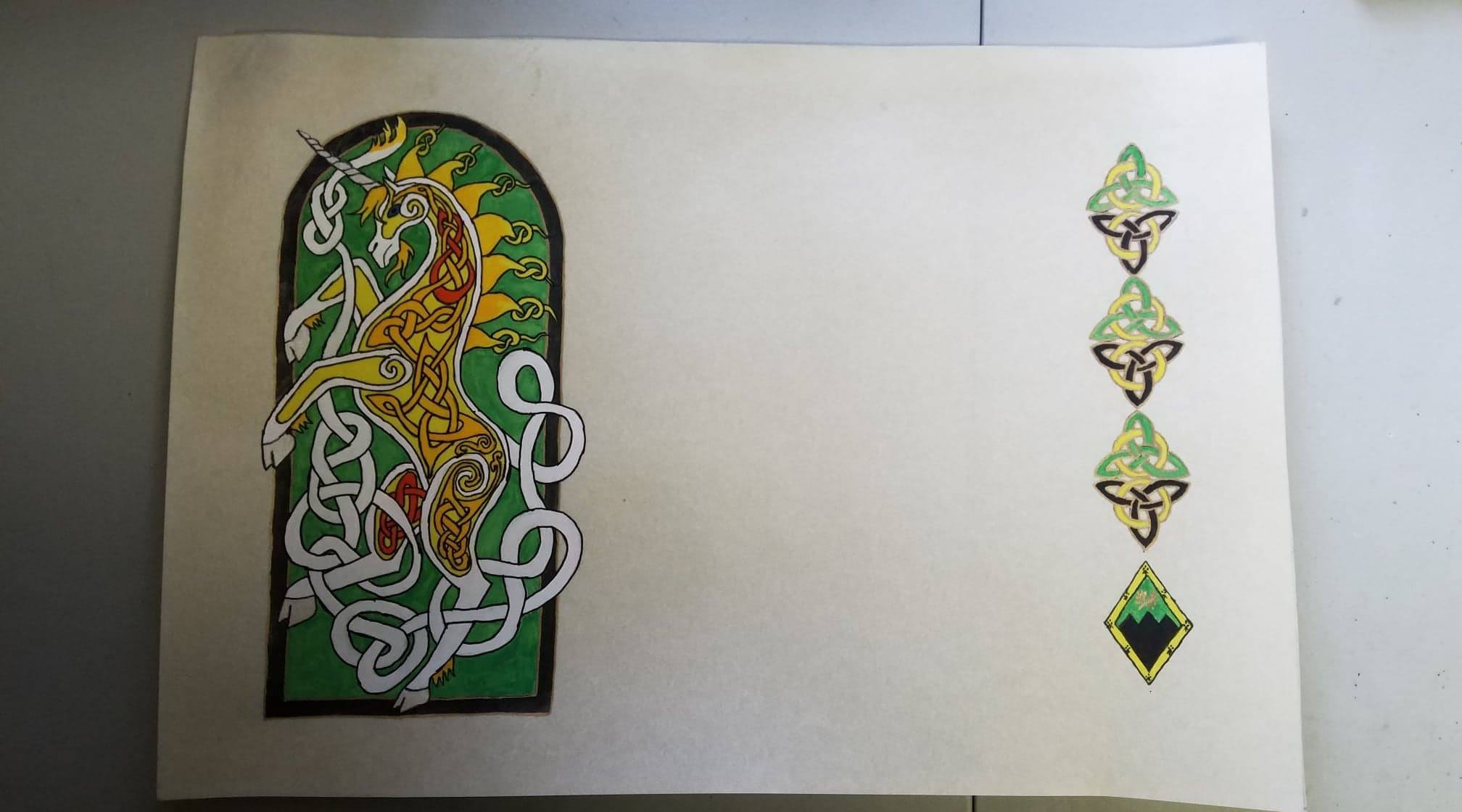
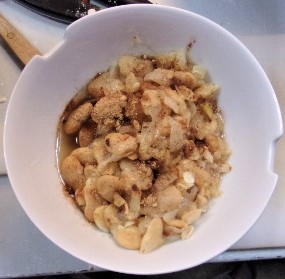
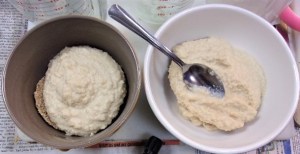
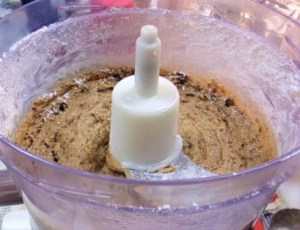







 opening the fridge! But very grateful we have one.”
 Sundials, etc. – Loren says, “In the spirit of the day, I do have a virtual project, i.e. one that so far exists only in my head. I have been contemplating on how a medieval sling shot might have been constructed in the absence of true elastics. I do not refer to the sling obviously, but to the Tom Sawyer pull it back and release type of vandalism tool that did not appear until the early 1800’s after vulcanized rubber was developed. I think I have seen a way, though I have never seen mention of it anywhere. Twisted rope springs were well known and used in many applications, from catapults to wagon springs and mouse traps. It seems to me that a couple pulley wheels with a rope spring attached to them and a separate cord running around them in the same manner as a lawnmower starter could make an admirable device, possibly even better than what we are familiar with, and would have been well within the construction capabilities of the time, much the same as the recently developed repeating long bow.”
 We started the day with Anja being late getting the event page started. <sigh> She spent time with her sampler, talking with people on our group and medieval percussion instruments with a guy on another list.
 Peggy Vlach posted, “Took apart a 100% wool skirt to recycle into a project and working on scrolls again. Here is a picture of the latest finished scroll, this one for Kingdom. And yesterday I attended 4 classes at University of Atlantia, and picked up some ideas for future projects.”
 Isabeau posted, “It’s 318 AQI here in the valley. I’m bound to the house and working on embroidering a neckline on a tunic. Then in to the assembly of the little pin cushions I had started. They have been found! Lol”
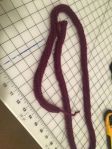


 A new post from Volker Bach on one of the cookery groups. From Meister Hans 1460 cookbook. This would be a fun/funny subtlety!
 Recipe #260 Von ainem abenteuerign aye des vgiss nit – Of an adventurous egg, do not forget it
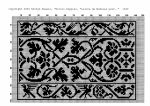


 House Capuchin 3

