Search

House Capuchin 3

An historical recreation household centered on the Central Oregon Coast (households are not official groups of the Society for Creative Anachronism and do not represent the views or policies of SCA, Inc. )

Archives

Activities through 5-16-21 Potluck

House Capuchin Shield2This week’s report is late because of the duck. I’ve never run across a fowl that took 5 days to thaw in the fridge! …but it did. So, since it was part of the potluck, this waited an extra day. 

This week’s stuff is already in process, mostly herbs, but a bit of sewing, so far. This coming week is the Virtual May Crown. No pre-reg necessary! Just show up!
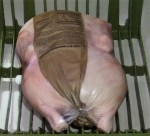
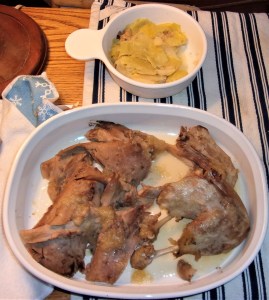
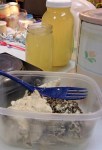
The duck took 5 days to thaw….

All meetings are on hold for the moment, although Project Day and the Monthly Potluck are being held in the Virtual Realm. We’re also doing mini-potlucks, just Anja & Loren and one other “pod” at a time. Let us know if you’re interested!

When will we be able to do these in person? We’ll probably keep right on with the virtual ones side-by-side with the actual. 

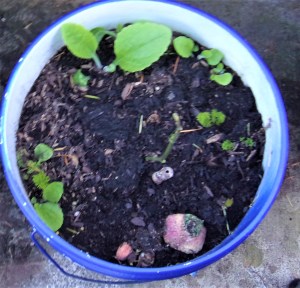
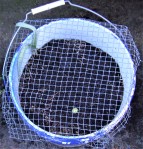
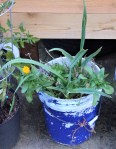
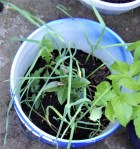
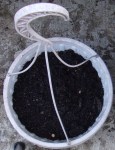
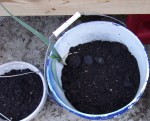
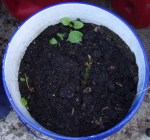
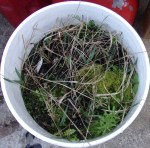
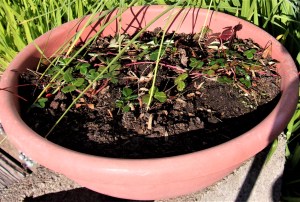
  • Regrown veg

    Herb Bunch – At Ancient Light, Saturdays, 11am-1pm
  • Sewing Time – At Ancient Light, Saturdays, 3-5pm
  • Project Day – At Ancient Light, Sundays, Noon to 6pm
  • Cheese and Wine happens irregularly, usually announced with little notice on our Facebook group.
  • Next Virtual Potluck – 4/18, 5/16, 6/20 
  • No Winter Feast in 2021. We’ll revisit for one in 2022 sometime in the next two months.

Here is the direct Portfolio link which has all the past Project Day reports and various projects, original here:  https://housecapuchin.wordpress.com/portfolio/  and new one here:  https://housecapuchin2.wordpress.com/portfolio/ and number three is here: https://housecapuchin3.wordpress.com/portfolio/

Educational Events

  • A Master List for finding classes, webinars and other things – https://moas.eastkingdom.org/list-of-online-webinars/?fbclid=IwAR20OE8b6vvYKvmwrqwpule27szarZ7EPV-8R72F1eV2CxcdmOXQhZf9ayk
  • May 22 at 8:30 AM PDT – May 23 at 9 PM PDT – An Tir May “Crown” Grand Ithra 2021 – Free – Facebook Live – Event by Sheila Louise Wright, Alysa Harron – Welcome one and all to An Tir’s MAY “CROWN” GRAND ITHRA, May 22 & 23, 2021. – There will be classes for everyone, themed discussion salons, social rooms, bardic and COURT with our Long-lived Majesties, Christian & Helene. All classes are FREE and Ithra credits given for classes taken or taught in An Tir and in your home Kingdom as they allow. Student registration will open on May 8th and a schedule posted at that time. https://www.facebook.com/events/373200300521935/
  • Jun 5 at 7 AM PDT – Jun 6 at 3 PM PDT – Sparkly and Shiny – https://www.facebook.com/events/467194268026910 
  • June 4-5 Known World Colegio de Iberia II, a Virtual Event, held on the first weekend of June 2021! – The focus of the virtual classes is on the lives and times of the people who dwelt in the lands which we now call Spain and Portugal. The symposium covers the period from the Celtiberians, Roman occupation, the Visigoths, the Muslim Umayyad Conquest, and includes the great Muslim city-states and the four Christian kingdoms (Kingdom of Castile y Leon, Kingdom of Aragon, Kingdom of Navarre and Kingdom of Portugal), ending with death of the Habsburg king Philip II. We also explore some of the worlds who experienced colonization or occupation by these kingdoms, as well as the relationships held by other countries. Website – We have a website which will contain information about classes and our teachers, as well as the schedule. This is getting updated all the time so visit regularly! It is located here: https://scaiberia.com/known-world-colegio-de-iberia-2021/ And you can contact us by email: scaiberia@westkingdom.org
  • Known World Science Symposium – JUN 25, 2021 AT 8 AM PDT – JUN 27, 2021 AT 11 AM PDT – Barony of Gryphon’s Lair – https://www.facebook.com/events/456485881710498/

 Other Good Stuff

Knowne Worlde Entertainment Guide – KWEG – Entertainment List – https://docs.google.com/spreadsheets/d/1xEZAwCca4IQham3TpxfWnonQscG668mmYgIMA18YZ-E/edit?fbclid=IwAR3UAXblIOd9u-N5IKtJNLzLFS52KPibZEAuwoDHjWzFoCtN_gDHETI9iCo&fbclid=IwAR3zne1DsdAtuMBtK0qmaRI5jf1HVc-rOFaokhJTLkYYGY49iRnFZBJbzjo#gid=0

Dance Vids – History & Dance Steps of Il Torneo AmorosoLynne Fairchild – Il Torneo Amoroso was a late 16th century / early 17th century dance published in Cesare Negri’s dance treatise called Le Gratie d’Amore. Il Torneo Amoroso translates to English as the Love Tournament. This particular dance style was known as combat dance, which was popular during the Elizabethan age. This dance is danced by a couple (two people: one in the lord’s position and one in the lady’s position). It has courting, an argument, and the make-up after the argument. Also, learn some history about this dance master, as well as different interpretations (and Italian to English translation) of Il Torneo Amoroso (the 7th dance in Negri’s treatise). Plus, instructions of how to do the various dance steps in this dance.

Early Week – Only plant things…..

Cookery – The week was crazy enough that the duck didn’t come out of the freezer until Thursday and it wasn’t thawed by Saturday night, despite sitting out a couple of times. We didn’t manage to get the extra apples, so Sunday ended up with only two dishes other than nibbles. There just wasn’t enough time this week. Coming up on summer…. …and then it took two days to finish the third! 

An English Manor for a Bowl of Stew?Tasting History with Max Miller – LINKS TO INGREDIENTS & EQUIPMENT** Sony Alpha 7C Camera: https://amzn.to/2MQbNTK Sigma 24-70mm f/2.8 Lens: https://amzn.to/35tjyoW Rose Water: https://amzn.to/2PRRW8A Ground Mace: https://amzn.to/3h2sOqP Dried Ginger: https://amzn.to/3xPyla7 Cloves: https://amzn.to/3aYA8jm Pine nuts: https://amzn.to/3f1OOQa LINKS TO SOURCES** **Some of the links and other products that appear on this video are from companies which Tasting History will earn an affiliate commission or referral bonus. Each purchase made from these links will help to support this channel with no additional cost to you. The content in this video is accurate as of the posting date. Some of the offers mentioned may no longer be available.

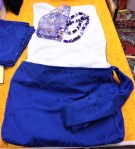
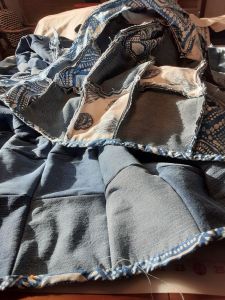
Sewing – Sewing buttons on a dress and starting to stitch up some small embroidered pouches. 

Research on 16th Century Women’s Hoods with a Wimple-like VeilLynne Fairchild – This particular style of woman’s hood can be found in various 16th century Flemish paintings. However, this particular hood appears to have only been painted by one painter (that I can find). This hood is similar, but different, to the 16th century hoods worn by French women in mourning. Was this (not French) lady in mourning? There are various differences, though, between the French hoods women wore in mourning and this particular lady’s hood. For example, the veil appears to end above the shoulders and is pinned underneath the lady’s chin. ** Side note: when I refer to Tudor or Henrician dress (which is specifically English 16th century dress) in this video, I am loosely using these terms to give an idea of the type of European dress being worn at this time by women in the paintings (like kirtles, stiffened bodices, possible farthingales, etc).

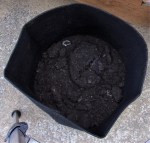
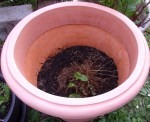
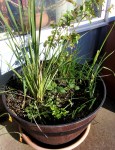
Herb Bunch – The plants that have been living in a friend’s yard for the last two years, finally came home. Some were  dead (blueberry) but some, like the big pot of mint, have been thriving. Some went into transplant shock and needed extra water and tending. We managed to separate the one aloe, although it looks odd, as though it got frostbitten somehow, so goodness knows how well that will work. Two ferns got separated and we found a couple more jade plants. 

Project Day – Helena and Isabeau checked in early, Isabeau with a joke and Helena that she’s drafting at-shirt pattern. 
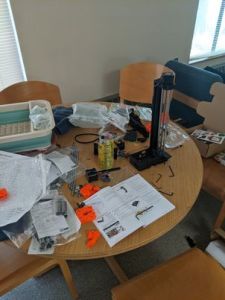
Gudrun – (last Sunday night) lol found out my calibration issue. Still not quite fixed but damn close. Turns out my x plane was off lol. An’ this is super neat! I’m printing the Veles I had mentioned. Didn’t notice the file was tagged with CNC machine, which works roughly n the reverse, but it sliced just fine, and it’s working! I was so afraid I’d end up with a block of filament lol. Should be done at 10pm tomorrow! 14 meters of filament though, and so far total print time will be 23.5 hours. Best part! If you gently sand with water, and waterproof sandpaper, you can then paint! Great proof of some of the magic 3D printers can do.

Gudrun – Cheapest decent one I know of is an Ender 3, but they’re $200, and with required mods to make it good, the price jumps to $500. Much bigger than my printer. That had a list price of $349. And I had to build it! That’s the mess of what I started with lol. Adult legos. The 3 piece kit is significantly easier on the otherhand. $50 extra though. Ships faster too! Live vicariously through my printer posts lol. I know a decent bit on making my own too! I just haven’t felt like making my own models to print lol The issues you’d run into moreso would be maintenance, and filament costs. Thankfully one company I get filament through does student discounts. 

Gudrun –  lol. apparently it’s time for functional prints while I calibrate more. I’ve made wee cups!  Sewing notion holder? Lol That only takes me about half an hour to print up!  
Anja – If you could add an embellishment on the side, those would make great largesse. Some kind of marginalia? Like a snail? Or one of those butt-trumpet guys? If you need marginalia you should talk to Arlys. She’s got a tarot deck and a game deck that are just that.   
Gudrun – Printed in vase mode, so the walls are super-duper thin. I should be able to track some down, but the problem comes down to modeling. Unless sand and hand off to paint? You just need acrylic paint too! Sadly not drinkable either. 
Anja – Not with sugar/starch in the mix, no.  
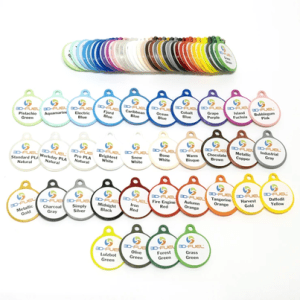
Gudrun – If I was printing in PETG, and had all metal printhead, then you totally could. Just no hot bev. ABS would be one of the safest for plastics maybe but it requires things I don’t think housing would be happy about. Namely, I’d have to build my printer an enclosure, with smoke detectors inside of it. I don’t see ABS in my immediate future.    For ABS, it’s super sensitive to temp and humidity changes, so that’s part of why an enclosure. It’s also one of the things you print at close to I think 400c if I’m remembering correctly. …Everything with 3D printing is done in metric lol. …Ah. Way off. 240-270. It’s one of the most durable and once printed, heat resistant. No wonder legos uses it, eh?   There’s also wood filament now too, and out of the company my white comes from? They also do glass, hemp pulp, the waste from brewing beer, and coffee grounds! That stuff is that material mixed with PLA. 3D Fuel out of Fargo does all of that. Shipping is also super quick! Student discount, plus that? no wonder they’re a favorite.  And for just plain ol’ PLA, they carry 32 different colors! Sadly this color keychain of all their colors is out of stock, but shows a pretty good range.

Engineer brain definitely kicked in with this printer. It took so long to get this printer too! I did order from Prague, and it was on preorder. 3 months and 6 days, and then 3 days to build it. I had to put it together from a slew of parts. It was a damn investment..
Anja – New tech, so it takes awhile.    

Gudrun – And it’s precision machining stuff. I did record it singing to me when I printed a little tugboat though! It was so cute! The singing is towards the end. And that’s the completed object! It’s called a Benchy! That filament is so dang glittery. I also made a whistle as my first print and it is SUPER LOUD. Good for wrangling the littles. Rae sent Today at 3:39 PM I might at some point record a video of how loud the whistle is.. I just wouldn’t give it to little kids/people who I swear are chaos personified, When I blow the whistle, it honestly hurts my ears. I might measure the db level out of it. 
Anja – (about the singing printer) Oh, that’s cute! Oh, how funny! I had to turn the volume up, but yeah, that’s a melody!      

Gudrun – I got a chance to measure the db output of my printer. From where both my desk and bed are, it averages at 42!
Anja – Well, that’s the answer. …to life, the universe and everything…. so it makes sense. 
Gudrun – At the print head I’m around 50db. Considering they sent me boxes of parts to put together, and they’ve done some upgrades. Prusa printers used to be super loud. Comparison I’ve always read? “Like a drunken robot barfight”    

Gudrun – (Tuesday)  Aw. That’s sad. The print I put on before I went to sleep, which is still going is a failure! This is worse than fiddling with a sewing machine! Started a hilarious print though. Honkdra. A goose hydra… I doubt there’s any marginalia with a multi-headed goose, but there SHOULD BE

Gudrun – (Thurs.) Lol game store at the mall tried to offer me a commission. Also finally got around to printing something I designed myself! Gotta work out the stringing issues though. Assignment was “Make something interesting”. The elements inside the box are all a part of the model and it all goes at one time. Professor tried to tell me it was unprintable though. Goddamn HOW. Honestly, even that box would be useful once those decorative elements are removed. I see small pincushion for events,  that you can just pull out and set nearby! It’d be super easy to convert, from modifying the file, to just actually turning it into a pincushion! Plus it’s got a separate base as a part of the model! The base itself is ~2mm. Means the entire box can be painted easily too. One thought I definitely had was stamps for textiles lol. I’ll have to play around with modeling some. PLA is too brittle though. It’ll break super easy. PETG might be best. That’s basically the same plastic as soda bottles. I hate that it’s a legitimate material with printing, but it’s pretty durable. With PLA, when it breaks, which I’ve broken good sized pieces in my hands, it splinters all over the place. Exactly why I say it isn’t suitable. Due to the lack of heat resistance, it’s also a bitch to clean up prints. It’s the hardest extruded filament to clean up
Anja – But it’s cheap?
Gudrun – And supposedly biodegradable. Supposedly you can compost with it, but it takes anywhere from 10-100 years to break down. No one really knows however. I mean, you can anneal it too, which increases part strength. I haven’t futzed with annealing yet.

Gudrun – (Thursday) Lol I made that Ocarina! I gotta learn to play it. 
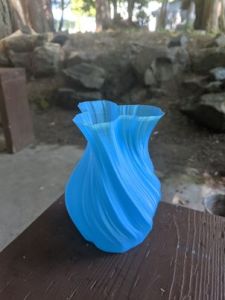
Gudrun – (Sunday) Also! Vase! Wow. I took a picture of the vase outside and the colors are gorgeous. Someone who saw it in person thought I did glassblowing to make it! Lol. Can’t believe though, folks are balking at the price I’m asking for a vase.
Anja – Get your electric cost, materials and labor at $10 per hour at least.
Gudrun – I could drop it $15, but accounting for time, and materials, it comes out to actually like $26.87.
Anja – So $30 is reasonable.
Gudrun – $30 also accounts for sales tax. A little over actually, so I’d be making a small profit,
Anja – If someone complains, lay out your costs.
Gudrun – Dang. I did just did the math for if I printed a whole spool’s worth at the price I’m asking. $1,350! That’s a profit of $900. 
Anja – If you can get it. That’s always the problem.
Gudrun – Yeah. 90 hours give or take to do a whole spool too.

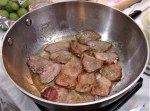
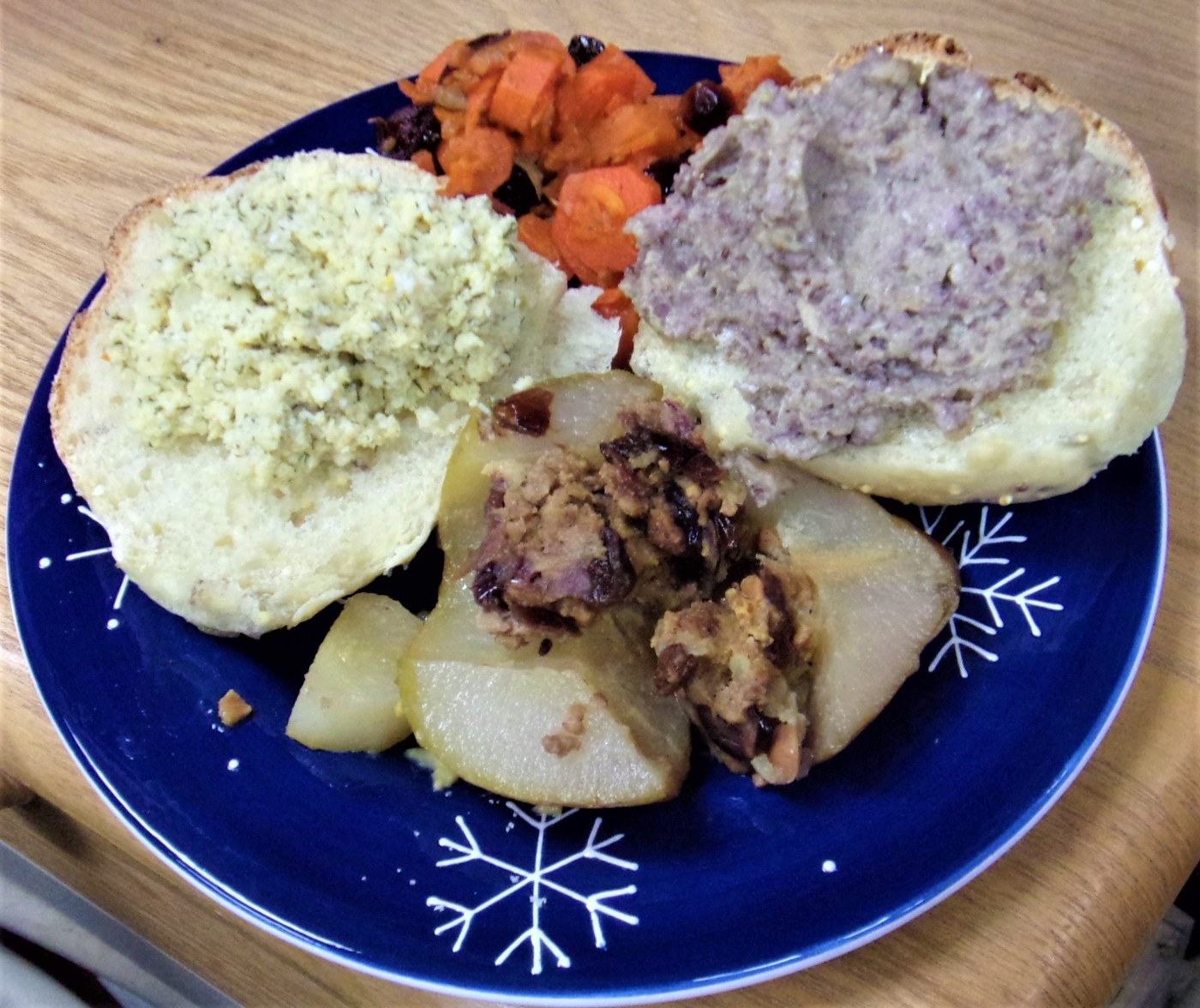
Potluck – Anja was cooking right up into the potluck time, but no one else posted anything. The nibbles photos had a lens smudge, so none turned out. Those were on the table all day. The duck had to wait, so Anja did the Lauchmusz first. It took a couple of hours because each separate thing to be cooked took 20 to 30 minutes. After we ate that (on trenchers) she started in on the Rique-Manger (which only took 20 minutes) we ate, and that was it for the evening! 

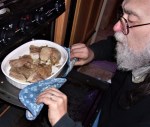
The duck was roasted on Monday and because Anja is unfamiliar with the new oven, it had to get finished on Tuesday. She turned the pilot light off, rather than turning the heat down! She took it apart, cold, and put the honey/pear glaze on. Loren put the dish back in the oven (he can reach the pilot light!) while she got the schmaltz taken care of. 

Potluck Menu
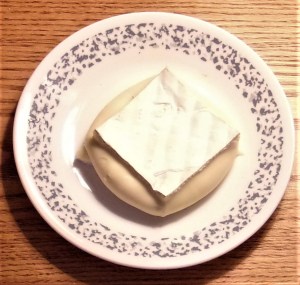
Pic of the Brie after sitting for 2 hours. 🙂 Only nibble pic that we got!

Nibbles

  • Bread (light rye)
  • Butter
  • Goat cheese with garlic and herbs
  • Brie
  • Bean Pickles
  • Mixed veg pickles

Main

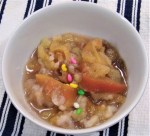
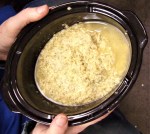
  • Pottage – A nameless leftover veg, chicken and barley from the freezer
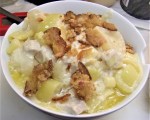
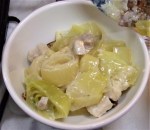
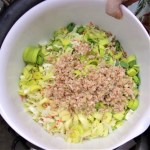
  • Lauschmutz – Leeks and pork in a cream sauce
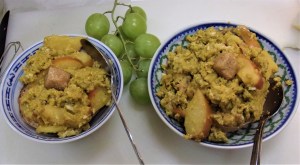
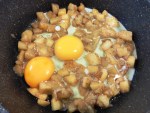
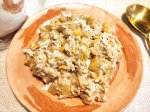
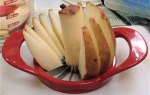
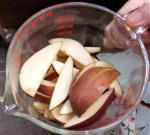
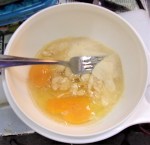
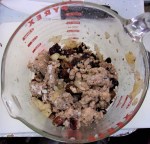
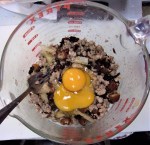
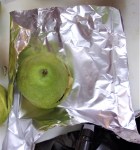
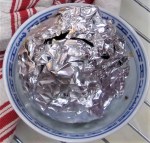
  • Rique-Manger – Cooked apples and eggs
  • The glazed duck and the Lauschmutz.

    Duck in honey pear glaze (not till later)

Sweets

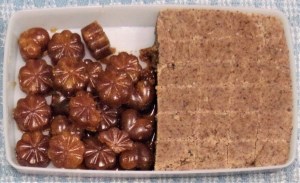
  • Marzipan
  • Comfits

Recipes

Duck with pear/honey glaze – Mostly followed the rule in Joy of Cooking (Rombauer), but also with advice from the Medieval and Renaissance Cookery group on Facebook. 

  • 6 1/2 pound duck, frozen
  • Salt
  • Large needle
  • Roaster
  • 1/2 cup of water
  • Pot for extras
  • Spoon for scraping up schmaltz and small canning jar for freezing it. 
  • Knife & cutting board

Method

  1. Allow plenty of time for the duck to thaw in the fridge. This took 5 days! 
  2. Once duck is thawed, remove giblets, extra fat bits and wingtips. Set aside in cookpot in the fridge.
  3. Prick the duck skin through all over to allow extra fat to escape. Hold the needle slaunchways, so you’re not pricking the meat. 
  4. Salt well, add water. 
  5. Roast covered in 350F oven 2 hours, breast down, flip and pour off cooking liquid.
  6. Put back (covered) until breast registers 135F and legs 165F. 
  7. Remove from heat and pour off cooking liquid. (This is the point where it went back into the fridge.)
  8. Disassemble duck, putting meat into a roasting pan and carcass and skin into the pot from step two. 
  9. Add water to cookpot and boil for an hour, strain, separating solids and liquids. Fridge. You can pick the carcass later, and the schmaltz (duck fat) will form on top of the liquid. (More next week on this part.)
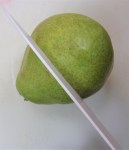
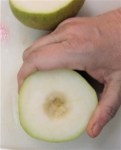
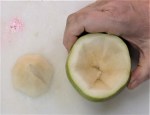
  10. Peel, core  and cut up pear. 
  11. Microwave 1 minute. 
  12. Mash. 
  13. If it doesn’t completely turn to mush, nuke it for another minute and mash again. 
  14. Add 1/4 cup honey and mix well. 
  15. Pre-heat oven to 450. 
  16. With the meat in the roasting pan, pour glaze over all. 
  17. Turn the oven temp to 350 and heat for 20-30 minutes until the glaze begins to caramelize and the duck is heated through. Serve. 

Note from Rombauer’s Joy of Cooking – “Duck and goose are carved in the same basic way as chicken and turkey, except that their leg and wing joints are located closer to the back and are harder to get at. For this reason duck and goose are best carved in the kitchen rather than at the table (but do exhibit it at the table first), since disjointing the bird is inevitably a bit of a struggle.” She’s not kidding!

Lauchmusz  – Leeks and pork

  • 5 large leeks
  • 1/3 pound bacon cut into squares. 
  • Extra bacon grease or butter or duck fat
  • 1 cup water
  • 1 cup Milk
  • Cream (optional)
  • 1/2 cup Bread crumbs
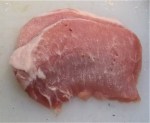
  • 2 boneless pork chops
  1. Cook bacon in a pan.
  2. Reserve grease in the pan and pull out the meat, once it’s cooked.
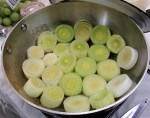
  3. Cut just the white part of the leeks into about ½ inch wheels.
  4. Sauté them in the bacon grease over medium heat until they begin to caramelize. FLip onto the other side and repeat. 
  5. Pour water into the pan, turn to low heat, put on a lid and let simmer until done.
  6. Strain through a colander. (reserve liquid and greens for soup!)
  7. Put back into the pan on low heat.
  8. Add milk and maybe a little cream.
  9. Dice pork chop and add.
  10. Cook until pork pieces are done (Time depends on how large the pieces are…)
  11. Add bread crumbs and stir until thickened.
  12. Crumble bacon on top of the dish and serve hot.

Rheinfränkisches Kochbuch- 23 If you would make a spoon dish of leeks (lauchmusz), take white leeks and cut them a finger’s length and sautee them well with animal fat. Pour water into it and let it boil up lay it in a colander (syep), so the wet (the cooking liquid) comes off it. Afterwards, lay it in a pot and pour milk into it that has been passed through a cloth with white bread, add fat to it, and boil it with pork.

Rique-manger and grapes

Rique-Manger – France, XIV century

  • 2 TBSP water
  • 1 apple
  • 2 eggs
  • 1 tablespoon butter
  • 1/4 tbsp poudre fina
  • ¼ tsp ground ginger or 1 slice fresh root (see steps 2 & )
  • a pinch of saffron

Method

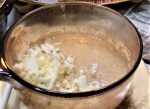
  1. Put water into a thick-bottomed pot or frying pan.
  2. Add saffron (and ginger root, if you’re using that rather than powder)
  3. Warm up (low heat) until the saffron colors the water (and the ginger root is cooked)
  4. Pour into a cup and set aside.
  5. Peel the apple and cut it up.
  6. Put into the pot.
  7. Add water from the cup back to the pot.
  8. Cook for 10 minutes until the fruit has begun to soften.
  9. Pour off liquid (reserve to make a sauce with honey), but keep apples cooking until the dry a little.
  10. Add butter and spices.
  11. Stir eggs into the mix and cook, stirring constantly until done.
  12. Serve warm with bread.

From the Medieval and Renaissance Cookery list on Facebook – 1 apple, 2 eggs, 1 tablespoon butter, 1/4 tbsp powder fine*, a pinch of saffron – We peel the apple and cut it into a cube or slices, throw it into the pan, water it with a small amount of water and cook it for a few minutes until the fruit softens slightly, we are draining. (I didn’t pour water, but I poured it into a cup, added a little honey and that way I received an addition to the dish in the form of a delicious compote. )) We roast apples for a while in the pan to get rid of the leftover water, add butter and fine powder and fry for a few more minutes for the fruits to take root. We stick eggs, add saffron and mix the whole thing until the proteins are cut. Serving warm, with bread. Today we have a guest at the Dwarf’s cooks by Agnieszka ENJOY!!!

* powder fine: 3 tablespoons ginger, 2 tablespoons sugar, 1 tablespoon cinnamon, 1 teaspoon cloves, 1 teaspoon paradise grain (aframon can be replaced with pepper, just remember this one is less smoking)

Apple mush loaf (Didn’t have the different types, so put off for another time, that’s why no amounts are given)

  • One each of three types of cooking apples. (Suggested are Gala, Yellow Delicious and Granny Smith)
  • ?? Water
  • Rice flour (in Lent) or eggs (non-Lent)
  • Poudre Fina
  • Saffron
  • Honey

Method

  1. Peel, core and cut up apples.
  2. Put into a small pot with a tight lid.
  3. Boiled until cooked through.
  4. Melt butter in a thick frying pan.
  5. For the Lenten dish add apples and simmer until about ½ the liquid is gone, then add rice flour and stir well, then go on with step 7
  6. For the non-Lenten dish, skip step 5, add apples and simmer until most of the liquid is gone and let cool. Add eggs and stir thoroughly. Return to heat and keep stirring until the eggs are cooked through.
  7. Add poudre fina, saffron, and honey and let stand over low heat until it colors.
  8. Mold in 1 or 2 mini-loaf bread pans (ceramic will cool it the fastest). Pour off any liquid that hasn’t “set”.
  9. Stick cloves into the top and let stand, covered with a thick towel to steam.
  10. Serve warm with sweetened cream, if desired.

Mittelniederdeutsches Kochbuch – 42 Item if you would make a bread loaf (shaped dish) of apples, take moeseppele or goderlynghe or vlageeppele (three types of cooking apples not clearly identifiable). Peel them and cut them in quarters and cut out the core and everything that does not belong on them (wat dar nicht ane doch). Put them into a clean pot. Let them boil in clean water so that no water can get in (sealed pot or water bath?). Let them cook through and put them into a clean thick-walled cooking vessel (deghel). Take butter that you have washed clean of salt, or good clean animal fat that is not unpleasant (garstech), or poppyseed oil that is sweet, whatever the time of the day may be (i.e. whether a full or partial fast day) and let it boil in the fat. And take with that what the time of the day may be, eggs or white bread or pounded rice that is searced through a spice sieve. Take spices, pepper and saffron, honey. Put it into a thick-walled (deghelik) wooden vat shaped in the form of a bread loaf. And serve it.

Anja’s note – Oh, my goodness! This is what my grandmother called “squashed apple cake”! Her recipe called for red, yellow and green apples, butter, a couple of eggs, white bread crumbs, nutmeg, saffron and ginger and plenty of honey. She boiled the apples, first, whole, then cut them to take out the hard pieces, squashed ’em with a potato masher and she baked it in a mixing bowl! That’s just too close for coincidence! She would stick whole cloves in the top after baking and cover it with a thick towel to let it steam a little and serve it with cream. The house would smell wonderful!

Music – Media Vita In Morte Sumus – Musica Medievale


Ensemble: Ioculatores Album: Media Vita In Morte Sumus Video: MS. M359 (XV cent.) http://www.facebook.com/musicamedievale • 1 Prolog: Die Weisheit Der Welt 2 Media Vita In Morte Sumus (Responsorium saec. X) 3 Hiervor Ein Werder Ritter Lac (Der Gutere, saec. XIV) 4 O Varium Fortune Lubricum (Carmina Burana, saec. XIII) 5 Kreuzzugslied (instr. Thibaut de Champagne, saec. XIII) 6 Die Menscheit Muoz Verderben / Crucifigat Omnes (Walther von der Vogelweide XIII saec. / Codex Las Huelgas XIV saec.) 7 Ad Mortem Festiamus (Llibre Vermell de Montserrat, saec. XIV) 8 Madre De Deus (Cantigas de Santa Maria, saec. XIV) 9 Der Tod Und Die Liebe (Freidank, saec. XIII) 10 Saltarello In Fine (instr. nach ‘Dies irae dies illa’) 11 Media Vita In Morte Sumus 12 Ples De Tristor (Guirat Riquier, saec. XIII) 13 Der Doten Dantz / Saltarello In Fine (Text: Totentanz, saec. XV) 14 Dies Irae Dies Illa / Totengeläut (Sequenz der Totenmesse, saec. XIII) 15 In Paradisum / Chorus Angelorum / Ego Sum Ressurectio (Antiphonen der Exsequien, saec. X) 16 Media Vita In Morte Sumus 17 Epilog: Das Rad Der Fortuna

Links

Top 10 Villains of the Middle Ages – https://www.medievalists.net/2015/05/top-10-villains-of-the-middle-ages/?fbclid=IwAR19oI5UW7i-CjzqQz03y52RqV65yJ1KvhXrDmk_HETidVJHWSPPux21r0Y

Medieval Sex and Scandal: Consistory Courts and Morality in Medieval England – https://www.ancient-origins.net/artifacts-ancient-writings/medieval-sex-0015263

Boxer at Rest: The Most Iconic Ancient Bronze Statue in the World – https://www.ancient-origins.net/artifacts-other-artifacts/boxer-rest-0013268

Funnies 

divider black grey greek key

  • ASXLVII = 24
  • ASXLVIII = 88
  • ASXLIX = 794
  • ASL = 2138
  • ASLI = 731
  • ASLII = 304
  • ASLIII = 146
  • ASLIV & ASLV = 230
  • ASLVI = 0 plus 4 puppets, 4 powder fort, 8 cheese spice and 9 powder douce packets, 1 kiss-lock pouch, 9 tiny bobs, 7 pincushions, 3 pins, 3 snip case w/snips, lucet cords, 25 pouches for block-printing, 1 medium pouch, 4 small pouches, 12 bookmarkers, 14 unfinished pincushions, 1 sewing kit (except for bone needle), varnished stuff (124), 2 emery strawberries, 1 woolen spool-knit cord, 48 key bottle openers

Total as a Household = 4061 handed off

moving writing pen motif

In ministerio autem Somnium! Anja, graeca doctrina servus to House Capuchin
Page Created 5/11/21 & published 5/19/21 (C)M. Bartlett
Last updated 5/19/21

Actvities through 5-9-21

House Capuchin Shield2We had a productive week and then some fun interactions on Project Day this week. There are a lot of the usual links in the report, plus herb stuff, embroidery and sewing, and 3D printing. 

This week is Potluck, so we’ll be concentrating more on food things. We have a duck that we might get a chance to try to do something with and there’s an interesting leek and pork dish, also. 

All meetings are on hold for the moment, although Project Day and the Monthly Potluck are being held in the Virtual Realm. We’re also doing mini-potlucks, just Anja & Loren and one other “pod” at a time. Let us know if you’re interested!

When will we be able to do these in person? We’ll probably keep right on with the virtual ones side-by-side with the actual. 

  • Herb Bunch – At Ancient Light, Saturdays, 11am-1pm
  • Sewing Time – At Ancient Light, Saturdays, 3-5pm
  • Project Day – At Ancient Light, Sundays, Noon to 6pm
  • Cheese and Wine happens irregularly, usually announced with little notice on our Facebook group.
  • Next Virtual Potluck – 5/16, 6/20, 7/18, 8/15, 9/19
  • No Winter Feast in 2021. We’ll revisit for one in 2022 sometime in the next two months.

Here is the direct Portfolio link which has all the past Project Day reports and various projects, original here:  https://housecapuchin.wordpress.com/portfolio/  and new one here:  https://housecapuchin2.wordpress.com/portfolio/ and number three is here: https://housecapuchin3.wordpress.com/portfolio/

Educational Events

 Other Good Stuff

Knowne Worlde Entertainment Guide – KWEG – Entertainment List – https://docs.google.com/spreadsheets/d/1xEZAwCca4IQham3TpxfWnonQscG668mmYgIMA18YZ-E/edit?fbclid=IwAR3UAXblIOd9u-N5IKtJNLzLFS52KPibZEAuwoDHjWzFoCtN_gDHETI9iCo&fbclid=IwAR2rPB-dkaGPgC11XOEHxYuA5AXE5MWSaRXCW2I-D1YCs-oWwB1Co0xwzKc#gid=0

Dance Vids – Medieval Dance Demo: Vito Di Cholino – Rachel Lorenz – The Creative Contessa dances Vito Di Cholino with her Condottiero and Lady-in-Waiting. Vito Di Cholinois by Gaita Medieval Music and can be found on their music release “The Queen of Measures”. The exit music is Principessa by Gaita Medieval Music; it can also be found on their music release “The Queen of Measures”. Both are available via their website at http://www.gaita.co.uk or by email at info@gaita.co.uk

Early Week – Not much going on. Moving plants to home and continuing on embroidery. Started a ball. 

Cookery – Starting to think about potluck. We want to do the duck and the rique-manger looks promising. 

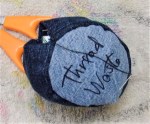
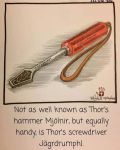
Sewing – Started on a ball, finished the seam ripper case, but still needed pictures. 

Dress Historian Recreates Margaret Tudor’s French Hoods – The Welsh Viking – The famous Tudor era French Hood is frequently misunderstood and a challenge for new and experienced costumers alike. Thankfully, we have the amazing, knowledgeable dress historian and historical costume maker Perin from Isabel Northwode Costumes to teach us all about them! Join us for this special edition as she teaches us how these wonderful and mysterious garments developed from earlier medieval hoods, how they could have been made, and why they’re a much easier costuming project than you might have thought – all by looking at new and exciting historical resources from Renaissance Scotland! Dig out your silk velvet and your finest linen (or a tea towel) and get ready!

Herb Bunch – Gradually getting the plants moved an set up. 

Project Day

Before I even got there!

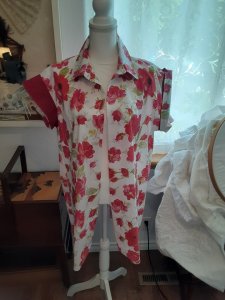
Helen Louise was working on a summer blouse. >>>

Arlys – “Posting early because kids coming later. Currently playing around with one of the emblems from the Oxburgh hangings. This involves some some conjecture and reconstruction, owing to degradation. Also known as playing with colored pencils.”

“I’m working on reconstructing a pattern from one of the Oxburgh Hangings. Parts of this particular one are degraded, so it’s an interesting challenge. Hooray for colored pencils and erasers! One of the really neat things about this particular one is that you can see how Mary did the cruciform edging.”

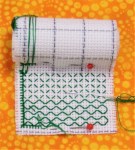
Anja got a very bad photo of her embroidery stuff and then pulled out the sewing project (buttons on a mundane dress.) 

Isabeau briefly got into chat. “😂🤣🤣🤣 I didn’t know it was live. Daniel took me out for lunch! We have lemon pie!”
She also posted earlier, “I’m working on a black wool hooded mantel with rectangular construction. Sewing the seams with gray wool yarn/thread. I’ll post a picture later today. If I can find a finer darker red, I’ll embellish it.”
Anja posted – “Got handed my Mother’s Day dinner! Take-out….. A lovely crab cake with a poached egg, hash-browns and spinach and then a marvelous sweet that they called, “Momma Triffle”. 🙂 It was meringues, straw and blueberries, sweetened whipped cream with vanilla and a blodge of chocolate ganache. I also ended up with a mimosa, so it’s Happy Mommies’ Day to me!” …and the mimosa eventually finished her off. 🙂 
This is a calibration cube.


Gudrun (edited and used with permission) – “I’d join the project day thing, but I’m mucking about with my printer to get everything perfect before I start making some neat prints that could be displayed with SCA stuffs. I’ve been making calibration cubes with a white PLA lol. I’m -.1-.2mm off on most sides though. 20mm cube lol.
 
One of the downsides to PLA, is it can’t be out in the sun. It’ll deform. Would make for good jewelry bits for indoor events, but you can’t use it for outdoor. Winter events provided inside PLA should be okay. It just can’t be exposed to sunlight. Well, sunlight behind a window. It makes sense if you think about it. Especially when I’m printing with a nozzle temp of 200c and bed temp at 70c. Exactly the same concept for FDM (Fused Deposition Modeling) which is what I’m doing.
 
3D printing is super neat lol, I love watching it go from a single bit of hot plastic coming out of the nozzle to a completed object. Best part about PLA? Supposedly biodegradable! Biodegradable because it uses corn starch. I’m not sure why warmed filament gives the scent of honey though. Sucrose in the corn starch I’d guess. 


Gudrun – Yeah. Thus indoor is best for it. Once I can get a pretty much perfect cube though, I’ll be printing that Veles model I sent to you a long while back. Fitting with me having named the printer Veles, and could make a nice thing in the background for SCA videos. Once I get an octopi, I’ll start recording videos too, which could be super duper neat. 
It makes sense if you think about it. Especially when I’m printing with a nozzle temp of 200c and bed temp at 70c.
Gudrun – Exactly the same concept for FDM (Fused Deposition Modeling) which is what I’m doing. Once I get an octopi, I’ll start recording videos too, which could be super duper neat. It took so long to get this printer too! I did order from Prague, and it was on preorder. 3 months and 6 days, and then 3 days to build it. I had to put it together from a slew of parts. It was a damn investment… 🙂 New tech, so it takes awhile. And it’s precision machining stuff. I did record it singing to me when I printed a little tugboat though! It was so cute!
And that’s the completed object! It’s called a Benchy! That filament is so dang glittery. I also made a whistle as my first print and it is SUPER LOUD. Good for wrangling the littles. I might at some point record a video of how loud the whistle is.. I just wouldn’t give it to little kids/people who I swear are chaos personified. When I blow the whistle, it honestly hurts my ears. I might measure the db level out of it lol. 
 
I got a chance to measure the db output of my printer. From where both my desk and bed are, it averages at 42!
Anja – Well, that’s the answer…….to life, the universe and everything…. so it makes sense. 🙂
I think the cute li’l song is the steppers modulating, but I LOVE IT. My brother’s printer also does it! There’s even gcodes (what tells the printer what to do) for singing whole songs! https://www.youtube.com/watch?v=wEBZckkRwSM
XMA Header Image 3D Printer Plays Music – Harry Potter, Star Wars, AC/DC, Jurassic Park
youtube.com
XMA Header Image
3D print a Recorder, an Ocarina or a Kazoo – print a musical instrument!
youtube.com
 
Pluuuus, wood filaments are a thing! They’re plastic and wood pulp.
I figure when I actually start making 3D printed SCA stuff, I can provide links to STLs and writeups on settings and whatnot to go in the posts! STLs are the model file you have to do what’s called slicing to generate the code to print. It’s a form of engineering lol. 
 
Other benefit to PLA? Once I figure it out, there’s a form of lost wax casting, using the PLA as molds that you pour resin into! especially for stuff like jewelry and awards, even better. Plus, I recently heard of someone who 3D prints crowns and stuff!

Recipes

The translation is a bit off, but it’s followable.

Rique-Manger – France, XIV century

– 1 apple
– 2 eggs
– 1 tablespoon butter
– 1/4 tbsp powder fine *
– a pinch of saffron
We peel the apple and cut it into a cube or slices, throw it into the pan, water it with a small amount of water and cook it for a few minutes until the fruit softens slightly, we are draining. (I didn’t pour water, but I poured it into a cup, added a little honey and that way I received an addition to the dish in the form of a delicious compote. ))
We roast apples for a while in the pan to get rid of the leftover water, add butter and fine powder and fry for a few more minutes for the fruits to take root. We stick eggs, add saffron and mix the whole thing until the proteins are cut.
Serving warm, with bread.
Today we have a guest at the Dwarf’s cooks by Agnieszka
ENJOY!!!
* powder fine: 3 tablespoons ginger, 2 tablespoons sugar, 1 tablespoon cinnamon, 1 teaspoon cloves, 1 teaspoon paradise grain (aframon can be replaced with pepper, just remember this one is less smoking)

Miscellaneous pix

Music –

Troubadours d’Italie, Italian Troubadours – Musica Medievale – Ensemble: Trob’Art Ensemble Album: Canso viva – Les Troubadours d’Italie XIIº et XIIIº siècles Video: Ms. 854

  1.  RAIMBAUT DE VAQUEIRAS, Altas ondas que venez suz la mar
  2.  BONIFACI DE CASTELLANA, Sitot m’es fort gaya la sazos
  3.  RAMBERTI DE BUVALEL, Ges de chantar n.om voill gequir
  4.  En sai la flor plus bella d’autra flor
  5.  BERTRAN D’ALMANON, Un cavaliers si jaza
  6.  SORDEL, Puois trobat ai qi conois et enten
  7.  Ai las e que fan miey huelh
  8.  PEIRE DE LA MULA, Dels Joglars servir mi laisse

Links

Funnies 

divider black grey greek key

  • ASXLVII = 24
  • ASXLVIII = 88
  • ASXLIX = 794
  • ASL = 2138
  • ASLI = 731
  • ASLII = 304
  • ASLIII = 146
  • ASLIV&ASLV =230
  • ASLVI = plus 4 puppets, 4 powder fort, 8 cheese spice and 9 powder douce packets, 1 kiss-lock pouch, 9 tiny bobs, 7 pincushions, 3 pins, 3 snip case w/snips, lucet cords, 25 pouches for block-printing, 1 medium pouch, 4 small pouches, 12 bookmarkers, 14 unfinished pincushions, 1 sewing kit (except for bone needle), varnished stuff (124), 2 emery strawberries, 1 woolen spool-knit cord, 48 key bottle openers

Total as a Household = 4061 handed off

moving writing pen motif

In ministerio autem Somnium! Anja, graeca doctrina servus to House Capuchin
Page Created 5/4/21 & published ?/?/21 (C)M. Bartlett
Last updated 5/15/21

Activities through 5-2-21

House Capuchin Shield2*Marzipan was the big thing this week. People are working on various projects, but being in-process there isn’t as much to say! Lots of cookery links this week, not as many classes, although the Salon of the Italies has a bunch of new classes up. There’s a link to the series below. 

All meetings are on hold for the moment, although Project Day and the Monthly Potluck are being held in the Virtual Realm. We’re also doing mini-potlucks, just Anja & Loren and one other “pod” at a time. Let us know if you’re interested!

When will we be able to do these in person? We’ll probably keep right on with the virtual ones side-by-side with the actual. 

  • Herb Bunch – At Ancient Light, Saturdays, 11am-1pm

  • Sewing Time – At Ancient Light, Saturdays, 3-5pm
  • Project Day – At Ancient Light, Sundays, Noon to 6pm
  • Cheese and Wine happens irregularly, usually announced with little notice on our Facebook group.
  • Next Virtual Potluck – 4/18, 5/16, 6/20 
  • No Winter Feast in 2021. We’ll revisit for one in 2022 sometime in the next two months.

Here is the direct Portfolio link which has all the past Project Day reports and various projects, original here:  https://housecapuchin.wordpress.com/portfolio/  and new one here:  https://housecapuchin2.wordpress.com/portfolio/ and number three is here: https://housecapuchin3.wordpress.com/portfolio/

Misc – Taran Daestingr – from Facebook 4/29/21 – Used with permission

To those who feel unwelcome in the SCA:
The key to understanding the SCA is realizing that most of the folks in it are socially awkward to some degree, and a lot of the stuff that looks like snobbery is actually a lack of awareness. Many of us struggle to see how our words and actions appear to others, especially people who don’t know us. Sad but true.
Folks are excited to see their friends! (And maybe don’t notice/think to include the newbie)
Folks are obsessed with this strange rabbit hole of research! (And fail to realize that their explanation can sound like a lecture on how you’re doing it wrong)
Folks are proud of the new thing they just made and want to show it off! (And don’t see how that can make the newcomer feel like their hand me downs are inadequate)
Believe me, I do know the feels. I had THREE false starts in the SCA and two of them were because I didn’t feel welcome, which is really hard to get past as an introvert!
I eventually teamed up with another friend to drag our entire household into the SCA, and having my comfort zone with me was really helpful. I wouldn’t have made it without them, so I deeply understand how coming in solo can be very hard.
My friends and I showed up in garb made to theatrical standards (wrong fabrics, machine sewn everything, no clue how to construct things historically, no matching ensembles or proper layers… just whatever I could throw together inexpensively) and most of everything else was just our modern camp stuff. We didn’t know anybody. We knew very little about the SCA. For the most part no one even talked to us the first few months.
It took a while to notice that we weren’t being judged, we were simply being overlooked by people with busy lives and other things on their minds. That doesn’t make it any easier to break in, but the perspective can be helpful in battling brain weasels.
If anyone is *intentionally* making you feel unwelcome let me at them and I’ll set them straight. If there’s anything else I can do to help you, let me know. At this point all I can promise is answering questions and throwing costume resources at you, but if that helps, I can do it.
To those who have been doing this a while:
Look, I know you’re excited to see your friends and show off the new thing you’ve made/ acquired/learned… but look around. Is there a newcomer you could be including in the conversation? What can you add to their understanding of what’s going on in front of them? Are there terms you can use mundane friendly substitutes for (or explain) instead of making what you say very confusing?
Instead of just jumping into the “correct” way to do a thing, could you maybe start with “we’re all using [insert convenient/inexpensive modern hack] but I’ve been researching [historic thing] which is NOT the expectation we’ll hold anyone to.” Make it clear that your gushing about the exciting new thing is not a lecture on the inadequacies of those around you.
It’s hard when you’re excited to think of such things, I know, but just try. It’ll help you be more aware of when you’re accidentally excluding people.
If you notice someone looking worried or self conscious as you talk, take a minute to tell them where you started. If you’ve been lecturing about your new project using wool from exactly the right kind of sheep in your hand woven twill that you dyed with a period recipe before hand stitching the garment based on some extant find you examined in a museum in France, tell the newcomers that you spent your first year wearing flannel pj pants and that’s a perfectly valid beginning. We all know what a slippery slope A&S can be in this society of craft enablers, but the new folks only see the massive amount of effort that you’ve expended as an insurmountable chasm that separates them from being worthy.
We all tend to forget that those who come after do not know our humble beginnings. Yes, I still feel like that awkward weirdo who first showed up to an event in a royal purple synthetic velvet “princess” dress and didn’t know anything about historical clothing… but what the new folks see (hand sewing, tailoring, natural fibers, laborious embellishment, period styles heavily see researched) is the result of years of research, practice, and learning that looks intimidating to someone who doesn’t even know what questions to ask or search terms to use in order to get started! My garb is NOT the bar. I always tell people that I figure “the bar” for garb is set somewhere around B movie extra from the crowded marketplace scene. If you’re blending in well enough in the background of pictures that you’re less shockingly moden than a bright blue biffy that’s ALL you need to start. They need to be assured of this, but they need to hear that from the people who are well dressed especially.
We all start somewhere. Anyone who isn’t a jerk accepts that newbies are gonna come in with lots to learn. We don’t judge them, and we think that’s enough. I would like to challenge the notion that simply not judging them is enough.
It isn’t.
Not if we want to grow the society. Not if we want to make the shy newcomers (like I once was) feel welcome. We need to EXPRESS our lack of judgement by engaging with them, and by giving them context of our journey so they understand that where they are on the path is a perfectly fine beginning.
We need to let them know that we appreciate their presence and hope they return. A simple introduction, welcome, and the words “Do you have any questions?” or “What questions do you have?” make such a difference! Active question words are key. Please do NOT say “let me know if you have any questions… this puts the effort to engage back onto the person you’re trying to encourage, and I guarantee you the shy introvert won’t do it. You need to make the offer to ask immediate, subtly assure them you’re prepared to answer now. Sounds weird, I know, but I have seen the difference in language work magic with new folks.
A lot of feelings of exclusion are the result of unintentional acts. If we examine our actions and strive to make intentionally inclusive choices we’ll see people who might never have returned instead become the next generation of the SCA, welcoming new members with the warmth they think of as normal because it is how they were recieved. I can tell you that watching this take place is a treasured memory of mine. We can change and build a culture of inclusion, but only by acting with intention.
I know this one was a bit of a read, but I hope it helps someone. A big part of my personal mission is to do what I can to keep as many people as possible from feeling the same exclusion that drove me away (twice) in the beginning.
Both the folks who ignored/dismissed me and the people who were kind and took the time to welcome me in the beginning have made a lasting impact on me and the way I approach new folks.
Think of which you are to new people. Look beyond your intentions and look at their perception of you.
Are you the paragon of nobility and accomplishment making someone feel valued?
Or are you the snobby cliquish judgey individual who is the reason that person never came back?
The choice is yours. Choose wisely.

 Other Good Stuff

Knowne Worlde Entertainment Guide – KWEG – Entertainment List – https://docs.google.com/spreadsheets/d/1xEZAwCca4IQham3TpxfWnonQscG668mmYgIMA18YZ-E/edit?fbclid=IwAR3UAXblIOd9u-N5IKtJNLzLFS52KPibZEAuwoDHjWzFoCtN_gDHETI9iCo&fbclid=IwAR2rPB-dkaGPgC11XOEHxYuA5AXE5MWSaRXCW2I-D1YCs-oWwB1Co0xwzKc#gid=0

Happy 56th Birthday, SCA!

Classes – The Salon of the Italies was this week. They have far too many classes to post here. This is the Ren Village page for their videos!  https://www.youtube.com/channel/UCe1Izj92BXlpjlCZbykKqVA/videos

Chalice Covers in History | Goblet Cover for a Cup – Lynne Fairchild – Need historical ideas for a cover for your cup or drinking vessel? The drinking vessel may be a goblet, a chalice, a cup, or a mug. Learn about the differences between a pall and a veil, as well as what type of fabrics and embroidery were used in different centuries. I am looking at historical examples of cup covers to help me decide how to design my next cup cover. These covers were used to help keep insects and dirt out of drinks inside cups.

Shopping with the Contessa: Medieval Eating Kit – Rachel Lorenz – 15th Century Eating Kit by Tod Cutler If you like this content, you can receive a host of perks by supporting the Creative Contessa via her Patreon page: https://www.patreon.com/thecreativeco…​. The Creative Contessa unboxes a 15th century eating kit. The knife is based on a find from the River Thames. The spoon and knife steel are based on common finds from around Europe. The three-part piece is based on conjecture about what could have been and is not based on an extent find. The items were purchased from Tod Cutler at http://www.todcutler.com. The Creative Contessa has purchased several items from this merchant and has been immensely satisfied with the quality and beauty of the pieces purchased. The music is Principessa by Gaita; it can be found on their music release “The Queen of Measures” and is available via Spotify, their website at http://www.gaita.co.uk or by email at info@gaita.co.uk The Creative Contessa can be found on Facebook at The Creative Contessa: https://www.facebook.com/TheCreativeC…​.

Early Week – Marzipan and some embroidery is all….. Oh, and plants…. 

Cookery – Lots of marzipan! So far that’s 13 pounds made, although some is going to have to go back into the food processor because it’s overly dry. A lot of trial runs on the really fancy candies (think gold leaf), and a start on the regular fancies (marzipan stuffed with ginger or dipped in chocolate). This is quite a project! (whole project page here: https://housecapuchin.com/projects-over-period…/marzipan/)

Duck pie! – https://kirielskitchen.blogspot.com/2013/06/renaissance-duck-pies.html

Sprinkle on a little spicy magic – (powder douce) – https://modernmedievalcuisine.com/2019/05/31/sprinkle-on-a-little-spicy-magic/

What is powder fort? https://modernmedievalcuisine.com/2019/05/31/what-is-powder-fort/

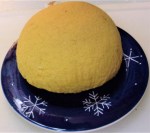
A simnel [not to be confused with simnel bread]. The shape is based on the 1608 evidence in Volume 50 “Bread” of Food and Cookery in Elizabethan and Early Stuart England which also talks of them being boiled. For reference the plate is 12” diameter.
Simnel breads are larger costing 2d and one gentleman took 4 meals to eat one, spread from buying it on Monday to the last in a meal on Saturday. Breads were coped or domed in the center and could contain currants.

Crustard of Erbes on a Fysche Day (Tart of Salmon and Greens) – Monk’s Modern Medieval Cuisine – Dr Monk not only shows you how to make his modern-medieval version of Richard II’s ‘custard tart’ for a non-meat day, but delves into the language, history and manuscripts of the period to give you the background to this delicious dish.

Bazzoffia | TASTE OF THE MIDDLE AGES – Regia Medievalis (Projekt Lazarus Sicilia) – Directed by Medievalis Projekt Lazarus – Hello to all the friends of Regia Medievalis, today’s medieval recipe is a soup called Bazzoffia. This dish belongs to the long and varied list of “energy soups” that the canteens of European convents made available to pilgrims, tired from the long journey and in need of substantial and invigorating meals to better face the next journey. The bazzoffia is nothing more than a tasty soup made from legumes, vegetables and vegetables, very simple to make and for which only “poor” ingredients, that is inexpensive, are needed; “A recipe for recovery and against any waste, which made it possible to make stale bread tasty and use many seasonal vegetables. It is also called” soup of love “because it is considered aphrodisiac:

Apothermum – Ancient Roman Spelt Cakes – Historical Italian Cooking

Today we prepare apothermum, ancient Roman spelt cakes from De Re Coquinaria.

 Ingredients

 For more info about this recipe check out our blog: https://historicalitaliancooking.home…

Ancient Roman Honeyed Pork – Tasting History with Max Miller


Sewing – Anja got the embroidery finished on the seam ripper case and then started stitching it up. She started sewing it, but didn’t finish until Tuesday….. 

gothic fitted gown – part 1 – Eleanor Bolton – Intro to sewing a gothic fitted gown (coteharde) in a weekend.

Dublin Dragons of Drachenwald – Elewys of Finchingefeld – You can’t escape the Vikings. Remastered. I just cleaned up the audio from the earlier version. This 10th century skip hole pattern was found in Dublin, Ireland, made during the Norse occupation of several coastal towns. The original is a brocade, with a ground weave of silk and gold brocade over the top. The pattern I’m showing you here is a threaded in, skip hole version of that pattern. Blog link with pattern:  http://ladyelewys.carpevinumpdx.com/2021/04/02/weave-along-with-elewys-ep-16-dublin-dragons-of-drachenwald/


Herb Bunch – A bunch of planting/tending happened on Tuesday/Wednesday. Nasturtium seeds went in and a lot of vegetable ends. 

Project Day – 

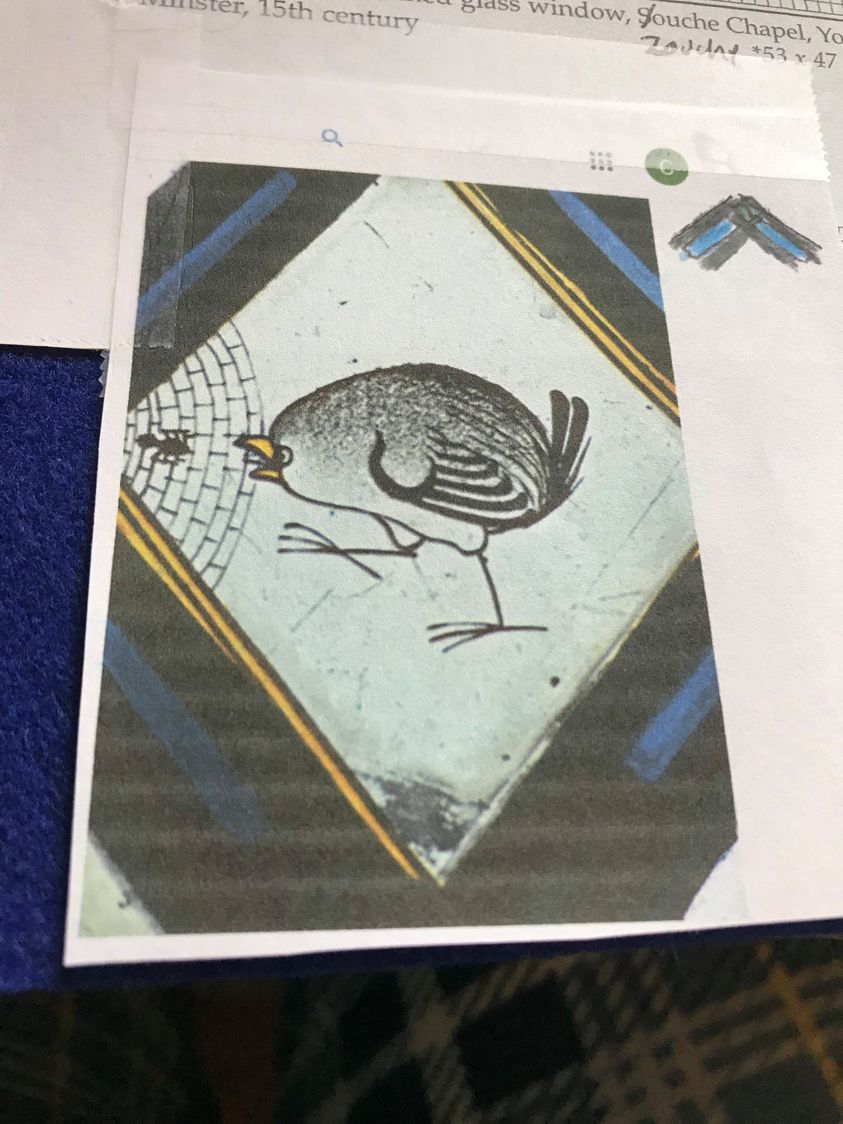
Arlys was first, before we were even started! “For Project Day: Gonna be up to my eyes this afternoon, but thought this little wren might be fun to try. He’s from a painted stained glass window in an English medieval cathedral. Fierce spider hunter!”


Amy brought in some more cords during the week. Those will replace the ones that went onto the bottle openers. 

Anja was trying to get more of the marzipan stuff into galleries on that new page, but wordpress was fighting here. Much cussing ensued…. https://housecapuchin.com/projects-over-period…/marzipan/

Miscellaneous pix

Music –

Carmina Burana XII century – Musica Medievale

Links

Microscopic identification of feathers from 7th century boat burials at Valsgärde in Central Sweden: Specialized long-distance feather trade or local bird use? – https://www.sciencedirect.com/science/article/pii/S2352409X21000407

New and Updated Pages

Marzipan – https://housecapuchin.com/projects-over-period…/marzipan/

Funnies 

divider black grey greek key

  • ASXLVII = 24
  • ASXLVIII = 88
  • ASXLIX = 794
  • ASL = 2138
  • ASLI = 731
  • ASLII = 304
  • ASLIII = 146
  • ASLIV & ASLV = 230
  • ASLVI = plus 4 puppets, 4 powder fort, 8 cheese spice and 9 powder douce packets, 1 kiss-lock pouch, 9 tiny bobs, 7 pincushions, 3 pins, 3 snip case w/snips, lucet cords, 25 pouches for block-printing, 1 medium pouch, 4 small pouches, 12 bookmarkers, 14 unfinished pincushions, 1 sewing kit (except for bone needle), varnished stuff (124), 2 emery strawberries, 1 woolen spool-knit cord, 48 key bottle openers

Total as a Household = 4061 handed off

moving writing pen motif

In ministerio autem Somnium! Anja, graeca doctrina servus to House Capuchin
Page Created 4/27/21 & published 5/5/21 (C)M. Bartlett
Last updated 5/5/21

Activities through 4-25-21

House Capuchin Shield2Before the Plague hit a lot of stuff was easier. We’re all having to learn new skills. The marzipan for the auction is coming along. All the doughs are done and packed and Anja is starting on the “fancies”. Other than that folks are just continuing with projects. 

All meetings are on hold for the moment, although Project Day and the Monthly Potluck are being held in the Virtual Realm. We’re also doing mini-potlucks, just Anja & Loren and one other “pod” at a time. Let us know if you’re interested!

When will we be able to do these in person? We’ll probably keep right on with the virtual ones side-by-side with the actual. 

  • Herb Bunch – At Ancient Light, Saturdays, 11am-1pm
  • Sewing Time – At Ancient Light, Saturdays, 3-5pm
  • Project Day – At Ancient Light, Sundays, Noon to 6pm
  • Cheese and Wine happens irregularly, usually announced with little notice on our Facebook group.
  • Next Virtual Potluck – 4/18, 5/16, 6/20 
  • No Winter Feast in 2021. We’ll revisit for one in 2022 sometime in the next two months.

Here is the direct Portfolio link which has all the past Project Day reports and various projects, original here:  https://housecapuchin.wordpress.com/portfolio/  and new one here:  https://housecapuchin2.wordpress.com/portfolio/ and number three is here: https://housecapuchin3.wordpress.com/portfolio/

Misc – Sisters Interview with Mistress Yseult, Summits (An Tir)

Educational Events

 Other Good Stuff

Knowne Worlde Entertainment Guide – KWEG – Entertainment List – https://docs.google.com/spreadsheets/d/1xEZAwCca4IQham3TpxfWnonQscG668mmYgIMA18YZ-E/edit?fbclid=IwAR3UAXblIOd9u-N5IKtJNLzLFS52KPibZEAuwoDHjWzFoCtN_gDHETI9iCo&fbclid=IwAR2rPB-dkaGPgC11XOEHxYuA5AXE5MWSaRXCW2I-D1YCs-oWwB1Co0xwzKc#gid=0

Classes – 

Hans Holbein the Younger: A collection of 119 paintings (HD) – LearnFromMasters – Hans Holbein the Younger: A collection of 119 paintings (HD) Description: “Holbein was one of the most accomplished portraitists of the 16th century. He spent two periods of his life in England (1526-8 and 1532-43), portraying the nobility of the Tudor court. Holbein’s famous portrait of Henry VIII (London, National Portrait Gallery) dates from the second of these periods. ‘The Ambassadors’, also from this period, depicts two visitors to the court of Henry VIII. ‘Christina of Denmark’ is a portrait of a potential wife for the king. Holbein was born in Augsburg in southern Germany in the winter of 1497-8. He was taught by his father, Hans Holbein the Elder. He became a member of the Basel artists’ guild in 1519. He travelled a great deal, and is recorded in Lucerne, northern Italy and France. In these years he produced woodcuts and fresco designs as well as panel paintings. With the spread of the Reformation in Northern Europe the demand for religious images declined and artists sought alternative work. Holbein first travelled to England in 1526 with a recommendation to Thomas More from the scholar Erasmus. In 1532 he settled in England, dying of the plague in London in 1543. Holbein was a highly versatile and technically accomplished artist who worked in different media. He also designed jewellery and metalwork.”

Researching & Experimenting with Historic Hairstyles with Braiding – Lynne Fairchild – Follow me as I research and experiment with different medieval and Renaissance hairstyles, including hair braiding and hair taping from the 14th century, 15th century, and 16th century. I am looking for a historically accurate hairstyle that keeps my long hair up and off of my face, but that’s also quick to do and won’t fall down easily. So no using elastic hair ties or hair clips. Just a needle and thread!

Music credit: Deep Woods 3 by PeriTune | http://peritune.com​ Music promoted by https://www.free-stock-music.com​ Attribution 4.0 International (CC BY 4.0) https://creativecommons.org/licenses/…

Early Week – Bits and pieces of projects being worked on. Sasha got a care package Tuesday night and I made another batch of capouns in conscys, just because I had the ingredients. 

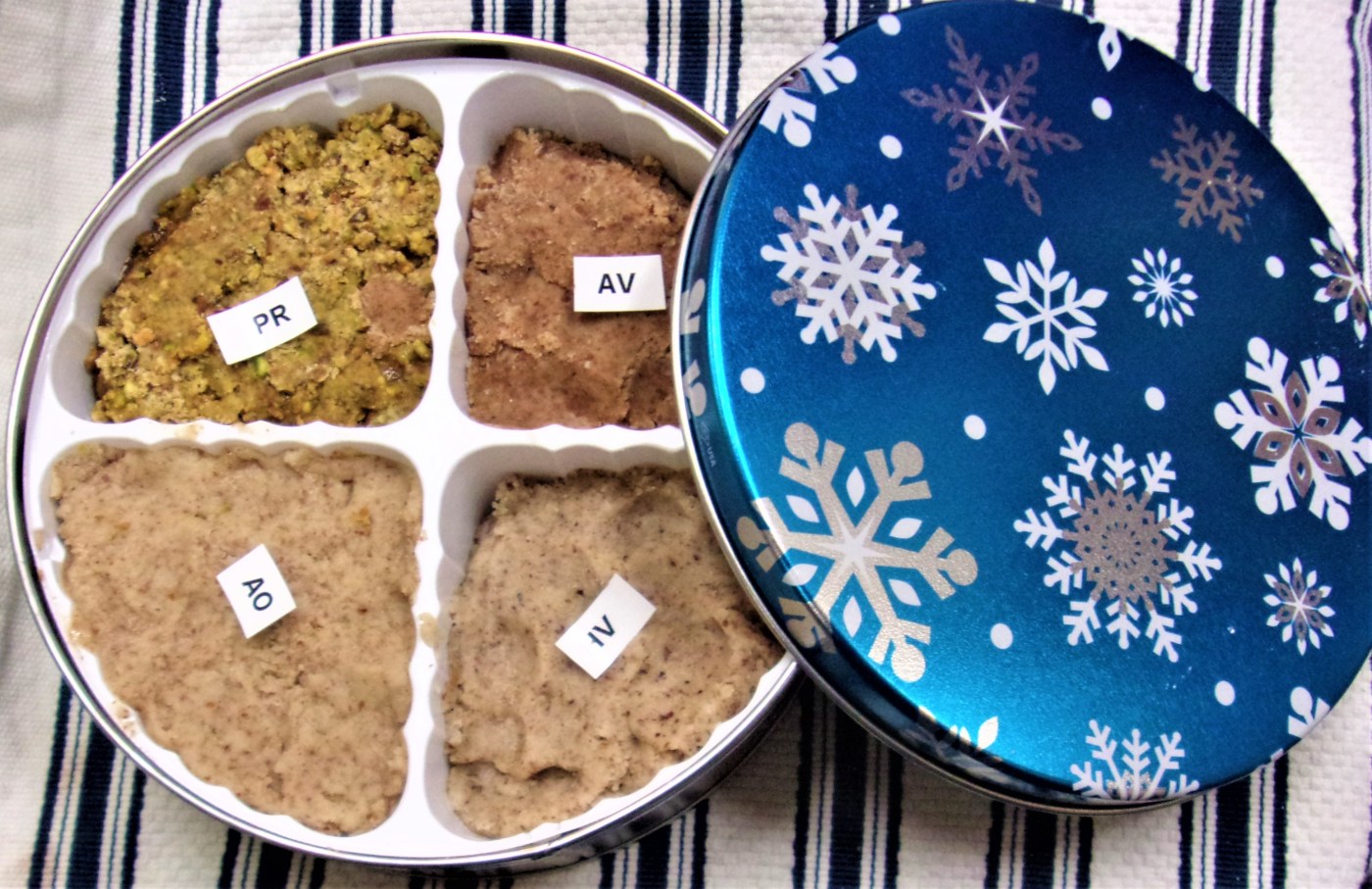
Cookery – Prep for setting up a *lot* of marzipan went on in the early week. There was a lot of organizing to do and some deep cleaning, so that photos would look good. A lot of this is going into a class and the marzipan itself to an auction. Mid-week doughs got started. Almond with vanilla, then almond with rose, then pistachio with rose, then by Saturday, almond with orange blossom, filbert with vanilla and filbert with rose. Once those were done we were just waiting for the tins which we supposed to arrive on Friday and didn’t until Monday, so those pix will all be in the next report. 

How To Feed A Roman Emperor: Vitellius & the Year of 4 EmperorsTasting History with Max Miller – LINKS TO SOURCES

  • Apicius, De Re Coquinaria (translated by Elisabeth Rosenbaum and Barbara Flower): https://amzn.to/3wLqA4A
  • The Twelve Caesars by Suetonius: https://amzn.to/3uDUt4W
  • 69 AD The Year of Four Emperors by Gwyn Morgan: https://amzn.to/2RfsY39
  • Some of the links and other products that appear on this video are from companies which Tasting History will earn an affiliate commission or referral bonus. Each purchase made from these links will help to support this channel with no additional cost to you. The content in this video is accurate as of the posting date. Some of the offers mentioned may no longer be available. Subtitles: Jose Mendoza

PHOTO CREDITS

Stinging nettle, wild garlic, poppyseed and acorn flour bread – Sally Pointer – Bored with recuperation after surgery, Sally escapes for a short hedge-bothering session and bakes bread rolls made with foraged stinging nettle, wild garlic, poppyseed and acorn flour.

Sewing – Just keeping on….. Close to the end of that project. 

Wonderful article about a textile find, a men’s coif! – https://historicaltextiles.org/coif-cuffia/?fbclid=IwAR0w1ENe9tfqSVCG1enbAbPa4jisdvXHyO2-6SgDh-_kVgVkZlWIomJdlUs

Herb Bunch – Mostly tending again this week. A lot of plants are going to need to be separated in the next few months. The mother aloe has 1/2 a dozen babies. There are tiny jade plants in a lot of unusual places. Several of the other succulents have dropped leaves which have rooted. 

Project Day – There wasn’t a lot this week. Folks were busy with mundane concerns. We’re going to try having a vido chat open from 3-4pm on Sundays for awhile. 

Miscellaneous pix

Music – Cantigas de Santa Maria – Clemencic Consort – Musica Medievale – Ensemble: Clemencic Consort Album: Troubadours / Cantigas De Santa Maria (CD3) http://www.facebook.com/musicamedievale • This 2021 is the anniversary of the 800 years from the birth of Alfonso X El Sabio. To celebrate him, this year I’ll share many versions of his Cantigas! This is the third video about it, you can easily find the others on the channel. This third version of the Cantigas is from the Clemencic Consort, one of my three favorite ensembles for medieval music. As always, Clemencic’s conducting prefers to approach historical accuracy with courageous and often not easily accessible choices for a not accustomed ear to medieval music. The musicians who accompany him in this first volume are among the best with whom Clemencic has worked over the years including René Zosso on vocals and hurdy-gurdy and soprano Pilar Figueras. • Alfonso X was born in 1221, he was King of the Romans, of Castile and León. His father was Ferdinand III, a liberal man called “the Saint” and the “King of religions” as during his reign he managed to make Christians, Muslims and Jews coexist in peace. His mother was Elisabetta Hohenstaufen, nephew of Frederick Barbarossa. From the sources that speak of his life we ​​know that in his youth Alfonso was surrounded by numerous paramours and politically helped his father in many military campaigns, but it was his love for Art that made him immortal with the nickname “El Sabio”. In 1254 Alfonso endowed with many privileges the school of Salamanca, founded by his grandfather, and thanks to Pope Alexander IV, he obtained permission to make the school an international university allowing its graduates to teach anywhere, except Paris and Bologna. Alfonso tried to bring together all the knowledge of his time in the language spoken by his subjects by founding the School of Translators of Toledo; the Muslim and Jewish sages of his court translated ancient Arabic and Hebrew works into Castilian. His scientific, historical and literary work was fundamental; promoted the drafting and publication of a series of authoritative texts in various fields of artistic and scientific culture such as the Alfonsine Tables: astronomical tables capable of providing the positions of the Sun, planets, stars and the dates of eclipses. He was also an excellent poet and even the author of one of the first treatises on chess. However, it was Music that handed it over to legend thanks to the collection of the famous Cantigas de Santa Maria, monophonic songs of the XIII cent. now preserved in Madrid and Florence, containing an enormous number of compositions and representations of musical instruments and players. The outset of these compositions can be traced back to the troubadour art, which were so successful as to induce Alfonso X to use both the language and the form. Marian devotion was particularly in vogue in this century, the collection sees the participation of aristocrats and courtiers, bourgeois, friars, clerics and jesters of humble origins, but protected in the courts. King Alfonso himself composed cántigas, some of which incite poets and jesters to dedicate their efforts and inspiration to the “Santa Dama”. In addition to the Cantigas de Santa Maria, the Cantigas de Amigo, popular, melodious and melancholic, also spread in that period, showing some contact with the Mozarabic kharge in Arabic-Hebrew composed in the XI cent.. The work has great importance from a triple point of view: literary, musical and pictorial. Alfonso X inherited from his father Fernando III his musical chapel which brought together interpreters and composers of various cultures and who formed part of the alphonsine court, similar to his School of translators or scriptorium regio. He seems to be surrounded by them in some miniatures (50:59). The melodies are influenced by Gregorian monody, popular lyric and troubadour songs. The Codices of the Escorial Library are adorned and profuse with miniatures, fundamental for the reconstruction of 13th century musical instruments: flutes, hurdy-gurdy, psaltery, lute, vielle, cítara, guiterne, harp, castañuelas, bagpipes, dulzaine…

  1. Prologue – Porque Trobar
  2. Cantiga 2 – Muito Devemos Varoes
  3. Cantiga 30 – Muito Valuera Máis
  4. Cantiga 264 – Pois Äos Seus Que Ama 
  5. Cantigas 5 & 59 (Instrumentales) 
  6. Cantiga 47 – Virgen Santa Maria, Guárda-nos
  7. Cantiga 322 (Instrumentale) 
  8. Cantiga 37 (Instrumentale)
  9. Cantiga 340 – Virgen, Madre Gloriosa
  10. Cantiga 166 (Instrumentale)
  11. Cantiga 100 (Version I) – Santa Maria, Strela Do Dia
  • Conductor, Liner Notes, Recorder, Crotales – René Clemencic
  • Hurdy Gurdy – René Zosso
  • Soprano Vocals – Pilar Figueras
  • Countertenor Vocals – Zeger Vandersteene
  • Baritone Vocals – Pedro Liendo
  • Bombarde, Chirimia Gigante – Alfred Hertel
  • Goblet Drum (Zarb) – Djamchid Chemirani
  • Vielle – Michael Dittrich
  • Zither (Tympanon), Carillon, Drum Tabor – Johann Krasser

Links

Video & Podcast Links

Funnies 

divider black grey greek key

  • ASXLVII = 24
  • ASXLVIII = 88
  • ASXLIX = 794
  • ASL = 2138
  • ASLI = 731
  • ASLII = 304
  • ASLIII – 146
  • ASLIV – 230 plus 4 puppets, 4 powder fort, 8 cheese spice and 9 powder douce packets, 1 kiss-lock pouch, 9 tiny bobs, 7 pincushions, 3 pins, 3 snip case w/snips, lucet cords, 25 pouches for block-printing, 1 medium pouch, 4 small pouches, 12 bookmarkers, 14 unfinished pincushions, 1 sewing kit (except for bone needle), varnished stuff (124), 2 emery strawberries, 1 woolen spool-knit cord, 48 key bottle openers

Total as a Household = 4061 handed off

moving writing pen motif

In ministerio autem Somnium! Anja, graeca doctrina servus to House Capuchin
Page Created 4/18/21 & published ?? (C)M. Bartlett
Last updated 4/26/21

Activities through 4-18-21 Potluck

House Capuchin Shield2Busy week for Anja and Loren, with the shop and the moving! They’re mostly down to finishing touches on the latter. As usual in potluck weeks cooking was the main thing that got done. Sunday’s potluck was a touch lonely again, just us…. missing in-person events! 
All meetings are on hold for the moment, although Project Day and the Monthly Potluck are being held in the Virtual Realm. We’re also doing mini-potlucks, just Anja & Loren and one other “pod” at a time. Let us know if you’re interested!

When will we be able to do these in person? We’ll probably keep right on with the virtual ones side-by-side with the actual. 

  • Herb Bunch – At Ancient Light, Saturdays, 11am-1pm
  • Sewing Time – At Ancient Light, Saturdays, 3-5pm
  • Project Day – At Ancient Light, Sundays, Noon to 6pm
  • Cheese and Wine happens irregularly, usually announced with little notice on our Facebook group.
  • Next Virtual Potluck – 4/18, 5/16, 6/20 
  • No Winter Feast in 2021. We’ll revisit for one in 2022 sometime in the next two months.

Here is the direct Portfolio link which has all the past Project Day reports and various projects, original here:  https://housecapuchin.wordpress.com/portfolio/  and new one here:  https://housecapuchin2.wordpress.com/portfolio/ and number three is here: https://housecapuchin3.wordpress.com/portfolio/

Misc – Spring in the Middle Ages – https://www.medievalists.net/2021/04/spring-middle-ages/

Educational Events

 Other Good Stuff

Knowne Worlde Entertainment Guide – KWEG – Entertainment List – https://docs.google.com/spreadsheets/d/1xEZAwCca4IQham3TpxfWnonQscG668mmYgIMA18YZ-E/edit?fbclid=IwAR3UAXblIOd9u-N5IKtJNLzLFS52KPibZEAuwoDHjWzFoCtN_gDHETI9iCo&fbclid=IwAR2FNHXNjhHUNRlFdL9ACXgAt1CuLj5cRx9h1Fweqj-Vq4AGrUyvLQ7z5dc#gid=0&fvid=1272975718

Dance Vids – Medieval Dance Demo: Amoroso – Rachel Lorenz – The Creative Contessa dances Amoroso with her Condottiero. Amoroso is by Gaita Medieval Music and can be found on their music release “Eschewing of Ydlenesse”. The exit music is Principessa by Gaita Medieval Music; it can be found on their music release “The Queen of Measures”. Both are available via their website at http://www.gaita.co.uk or by email at info@gaita.co.uk

Early Week – Anja was working on stuff for classes that she’s supposed to teach. 

Cookery – A green bruet got made in the early week, a try with using something other than stewed parsley. It didn’t help, but that may have been because Anja left out the cheese and the bacon! When those got added, on Sunday, it was actually pretty good. Later in the week carrots got cooked and set up with butter and then on Friday we set up the cabbage/ham pottage. This is one we’ve done before. It’s mostly from descriptions, rather than from a cookbook, since everyone knew how to make pottage. What we did is in the recipe below. Then bread and hard-boiled eggs on Saturday and chicken for the capouns in conscys. The weird part is that all the mustard is awol. I’m pretty sure I still had some ground. So I went looking for the little tubs of made mustard in the freezer and those are lemon juice and lemon zest! I finally had to use some Dijon mustard. Sunday was dumplings, apple/pear muse, a vanilla extract set-up and putting together a nibbles tray. 

Sewing – Just keeping on with projects.

Anja’s note – I’m cringing over the use of a hoop, but otherwise this is pretty interesting. No narration, just stitching.

DIY Step by Step Blackwork Embroidery | Pin Cushion Tutorial – Lynne Fairchild – Watch step by step in this tutorial as blackwork embroidery is added to linen to create a flower, using a historic pattern from the 16th century. Afterwards, the reversible embroidery will be made into a pin pillow inspired by pincushions dating from the 16th and 17th centuries.

Sundials, etc. – 

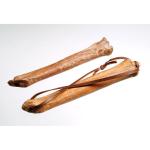
Fjorlief inHagahas been doing some bone-carving. These are thread-winders. Originals were antler. 

Chess Sets – a look at my collection – Nick Saint-Erne – Here are my chess sets that I have collected from travels. They were selected because they represent the countries from where they were made. Sets are from Mexico, Greece, Romania, Turkey, El Salvador, Philippines. Sri Lanka, Thailand, Middle Earth and USA.

Mechanical Marvels—Musical Automaton: Clock with Dancing Figures, Spinet and Organ, 1625 – The Met – Each part of this marvel, a combination of clock, musical instrument, and automaton, would have added to its expense. Its production required the cooperation of several artisans. The clock’s case is marked “eben,” which the cabinetmaker’s guild used to indicate real ebony (and not a cheaper substitute), and its corners are embellished with fine silver caryatids (female supporting ornaments). Clocks like this one—the earliest surviving example of its type—made it possible to enjoy recorded music at home. A multisensory entertainment for the noble classes, this piece has a clockwork mechanism that plays three jaunty original compositions (one of which can be heard in this video) on a spinet and an organ. It also sets in motion a cast of commedia dell’arte figures that dance in a circle or spin and jump on the hour. The mirrored panels behind them are positioned to create the illusion of a large ballroom; the trick is simple yet effective. Featured Artwork: Musical Automaton Clock with Spinet and Organ, ca. 1625. Veit Langenbucher (1587–1631) and Samuel Bidermann and Son (1540–1622). German, Augsburg. Silver, brass, iron, gilding, ebony, hardwood, parchment, leather, textile, paint. The Metropolitan Museum of Art, New York, Purchase, Clara Mertens Bequest, in memory of André Mertens, 2002 (2002.323a–f)

Herb Bunch – Berries got moved to the new place. 

Project Day – Amy posted some new lucet cords. Anja and Loren were busy with either customers or food all day. 

Potluck – Was just Loren and Anja. We ate starting nibbles around 5pm and the main course around 6pm. Afters were more like 8 o[clock….. More pix below in the menu and recipes. 

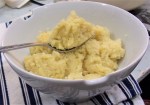
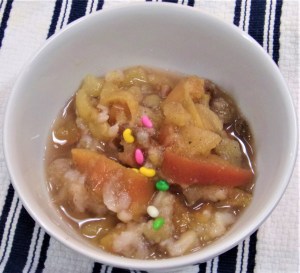
Apple/Pear Muse

Egg and semolina dumplings – Easy! Two eggs, 1 cup semolina, salt and garlic powder to taste.

Potluck Menu

Beverage – Mead

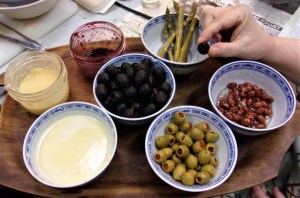
Nibbles – clkws from asapargus pickle – bean pickle, green olives, butter, garlic butter, salad jam remnants, black olives in the middle

Nibbles

  • Pickles – beans, onion, asparagus
  • Bread – ready
  • Butter – ready
  • Olives – black and green
  • garlic butter
  • salal jam

*

*

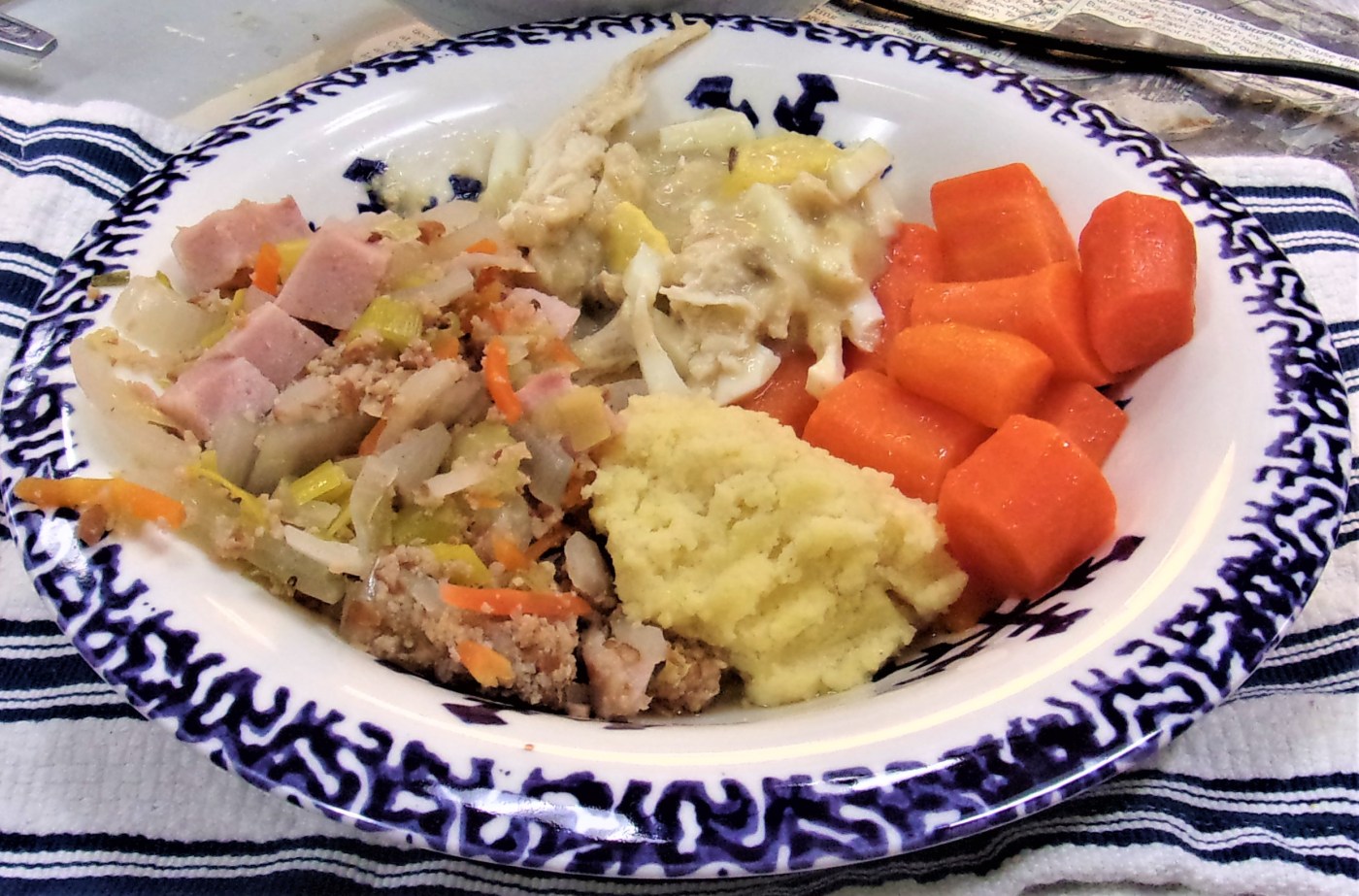
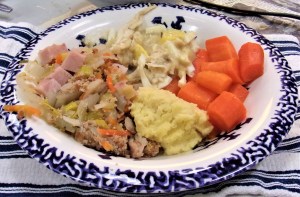
My plate – clkws from dumpling – pottage, capons in conscys, carrots

Main

  • Cabbage/Ham pottage
  • Carrots 
  • Green bruet 
  • Capons in Conscys 
  • Egg/semolina dumpling

*

*

Yum!

Afters

  • Apple pear muse
  • comfits
  • marzipan

Recipes

Finished Bruet

Tallivent – Green egg and cheese soup (bruet or brewet) – Anja’s version

  • Crockpot
  • Parsley,   2 bunches – replaced with 2 handfuls of spinach leaves, plus a handful of garden greens (parsley, but also dandelion, onion, garlic,  leek, thyme, fennel, turnip tops, celery, sorrel), plus one pint box of microgreens)
  • Dab saffron (ended up with cheese spice!)
  • 1 quart of chicken broth
  • Bread crumbs, 1 cup cubes made 3/4 cup crumbs – replaced with two stale rolls, cut up.
  • Dried green peas cooked pureed (used 2 cups water)
  1. Cook all of the above together
  2. Grate cheese and add (cheddar? Parmesan?)
  3. Poach eggs in almond milk, maybe? Or water. Or even directly in the crockpot, if you have long enough.
  4. Add a little cooked bacon.


Take parsley, a bit of sage, just a bit of saffron in the greens, and soaked bread, and steep in puree [of peas] or boiled water. Add ginger steeped in wine, and boil. Add the cheese, and the eggs when they have been poached in water. It should be thick and bright green. Some do not add bread, but add almond milk.

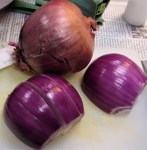
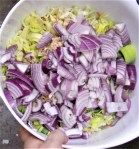
Cabbage/Ham pottage with leeks and onion – This is a savory pottage cooked from descriptions, rather than a recipe. 

  • Broth (About 3 cups) 
  • 1 bag tri-color cole slaw mix
  • 1 red onion
  • 2 leeks (only the yellow parts and pale green parts, the rest will get washed (muddy!) chopped and frozen in some of the water from the pottage
  • Ham rind (from about 5 inches of a ham)
  • Caraway
  • Extra ham, diced

Method

  1. In a large pot, put some kind of broth, about 2 inches (we used carrot water!) 
  2. Add Cole slaw mix.
  3. Chop and add onion
  4. Chop and add leeks
  5. Run ham rind through food processor to grind it and add.
  6. Add salt and caraway to taste. 
  7. Cook on low until cabbage is cooked and onion is starting to soften. 
  8. Taste again and add salt or caraway, if necessary. 
  9. Add more ham, if you wish.
  10. Serve hot with a strainer spoon with pats of butter on the side. (Iow, leave the liquid in the pot.)

Note – This will fridge well, but only freeze if you have liquid up to the top of the solids. Re-heat in the microwave. 

Capouns in Councys (two batches)

  • Chicken broth, quart
  • Two frozen chicken breasts (plus 2 for 2nd batch)
  • Water (if they’re not covered by the broth)
  • Salt
  • powder fort or a mix of mustard, caraway, horseradish and garlic
  • 4 eggs (plus 4 for 2nd batch)
  • handful breadcrumbs (times 2)
  • big pinch saffron (times 2)

Method

  1. Heat chicken broth. Add chicken. Add water if the broth doesn’t cover. 
  2. When the chicken is thawed and mostly cooked, shred with a fork, simmer until completely done with spices and salt.
  3. Put the chicken in a re-heatable serving dish. Put half (about 2 cup)s of the broth into a canning jar and fridge. (This makes two batches, iow)
  4. Meanwhile hardboil eggs and separate white from yolk.
  5. Split the yolks and set them on top of the chicken.
  6. Return the rest of the broth with saffron and breadcrumbs, to the pot. Stir and let heat for a couple of minutes after stirring, then stir well until thickened. 
  7. Chop egg whites and add to the broth. Stir well. 
  8. Pour the sauce over the chicken and “flour” with the ground clove…

Original recipe – Take capons (chicken) and roast him right that he be not half-enough (half-cooked) and hew him to gobbets and cast him in a pot. Do thereto clean broth. (Add strained broth) Seeth him that he be tender. (Simmer) Take bread and the self-broth and draw it up together (drain the chicken and put bread in the broth). Take Powder Forte and Saffron and salt and cast thereto. (add it…) Take eggs and seeth them hard (hardboil some eggs). Take out the yolks and hew the white therein. (Separate whites and yolks and chop the white.) Take the pot from the fire and cast the white therein. Messe the dishes therewith (plate the chicken, pour the sauce over.) Lay the yolks whole and flour it with cloves. (Set the whole yolks around attractively and sprinkle the whole thing with ground clove.)

Forme of Cury – CAPOUNS IN COUNCYS [1]. XXII – Take Capons and rost hem right hoot þat þey be not half y nouhz and hewe hem to gobettes and cast hem in a pot, do þerto clene broth, seeþ hem þat þey be tendre. take brede and þe self broth and drawe it up yferer [2], take strong Powdour and Safroun and Salt and cast þer to. take ayrenn and seeþ hem harde. take out the zolkes and hewe the whyte þerinne, take the Pot fro þe fyre and cast the whyte þerinne. messe the disshes þerwith and lay the zolkes hool and flour it with clowes.

Music – Le Coeur MangéMusica Medievale – Ensemble: L’Itinéraire Médiéval/Katia Caré Album: Le Coeur Mangé: La Légende Du Premier Trouvère, Le Châtelain De Coucy Video: Ms.5070 http://www.facebook.com/musicamedievale

The Chatelain de Coucy (Lord of Coucy), one of the most highly appreciated poets of the entire courtly period, belonged to the first generation of trouvéres, as did his neighbour and friend Gace Brule. His oeuvre of fifteen authenticated songs stands out for its great lyricism and for its flights of sincere personal sentiment, both of which largely surpassed more conventional verse on courtly love. The poems sketch out a story: burgeoning love, fear of malicious gossip, the last moments of pleasure before leaving on a Crusade, the Crusader’s adieu – which was to become an often-repeated legend. This legend, coupled with the beauty of his poetry, allowed the Chatelain de Coucy to share a distinction with the King of Navarre, Thibaut IV: the verses of these trouvéres were the first ever to be published. Although the Chatelain de Coucy cannot be identified with absolute certainty, it is likely that his name was Guy de Thourotte. This figure served as gouverneur at the Chateau de Coucy from 1170 to 1203; he departed on the fourth Crusade in 1203, and died the same year. “Lors lor aviat uns granz damages que uns halz hom de lost, qui avoit nom Guis li chastelains de Coci, morut et fu gitez cen la mer.” (Villehardouin). The narrative romance appeared in France around the mid-twelfth century. Its penchant for subjects having to do with love made it an ideal vehicle for the themes of courtoisie and courtly love. ‘A number of romances written in the thirteenth and fourteenth centuries retold the legend of the Chatelain de Coucy. The first of these is “Le roman du castelain de Couci et de la dame du Fayel”. It was written in Picard and includes 8266 octosyllabic lines, the last of which spell the word Jakemés in an acrostic. The narrative is built around songs attributed to the Chatelain de Coucy, to which were added original lyrical works as well as two songs by Gace Brulé. Its heroes, Renaud de Coucy and the Dame de Fayel, were contemporaries of Richard the Lionhearted, who lived during the period of the third Crusade. Jakemés brings the story to a dramatic conclusion, modelling the death of the Chatelain de Coucy on that of the troubadour Guillem de Cabestain, whose ladylove, according to legend, was induced to eat his heart. The theme of the eaten heart frequently occurs in Occidental narratives from the twelfth century on: it also rather surprisingly turns up in orally transmitted stories gathered in the Punjab in the nineteenth century. The tales based on the eaten heart can be divided into two categories. In the first, the husband kills his rival and induces his wife to eat her lover’s heart. The vidas of Guillem de Cabestaing, a story from Bocaccio’s Decameron, and a story from Cento Novelle Antiche belong to this group. The romance of Jakemés belongs to the second group. In these tales the heart of the lover, who has died in the Holy Land, is drought back by a messenger but intercepted by the husband. Another important difference between this tale and the vidas of the first group is that the Dame du Fayel dies of love, whereas ‘Saurimonda’, the troubadour’s lady-love, commits suicide. Le roman du Castelain de Couci et de la dame du Fayel is both typical of the narratives with musical interludes that were common in the Middle Ages, and one of the best examples of the genre. The systematic use of dialogue both strengthens and adds finesse to the story of the hero’s development. – Guy Robert

Unfortunately Jakemés’ manuscript only has two miniatures, so to create this video I used the MS.5070 with Boccaccio’s Decameron. The story is different, but the theme of the devoured heart is still present.

  1. Prologue: “Amour Qui Est Principaument”
  2. The Declaration: “Pour Verdure Ne Pour Pree” – Gace Brulé
  3. The Lady’s Emotion: “La Douce Voiz Du Losignol Sauvage” – Châtelain De Coucy
  4. The Jousts: Instrumental – Rondeau Et “Le Tournoi Des Dames” D’Apres Huon D’Oisy
  5. Hope: “Quand Voi Venir Le Biau Tens” – Châtelain De Coucy
  6. Disappointment: “Quant Il Estés Et La Douce Saisons” – Châtelain De Coucy
  7. The Lady’s Remorse: “Merci Clamans” – Châtelain De Coucy
  8. The Triumph Of Love: “Quant Voi Venir Lo Doulz Tens” – Châtelain De Coucy
  9. The Feast Of All Dangers: Rondeau Instrumental Et “J’aim Bien Loiaument”
  10. The Lovers Surprised
  11. The Trap: “Ha! Dous Sire, Pour Dieu Merci”
  12. The Crusade Of Hope: “Au Nouviel Tans” – Châtelain de Coucy
  13. Disillusionment: “De Ramis Cadunt Folia”
  14. The Lady’s Despair: “Chanterai Por Mon Corage” – Guyot de Dijon
  15. The Crusader’s Farewell: “A Vous, Amants” – Châtelain de Coucy
  16. The Eaten Heart (Le Coeur Mangé)
  17. The Lady’s Death: “Jerusalem, Grant Domage Me Fai” – Anonymous

Celts: The sound of the carnyx – NationalMuseumsScotland – Musician John Kenny brings the music of the past alive playing a replica of the Deskford carnyx, an Iron Age war trumpet that dates from 80-200AD. You can see the real and replica carnyces in the Celts exhibition at the National Museum of Scotland until 25 September 2016. Find out more at http://www.nms.ac.uk/celts

Links

Video Links

The materiality of Byzantine objects, with Elizabeth Dospěl Williams (podcast) – https://www.medievalists.net/2021/04/materiality-byzantine-objects-elizabeth-williams/

New and Updated Pages on related blogs

Baby-Houses, Doll-houses and their Miniatures – https://wordpress.com/page/anjasquest.wordpress.com/1408

Funnies 

divider black grey greek key

  • ASXLVII = 24
  • ASXLVIII = 88
  • ASXLIX = 794
  • ASL = 2138
  • ASLI = 731
  • ASLII = 304
  • ASLIII – 146
  • ASLIV – 230 plus 4 puppets, 4 powder fort, 8 cheese spice and 9 powder douce packets, 1 kiss-lock pouch, 9 tiny bobs, 7 pincushions, 3 pins, 3 snip case w/snips, lucet cords, 25 pouches for block-printing, 1 medium pouch, 4 small pouches, 12 bookmarkers, 14 unfinished pincushions, 1 sewing kit (except for bone needle), varnished stuff (124), 2 emery strawberries, 1 woolen spool-knit cord, 48 key bottle openers

Total as a Household = 4061 handed off

moving writing pen motif

In ministerio autem Somnium! Anja, graeca doctrina servus to House Capuchin
Page Created 4/14/21 & published 4/19/21 (C)M. Bartlett
Last updated 4/19/21

Activities through 4-11-21

House Capuchin Shield2Not very much to report on this week. Next week is our virtual potluck, though, and we’re already starting the cooking. 

All meetings are on hold for the moment, although Project Day and the Monthly Potluck are being held in the Virtual Realm. We’re also doing mini-potlucks, just Anja & Loren and one other “pod” at a time. Let us know if you’re interested!

When will we be able to do these in person? We’ll probably keep right on with the virtual ones side-by-side with the actual. 
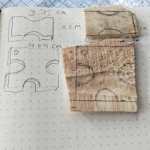
  • Herb Bunch – At Ancient Light, Saturdays, 11am-1pm
  • Sewing Time – At Ancient Light, Saturdays, 3-5pm
  • Project Day – At Ancient Light, Sundays, Noon to 6pm
  • Cheese and Wine happens irregularly, usually announced with little notice on our Facebook group.
  • Next Virtual Potluck – 4/18, 5/16, 6/20 
  • No Winter Feast in 2021. We’ll revisit for one in 2022 sometime in the next two months.

Here is the direct Portfolio link which has all the past Project Day reports and various projects, original here:  https://housecapuchin.wordpress.com/portfolio/  and new one here:  https://housecapuchin2.wordpress.com/portfolio/ and number three is here: https://housecapuchin3.wordpress.com/portfolio/

Educational Events

 Other Good Stuff

Knowne Worlde Entertainment Guide – KWEG – Entertainment List – https://docs.google.com/spreadsheets/d/1xEZAwCca4IQham3TpxfWnonQscG668mmYgIMA18YZ-E/edit?fbclid=IwAR3UAXblIOd9u-N5IKtJNLzLFS52KPibZEAuwoDHjWzFoCtN_gDHETI9iCo&fbclid=IwAR2FNHXNjhHUNRlFdL9ACXgAt1CuLj5cRx9h1Fweqj-Vq4AGrUyvLQ7z5dc#gid=0&fvid=1272975718

Cookery – During the week, chicken broth and carrots got cooked, bread crumbs got started from some bread that scorched, but was ok on the inside and more ingredients got put together for the marzipan project. Late in the week, having a bunch of ingredients, Anja decided to make another version of green brewet to see if she could get a happier flavor than the last batch. Stewed parsley just isn’t a fave around here. So, she got a bunch of assorted greens from the garden, first, which did include some parsley, but also had dandelion, onion, leek, thyme, fennel, turnip tops, carrot tops, celery and a couple of other bits. Herb harvest in Herbs. Recipe below.

Dragon Heart for a Viking King – Tasting History with Max Miller

Sewing – 

Pin Cushion | Pin Pillows in History – Lynne Fairchild – Learn about how pin cushions evolved over the centuries. In which centuries did women wear their pincushions and why? What were pin pillows filled with in the 18th century? What is up with the tomato in the Victorian era? Join me as I explore various historical paintings with examples of different types of pin pillows. Did you know that Queen Elizabeth I of England was gifted an embroidered pin pillow in 1561 as a New Year’s gift? In Tudor times, pins were used to help hold clothing items, such as sleeves and women’s headwear, together with other items (like sleeves being pinned to a kirtle). In modern times, pin cushions are used to hold pins for sewing.

Historical Reversible Double-Running Blackwork Embroidery – Lynne Fairchild – Learn all about blackwork embroidery, also known as reversible stitch or Holbein stitch, from potentially as early as the Egyptian period (Mamluk embroidery) up through the 16th century (Tudor and Elizabethan times).
Discover where to locate historical patterns, how to recreate these patterns, and watch step by step instructions on how create this lovely embroidery. Also included is a step by step tutorial on how to dress a slate frame.

Herb Bunch – Mostly this week was tending and watering, although they need more again, but on Sunday a bunch of herbs got harvested for the brewet. 

Project Day – Most of Project Day on our end was taken up with Anja’s Balls class. Anja stopped into the group before class and then was there from 4-5pm. 

Michelle Crocker stopped by with a question about a gown she’s working on to re-size it. She wants to add fabric and wasn’t sure where. 

Arlys took Anja’s class. 


Recipes

Tallivent – Green egg and cheese soup (bruet or brewet) – Anja’s version

  • Crockpot
  • Parsley,   2 bunches – replaced with 2 handfuls of spinach leaves, plus a handful of garden greens (parsley, but also dandelion, onion, garlic,  leek, thyme, fennel, turnip tops, celery, sorrel), plus one pint box of microgreens)
  • Dab saffron (ended up with cheese spice!)
  • 1 quart of chicken broth
  • Bread crumbs, 1 cup cubes made 3/4 cup crumbs – replaced with two stale rolls, cut up.
  • Dried green peas cooked pureed (used 2 cups water)
  1. Cook all of the above together, overnight.
  2. Grate cheese and add (Parmesan)
  3. Poached eggs in chicken broth. 
  4. Add a little cooked bacon.

—————————–

Previous version

  • Crockpot
  • Parsley,   2 bunch
  • Dab sage
  • Dab saffron
  • Bread crumbs, 1 cup cubes made 3/4 cup crumbs
  • Dried Ginger cubes soaked in white wine
  • Dried green peas cooked pureed (used 2 cups water)
  1. Cook all of the above together
  2. Grate cheese and add (cheddar? Parmesan?)
  3. Poach eggs in almond milk, maybe? Or water
  4. Add a little cooked bacon.

Take parsley, a bit of sage, just a bit of saffron in the greens, and soaked bread, and steep in puree [of peas] or boiled water. Add ginger steeped in wine, and boil. Add the cheese, and the eggs when they have been poached in water. It should be thick and bright green. Some do not add bread, but add almond milk.

Music – TROUBADOURS – trovadores occitanos – Clemencic Consort.avi –
Caballerito de Arratia – Canciones de trovadores occitanos, de los ss. XII y XIII, por Clemencic Consort.

Anonyme, fin 12e siècle – 01 – A l’entrada del temps clar [2:52​] – voix mixtes, vièle, chitarra saracenica, tintinnabulum, tambour à grelots
PEIROL, 1180-c.1225 – 02 – Quant amors trobèt partit [3:26​], voix, tambour
Peire VIDAL, c.1175-1204 – 03 – Vida et Razos [8:09​], récitant, flûte de berger, galoubet, cornemuse, tambour, tambourin, crotales
Raimbaut de VAQUEIRAS, c.1155-1207, 04 – Vida [7:04​], récitant, vièle, rubebe
05 – Calenda maia [5:05​], chant, vièle, rubebe, bûche, tambour-calice
La Comtessa de DIA, c.1160, 06 – Vida [0:23​], récitant
07 – A Chantar [14:36​], soprano, vièle, tympanon, rubebe, tambour
Bernart de VENTADORN, c.1125 – ?, 08 – Vida [2:40​], récitant, flûte de berger
09 – Can l’erba [6:14​], soprano, vielle à roue, flûte à bec, tambour à grelots Guilhem de CABESTANH, 10 – Vida [5:24​], récitant, luth
MARCABRUN, c.1150, 11 – Vida [1:10​], récitant, luth
12 – L’autrier jost’una sebisa [4:52​] ténor, sifflet, luth, tambour, tambour à grelots, crotales
Anonyme, c.1200, 13 – Novel amor [12:07​] – luth, flûte à bec, vièle, cornet à bouquin, tympanon, tambour-calice
Raimon de MIRAVAL, c.1135-c.1216, 14 – Selh que non vol [3:10​] – vielle à roue

CLEMENCIC CONSORT – René Clemencic

  • Pilar Figueras, soprano
  • René Zosso, chant et vièle à roue
  • René Clemencic, flûtes à bec, flûtes de berger, galoubet, sifflet, orgue portatif
  • Michael Dittrich, vièles
  • Andrtis Kecskès, luth, rubebe, chitarra saracenica
  • Frantisek Pok, cornemuse, cornet à bouquin, tambour à grelots, crotales
  • Esmail Vasseghi, tympanon, tambour-calice, tambour, tambour à grelots
  • Yves Rouquette, récitant

Links

Decoding Tudor Portraiture with Lawrence Hendra of the Philip Mould Gallery – The Tudor Travel Guide – In this episode of The Tudor History & Travel Show, Sarah talks to Lawrence Hendra, Director of Research at The Philip Mould Gallery, as they explore some of the highlights of the gallery’s up-and-coming exhibition: ‘Love’s Labour’s Found’. The exhibition, which opens on 21 April 2021, brings into focus the advances that have been made in ‘reading’ Tudor portraiture in recent times. So, why not join Sarah as, together, we tour the gallery and learn to decode four fabulous paintings of the period.

King and Collector: Henry VIII and the Art of Kingship with Siobhan Clarke and Linda Collins – The Tudor Travel Guide – In this episode of The Tudor History & Travel Show, Sarah talks to Linda Collins and Siobhan Clarke about their new book, King & Collector: Henry VIII and the Art of Kingship, which is due to be released in the UK on 15th April, 2021. A centre of glamourous excess, Henry adorned his court with tapestries and paintings that glorified him and his realm. King & Collector: Henry VIII and the Art of Kingship guides us through Henry’s collection of artworks and what they reveal about him and his reign in a unique story of art, power, and propaganda in Tudor England.

Video/Audio Links

I Stopped Washing My Hair For 2 Weeks: A Medieval Haircare Experiment – Maridith Smith
Happy Saturday Friends,
Today I have a vlog for you that I filmed in August and September of 2020. Pandemic Chic for the last year and change has included sweatpants, fewer showers, and the messy up-do. This had me passively wondering about how 16th century people handled hygiene more. One one likes being stinky after all, but they did not believe it was necessarily healthy to shower as often as we do in the United States in 2020. Please note I am not going to perpetuate the myth about medieval people being dirty and unclean, it was just a different time period with different methods.
Around this time I started reading How to be a Tudor by Ruth Goodman. When the book was published in 2015 I added it to my to be read pile immediately because I respect her work as a historian and in living history. Like many, the pandemic has helped me put a dent in my “to be read” pile. She has a section where she discusses the clothing and the hygiene of the Tudor period and I became inspired. One of the major ways people had to keep their hair clean in Medieval and Tudor England was using linen caps or coifs to keep it covered, and combing their hair out to remove an excess of dandruff and oil collecting on the scalp. It is the build up of these items which will start to cause your hair to smell with bacteria building up.
I did a little research on my own and found that by the Tudor period combs were incredibly common personal items found in archeology. Even the sailors of the Mary Rose in the 1540’s had a large number of them among the surviving effects now visible in the Mary Rose Museum. The most popular style of comb was the 2 sided comb like the ones I use in this video and had been in active use in Europe since the Ancient Romans.
The idea of using this comb for medieval hair care was simple. Use the wide teeth to detangle your hair, and use the narrow teeth to keep the scalp clean. In my personal experiment I found the horn comb I used was better at cleaning my scalp, but the sandalwood comb was better and detangling and distributing natural hair oils.
By the 16th century I found a few images of bristled brushes also being used, but they were far less common. I did add a boar’s hair brush into my experiment a bit to see how it would spread the natural hair oils compared to the double sided combs. The brush did not remove debris from the scalp, but as a follow up after combing, it did a much better job at spreading the oils down the length of hair.
During the experiment I did not use modern hair elastics to make sure I was not tampering with the results I would find. I went without hair elastics with a few experiments similar to Morgan Donner’s Elasticless hair video. I used linen cotton tape, silk ribbon, and bits of hand braided linen as ties or bindings for the hair.
After 2 weeks what were my conclusions on this method of medieval haircare?
For the first time in my adult life I did not have split ends. Split ends drive me nuts and I am no stranger to leave in conditioner, wooden combs, and different combing styles. All do work and have their pros and cons, but none were as effective for my hair as combing and brushing the natural oils down.
It took about as much time to comb out my long hair each night as it would for me to properly wash and condition it using modern methods. One did not save time over the other.
I became very aware of the amount of oil my scalp was producing and it was higher after I had eaten fried or high fat modern foods. after a day and a half my body would return to normal amounts of natural oil. The hair oil after eating junk food also did not smell as good. This anecdote is probably a good reminder that we are what we eat, and that the fast majority of medieval people were not eating deep fried potatoes, which would have required their bodies to process out their waste differently.
Next week’s video is going to discuss another solution to the oily hair situation which I started researching after doing this experiment. Did you know they had a version of dry shampoo in the medieval period?
I hope you have enjoyed this little experiment about medieval haircare. Do you have a pandemic experiment that you have done. Did you try anything like this project? Let me know about it down in the comments section and I will see you next week with another historical hair care video.
Bisou Bisou,
Maridiht

Funnies 

divider black grey greek key

  • ASXLVII = 24
  • ASXLVIII = 88
  • ASXLIX = 794
  • ASL = 2138
  • ASLI = 731
  • ASLII = 304
  • ASLIII – 146
  • ASLIV – 230 plus 4 puppets, 4 powder fort, 8 cheese spice and 9 powder douce packets, 1 kiss-lock pouch, 9 tiny bobs, 7 pincushions, 3 pins, 3 snip case w/snips, lucet cords, 25 pouches for block-printing, 1 medium pouch, 4 small pouches, 12 bookmarkers, 14 unfinished pincushions, 1 sewing kit (except for bone needle), varnished stuff (124), 2 emery strawberries, 1 woolen spool-knit cord, 48 key bottle openers

Total as a Household = 4061 handed off

moving writing pen motif

In ministerio autem Somnium! Anja, graeca doctrina servus to House Capuchin
Page Created 4/7/21 & published 4/13/21 (C)M. Bartlett
Last updated 4/13/21

Activities through 4-4-21

House Capuchin Shield2Cookery made us late this week. Stuff cooked on Sunday got finished on Monday, so we waited to add those pictures. 

It was a fairly quiet week as far as SCA stuff goes, although Loren and Anja are moving which is eating all of their spare time. 

Try 2 on the Balls class is this coming Sunday! Virtual Project Day that day will be mostly Loren, although Anja may get a look-in. 

Still in the cheesecloth. See the “crust”?

All meetings are on hold for the moment, although Project Day and the Monthly Potluck are being held in the Virtual Realm. We’re also doing mini-potlucks, just Anja & Loren and one other “pod” at a time. Let us know if you’re interested!

When will we be able to do these in person? We’ll probably keep right on with the virtual ones side-by-side with the actual. 
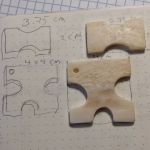
  • Herb Bunch – At Ancient Light, Saturdays, 11am-1pm
  • Sewing Time – At Ancient Light, Saturdays, 3-5pm
  • Project Day – At Ancient Light, Sundays, Noon to 6pm
  • Cheese and Wine happens irregularly, usually announced with little notice on our Facebook group.
  • Next Virtual Potluck – 4/18, 5/16, 6/20 
  • No Winter Feast in 2021. We’ll revisit for one in 2022 sometime in the next two months.

Here is the direct Portfolio link which has all the past Project Day reports and various projects, original here:  https://housecapuchin.wordpress.com/portfolio/  and new one here:  https://housecapuchin2.wordpress.com/portfolio/ and number three is here: https://housecapuchin3.wordpress.com/portfolio/

Misc – Can You Solve These Medieval Riddles? – https://www.medievalists.net/2016/03/can-you-solve-these-medieval-riddles/

Brief History on the Kingdom of An Tir 

Educational Events

 Other Good Stuff

Known World Entertainment Guide – KWEG – Entertainment List – Week 47 – April 4 – April 10 – https://www.facebook.com/KWEGuide/photos/pcb.286825113036946/286824583036999/

Remember if you want to check out the full line up you can see it here:
Also check out the AWESOME google calendar!
Have questions about KWEG? Check out our FAQ here:
Finally, have content to submit, you can do that here:
Want view a higher resolution version of the images below? You can find those hosted at the Demi-Sun Digest website here:
Comments? Questions? Laudations? Shoot us a message!
Thank you for continuing to follow and contribute!
– The Admin Team at KWEG

Dance Vids –

La compagnia di danze medievali “I Virelai” – Trovaeventinews Turista in Italia – Al Castello di Santa Severa torna ad esibirsi il corpo di ballo di danze medievali “I Virelai”, guidato dalla Maestra Maria Teresa Mascioni, che hanno rappresentato parte del loro repertorio.

The medieval dance company “I Virelai” – Trovaeventinews Tourist in Italy – The medieval dance corps “I Virelai” returns to perform at the Castle of Santa Severa, led by Maestra Maria Teresa Mascioni, who represented part of their repertoire.

The Contessa Answers All: Rhythm in Bassadanza – Rachel Lorenz – The Creative Contessa explains how to find the rhythm in bassadanza/basse danse music and whether or not you can dance such dances to any bassadanza tune.

Classes – Missed out this week. We’ll add a class post at some point over the next several days, and then be caught up next week. 

Early Week – Anja is still deep in marzipan research. 

Cookery – Lots happened on Sunday, almost none for the rest of the week. Write-up on Project Day page. 

Sewing – Anja found a fascinating little box that holds sewing supplies. It’s a pyramid that opens up like an etui and holds needles and scissors and such. She’s working out a pattern for one. She’s still working on the last scissor case and the needlebook. Sunday was all about a lined pouch. 

Sundials, etc. – Getting ‘et by the move. 

Herb Bunch – Plants being moved and tended. 

Project Day – Started with an unexpected visit from a House member who lives up in Washington and we haven’t seen for most of a decade! Kaleb’s doing well, living with girlfriend, etc. He’s been working pretty hard and coordinating schedules and funds is a problem, with school, work, etc. 

Arlys and Rosamunde checked in. 

Anja and Loren started some cookery. First was chicken to have poached meat and broth. Next was Hrudka, since it was Easter, finally a soup was started with chicken broth and a bunch of the dried vegetables from last fall. This was an experiment to figure out how much broth was needed for the dried stuff and also what it would taste like. More pix will be added when the dishes are finished. 

Chicken

Mushrooms – We get a special blend of dried mushrooms from a local restaurant supply. They’re not as useable as they might be for our purposes being whole slices, so they need to be run through the food processor and sifted. 

Hrudka

Soup

Recipes

gallery

Miscellaneous pix

Music –

Danze medievali italiane – Italian medieval dances – Musica Medievale – Ensemble: Anima Mundi Consort Album: Danze Strumentali Italiane VOL. I & II http://www.facebook.com/musicamedievale​ 

CD I

  • Chançoneta Tedesca 2
  • Isabella
  • Ghaetta
  • Bel Fiore Dança
  • Saltarello 4
  • Saltarello 3
  • Sangilio
  • Trotto
  • Chominciamento di Gioia
  • Chançoneta Tedesca
  • Manfredina e Rotta della Manfredina

CD II

  • Belicha
  •  Tre Fontane
  • Dança Amorosa – Trotto
  • Principio di Virtú
  • Saltarello 2
  • Parlamento
  • Chançoneta Tedesca 1
  • In Pro
  • Chançoneta Tedesca 3
  • Lamento di Tristano e Sua Rotta

Links

Video Links

Forme of Cury  – Original Page & Video – https://modernmedievalcuisine.com/2021/04/01/in-my-study-reading-and-translating-the-john-rylands-forme-of-cury/

Some follow-up thoughts on Forme of Cury video –  https://modernmedievalcuisine.com/2021/04/04/some-follow-up-thoughts-on-forme-of-cury-video/

Funnies 

divider black grey greek key

  • ASXLVII = 24
  • ASXLVIII = 88
  • ASXLIX = 794
  • ASL = 2138
  • ASLI = 731
  • ASLII = 304
  • ASLIII – 146
  • ASLIV – 230 plus 4 puppets, 4 powder fort, 8 cheese spice and 9 powder douce packets, 1 kiss-lock pouch, 9 tiny bobs, 7 pincushions, 3 pins, 3 snip case w/snips, lucet cords, 25 pouches for block-printing, 1 medium pouch, 4 small pouches, 12 bookmarkers, 14 unfinished pincushions, 1 sewing kit (except for bone needle), varnished stuff (124), 2 emery strawberries, 1 woolen spool-knit cord, 48 key bottle openers

Total as a Household = 4061 handed off

moving writing pen motif

In ministerio autem Somnium! Anja, graeca doctrina servus to House Capuchin
Page Created 3/25/21 & published 4/5/21 (C)M. Bartlett
Last updated 4/5/21

Activities through 3-28-21

House Capuchin Shield2Our newsletter is running late again this week. I apologize, but our tiny home is finally in place and we’re busily engaged in getting things moved over to it! Things should get back to normal within another week or two. 

Of course in-person meetings are still not happening. What we’re hoping at this point is to start the Herbs Workshop up first, once the restrictions ease in Lincoln County. 

The new strawberries

All meetings are on hold for the moment, although Project Day and the Monthly Potluck are being held in the Virtual Realm. We’re also doing mini-potlucks, just Anja & Loren and one other “pod” at a time. Let us know if you’re interested!

When will we be able to do these in person? We’ll probably keep right on with the virtual ones side-by-side with the actual. 

  • Herb Bunch – At Ancient Light, Saturdays, 11am-1pm
  • Sewing Time – At Ancient Light, Saturdays, 3-5pm
  • Various herbs just coming back after the winter.
    Project Day – At Ancient Light, Sundays, Noon to 6pm
  • Cheese and Wine happens irregularly, usually announced with little notice on our Facebook group.
  • Next Virtual Potluck – 4/18, 5/16, 6/20 
  • No Winter Feast in 2021. We’ll revisit for one in 2022 sometime in the next two months.

Here is the direct Portfolio link which has all the past Project Day reports and various projects, original here:  https://housecapuchin.wordpress.com/portfolio/  and new one here:  https://housecapuchin2.wordpress.com/portfolio/ and number three is here: https://housecapuchin3.wordpress.com/portfolio/

Misc – Miss art museums? The Louvre just put its entire art collection online – https://www.cnn.com/style/article/louvre-art-collection-free-museum-trnd/index.html

Interactive site map – https://collections.louvre.fr/en/plan

Educational Events

 Other Good Stuff

Knowne Worlde Entertainment Guide – KWEG – Entertainment List – https://docs.google.com/spreadsheets/d/1xEZAwCca4IQham3TpxfWnonQscG668mmYgIMA18YZ-E/edit?fbclid=IwAR3UAXblIOd9u-N5IKtJNLzLFS52KPibZEAuwoDHjWzFoCtN_gDHETI9iCo&fbclid=IwAR3LHjEqnVdiWwe8G4s_zyAy46spXdgThJieqPnF5Metn9IOFzJWGpLkLNw#gid=0

Dance Vids – Gioliva – https://www.patreon.com/posts/low-slow-and-49240869 

Classes – 

Online Class: Banner Painting 101 with HL Ana de la Sara – EarlySweden – Join HL Ana De La Sara for her class Banner Painting 101. The first hour of this class will be a lecture, discussion and display. HL Ana will then continue the class for anyone who would like assistance on hands on practice.

Online Class: Modern Music Notation with Dame Elisabeth Piper – EarlySweden – Join Dame Elisabeth Piper for her class: Modern Music Notation. This class is an introduction to the basic concepts of modern music notation. Students will learn to slowly, but accurately, decode musical examples. We will use pianos, electronic keyboards or keyboard apps to explore modern transcriptions of SCA period music. The focus of this class is hand-on practice of basic note-reading skills. Students will need access to an electronic keyboard, piano, or keyboard app with a device with a large enough screen to allow easy interaction with the virtual keyboard. They will need to download a print the class handout before the start of class.

Trans History – Royal University of the Midrealm – RUM – Lord Rohjon the Wanderer discusses the history of Transgender individuals.

Start a Newsletter and Keep It Going – Royal University of the Midrealm – RUM – Lady Claricia de la Mere discusses how to create and continue to produce a newsletter.

Early Week – We were eating up a lot of leftovers. Sash got a care package on Thursday. We set up a pork tenderloin roast on Friday, which was really good. 

Cookery – The last pear was gone on Wednesday. The rolls had been finished on Monday. The broth and a bunch of carrots went into a carrot and onion soup on Thursday, when Anja was making up packet meals. 

Anja was spending a lot of time this week setting up things for the marzipan class and doing some research into origins and older recipes. …and then on Sunday realized it wasn’t going to happen, drattit. Mostly it’s because the molds that were needed for 1/3 of the class got returned to sender for “insufficient address”. Same company and same address that we’ve been using for 6 years… 

Tudor Tansy Cake: An Easter Tradition – The Tudor Travel Guide – Tudor Tansy Cake: An Easter Tradition Become a member of my YouTube Channel: http://bit.ly/30ZbE4v​ Subscribe to the blog to get more top tips for visiting historic Tudor properties across the UK and receive your FREE digital mini-guide by following this link: https://thetudortravelguide.com/free​ The Tudor Travel Guide is delighted to be able to collaborate with Brigitte Webster from TudorExperience.com in our Great Tudor Bake Off series, featuring Tudor cookery demonstrations. In this video, enjoy this Tudor Easter recipe and find out how to prepare a traditional Tudor tansy cake.

KODAK Digital Still Camera

Sewing – Starting the needlebook for the sewing set for the gift exchange. 

Hand-Sewing a 16th Century Caul with Blackwork Embroidery – Lynne Fairchild – Watch step by step as a I hand-sew a previous blackwork embroidery project into a 16th century styled Elizabethan caul. A caul is a hair covering for the back of the head. Typically, a caul should be 10-12 inches in diameter with the band being 19-21 inches long. In this video, you may notice that the caul has a diameter of 14 inches (7 inches time 2) and the band is 23 inches long. I did this intentionally, as this caul was a surprise gift for a friend. This way, she can take the caul in as much as she likes to fit her head snuggly.


Tablet Weaving Tutorial: Finishing Your Tablet Weaving – Elewys of Finchingefeld – Have you ever gotten to the end of your weaving and thought…OK, how do I finish this? I have four options for you whether you have already cut it off your loom or are looking to finish it before you cut it.

Sundials, etc. – 

Illustration from an article on volvelles in early science texts. Included several videos of them in use. – https://www.openculture.com/2021/01/a-16th-century-astronomy-book-featured-analog-computers.html

Herb Bunch – A bunch of pictures happened on Monday. A lot of these plants are going to head out to Anja and Loren’s new place once they get moved. 

Bottle openers.

Project Day – Started late and ended early, because of the moving stuff going on. Anja was at the shop by herself, and when customers came in had to go tend to that. No one else but Arlys showed up, though. So I guess it was ok. Anja was embroidering, although she had planned to be working on marzipan. That’s going to be happening, anyway, even if the class doesn’t. It’ll be ready for the next time it can be taught. The largesse bottle openers are one step closer. 

Miscellaneous pix

Music – AncientFM this week!

Funnies 

divider black grey greek key

Largesse Item Count – (includes gifts, prizes, auction items, etc.)

  • ASXLVII = 24
  • ASXLVIII = 88
  • ASXLIX = 794
  • ASL = 2138
  • ASLI = 731
  • ASLII = 304
  • ASLIII – 146
  • ASLIV – 230 plus 4 puppets, 4 powder fort, 8 cheese spice and 9 powder douce packets, 1 kiss-lock pouch, 9 tiny bobs, 7 pincushions, 3 pins, 3 snip case w/snips, lucet cords, 25 pouches for block-printing, 1 medium pouch, 4 small pouches, 12 bookmarkers, 14 unfinished pincushions, 1 sewing kit (except for bone needle), varnished stuff (124), 2 emery strawberries, 1 woolen spool-knit cord, 48 key bottle openers

Total as a Household = 4061 handed off

moving writing pen motif

In ministerio autem Somnium! Anja, graeca doctrina servus to House Capuchin
Page Created 3/22/21 & published ??/??/21 (C)M. Bartlett
Last updated 3/30/21

Activities through 3-21-21 Virtual Potluck

House Capuchin Shield2We still don’t have all the photos, but I don’t want this to wait any longer! There was a minor camera issue, but it spoiled a whole batch. Don’t get fingerprints on a camera lens! 

It was a busy week with classes, A&S and then Embellisher’s Guild challenges and then a “potluck”. This coming week won’t be quite so busy, but we’re going to have to re-take what pictures we can that were spoiled and then add them back into this report, so expect a few things to change by the end of the week. 

Helen Louise – Today we are having chicken and vegetables curry on rice… I’m making a quilt for a dear friend… thinking of working on some roman garb, but we’ll see… red linen is calling me…

All meetings are on hold for the moment, although Project Day and the Monthly Potluck are being held in the Virtual Realm. We’re also doing mini-potlucks, just Anja & Loren and one other “pod” at a time. Let us know if you’re interested!

  • Herb Bunch – At Ancient Light, Saturdays, 11am-1pm
  • Sewing Time – At Ancient Light, Saturdays, 3-5pm
  • Project Day – At Ancient Light, Sundays, Noon to 6pm
  • Cheese and Wine happens irregularly, usually announced with little notice on our Facebook group.
  • Next Virtual Potluck – 3/21, 4/18, 5/16, 6/20
  • No Winter Feast in 2021. We’ll revisit for one in 2022 next spring.
Arlys lion is finished!

Here is the direct Portfolio link which has all the past Project Day reports and various projects, original here:  https://housecapuchin.wordpress.com/portfolio/  and new one here:  https://housecapuchin2.wordpress.com/portfolio/ and number three is here: https://housecapuchin3.wordpress.com/portfolio/

Misc – 

Educational Events

 Other Good Stuff

Knowne Worlde Entertainment Guide – KWEG – Entertainment List – https://tinyurl.com/KWEGSpreadSheet

Dance Vids – For as Many As Will

Classes – 

What to Consider When Choosing Your Name and Heraldry – Royal University of the Midrealm – RUM – Thory Vedardottir discusses things to consider when choosing a name and heraldry within the SCA.

Navigating eSCA – Royal University of the Midrealm – RUM – Baroness Sophia the Orange discusses eSCA – the resources, the options, and how it has been used so far.

Sir Baptist Hicks and the building of Old Campden House – The Landmark Trust – Join Landmark Historian Caroline Stanford as she explores the site of Old Campden House and its history.

Early Week – Anja got a new set of pictures of the balls display and the fillings on Monday. Those need to be processed, still. 

Tuesday was Adiantum’s A&S Night. Baroness Yseult did an informal class on the Sjkoldenham Hood and went on into a demo about some Nederlandishe hats! It was really information, going into patterns and construction and adapting the size for larger people (add a gusset!), but also the decorations on the hood and the associated clothing as well as the hats. Anja spent most of the time working on the current sewing kit project, but watching the various bits and pieces of display. 

Cookery – We hardboiled eggs several days back, but Wednesday evening we spent an hour peeling them for more pickled eggs, dividing pickled onions for garnishes from the last of the end-of-season-from-the-farmer’s-market cukes (they’re strong, but *really* tasty!) and the onions from the utopenci, which gave several smaller jars that are going to fit into 1/2 the space they were taking! …assuming that the utopenci and cuke pickles last through the weekend.. <grin> ..and some cucumber pickles, pickled beet slices, utopenci and a pickled onion, plus a roll with butter and roquefort made a great snack. Very happy tummy!

On Friday, since Sash was coming down, we decided to do the pears. We had Anjou pears, and you can see in the recipe section that I futzed with the recipe a bit, making more like the pastie fillings, since that’s what was in the freezer. He took two home and nuked them to re-heat. We also had a tray of various nibbles during the day. 

Two more got set up Saturday evening and Anja started the chicken for the Mortreas and Zerhefrehns thawing and then got the carrots started. Step-by-step photos are below each recipe in that section below.  

How to pickle Cowcumbers, The whole body of cookery dissected; Rabisha, 1661  https://giveitforth.blogspot.com/2021/03/how-to-pickle-cowcumbers-whole-body-of.html?fbclid=IwAR238dl6D_IL-NRRM-j4lu4A0PyEwW2WxivxbPrGrl9S3Jq6eBjzY4CTM5Y

Zanzarelli – Medieval Soup – Parmigiano in the Middle Ages – Historical Italian Cooking – Today we prepare medieval zanzarelli, a soup with bread and cheese, from a 15th-century cookbook, Maestro Martino’s Libro de Arte Coquinaria.

MMMK 04 Mortraeas – My Modern Medieval Kitchen – My Modern Medieval Kitchen making a modern version of mortræas/mortraeas, meat cooked in wine.

Cooking With Hadley – Alfred and the Oatcakes – Royal University of the Midrealm – RUM – Dame Hadley of Beckenham demonstrates making oat cakes, and tells a story about King Alfred the Great accidently burning some oat cakes.
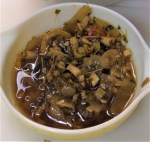
Oat Cakes

  • 1 Cup oats (250g) (Scottish porridge oats or whatever you have)
  • ½ Cup Oat Flour (46g) (any flour will do)
  • 1 ½ sticks (170g) butter melted
  • 2/3 Cup (50g) dried fruit chopped (apples, apricots, cherries)
  • 6 tablespoons (126g) honey
  • ½ teaspoon salt
  • 1 teaspoon cinnamon (optional)

Directions

  1. Preheat the oven to 350°F/180°C –OR– Set a skillet or frying pan over medium high heat. Cooking these on a skillet is closer to the way the Anglo-Saxons would have done it, but it is considerably more difficult.
  2. Add the oats, dried fruit, cinnamon, and salt to a medium bowl and mix well. Then mix in the honey and the butter. Once fully incorporated, add the oat flour and mix to combine.
  3. With your hands, form small flat patties, fairly thin, and about 3 inches across and set them on a lined baking sheet (or on a plate if you are using a skillet.)
  4. If you are baking the cakes, bake in the oven for 10 – 12 minutes, or until they start to darken around the edges. Place the cakes on a wire rack to cool completely. –OR–
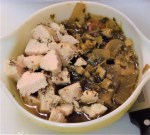
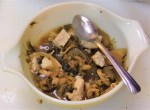
  5. If you are using a skillet or frying pan, gently place several cakes onto the pan. Leave them for 1 – 1½ min, then using a spatula, flip the cakes gently so they do not break, and cook for another 1 minute. The cakes should be browned (possibly slightly scorched) on both sides.
  6. Then set them on a wire rack to cool. Repeat until all the cakes are cooked.

Sewing – 

Michelle Crocker was working on a tunic early in the week and put some pictures up online. She was antsy to get it right and several of us spent some time assuring her that she would, indeed, and she did! 
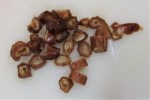
On Saturday Anja was one of the evaluators for the Embellisher’s Guild Challenges. 

Herb Bunch – Watering, tending, checking up on plants…. all week. A chunk of Anja’s garden is going to move to their tiny home space asap! The last of the spring flowers, plus that succulent that we rescued.

Project Day – Loren and Anja started the day by getting things ready for the cookery. Anja had been online asking folks about an ingredient in one of the recipes and got an answer by 1:30. Hard-boiled eggs for the one dish, started pears in the crockpot by 2. Realized that before I started the two chicken recipes I was going to have to make chicken broth. Argh…..  

So, got that made and strained and the solids put in a box with salt and ground mushrooms. That’s going to get cream of mushroom soup added. The broth went into a big canning jar to get used in the Zerfahrens. 

The carrots got set up with ginger and honey and craisins and into the tripot for final cooking. Next I made the Zerfahrens for chickens, got that into a tripot and then the Mortreas. By then it was 7pm. Loren was really tired and I needed a break, too, so it wasn’t until 7:45 that we started to set up to actually eat. The pears were at 190-195, so those got pulled out to set up. 

Potluck

The food was *yum*. Two different takes on similar ingredients turned out to be worth trying on the same day. The carrots were sweet without being sticky. The Zerfahrens chicken was a nice savory flavor and the Morteas had an interesting tang of wine. We had added aniseed (like the Meister Hans Mortar Chickens) and that was a good touch. The pear was delicious as they had been on Friday. Loren’s rolls are always tasty and they were a good “smoother” for the chicken dish flavors. The sweet was some 100’s of 1000’s, since we were so stuffed, but we had marzipan and maple candies later with some other nibbles.

Potluck Menu

Nibbles Tray

Nibbles

  • utopenci
  • cucumber pickles
  • pickled onion
  • pickled beets
  • pickled beans
  • white bread rolls
  • butter
  • roquefort cheese
Carrots

Main

  • lentil pottage with bacon and carrots
  • Stuffed Pears
  • Honey/Ginger carrots
  • Mortraeas
  • Zerfahrens of chickens

Afters

  • 100’s of 1000’s
  • marzipan
  • Maple Candies and Marzipan


    maple candy
  • comfits
  • Figs
  • Pecans

Recipes

Pear

Mittelniederdeutsches Kochbuch  Filled Pears

  • 6 pears (they do not have to be ripe)
  • 1-1½ cups of cooked mixed lamb and pork meat
  • 8-10 dates
  • Handful raisins and crasins
  • 1 tsp salt
  • 1 Tbsp mixed cardamom and nutmeg
  • 1 egg (we used two, but that was overdoing it.)

Method

  1. 1 Hack upper 1/3 off pears.
  2. Dig out dark stem bit on short end.
  3. Cut out a cone from the larger end that includes the entire core.
  4. Hollow out more, still in the cone shape.
  5. Extra bits of pear and what can be cut off the cores go into the microwave for 5 minutes and then get fork mashed.
  6. Throw the rest of the ingredients on top and zap for 3 minutes to make sure any fats are melted.
  7. Mix well.
  8. Pack pear “cups” tightly with filling and set tops on.
  9. Pin in place if you have to.
  10. Wrap tightly in foil.
  11. Place in a pie pan and bake at 350F until soft to the touch or fork tender, about an hour and half.
  12. Open the foil and twist on the stem to get it loose. You can replace it for looks. 
  13. Serve hot, with honey on the side for those who like it very sweet.

Note – Pears can also be baked in a crockpot on high for 4 hours or until they are fork-tender and the inside reaches at least 170F. 

Translation – Volker Bach – 3/15/21

95 Item if you would make pears, take them and cut the pears off above (cut off the tops). Cut out the core and throw it away. And pound the other with fat meat. And take (add) egg yolk and spices and salt. Fill that back into the pears. And set them in the embers and let them roast.

Mortraeas

Mortraeas

MMMK 04 Mortraeas – My Modern Medieval Kitchen – My Modern Medieval Kitchen making a modern version of mortræas/mortraeas, meat cooked in wine.

  • 3-4 slice bacon
  • 1 chicken breast
  • 2 eggs
  • Salt to taste and 1/2 tsp aniseed
  • One slice stale bread or ¼ cup bread crumbs
  • Cup of wine or more to cover.
  • Cinnamon

Method – (We used the food processor)

  1. Chop bacon.
  2. Cook bacon until it begins to color with 1/4 cup water. Add more if it starts to stick. 
  3. Grind chicken  in a mortar. OR chop fine. OR use a food processor.
  4. Add to bacon and cook
  5. Add wine and cook for 20 minutes, stirring occasionally.
  6. Add salt and aniseed.
  7. Shred bread.
  8. Add bread crumbs and stir well.
  9. Whisk the eggs with a couple of tablespoons of wine. Add to meat mixture and stir well. Turn off heat.
  10. Keep stirring until eggs are cooked through and mixture thickens.
  11. Sprinkle with cinnamon. (If needed) 

Zerfahrens

Zerfahrens of chickens

  • 2 sm chicken breast
  • 1 slice bacon plus two TBSP bacon fat or three slices bacon
  • 2 eggs
  • Chicken broth

Method

  1. Chop the bacon (food processor)
  2. Cook until starting to turn color.
  3. Thaw and chop up the chicken breast. I used a food processor.
  4. Two eggs went in with the chicken to be chopped
  5. Add broth to bacon. Stir
  6. Add chiken/egg mix and a bit of salt and dill weed.
  7. Stir very well.
  8. Bring to a boil.
  9. Either simmer for 15 minutes, stirring occasionally, or crockpot on high for at least an hour.

Original

Ein new cookbook 1581 – 6 Zerfahrens of chickens. Take the breast from the young hens/ cut it away from the bone/ and chop small together with calf fat/ chop into it eggs with the yellow and white/ put it in a clean fish ketter/ with a good hen broth/ that is not over salted/ and stir well over the coals/ that it does not scorch/ when it has come to a boil/ then let gently boil/ about a quarter of an hour/ so it becomes good and well tasting.

Miscellaneous pix

Music

Restoring Lost Songs from Boethius’ Consolation of Philosophy (2) – Benjamin Bagby – Faculty of Music, University of Cambridge – Benjamin Bagby, director of Sequentia, discusses his performance practice in reconstructing songs from Boethius’ De consolatione philosophiae. The video features a performance of Si quantas rapidis from book 2 with Hanna Marti. This is part of the project Restoring Lost Songs: Boethius’ Consolation of Philosophy directed by Dr Sam Barrett at the University of Cambridge, see: https://boethius.mus.cam.ac.uk/

𝑻𝒘𝒐 𝒎𝒆𝒅𝒊𝒆𝒗𝒂𝒍 𝒔𝒑𝒓𝒊𝒏𝒈 𝒔𝒐𝒏𝒈𝒔… – Musica Medievale – Ensemble: Murmur Mori

Songs:

Under der linden, Walther von der Vogelweide (XIII cent.)

 En mai, Colin Muset (XIII cent.)

Today is the first day of Spring: Flowers begin to poke out shyly over the outside world. The love song of birds fills the woods and meadows. The trees dance lazily, showing the first buds to the spring wind that the dry leaves sweeps away. In this setting, the Murmur Mori ensemble plays two spring songs from the 13th century: Under der linden and En mai quant li rossignolet

Links

Science in the Middle Ages – Rediscovering its Latent Genius – https://www.medievalists.net/2021/02/science-in-the-middle-ages/

Series – In Search of the Once and Future King – https://www.medievalists.net/tag/james-turner/

Early Christian relics examined and dated by researchers – https://www.medievalists.net/2021/02/early-christian-relics-examined/

Video Links

The Medieval Knight with Christopher Gravett (podcast) – https://www.medievalists.net/2021/02/medieval-knight-christopher-gravett/

Can you go to the toilet in medieval armour? (and other funny stories) – Modern History TV – Jason Kingsley OBE, the Modern Knight tells some funny stories and answers key questions about wearing real medieval armour.

Funnies 

divider black grey greek key

  • ASXLVII = 24
  • ASXLVIII = 88
  • ASXLIX = 794
  • ASL = 2138
  • ASLI = 731
  • ASLII = 304
  • ASLIII – 146
  • ASLIV – 230 plus 4 puppets, 4 powder fort, 8 cheese spice and 9 powder douce packets, 1 kiss-lock pouch, 9 tiny bobs, 7 pincushions, 3 pins, 3 snip case w/snips, lucet cords, 25 pouches for block-printing, 1 medium pouch, 4 small pouches, 12 bookmarkers, 14 unfinished pincushions, 1 sewing kit (except for bone needle), varnished stuff (124), 2 emery strawberries, 1 woolen spool-knit cord, 48 key bottle openers

Total as a Household = 4061 handed off

moving writing pen motif

In ministerio autem Somnium! Anja, graeca doctrina servus to House Capuchin
Page Created 3/15/21 & published 3/23/21 (C)M. Bartlett
Last updated 3/23/21

Blog at WordPress.com.

Up ↑