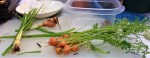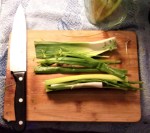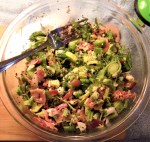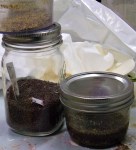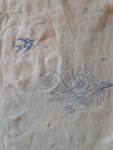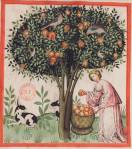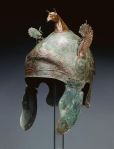
Search

House Capuchin 3

An historical recreation household centered on the Central Oregon Coast (households are not official groups of the Society for Creative Anachronism and do not represent the views or policies of SCA, Inc. )

Archives

Activities through 11-21-21 Potluck

Things are a little frantic again for Loren and Anja. Even though their store doesn’t do much for the holidays, they have to be ready for them and they’re still trying to catch up from summer. That’s why this is so late coming out! Well, that and a day-long internet outage from a cut fiber-optic cable… Incense workshop is going well and they had an extra “processing day” during the week for herbs, so those at least are getting caught up. Sewing was just mundanes. Potluck was good. We’ve two more dishes to add to the test ones and updated a couple more.
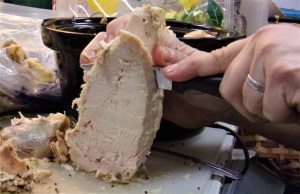
Carving

There’s no Herbs Workshop this week due to the holiday, but Friday afternoon we’re going to have a cutting out session in the afternoon at the shop.
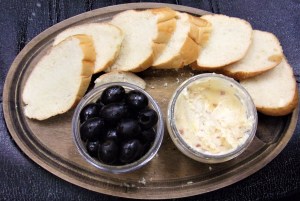
Project Day is now open for in-person meet-ups as well as in the Virtual Realm! Potluck this month will be Virtual and Real-World! Herbs Workshop and Sewing are ongoing. Masks required. When will the rest of these open up in person? We’ll keep right on with the virtual ones side-by-side with the actual. 

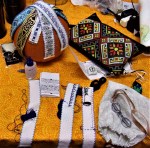
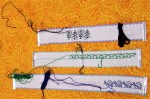
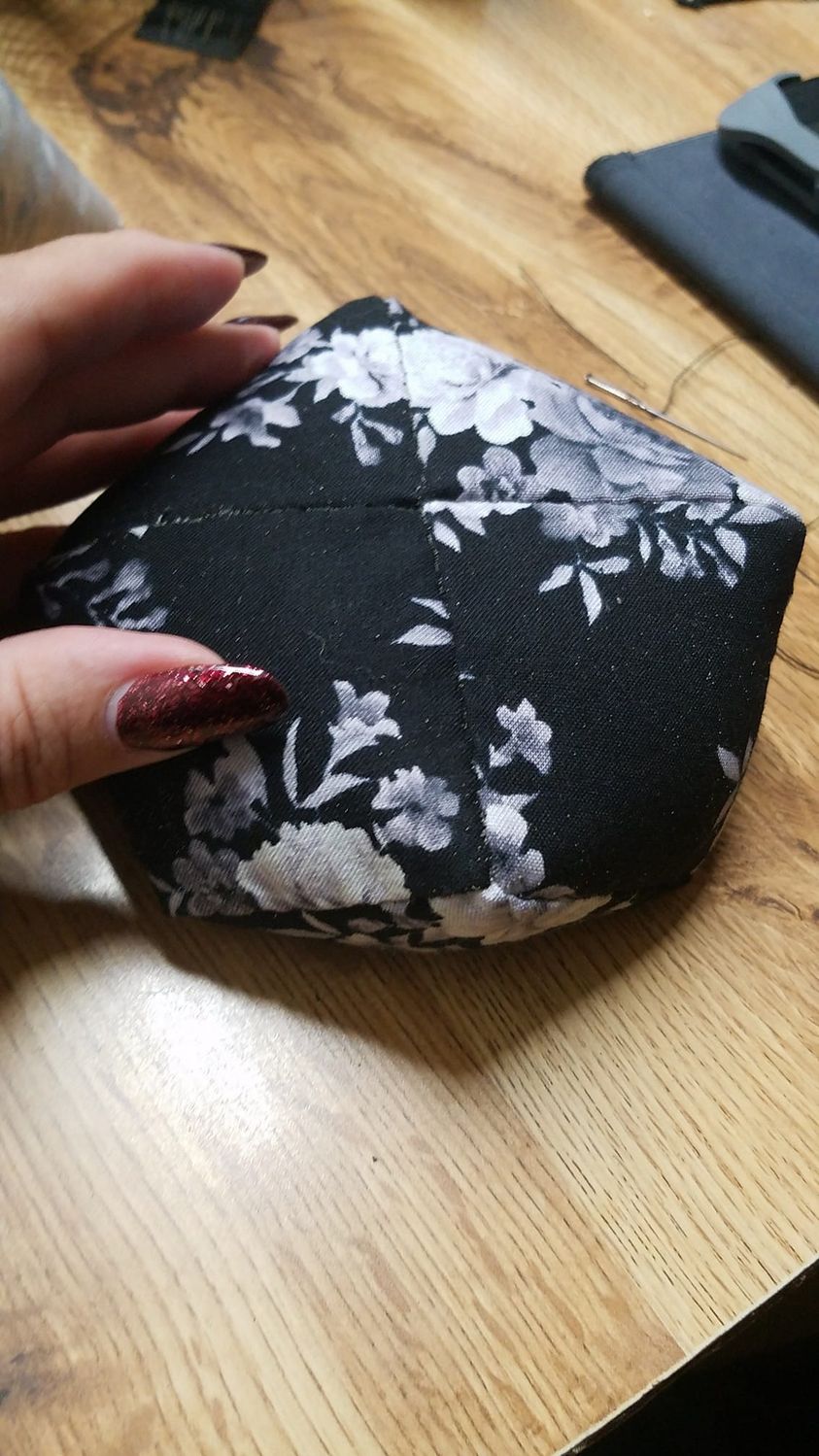
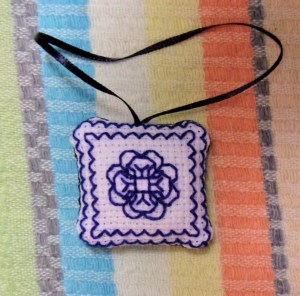
Finished and 3/4 finished bookmarks.
  • Herb Bunch – At Ancient Light, Thursdays, 7am-9pm, doing incense
  • Herb Workshop, In the Garden – Irregularly scheduled. Please ask to join the facebook chat!
  • Sewing Time – At Ancient Light, Saturdays, 3-5pm
  • Project Day – At Ancient Light, Sundays, 1 to 5pm
  • Cheese and Wine happens irregularly, usually announced with little notice on our Facebook group.
  • Next Potluck – 11/21, 12/19, 1/16
  • Winter Feast LVI, Norse Theme. Page here – https://housecapuchin.com/winter-feast/winter-feast-norse-feast-as-lvi-february-2022/ More pages coming!
Here is the direct Portfolio link which has all the past Project Day reports and various projects, original here:  https://housecapuchin.wordpress.com/portfolio/  and new one here:  https://housecapuchin2.wordpress.com/portfolio/ and number three is here: https://housecapuchin3.wordpress.com/portfolio/

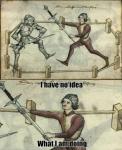
Misc – Just ‘cuz. I had no idea!

Shuffling a medieval deck of cards! – The Creative Contessa – Some medieval decks of cards were not square, but rather ovular, like these. And here is how to shuffle them!

Events

SATURDAY, DECEMBER 18, 2021 AT 10 AM – 8 PMSummits Winter Investiture – Event by Principality of the SummitsShire of Coeur du Val and Jacob Sanchez, Philomath Scout Lodge, antir.org/events/summits-11th-night-investiture – Good people of An Tir, join our Alpine Highnesses Kenric and Dagmar as they bestow the Summit Coronets unto their heirs, Viscount Luciano Foscari and Signora Tessina Felice Gianfigliazzi. To the rapier fighters of the Summits, bring your courage and steel for the tournament that decides who will stand with Their Alpine Highnesses as their Captain of Cats.

JAN 7, 2022 AT 2 PM – JAN 9, 2022 AT 12 PMAn Tir 12th Night 2022 – DoubleTree by Hilton Hotel Seattle Airport – Tickets book.passkey.com/go/SCA22 – We welcome An Tir and the Known World to the celebration of our Crown and Kingdom. This grand celebration will be hosted by the Baronies of Wyewood and Madrone, on January 7th-9th, 2022 at the Double Tree by Hilton at Seattle Airport.
We are pleased to announce that room reservations are now open for An Tir 12th Night 2022. This grand celebration will be hosted by the baronies of Wyewood and Madrone, on January 7th-9th, at the Double Tree by Hilton at Seattle Airport. Our room rates are available for the 6th and 10th as well should you opt for a longer stay. The parking cost is contracted to be 50% off their daily rate, which at one time was $32 but may change before our event, thus an additional cost of $16/day per vehicle parked. Please understand this is an airport hotel, that dictates the parking market. You may reserve online with this link: https://book.passkey.com/go/SCA22You may also reserve by phone. Please call toll free (800) 222-8733. Reference the group code: SCR, or the group name: SCA 12th Night

SATURDAY, JANUARY 15, 2022, 9AM–7PM – Adiantum Mid-Winter’s Feast – The Long Tom Grange – Event by Barony of Adiantum and Nái Martyn
Public · Anyone on or off Facebook
Event Main Contact (Event Steward): Naible Martyn
Event site: Long Tom Grange, 25823 Ferguson Junction City, OR 97448
This is a Level 2: Branch Event where no Kingdom or Principality business is expected to be conducted event.
Join their Excellencies of Adiantum for a Midwinter Feast & Revel. It has been a long dark winter, but we are in this together. Let there be light, laughter, music and revelry.
All attendees will either show proof of full vaccination or show proof of testing within 72 hours of the activities pursuant to the Society’s Policy dated September 25, 2021.
“Although the SCA complies with all applicable laws to ensure the health and safety of our event participants, we cannot eliminate the risk of exposure to infectious diseases during in-person events. By participating in the in-person events of the SCA, you acknowledge and accept the potential risks. You agree to take any additional steps to protect your own health and safety and those under your control as you believe to be necessary.

Dance Vids – Barriera (Renaissance Dance) – LuteandTheorbo – La Barriera by Cesare Negri – Recorded in Huysburg (2011)

Classes – 

The Doomed Romance Of Henry VIII & Anne Boleyn | The Lovers Who Changed History | Chronicle – Chronicle – Medieval History Documentaries – Dr Suzannah Lipscomb unfolds the extraordinary story of the tumultuous love affair between Henry VIII and Anne Boleyn, and asks: was it really love that brought them together – and was it love that tore them apart? Part 1 of 2.

Henry & Anne: The Lovers Who Changed History – Part 2 of 2 (British History Documentary) | Timeline – Timeline – World History Documentaries – They are two of history’s most talked about figures, but how much do we really know about the ill-fated lovers? What were their real characters and motives? Why did one of them lose their head? And how did their actions change the course of history forever?

Early Week – Nothing much going other than embroidery.
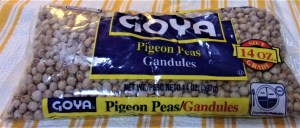
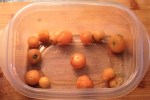
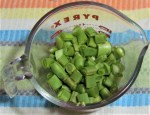
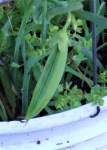
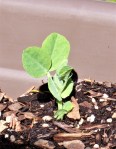
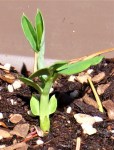
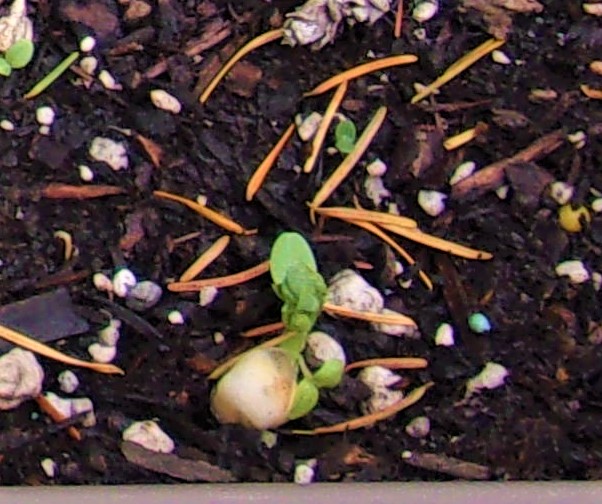
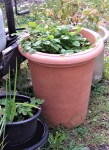
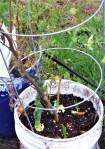
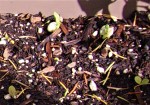
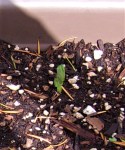
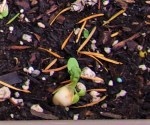
The peas that showed up on Monday.

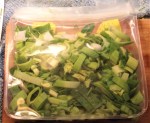
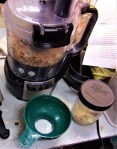
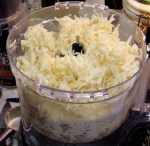
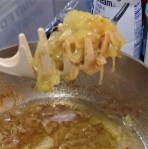
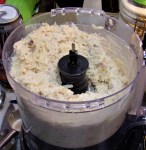
Cookery – This is potluck week, but some of the ingredients were hard to come by, since one set arrived as an empty envelope…. the replacement showed up on 11/22 😦 . So, some things were purchased on Friday and then cooked over the next couple of days. A lot of chopping and prep, including soaking the peas happened on Saturday and then we started in on Sunday, getting things rolling. Pictures are below in the Potluck section.

The 5,000-Year Secret History of the Watermelon https://www.nationalgeographic.com/history/article/150821-watermelon-fruit-history-agriculture

RECIPE FOR BASIC MEDIEVAL/RENAISSANCE MEAT PIE

Making Mincemeat Out of It: Medieval and Tudor Mincemeat Pies https://gilbertwesleypurdy.blogspot.com/2021/11/making-mincemeat-out-of-it-medieval-and.html?spref=fb&fbclid=IwAR2EKgLiaDSB0QrjJW_ztNDrUyzGEVcPo9gUYoktHzb_KRA-47L-xQAdB3k

Recipe Failed, But it Tasted Great! – Herb Pudding From The 1700’s – Townsends – I sat there with a grin on my face with him complaining that it didn’t work, but I coulda told him that right when he put the oatmeal in. This is a descendent of the oat and greens pottage that I make. The intervening step is to take the cold oat pottage and boil it in a cloth to re-heat it, so if you’re going to start from the ingredients instead you have to soak that oatmeal until it’s almost liquid! Kinda fun to groan over someone else’s didn’t-get-it, instead of my own! 🙂 Of course, now watch me mess up the boiled bread. 🙂

Ancient Babylonian Lamb Stew – Tasting History with Max Miller

12 – Las Criadillas de Abril para mi, las de Mayo para mi Amo – Fogones en la Historia – Receta de criadillas de tierra con huevos revueltos del siglo XVII (12 – The April Criadillas for me, the May ones for my Master – Stoves in History – Recipe for land criadillas with scrambled eggs from the 17th century)

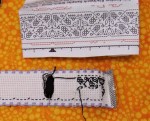
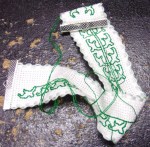
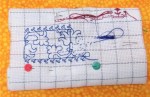
Sewing – Another bookmark got finished during the week and a 2nd got most of the way on Saturday.
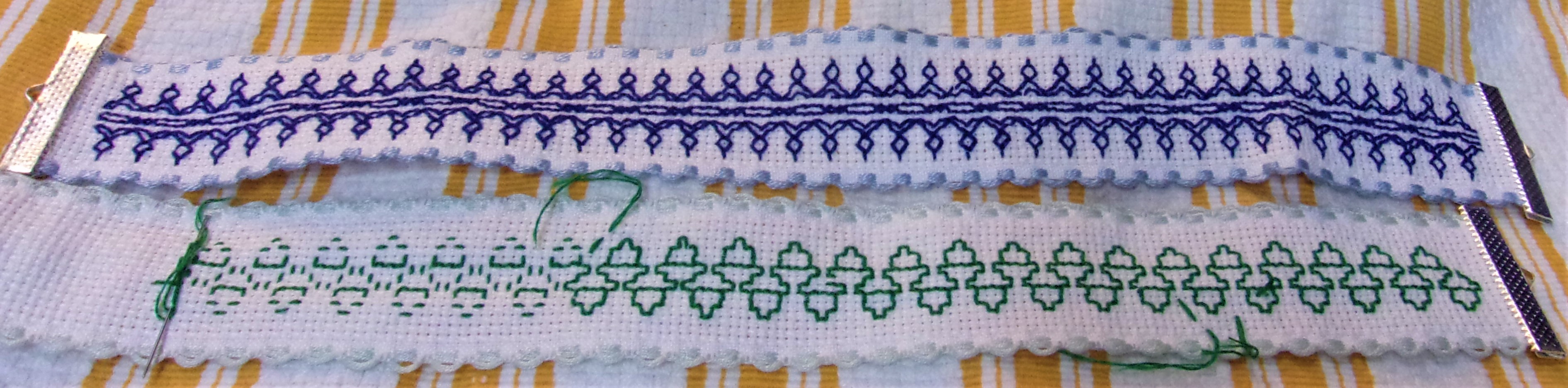
Finished and 3/4 finished bookmarks.

Unique Viking textiles found in woman’s grave – https://norwegianscitechnews.com/2021/05/unique-viking-textiles-found-in-womans-grave/

Sundials, etc. – 

Fitting a New Axe Handle – Hand Tools – Townsends Wilderness Homestead – Townsends

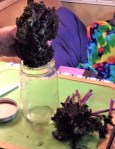
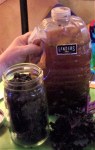
Herb Bunch – We had a “processing day” on Tuesday, separated leaves from twigs, powdering some, bagging up for storage….

The full box. There are about 30 gallon zips in there, some with more, some with less, but all labelled and prepped.

Thursday was on incense again.

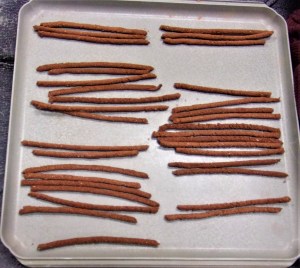
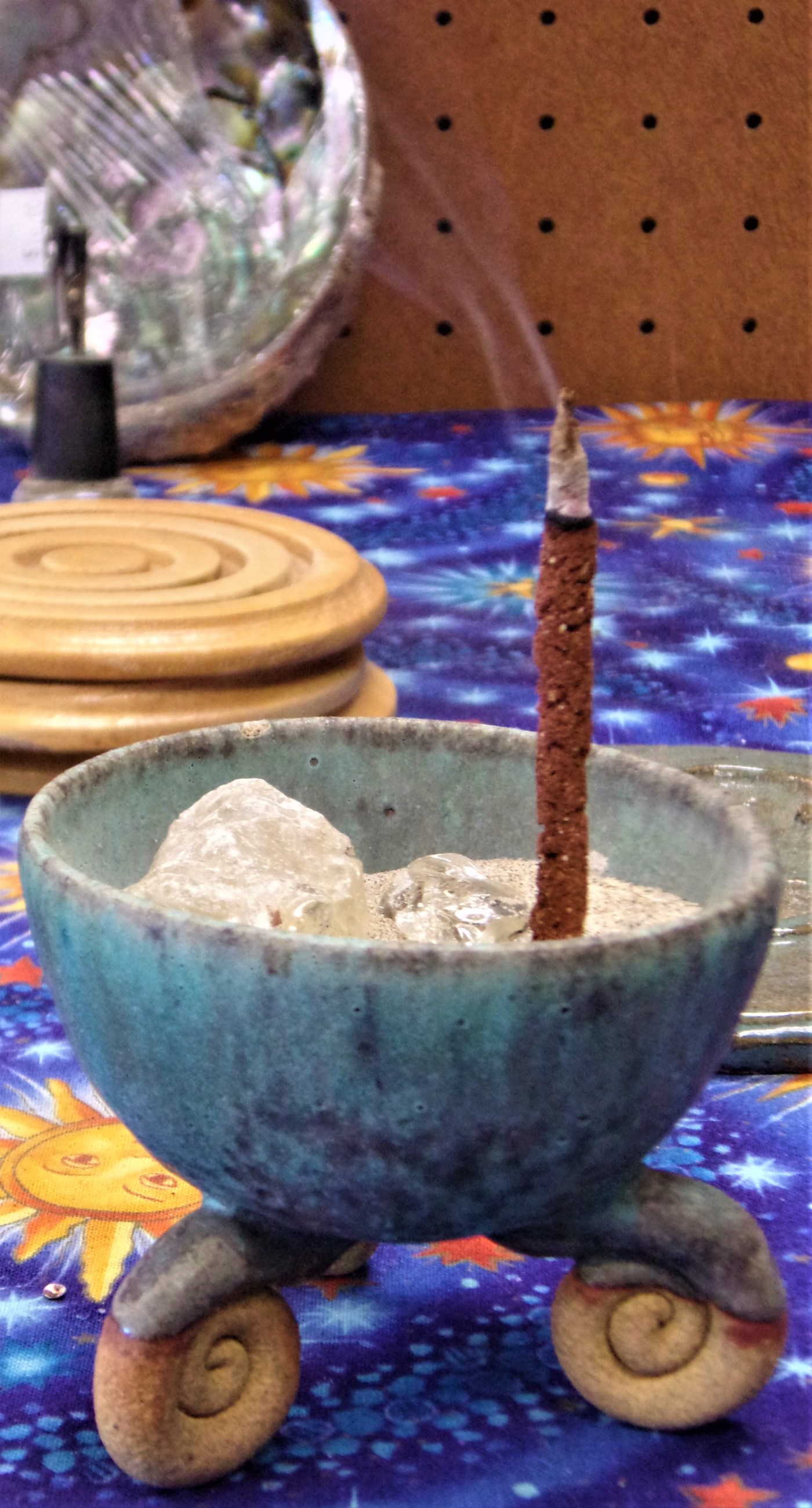
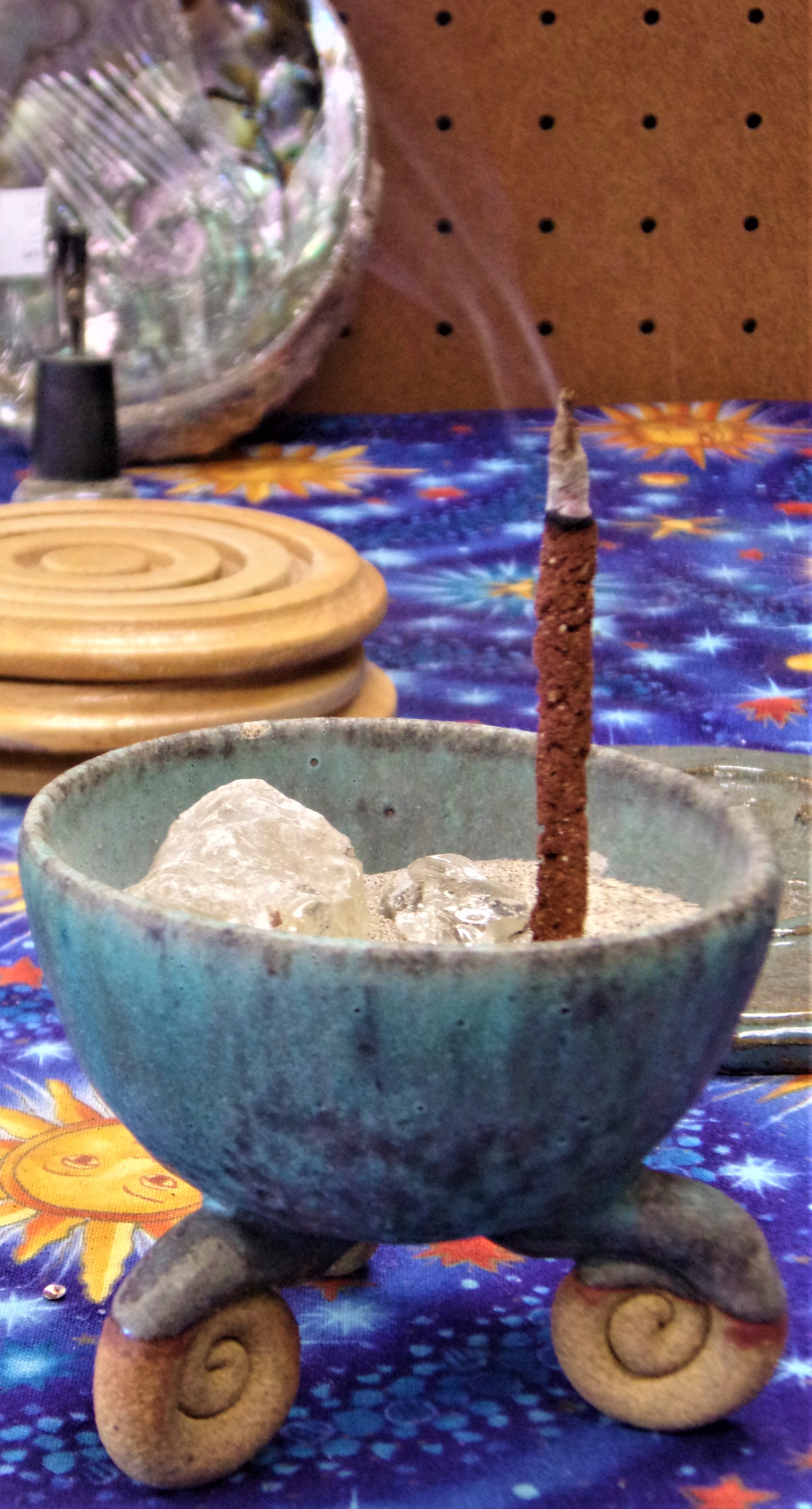
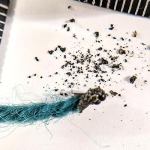
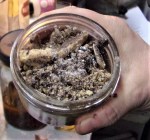
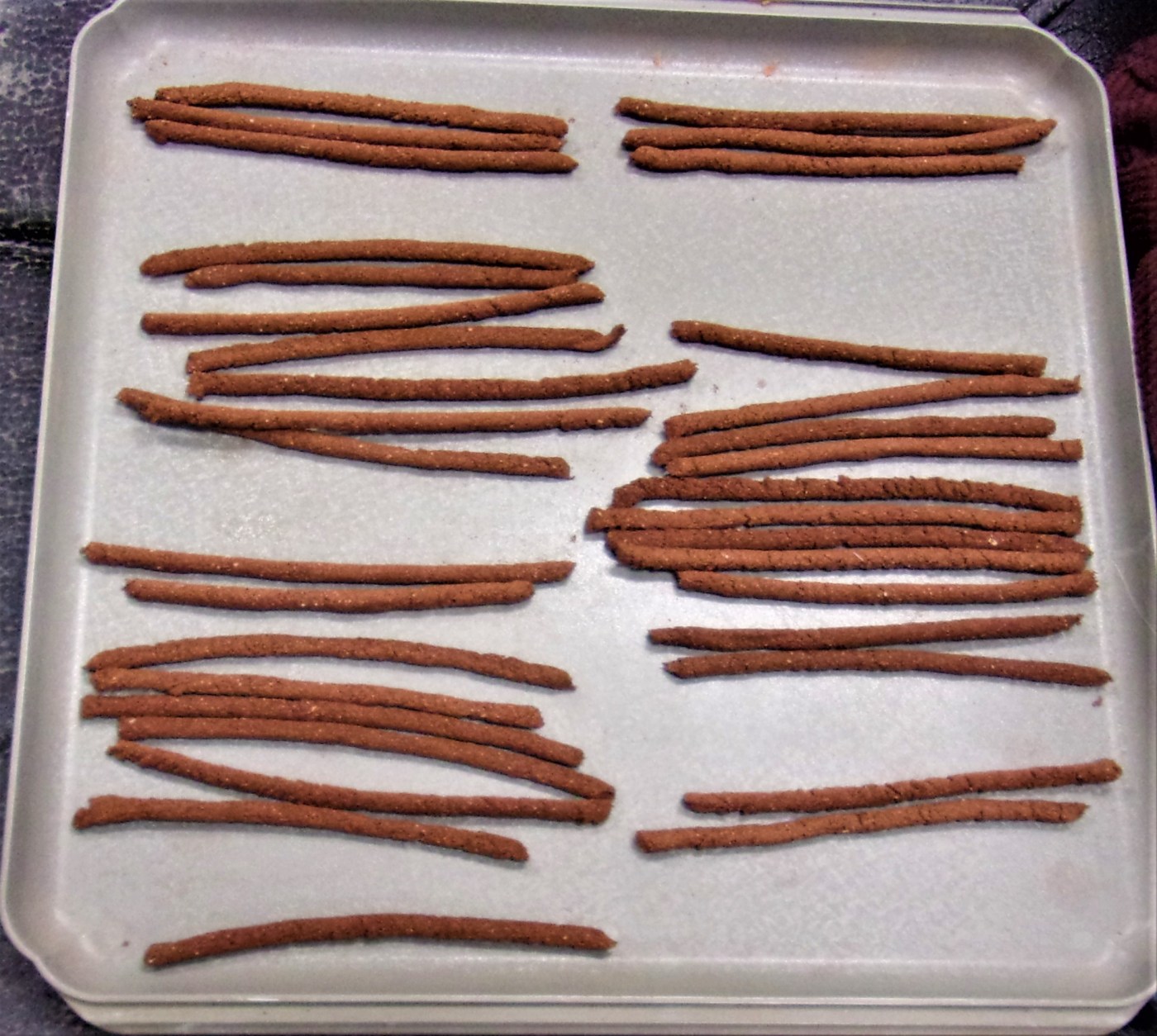
Linda’s incense sticks: sandalwood and black copal in a toh-makko base. No gum arabic added, as a test to compare with similar sticks with gum arabic. Medium was just water and they dried overnight. 

Project Day – …ended up all cooking. Loren had some mundane chores to tend to and Anja was talking with various people online, (and embroidering) but we were the only ones there! A few people chimed in later.

Isabeau – We spent the day delivering a vehicle to a “customer”/ household member after finishing the repairs. They happen to live in newport. Oh darn, road trip.

Arlys – I don’t feel so bad now. Uh, guess what I forgot….
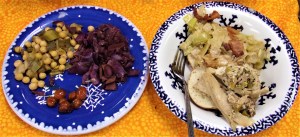
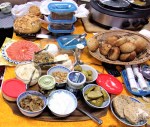
The full meal

Potluck – We had our nibbles, starting at around 5pm. We were waiting for the peas, which got done around 6:30 and the lauchsmutz took another 1/2 hour, but they we ate until we nearly popped! Just a spoonful of each dish was a gracious plenty after the nibble.

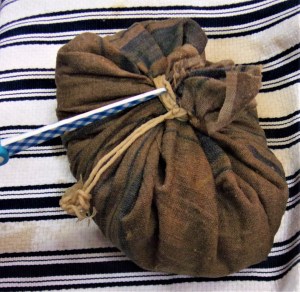
Feast Planning – The peas in a bag and the bread in a bag were the test recipes this week. We’re going to have to make proper bags to do these for the feast…. and also get a couple of large kettles or something. …and then the peas took to long….well, that’s why this is a test, so the bread dough got put into the fridge and the lauschmutz started.

Potluck Menu

Nibbles

  • Black olives
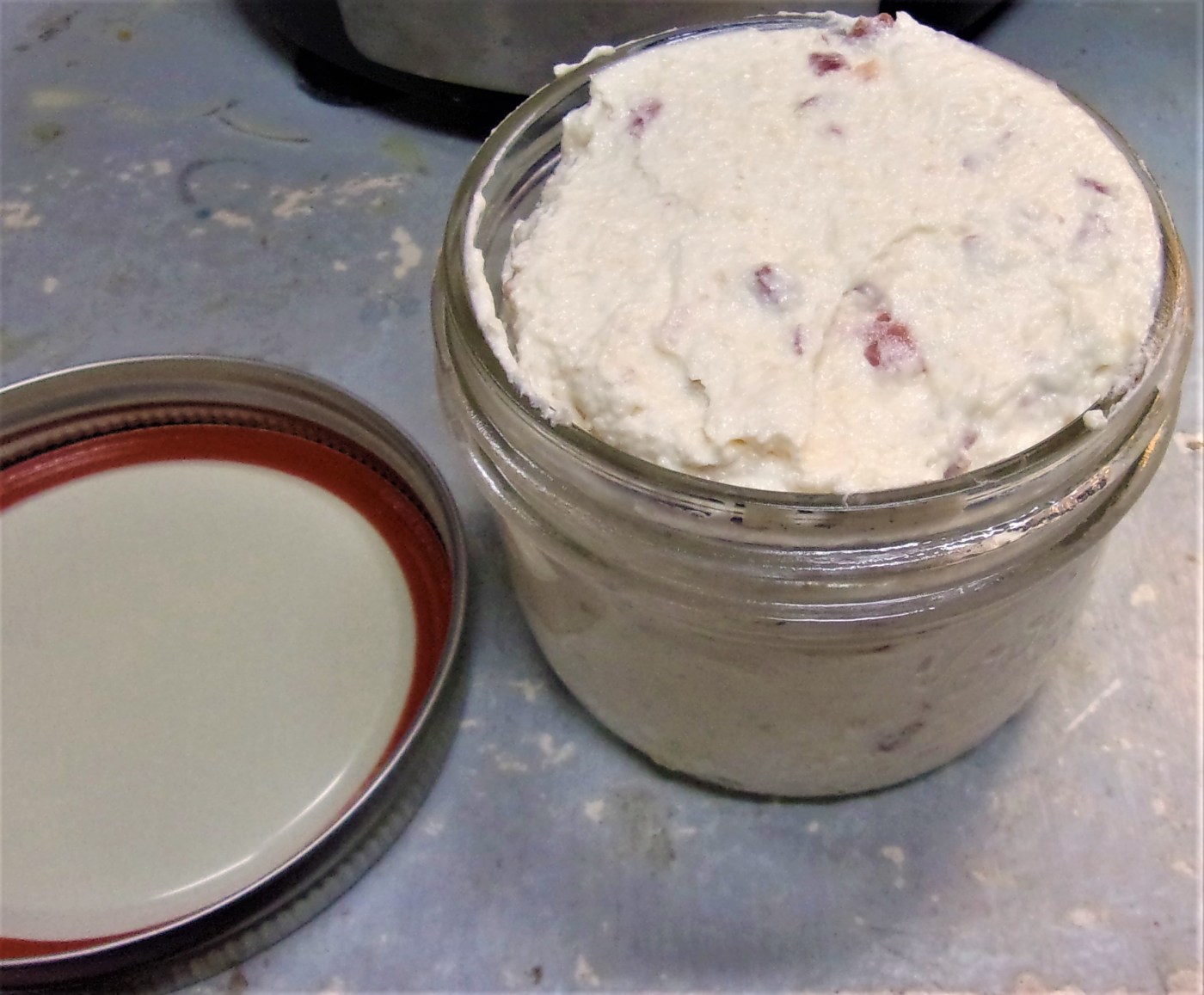
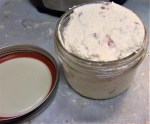
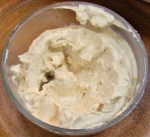
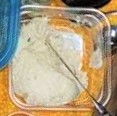
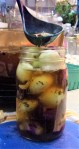
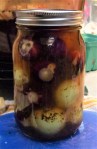
  • Potted cheese
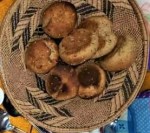
  • Bread roll

*

*

*

The full meal

Main

  • roasted stuffed chicken (bot. rt.)
  • Lauchsmutz (top rt.)
  • peas in a bag (top lft)
  • bread in a bag (didn’t get there)
  • sweet sour cabbage (lft plt top rt)
  • tiny sweet carrots (lft plt bot.)

Afters

  • comfits
  • 100’s of 1000’s.

*

Recipes

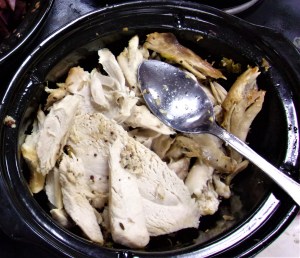
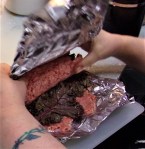
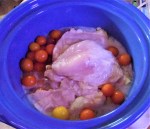
In tripot, stuffing on bottom, white meat left, dark meat right.

Roasted chicken – https://wp.me/P8ngGY-4XB
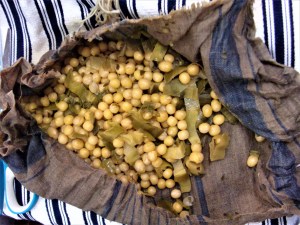
Yups. Done!

Peas in a bag – https://wp.me/P8ngGY-4Yq

*

*

*

*

Plus one page got updated because the pictures hadn’t gotten added. Wild Leaf Herb and Cheese Pottage – https://wp.me/P8ngGY-4Xl

Miscellaneous pix
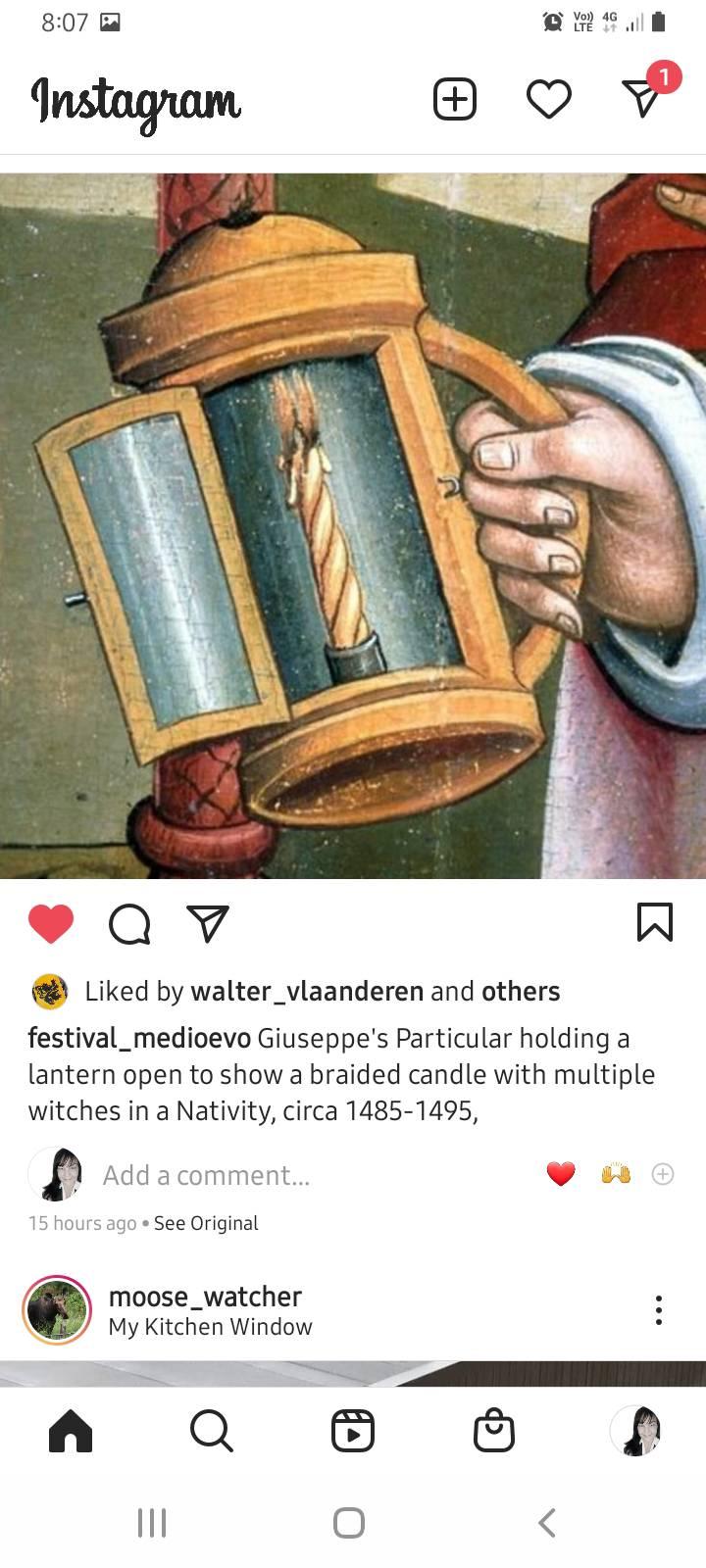
Rosalie’s Medieval Woman – I saw this today posted on Instagram by festivio_medioevo and just look at those two candles twisted together! Two wicks! Amazing! 1485-1495 Nativity.

Music – Orchesographie, 1589. Thoinot Arbeau – Alberto Sosa – Florilegio Ensemble

  • Branle De La “Haye”
  • Branle Des “Lavandieres”
  • Volte
  • Suite: “Hermites”, “Sabots”, “Chevaulx”
  • Base Dance — “Iouyssance Vous Donneray”
  • Tourdion — a) (Arbeau); b) (P Attaignant)
  • Suite: “Si I’ayme Ou Mon”, “I’aymerois Mieulx Dormir Seulette”
  • Suite: “Charlotte”, “Adrian”
  • Branle “Cassandre”
  • Branle D’ “Escosse”
  • Branle De La “Torche”
  • Allemande
  • Pavana — “Belle Qui Tiens Ma Vie”
  • Suite: “La Traditora Ma Fa Morire”, “Anthoinette”
  • Branle De La “Montarde”
  • Branle De L’ “Official”
  • Branle De “La Guerre”
  • Suite: Double, Simple, Gay, Bourgogne
  • Gavotte
  • Les Bouffons
  • Pavana De Spagna
This image has an empty alt attribute; its file name is download.png

Links

Fragment of lost 12th-century epic poem found in another book’s binding https://www.theguardian.com/books/2021/nov/18/fragment-of-lost-12th-century-epic-poem-found-in-another-books-binding

This image has an empty alt attribute; its file name is download.png

Video & Podcast Links

Were the Cathars even real? – Medievalists – The Cathars are one of the most well-known heresies in medieval Europe. But how much do we know about them? In this episode of the Medieval Grad Podcast, Lucie Laumonier interviews Jean-Paul Rehr about the mythical Cathars and a peculiar inquisition record drafted near Toulouse in the thirteenth century. Show notes – https://www.medievalists.net/2021/11/were-the-cathars-even-real/

How to live like a monk, with Danièle Cybulskie – Medievalists – Can medieval monastic practices, with their emphasis on a healthy soul, mind, and body, inspire us to live fuller lives today? This week, Danièle is the guest as she talks about her new book How to Live Like a Monk: Medieval Wisdom for Modern Life.

Funnies 

divider black grey greek key

Largesse, Gifts and Auction items
·       ASXLVIII = 88
·         ASXLIX = 794
·         ASL = 2138
·         ASLI = 731
·         ASLII = 304
·         ASLIII = 146
·         ASLIV & ASLV = 230
·         ASLVI = 177 plus 4 puppets, 4 powder fort, 8 cheese spice and 9 powder douce packets, 1 kiss-lock pouch, 10 tiny bobs, 7 pincushions, 3 pins, 3 snip case w/snips, lucet cords, 25 pouches for block-printing, 2 medium pouch, 4 small pouches, 12 bookmarkers, 14 unfinished pincushions, 1 sewing kit (except for bone needle), varnished stuff (124), 2 emery strawberries, 1 woolen spool-knit cord, 48 key bottle openers
Total as a Household = 4238 handed off


moving writing pen motifIn ministerio autem Somnium! Anja, graeca doctrina servus to House Capuchin
Page Created 11/14/21 & published 11/24/21 (C)M. Bartlett
Last updated 11/24/21
Activities through 11-14-21

Some quiet weeks are nice. It was frantic around here during parts of the summer, so it’s nice to get a bit of a break. OtOH, the flooding leaves a lot to be desired. None of us are affected, but there are places where it’s bad.

Looks like none of us are getting to 11th night. It’s already filled up.

The garden has mostly wound down and Herbs is into processing the harvest, as well as learning to make incense. Anja and Loren are starting some of the potluck cookery, so’s to have some of the test dishes done soonest. The Birka chicken looks like a good one for the feast. Embroidery and Sewing went on this week, too.

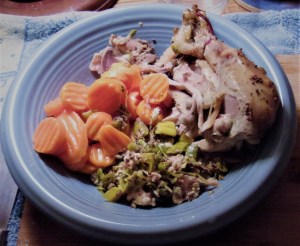
Chicken right, carrots left, stuffing below.

Adiantum A&S is on Tuesday and an extra Herbs Workshop earlier in the afternoon. Regular Herbs on Thursday. Sewing on Saturday and then our Project Day and Potluck on Sunday!

Project Day is now open for in-person meet-ups as well as in the Virtual Realm! Potluck this month will be Virtual and Real-World! Herbs Workshop and Sewing are ongoing. Masks required. When will the rest of these open up in person? We’ll keep right on with the virtual ones side-by-side with the actual. 

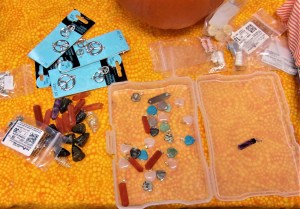
The charms from the bookmark project. Everything needs jump and split rings and we can’t find ’em….
  • Herb Bunch – At Ancient Light, Thursdays, 7am-9pm, doing incense
  • Herb Workshop In the Garden – Irregularly scheduled. Please ask to join the facebook chat! New!
  • Sewing Time – At Ancient Light, Saturdays, 3-5pm
  • Project Day – At Ancient Light, Sundays, 1 to 5pm
  • Cheese and Wine happens irregularly, usually announced with little notice on our Facebook group.
  • Next Potluck – 11/21, 12/19, 1/16
  • Winter Feast LVI, Norse Theme. Page here – https://housecapuchin.com/winter-feast/winter-feast-norse-feast-as-lvi-february-2022/ More pages coming!

Here is the direct Portfolio link which has all the past Project Day reports and various projects, original here:  https://housecapuchin.wordpress.com/portfolio/  and new one here:  https://housecapuchin2.wordpress.com/portfolio/ and number three is here: https://housecapuchin3.wordpress.com/portfolio/

Events

SATURDAY, DECEMBER 18, 2021 AT 10 AM – 8 PMSummits Winter Investiture – Event by Principality of the SummitsShire of Coeur du Val and Jacob Sanchez, Philomath Scout Lodge, antir.org/events/summits-11th-night-investiture – Good people of An Tir, join our Alpine Highnesses Kenric and Dagmar as they bestow the Summit Coronets unto their heirs, Viscount Luciano Foscari and Signora Tessina Felice Gianfigliazzi. To the rapier fighters of the Summits, bring your courage and steel for the tournament that decides who will stand with Their Alpine Highnesses as their Captain of Cats. (Waiting list of over 30 people on Monday 11/15. <sigh>)

SATURDAY, JANUARY 15, 2022, 9AM–7PM – Adiantum Mid-Winter’s Feast – The Long Tom Grange – Event by Barony of Adiantum and Nái Martyn
Public · Anyone on or off Facebook
Event Main Contact (Event Steward): Naible Martyn
Event site: Long Tom Grange, 25823 Ferguson Junction City, OR 97448
This is a Level 2: Branch Event where no Kingdom or Principality business is expected to be conducted event.
Join their Excellencies of Adiantum for a Midwinter Feast & Revel. It has been a long dark winter, but we are in this together. Let there be light, laughter, music and revelry.
All attendees will either show proof of full vaccination or show proof of testing within 72 hours of the activities pursuant to the Society’s Policy dated September 25, 2021.
“Although the SCA complies with all applicable laws to ensure the health and safety of our event participants, we cannot eliminate the risk of exposure to infectious diseases during in-person events. By participating in the in-person events of the SCA, you acknowledge and accept the potential risks. You agree to take any additional steps to protect your own health and safety and those under your control as you believe to be necessary.

JAN 7, 2022 AT 2 PM – JAN 9, 2022 AT 12 PMAn Tir 12th Night 2022 – DoubleTree by Hilton Hotel Seattle Airport – Tickets book.passkey.com/go/SCA22 – We welcome An Tir and the Known World to the celebration of our Crown and Kingdom. This grand celebration will be hosted by the Baronies of Wyewood and Madrone, on January 7th-9th, 2022 at the Double Tree by Hilton at Seattle Airport.
We are pleased to announce that room reservations are now open for An Tir 12th Night 2022. This grand celebration will be hosted by the baronies of Wyewood and Madrone, on January 7th-9th, at the Double Tree by Hilton at Seattle Airport. Our room rates are available for the 6th and 10th as well should you opt for a longer stay. The parking cost is contracted to be 50% off their daily rate, which at one time was $32 but may change before our event, thus an additional cost of $16/day per vehicle parked. Please understand this is an airport hotel, that dictates the parking market. You may reserve online with this link: https://book.passkey.com/go/SCA22You may also reserve by phone. Please call toll free (800) 222-8733. Reference the group code: SCR, or the group name: SCA 12th Night

Dance Vids – Turbo medieval dance lesson // The Contessa’s Quickies #shorts – The Creative Contessa – Learn the basics of the bransle, a 16th century French line dance enjoyed by commoners. A Renaissance Peasant dance for the win!

Classes – 

Wrap Shots Demo Sir Ataias – Kingdom of AnTir, SCA – Sir Ataias demonstrates how to do a wrap shot.

1415: The French Disaster Of Agincourt | Medieval Dead | Chronicle – Chronicle – Medieval History Documentaries – The Battle Of Agincourt may well be the most famous battle of the entire Middle Ages. During the Hundred Years’ War between England and France, Henry V, the young king of England, lead his forces to victory on the plains of Azincourt in northern France. For the French, it was a catastrophe. Despite outnumbering the English by far, they lost over 6,000 men, in comparison to 400 on the English side. How did this young king secure one of the greatest military victories of all time? And what can archaeologists at the burial sites at Agincourt find to tell us about this grisly moment of medieval history?

Writing The Perfect Medieval Letter // Contessa Quickies #shorts – The Creative Contessa – Explore how to write perfect medieval letters based on an actual piece of medieval correspondence written in the 15th century. The Paston Letter are a collection of upper middle class correspondence that offers a window into daily 15th century/late medieval live in England, from parties, balls and feasts to commerce through to birth, marriage and death. Also interactions between peasantry, merchants and the nobility.

Early Week – A little embroidery got done and a bit more writing.

Cookery – 

Thanks to some of the House folks I’m going to have to call it roasted stuffed chicken instead of spit-roasted…. 🙂 The Birka chicken got started on Saturday after some harvest. The stuffing got made at home and then the chicken got baked on Sunday at the shop and finished just at closing time. We took the chicken home and ate it there.

More on the stuffing

Chicken right, carrots left, stuffing below.

Baking the chicken on Sunday – Donededonedone….and tasty! The filling is a different kind of flavor, not acid at all, despite the whey. Nowhere does it say to salt it, although I did….but not enough. The basting does give an interesting taste to the skin and the outer meat, although the basting with egg right at the last didn’t seem to do anything. …and Loren actually *likes* the stuffing!

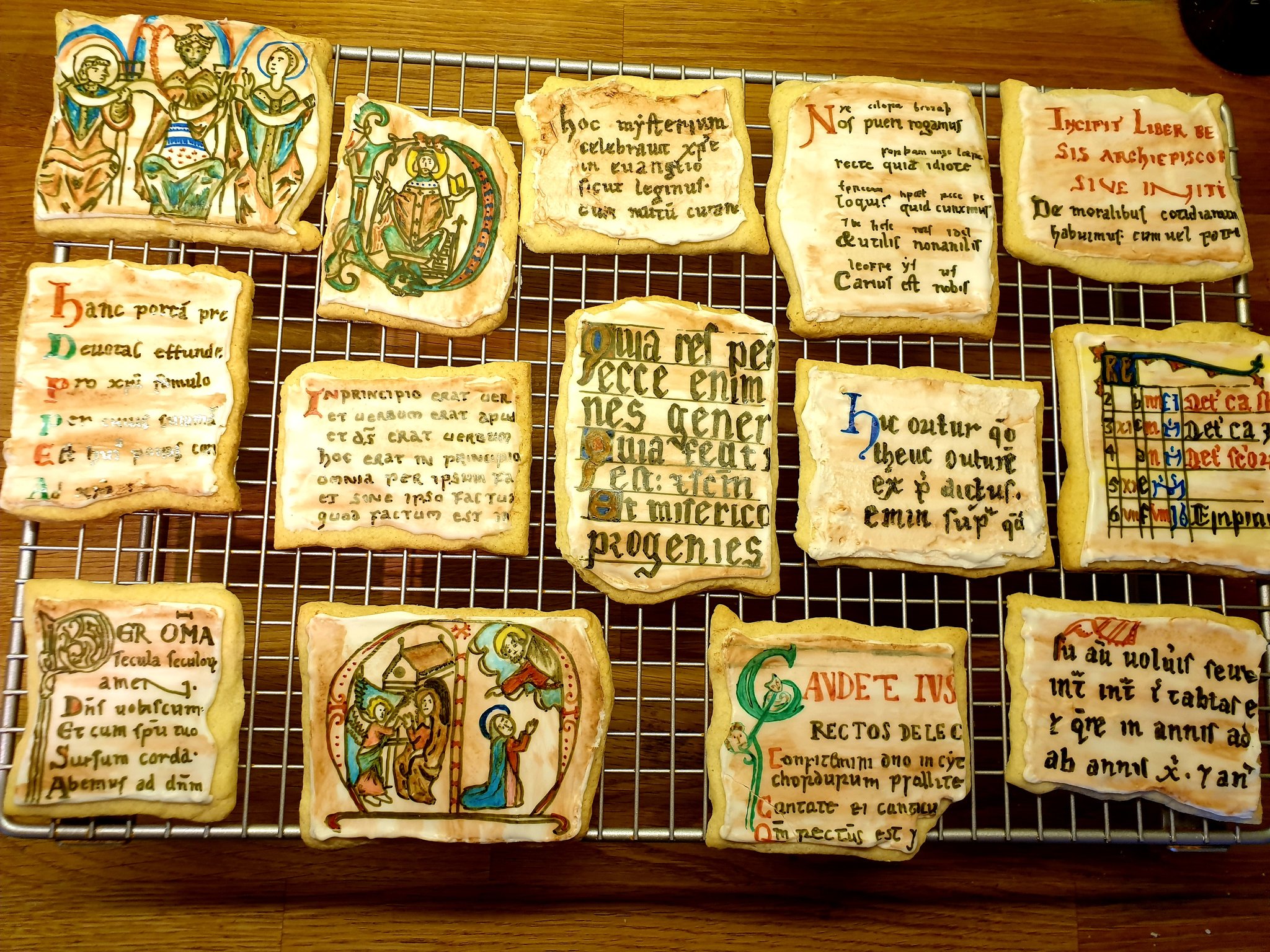
The Past is a Foreign Pantry@foreign_pantry – Wonky selection of medieval manuscripts biscuits for reading week (does this count as research?)

 
Ancient Roman Steak Sauce – Tasting History with Max Miller
 

Sewing – A fair amount of embroidery happened during evenings this week.

Bast Fiber! Unearthed textiles from Stone Age settlement reveals history of clothes makinghttps://phys.org/news/2021-11-unearthed-textiles-stone-age-settlement.html

Sampler – 1600 – 1630
England, 17th century
Embroidery: silk on linen tabby ground
Overall: 24.1 x 50.8 cm (9 1/2 x 20 in.)
The Mary Pack McNairy Collection 1942.508
LOCATION – not on view
SEE ALSO
Collection: Textiles
Department: Textiles
Type of artwork: Sampler
Medium: Embroidery: silk on linen tabby ground
Credit line: The Mary Pack McNairy Collection
The information about this object, including provenance information, is based on historic information and may not be currently accurate or complete. Research on objects is an ongoing process, but the information about this object may not reflect the most current information available to CMA. If you notice a mistake or have additional information about this object, please email collectionsdata@clevelandart.org.
To request more information about this object, study images, or bibliography, contact the Ingalls Library Reference Desk.
Request a digital file from Image Services that is not available through CC0, a detail image, or any image with a color bar. If you have questions about requesting an image, please email imageservices@clevelandart.org.

Sundials, etc. – 

Mystery of 8500-year-old copper-making event revealed through materials science – https://phys.org/news/2017-08-mystery-year-old-copper-making-event-revealed.html

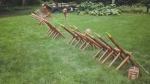
Going to make a new shade or pavilion? Read this first! – Tent poles, the long and short of it. – https://sawdustandshavings.home.blog/2021/11/08/tent-poles-the-long-and-short-of-it/

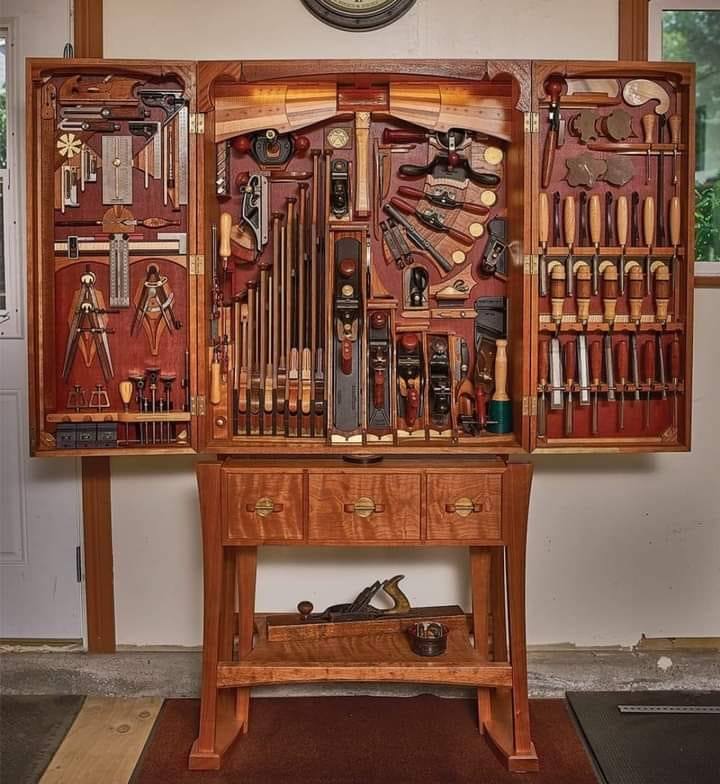
Anja says, “At one point I had most of these, but not the awesome case! You’ve seen my ironwood come-along (made by my Daddy) in various projects. That’s the tool that’s top center, surrounded by some lovely pegged framing wood.”

Erik Johnson – Steampunk Tendencies – Group – This is an old shipfitter’s tool set, from the era of iron men & wooden ships.

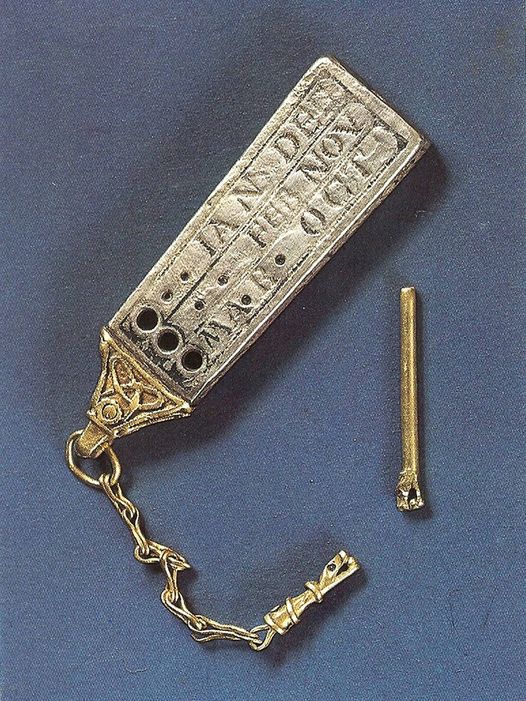
Ticia Verveer – Archaeologist – This 10th century portable sundial was discovered during alterations to the cloister garth of Canterbury Cathedral in England. It consists of a silver tablet, inscribed with the names of the months and with holes through which a peg was inserted. Around its sides runs the inscription ‘[SA]LVS FACTORI [PA]X POSSESSOR[I]’: ‘Health to my maker, peace to my owner’ If the tablet was dangled from a chain, facing the sun, the position of the peg’s shadow gave a rough idea of the time. https://t.co/w6qKKiGpME

How Ale Was Made | Tudor Monastery EP3 | Absolute History – Absolute History – The team wean piglets, cultivate wild yeast, malt barley, make ale and bread, harvest honey and beeswax, dip candles, shave their sheep’s hooves, demonstrate period hair care methods, roast lamb, and celebrate both a mass and the midsummer festival. They take custody of a boar to service their sows. They observe the shaping, moulding, and pouring of a bell, learn about period clock mechanisms and observe a wind-powered grain mill.

Viking House: Full Bushcraft Shelter Build with Hand Tools | Vikings – -TA Outdoors – We build a bushcraft viking house from the viking age using hand tools only. Inspired by vikings, who were very resourceful and created buildings using the natural materials they scavenged around them. We used simple hand tools such as axe, saw, auger, drawknife, bushcraft knife and other simple tools.
To begin with we cut cedar logs from trees that had been felled in the forest. We used an axe and saw to make log cabin notches and built the foundation of the viking house two logs high. We then used the hand auger to build the timber frame. This consisted of 3 large “A” frames. We burnt the ends of the logs in fire to evaporate any moisture and create a rot-proof layer of charred wood which will help to preserve the timber frame foundation when the poles are in the ground. We used a long cedar log as the ridge pole which sits on top of the a frame of the bushcraft shelter. The next stage was building a viking longpit or firepit. This we wanted to make as historically accurate as we could. So we dug a pit about 4 feet long and 2 feet wide. We lined the pit with large stones found in the nearby area. In order to reduce waste of any materials, we used the clay from the pit to secure the stones. We added water to the clay to make it easier to work with and we filled in the gaps between the stones. We then lit a small fire in the pit and let the clay dry out for a few days. At this point we realised we could make our job easier by building a diy saw horse. So we used the drawknife to remove bark from a log (helps to prevent rot). We used the auger to drill four holes for legs and then we made four wood pegs for the top of the saw horse. For the rafters we used more cedar logs and again burnt the ends. It is an ancient japanese technique to preserve wood which is called shou sugi ban.
It was then finally time to build the roof of the house. For this, we peeled the bark off the cedar logs. We then put this on the rafters and secured it with some roofing tacks. We had to be fast when doing this, as the cedar bark shrinks and cracks when it dries. We put it on in layers like roof tiles. We built a wood ladder to get up high on the roof and secure the final bark layers.
Using an axe and bushcraft, we made some wooden wedges and split a few large cedar logs. We then hewed these logs and built a raised viking bed for the inside of the house. We also made some benches to sit near the fire. At the back of the viking house, we built a folding window and support arm so that we could let light into the house and also improve the airflow. We dug an air vent too, to allow more oxygen to get to the fire. To make the shelter more secure, we built a perimeter wall use cedar posts and hazel saplings (also known as wattle wall). To help further improve the airflow inside the shelter, we cut a hole in the roof and built a ridge cap or ridge vent to act like a chimney and let the smoke out. Overall this viking house took about 10 days to build. It was in winter, so we were restricted by daylight hours. This is not a historically correct viking house. Traditional viking houses were built with large timbers that were hewn from big logs. They had large gable ends almost like log cabins and the roof was made from wood shingles. Often they looked like viking longships or longboats and had many decorative viking features. In a viking longhouse, there would be enough room for many people and animals as well. But this was our take on it.
We have done a number of different camping overnight trips in this shelter. We have cooked meat over fire, had great viking feasts and spent many hours keeping warm around the firepit. I hope you enjoyed this vikings inspired bushcraft build. To watch the whole series of individual episodes (where we talk and explain what we are doing) then please follow links below.

VIKING HOUSE BUILD (Each Episode): https://www.youtube.com/playlist?list=PLxnadpeGdTxD9wUrrSUQojUgTowrFMJeg

Herb Bunch – Finally harvested various things for the dishes in cookery and then Incense got another batch of incense sticks made. They were dry on Sunday, so got boxed up and put by. We got dough made for Clearing incense sticks and a bunch of herbs processed for drying.

We ended up with a total of 50, although we’ve burned two for tests.

Why Frankincense And Myrrh Are So Expensive | So Expensive – Business Insider – Frankincense and myrrh are perhaps best known for their biblical connotations. But this tree sap has been prized across the world for over 6,000 years. These fragrant incense pieces come from the Burseraceae family of trees and are found across the Horn of Africa and the Arabian Peninsula. But despite recent attempts to protect these trees, they could soon be headed for extinction. So what makes frankincense and myrrh so expensive?

What Are Frankincense and Myrrh? – ReligionForBreakfast – According to the Gospel of Matthew, the magi bring gold, frankincense, and myrrh as expensive gifts to the young Jesus. We all know what gold is, but what is this frankincense and myrrh stuff? What did the ancients use it for?

Why Agarwood Is So Expensive | So Expensive – Business Insider – For thousands of years, agarwood has been known as “The Wood of the Gods.” First-grade agarwood can cost as much as $100,000 per kilogram, making it one of the most expensive raw materials in the world. Aquilaria malaccensis is a tree native to the rainforests of southeast Asia. The healthy heartwood inside Aquilaria trees is pale, odorless, and worthless. In order for this tree to produce any agarwood, it must first become infected with mold. So how does this infection process work? What is agarwood used for? And what makes it so valuable?

Ingredients Uncovered: The Story of Sandalwood – LUSH – Sandalwood is in high demand as an ingredient in perfume, but the supply of this precious material is scarce. Sandalwood trees are in danger of extinction due to increased logging in places such as Tanzania and Kenya. This short film explores the positive action being taken to prevent its illegal felling in Kenya and sustainable ways of cultivating the fragrant trees.

Project Day – Anja started with processing pictures, then went on to the chicken and then to embroidery.

Helen Louise said, “Making stays today…”

Arlys said, “I’m sorry I missed Project Day. I’m getting ready for two big shows–the Portland Holiday Market, this weekend at the Portland Expo–and Geek The Halls, which will be the following weekend at the Lloyd Center Double Tree (we held a Twelfth Night there not too long ago, and the room we used for Merchants is being used for Geek). My orders showed up early so I spent the day bagging, tagging, and packing because it all needs to hit the Expo tomorrow.Portland Holiday Market Nov 18-21Geek the Halls Nov 27-28I’ll be with the NIWA booth (NW Independent Writers Association, across from Santaland). Hope to see some of you there!

Feast Planning – The test dish for the week was the Birka roasted stuffed chicken (in cookery above). We’ve also started a boiled bread, but that’s for this coming week.

Miscellaneous pix

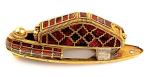
Hledači na Rakovnicku našli zlatý poklad nevyčíslitelné hodnoty https://www.novinky.cz/domaci/clanek/hledaci-pokladu-na-rakovnicku-nasli-zlaty-poklad-nevycislitelne-hodnoty-verejnosti-je-zatim-nepristupny-40377797 – Searchers in Rakovnicko have found a golden treasure of incalculable value. (Picture captions in the original post) 

Music – 𝔈𝔡𝔡𝔞 • myths from medieval Iceland – 𝔐𝔲𝔰𝔦𝔠𝔞 𝔐𝔢𝔡𝔦𝔢𝔳𝔞𝔩𝔢 – Ensemble: Sequentia – Album: Edda – Myths from medieval Iceland
Video: Selection of many runic art photos, courtesy of Alessio & Valentina
http://www.facebook.com/musicamedievale

Untangling among the myriad of musical projects inspired by the Vikings born in recent years is something really difficult. To help those who are looking for something more credible and historically accurate, even if perhaps less easy for the common ear, here is the musical version of the Edda proposed by Enseble Sequentia.
The Edda are the sagas of medieval Iceland, as they are usually called, a series of texts describing various aspects of the society from their laws to their religious beliefs. Some texts are in prose, while some are poetic. The latter are the subject here, and are performed primarily as preserved in the Codex Regius (early thirteenth century).
The sagas of medieval Iceland are some of the West’s most fascinating literature, arising from one of the West’s most fascinating civilizations. Iceland was settled by the Norse in the late 9th century, and has been inhabited since then. It’s cultural distinctions include not only that early exploration and settlement but a democratic parliament as well. Many of the sagas apparently date to this period, and possibly even prior to settlement, but were written down only from around the 13th century.
This poetry and its recitation are inherently oral traditions. There is no musical notation which accompanies it, and so Sequentia’s reconstructions are particularly hypothetical. They are based both on their own study of medieval poetry as it is linked to music elsewhere, the various modal gestures entailed, as well as some of the earliest written descriptions (18th century) of Icelandic recitation by European musicians. The amount of effort put into this production is very impressive, based as it was over the course of years of study.
Regarding the resulting music itself, some sections are particularly compelling, and regardless of provenance (whether medieval Iceland per se or the minds of Sequentia), make for a fine program. There is an alternation of more lyrical passages with some more dramatic recitations, as one might generally say this material was typically performed in the bardic tradition. Medieval pronunciation is attempted as well.
Benjamin Bagby, legendary performer and teacher, has always been interested in Iceland, and in fact he lived & worked on that mysterious North Atlantic island during summers as a student, studying the language. It is only natural that his passion for medieval music would find an outlet in the many medieval texts preserved by the Icelanders. In this project (which was staged as a music-drama production in Luxembourg in 1995) the myths of the ‘Edda’ are interwoven, to tell the stories of creation, destruction, and of the gods Odin, Thor and Baldur. Bagby, Thornton and Gaver are joined by long-time colleague Lena Susanne Norin for this first great reconstruction project of a lost musical repertoire, for which Bagby’s work in Icelandic archives was the basis. The philological guiding light in this project was the Icelandic scholar Heimir Pálsson, and the CD was recorded in the church at Skálholt, in Iceland, a place rich in history.
More info: http://www.sequentia.org

00:00 1 Leikr elds ok ísa “The song of Fire and Ice” (fiddle)
02:16 2 Veit ek at ek hekk “Óðinn’s Rune-verses” (voice, lyre)
07:58 3 Hlióðs bið ek allar “The Prophecy of the Seeress” (all)
18:08 4 Vreiðr var pá Ving-Þórr “The Tale of Prymr” (voice, lyre)
32:00 5 Nú erum komnar “The Song of the Mill” (2 voices, fiddle)
44:18 6 Baldrs minni “In Memory of Baldr” (fiddle)
47:52 7 Senn vóru æsir allir á þingi “Baldr’s Dreams” (2 voices, fiddle)
57:23 8 Þat man hón fólkvíg “The Prophecy of the Seeress” (2 voices)
01:03:47 9 Ragnarok “The End of the Gods” (fiddle)
01:05:16 10 Á fellr austan um eitrdala “The Prophecy of the Seeress” (all)

Barbara Thornton – voice
Lena Susanne Norin – voice
Elizabeth Gaver – fiddles
Benjamin Bagby – voice, lyre
Benjamin Bagby & Barbara Thornton – dir.

This image has an empty alt attribute; its file name is download.png

Links

Calverley Old Hall: Historians make ‘once in a lifetime’ discovery as they find entire lost room of Tudor paintings in Yorkshire medieval hall https://www.yorkshirepost.co.uk/heritage-and-retro/heritage/calverley-old-hall-historians-make-once-in-a-lifetime-discovery-as-they-find-entire-lost-room-of-tudor-paintings-in-yorkshire-medieval-hall-3449288

Archeological dig in Newfoundland unearths what could be Canada’s oldest English coin – https://vancouversun.com/news/national/archeological-dig-in-newfoundland-unearths-what-could-be-canadas-oldest-english-coin/wcm/58b37e13-d133-4b9c-aa01-662dcb25455b

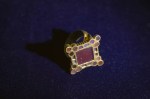
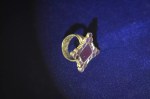
Archaeologists discover ancient ‘hangover prevention’ ring – https://www.cnn.com/style/article/archaeologists-ancient-hangover-prevention-ring-amethyst-scn/index.html

Good largesse project, no-sew crayon wrap. – https://www.smallfriendly.com/small-friendly/2012/02/no-sew-crayon-wrap.html

This image has an empty alt attribute; its file name is download.png

Video & Podcast Links

PODCAST: Hans Holbein the Younger’s Captivating Portraits https://blogs.getty.edu/iris/podcast-hans-holbein-the-youngers-captivating-portraits/

13th Century Interior Design | Secrets of the Castle (3/5) | Absolute History – Absolute History – Ruth, Peter and Tom enter the surprisingly colourful world of medieval interior design. The castles that we see today are in fact scarred by centuries of decay. Most of their original roofs, carpentry and interior finishes have long since disappeared, but in their heyday they were lavishly decorated.

Celtic and Anglo-Saxon treasure found – but what is treasure? – Hidden History – Two recent treasure finds have highlighted an important issue. What is treasure? How is it decided what qualifies as treasure? And how can finding it land you in trouble with the law?

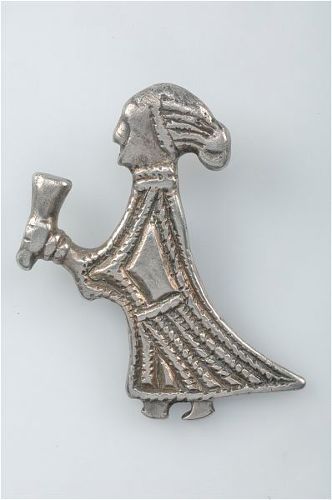
Medieval Badges with Ann Marie Rasmussen – Medievalists – If you were suddenly transported back into Northern Europe in the latter part of the Middle Ages, a lot of the people you came across would be sporting something shiny on their clothes or hats. This week, Danièle speaks with Ann Marie Rasmussen about medieval badges, how they were made and used, and who was wearing them.

The column and equestrian statue of Justinian, a landmark of Constantinople, with Elena Boeck – Medievalists – Though it is often overlooked today, Justinian’s column and colossal statue, which stood for a thousand years next to Hagia Sophia, defined the City almost as much as the Great Church itself. In this episode of Byzantium and Friends, we talk with Elena Boeck about the symbolism, history, and the engineering of this monument.

Funnies 

divider black grey greek key

Largesse, Gifts and Auction items
·       ASXLVIII = 88
·         ASXLIX = 794
·         ASL = 2138
·         ASLI = 731
·         ASLII = 304
·         ASLIII = 146
·         ASLIV & ASLV = 230
·         ASLVI = 177 plus 4 puppets, 4 powder fort, 8 cheese spice and 9 powder douce packets, 1 kiss-lock pouch, 10 tiny bobs, 7 pincushions, 3 pins, 3 snip case w/snips, lucet cords, 25 pouches for block-printing, 2 medium pouch, 4 small pouches, 12 bookmarkers, 14 unfinished pincushions, 1 sewing kit (except for bone needle), varnished stuff (124), 2 emery strawberries, 1 woolen spool-knit cord, 48 key bottle openers
Total as a Household = 4238 handed off


moving writing pen motif
In ministerio autem Somnium! Anja, graeca doctrina servus to House Capuchin
Page Created 11/9/21 & published 11/15/21 (C)M. Bartlett

Last updated 11/15/21
Activities through 11-7-21

Our gardening is winding down for the season, but cooking and crafts are winding up! We’re scheduling a couple of workshops for the Feast, and one before it for getting ready. Folks are working on tunic, coptic bookbinding, embroidery, quince, soup and more. We have lots of links in the report, too, on various interesting topics, and the 3rd bit in the music section is a “wtf”. 🙂 but lots of fun! 

There shouldn’t be anything holding up workshops this week, or project day unless the weather does something strange again.

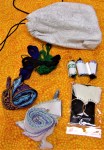
Various bookmark pieces

Project Day is now open for in-person meet-ups as well as in the Virtual Realm! Potluck this month will be Virtual and Real-World! Herbs Workshop and Sewing are ongoing. Masks required. When will the rest of these open up in person? We’ll keep right on with the virtual ones side-by-side with the actual. 

  • Herb Bunch – At Ancient Light, Thursdays, 7am-9pm, doing incense
  • Herb Bunch, In the Garden – Irregularly scheduled during the winter, Wed. 3-5pm. (Ask Anja to join the chat group for notifications)
  • Sewing Time – At Ancient Light, Saturdays, 3-5pm
  • Project Day – At Ancient Light, Sundays, 1 to 5pm
  • Cheese and Wine happens irregularly, usually announced with little notice on our Facebook group.
  • Next Potluck – 11/21, 12/19, 1/16
  • Winter Feast LVI, Norse Theme. Page here – https://housecapuchin.com/winter-feast/winter-feast-norse-feast-as-lvi-february-2022/ More pages coming!

Here is the direct Portfolio link which has all the past Project Day reports and various projects, original here:  https://housecapuchin.wordpress.com/portfolio/  and new one here:  https://housecapuchin2.wordpress.com/portfolio/ and number three is here: https://housecapuchin3.wordpress.com/portfolio/

An Tir’s First Crown Tournament – Kingdom of AnTir, SCA – Duke Thorin discusses An Tir’s first Crown Tournament. From The Sister’s Interview.

Collar of Steel – Kingdom of AnTir, SCA – Duke Steingrin and Jarl Alfred discuss An Tir’s tradition of the Knight’s Fealty tradition. From The Sister’s Interview.

Events

SATURDAY, DECEMBER 18, 2021 AT 10 AM – 8 PM – Summits Winter Investiture – Philomath Scout Lodge – Event by Shire of Coeur du Val, Principality of the Summits and Jacob Sanchez – antir.org/events/summits-11th-night-investiture
Good people of An Tir, join our Alpine Highnesses Kenric and Dagmar as they bestow the Summit Coronets unto their heirs, Viscount Luciano Foscari and Signora Tessina Felice Gianfigliazzi. To the rapier fighters of the Summits, bring your courage and steel for the tournament that decides who will stand with Their Alpine Highnesses as their Captain of Cats.
Additional details will be provided as they become available.

SATURDAY, JANUARY 15, 2022, 9AM–7PM – Adiantum Mid-Winter’s Feast – The Long Tom Grange – Event by Barony of Adiantum and Nái Martyn
Public · Anyone on or off Facebook
Event Main Contact (Event Steward): Naible Martyn
Event site: Long Tom Grange, 25823 Ferguson Junction City, OR 97448
This is a Level 2: Branch Event where no Kingdom or Principality business is expected to be conducted event.
Join their Excellencies of Adiantum for a Midwinter Feast & Revel. It has been a long dark winter, but we are in this together. Let there be light, laughter, music and revelry.
All attendees will either show proof of full vaccination or show proof of testing within 72 hours of the activities pursuant to the Society’s Policy dated September 25, 2021.
“Although the SCA complies with all applicable laws to ensure the health and safety of our event participants, we cannot eliminate the risk of exposure to infectious diseases during in-person events. By participating in the in-person events of the SCA, you acknowledge and accept the potential risks. You agree to take any additional steps to protect your own health and safety and those under your control as you believe to be necessary.

Greetings to the Known World photographers from Messer Giuseppe da Borgia, of the Kingdom of Caid.
Good gentles, as you all know all too well, our world and our SCA faced a harsh impact of the modern-day plague when Covid hit. This left us all uncertain about the future, and dearly missing events. It was with this in mind that the Pandemic Portrait competition was announced. Entrants were encouraged to submit portraits that appear to be a moment of time out of time, that are both evocative and tell a story to the observer.
My fellow judges and I were not only impressed but a little bit overwhelmed with the responses which reflected a variety of time periods, cultures, and moments.
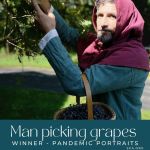
I am very pleased to announce that the winning photograph was submitted by Katerina Unru (mka Lisa Schneider) for the image of a man picking grapes.
Honorable mentions also include:
“Stayned Cloth” by Duchess Eleanor Bolton >>>>>>>>>>>>>>>>>>>>>>>
The Gosnells for “Happy Family”
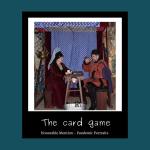
And again, Katerina Unru for “the Card Game”
On behalf of the judging team, which also consisted of Mistress Anne of Lochoc and Lady Ragnailt of Caid; we are thrilled to have been able to provide this opportunity to highlight period portraiture. Who knows? Maybe we will see another version of this competition again in the future.
In service to the dream and to an eventual return to the “new normal”, I remain,
Giuseppe

Classes – 

A New History of the Middles Ages with Dan Jones (recorded lecture!)https://www.medievalists.net/2021/10/a-new-history-of-the-middle-ages-with-dan-jones/

How Salt Is Made? Check Chinese Ancient Method!!! – More China –
Wondering where the salt comes from? Check out the video for an answer!!!
Zhao Tongsong, from China, inherited his father’s job of making salt for more than 20 years
The best season for obtaining salt is between March and July each year when sunlight is profuse, the temperature is high, rain is scarce, and typhoons are unlikely
The salt depends not only on the weather but also on human labor
Thousands of years of salt handicraft handed down today, let’s see how it works

The Tudors and Courtly Love with Sarah Gristwood – Medievalists – The Tudors are a fascinating and turbulent dynasty, but how were they shaped by medieval culture? In this episode, Danièle speaks with Sarah Gristwood about the courtly love traditions that heavily influenced the Tudors.

Medieval(ish) on the Cheap, Episode 3 // Dining with the Contessa – The Creative Contessa – Creating a medieval(ish)/Renaissance-(esque) kit on a shoestring budget, including cheaposimilars and cheaporeplicas! Shopping tips and information on authentic medieval dining/production practices! A shopping guide for medieval recreationists who want to have the right look, but cannot invest in expensive historic replicas, with a focus on drinking, serving and eating vessels. We discuss extant archeological pieces and provide suggestions for alternatives that fit every budget. Flatwear (spoons/knives), tablecloths, and trenchers – all discussed! The perfect guide for thrifting for medieval items.
Music is by Gaita Medieval Music (Principessa, Saltarello, Le Haut et le Bas and Souffrance) on their Queen of Measures album. Available from their website http://www.gaita.co.uk or on Spotify

How Syphilis And Leprosy Ravaged The Medieval World | Medieval Dead | Chronicle – Chronicle – Medieval History Documentaries – Illness, disease and plagues were a gloomy part of everyday life in the Middle Ages. Living conditions for both the rich and poor were very unsanitary and life expectancy was very low. Leprosy and syphilis were two common diseases that plagued daily life. How did they handle treating disease, centuries before penicillin was invented? A single woman’s body found in Dixon’s Lane in York is going to help Malin Holst find some answers. Medieval approaches to disease may actually have been a little more advanced than we might think.

Early Week – Some of the young folks who play with the House showed up at the shop on Monday. We sat around and talked and got caught up. They’re going to plan on being servers and gofers for the Feast, too, and we’ll have the small one running around the hall, it looks like, so plan on an “underfoot”. 🙂

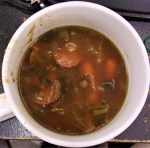
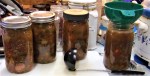
Cookery – A vegetable soup with sausage got put together Saturday evening and the sausage added in the morning. This is a pretty typical “peasant” soup, only known from descriptions, no recipes from period. “Soup is bottled and we’re eating the scraps. Loren’s going to have to salt it, but I like it this way. Spiced with caraway, mushroom spice, horseradish and just a bit of salt. Turnip, onion, carrot, celery, spinach in a saved tomato/hamburger/onion base, plus the random garden greens, mostly dandelion and carrot tops at this point. This soup turned out to be pretty good. It’s the type of soup that you see described, but rarely written up as a recipe until OoP.”

Payne Puffehttps://modernmedievalcuisine.com/2021/11/01/payne-puffe-pastry-made-with-cream/

Tudor Pear Pie – The Tudor Travel Guide – The Tudor Travel Guide is delighted to be able to collaborate with Brigitte Webster from TudorExperience.com in our Great Tudor Bake Off series, featuring Tudor cookery demonstrations. In this video, learn how to make a traditional Tudor Pear Pie, and find out why the Tudors preferred to consume fruit when it had been cooked, or made into a tart or pie.

Different ancient ways to use whey – 1000 years ago – How to make curd, cheese and whey caramel. Pickle carrots and marinate meat in whey.

2.10- Debajo del dulce cebo, está el anzuelo – Fogones en la Historia – Receta de Fruta de frisuelo del siglo XVII, extraida del tratado Arte de Cozina de Francisco Martínez Montiño. 2.10- Beneath the sweet bait, there is the hook – Stoves in History – Frisuelo Fruit Recipe from the 17th century, extracted from the treatise Arte de Cozina by Francisco Martínez Montiño.

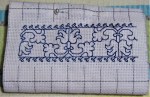
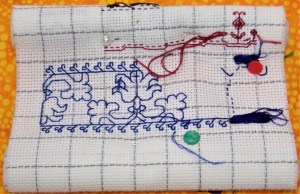
Sewing – Mostly bookmarks this week, but Anja finished the one motif on the sampler and started another. During the week small pieces got worked on, bookmarks in Sewing Workshop, then the green leaves during Project Day.

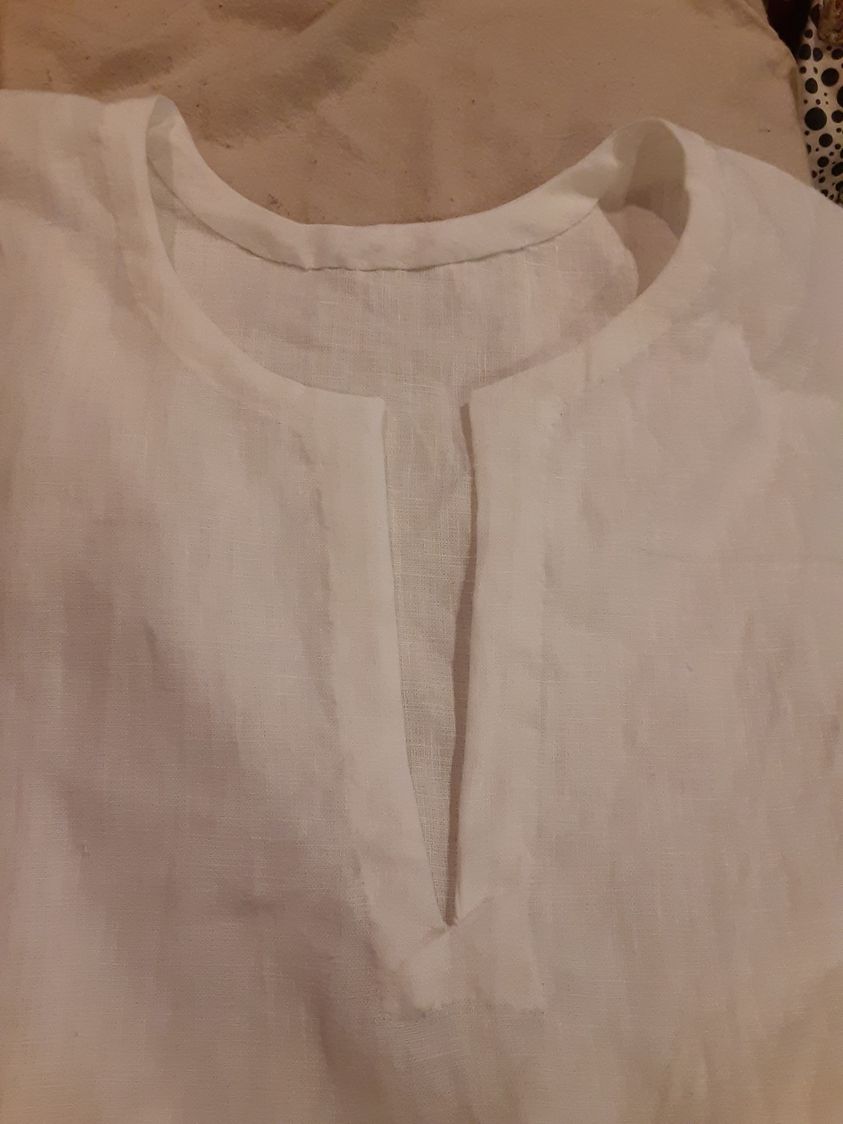
We’re talking about doing a cutting-out party…. Anja needs help with big pieces. A couple of other people are making garb who might need help with shapes and all? I could offer Thanksgiving weekend at the shop. Friday, Saturday or Sunday….. We’re not usually horribly busy that weekend and there will be food, in plenty. Is that of interest to folks?

On Project Day

Crash Course in a Cotehardie Part 1 – Barony of Terra Pomaria – hand outs: https://drive.google.com/drive/u/0/folders/0B3Lxe0Hkj9b5UExCMldZOUlnSDA?resourcekey=0-FUxwUy3M2voCH3NpRbEDvg&fbclid=IwAR3C1DUPlwFXRDBLI0ZUh7nlhfx6ad3_uTJnY83X8kR7abZ3cb_9UnkJ4DM

My first-ever embroidery project // Contessa Quickies #shorts – The Creative Contessa – A brief video on my first ever medieval embroidery project from 25 years ago! Bayeux Tapestry for the win!

Herb Bunch – With the weather closing in, it’s been hard to find garden time. Anja managed to get a bit on Tuesday and spent it tying up the peas that have tendrils, harvesting a salad and doing some trimming of plants that were dying back. We’re trying to get to the horseradish harvest, but it’s going to be messy, since the bucket needs to be dumped, the roots separated and at least partly re-planted….in wet dirt….

Anja talked herbs and garden for a couple of hours on Sunday with a group of folks that want to try an afternoon Herbs Workshop, an in-the-garden kind of thing. I usually do that in the summer, but there are some things I could use help on…. we’ll see how that goes….

Herbs Workshop on Thursday was all on incense. We got some makko powder base last spring and this is the first opportunity to try it.

It works! This stick dried for about 16 hours. There are some copal chunks in the burner with it. 

This incense was 1.6 toh makko base, 0.4 black copal, 0.4 sandalwood, 0.2 gum arabic.

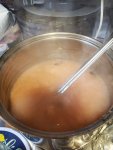
Project Day – Anja started with putting kielbasa into the soup.

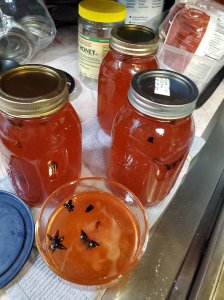
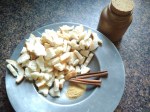
Jam with star anise

Ailantha posted on Saturday, ” I am GOING to join you tomorrow! I’m making THAT my priority for the day. And while we are together, leather work, bow bags, and coptic book binding are my planned activities
Anja – Wonderful! How did you do on the archery guard?
Ailantha – Alas, it needs a 3rd round of modifications. Fingertips need heavier leather and straps from wrist to fingertip are now going to be adjustable. I’ll post pics later today.

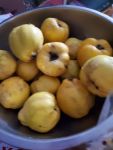
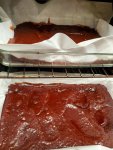
Then later, “Ailantha – The morning activity was learning various ways to utilize quince. There are 2 pans of membrillo dehydrating in the oven and 3 quarts (and a bit more) of quince/star anise jelly made. This used only 8 quince. The remaining dozen seem to need just a little more time to ripen, but the plan fir them is jam and perhaps more membrillo.
Anja – I love membrillo! Miriam gave us one in March 2020, just before the plague got bad. It lasted through to December with us nibbling at it every chance we got. I don’t think I’ve ever had quince jam.
Ailantha – I’ve never had either one. This is all new to me.
Anja – With star anise…. yummers!
Ailantha – We have decided that it tastes a great deal like honey. I say, “we”, but I really mean my family, as my personal taster is still out of commission. All agree the star anise is a very pleasant touch.

Helen Louise posted, “My day got derailed but did get 5 mens tunics cutout and started putting one together.”
Anja – 5?!? Wowzers!
Helen Louise – I know right?! LOL
Ailantha – Very neat! Love your hand stitching
Helen Louise – Thanks!

Isabeau said, “I pulled muscles in my lower back. In bed.”
Anja – Ow! Damn, bin ther…. <sympathy>
Ailantha – Hope you recover quickly.

Ailantha – Now working on coptic book binding in a Baronial project. Love doing thus. Its very relaxing
 Anja – I wish my hands were still up to it.
Ailantha – I relate! My arthritis is touchy, but I can still do an hour or so before stopping
Anja – Mine just aren’t coming back from the weather change the way they usually do. They’re still twitchy and touchy. Even embroidery, the light bookmarks I’ve been doing, gets to be hard. I haven’t done any finishing work in a month!
Michelle Crocker – How do you make one?
Ailantha – it’s a tad complex to describe here, but we will be doing another class on it in the near future! And I’ll post a link for a youtube on it for you here in just a bit
AilanthaMichelle Crocker here’s a very simple demo on the stitching

Feast Planning


11/5 – Plans are firming up! We have a kitchen crew and a start on servers and other helpers, need probably 2 more servers.

A couple of trial dishes have been made with more to come. Sources for some of the odd things are mostly in place.

Two workshops/classes so far. One is on festoons, taught by our own Isabeau. The other is Norse Wire Weaving being taught by Katherine Jeffreys. Blurbs and costs yet to come.

We’re also hoping to have a pre-feast cutting-out get-together sometime late in November or early December, maybe on Thanksgiving weekend.

Recipes

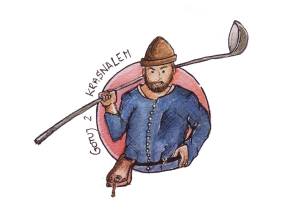
G.R.H. Routiers – 11/7/21 – GYNGERBREDE – Przepis na średniowieczny deser z przyprawami – #routiersGotujzKrasnalem – Found on https://www.facebook.com/groups/321708034558491/?multi_permalinks=4801292733266643%2C4800487346680515%2C4797310716998178%2C4800559843339932&notif_id=1636325068871743&notif_t=group_activity&ref=notif
  • 0.5 kg miodu
  • 1 łyżeczka sproszkowanego cynamonu
  • 1 łyżeczka sproszkowanego imbiru
  • 1/4 łyżeczki pieprzu
  • 1 ususzona bułka pszenna (na oko)

Bułkę pszenną suszymy kilka dni wcześniej, najlepiej ją pokroić, wtedy wyschnie szybciej niż cała. Tłuczemy ją w moździerzu lub mielimy w maszynce.

Miód podgrzewamy powoli w garnku prawie do wrzenia, jeżeli pojawi się na nim piana, to ją usuwamy. Do garnka z miodem wrzucamy przyprawy i dokładnie mieszamy. Do miodu, który wciąż jest na małym ogniu, zaczynamy wsypywać bułkę małymi partiami, dokładnie mieszając. Bułki dajemy na oko. Ma się zagęścić na tyle, żeby zaczęło odklejać się od ścianek garnka. Potem całość wykładamy na deskę i rozwałkowujemy na placek ok. 1 cm grubości. Deskę lepiej wyłożyć papierem, wtedy się nie przyklei. Zostawiamy do wystygnięcia i kroimy wedle uznania na mniejsze kawałki.

GYNGER PRAYER – Medieval dessert recipe with spices

  • 0.5 kg of honey
  • 1 teaspoon powdered cinnamon
  • 1 teaspoon powdered ginger
  • 1/4 tbsp pepper
  • 1 dried wheat roll (on eye)

We dry the wheat bun a few days earlier, best to cut it, then it will dry faster than the whole one. We beat her in a mortar or had her in a machine.

We warm the honey slowly in the pot almost boiling, if there is foam on it, we remove it. We put seasonings in the honey pot and mix thoroughly. To the honey that is still on a small fire, we start to put the bun in small batches, stirring thoroughly. We’re keeping the buns open. It’s supposed to thicken enough to make it start falling off the pot walls. Then we put the whole thing on the board and smash it into a pie about 1 cm thick. It’s better to put the board with paper, then it won’t stick. We leave it to cold and cut it into smaller pieces as we choose.

Miscellaneous pix

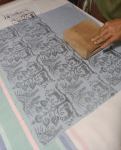
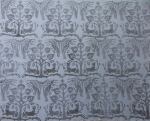
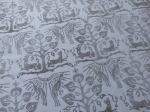
Madblock – Medieval Block Printing on Fabric – Tree of life with phoenixes and leopards. Italian work from Venice from the first half of the 15th century. Pale blue linen printed in black. Simple chaining pattern over the image of the sun.

Music

Josquin des Prez: In te Domine speravi, Voices of Music – Voices of Music – We celebrate Josquin’s 500th anniversary with the frottola, In te Domine speravi, from Petrucci’s Frottole libro primo, Venice, 1504.

Composed c1497, Josquin’s composition is attributed as “Josquin d’Ascanio” in both original sources, and it is likely that this is Josquin des Prez. The “Ascanio” refers to the Sforzas: the poet and musician Serafino dall’Aquila, who was in the service of Ascanio Sforza between 1484 and 1491, wrote a dedicatory sonnet ‘Ad Jusquino suo compagno musico d’Ascanio’ (‘To Josquin, fellow musician of Ascanio,’ see: New Grove dictionary). The performance is a typical renaissance ensemble of three shawms and a sackbut (trombone). Filmed as part of the Voices of Music award winning “Leonardo da Vinci: A Musical Odyssey” program.
Adam Gilbert, shawm
Malachai Bandy, shawm
Rotem Gilbert, shawm
Adam Bregman, sackbut

Quartet Palisander, Tarantella. (Música Renacentista) – Vídeos del profe de Música

2 Unlimited – Get ready for this ☢👽 (Renaissance Orchestral Version) – Early Music in a different way – Hello friends! The crumhorns attack again! This time a very crazy renaissance version from a contemporary piece. These crums go even more far. Let´s dance with it? Let´s party!

This image has an empty alt attribute; its file name is download.png

Links

Medieval tannery discovered at Fountains Abbey https://www.medievalists.net/2021/10/medieval-tannery-discovered-at-fountains-abbey/

Salt mafias and rebellion in medieval China – https://www.medievalists.net/2021/10/salt-mafias-rebellion-medieval-china/

Famine in Medieval London https://www.medievalists.net/2021/10/famine-medieval-london/

Orlík Castle – https://czech-archaeology-news.estranky.cz/articles/castellology-in-czech-republic/orlik-castle.html?fbclid=IwAR0xG8WwKYBjIvxD68Uttp0ophJbaC_tKUI76LEEByXJ_4eanMPCmrikv7Q

This image has an empty alt attribute; its file name is download.png

Video Links

Early American Fabric Dye – Townsends

Britain’s Best Preserved Roman Fortress | Time Team | Timeline – Timeline – World History Documentaries- The Roman legionary fort of Caerleon in South Wales is one of the most famous and best preserved Roman sites in Britain. It stood on the edge of the Roman Empire, its huge amphitheatre, immense baths, and the scale of its ruined walls all testament to its power and importance. Tony and the team are joined by a group from Cardiff University to cast new light on a site once seen as solely a military outpost.

Funnies 

Animaniacs 2021 – Bayeux Tapestry Song – Smple50 – https://www.youtube.com/watch?v=xYNL1IBLgLg
divider black grey greek key

Largesse, Gifts and Auction items
·       ASXLVIII = 88
·         ASXLIX = 794
·         ASL = 2138
·         ASLI = 731
·         ASLII = 304
·         ASLIII = 146
·         ASLIV & ASLV = 230
·         ASLVI = 177 plus 4 puppets, 4 powder fort, 8 cheese spice and 9 powder douce packets, 1 kiss-lock pouch, 10 tiny bobs, 7 pincushions, 3 pins, 3 snip case w/snips, lucet cords, 25 pouches for block-printing, 2 medium pouch, 4 small pouches, 12 bookmarkers, 14 unfinished pincushions, 1 sewing kit (except for bone needle), varnished stuff (124), 2 emery strawberries, 1 woolen spool-knit cord, 48 key bottle openers
Total as a Household = 4238 handed off


moving writing pen motif
In ministerio autem Somnium! Anja, graeca doctrina servus to House Capuchin
Page Created 6/7/21 & published ast updated 11/8/21 (C)M. Bartlett
Last updated 11/8/21

Activities through 10-31-21

House Capuchin Shield2

Garden winding down for the year. Progress on projects and feast. Sorrow for the loss of a House member’s daughter. Lots of links and learning.

Project Day is now open for in-person meet-ups as well as in the Virtual Realm! Potluck this month will be Virtual and Real-World! Herbs Workshop and Sewing are ongoing. Masks required. When will the rest of these open up in person? We’ll keep right on with the virtual ones side-by-side with the actual. 

  • Herb Bunch – At Ancient Light, Thursdays, 7am-9pm Doing incense
  • Sewing Time – At Ancient Light, Saturdays, 3-5pm
  • Project Day – At Ancient Light, Sundays, 1 to 5pm
  • Cheese and Wine happens irregularly, usually announced with little notice on our Facebook group.
  • Next Potluck – 11/21, 12/19, 1/16
  • Winter Feast LVI, Norse Theme. Page here – https://housecapuchin.com/winter-feast/winter-feast-norse-feast-as-lvi-february-2022/ More pages coming!

Here is the direct Portfolio link which has all the past Project Day reports and various projects, original here:  https://housecapuchin.wordpress.com/portfolio/  and new one here:  https://housecapuchin2.wordpress.com/portfolio/ and number three is here: https://housecapuchin3.wordpress.com/portfolio/

It is with great sorrow that we found out on Thursday that Heather, Isabeau’s daughter, lost her fight against the COVID virus. Her lungs were just too damaged to function again. 

 
To Our dearest populace and people of An Tir,
We find Ourselves writing yet another unprecedented missive. Last week marked events never before seen in Our realm. But We do not write to discuss or engage on those matters. We write today to reaffirm Our pledge, Our oath, that We swore to our predecessors on the Crowns and Great Symbols of State. We write today swearing to protect and defend you, our populace, to the best of our abilities, through trials, tribulations, mirth, and merriment until our Heirs ascend these thrones. We pledge to uphold the ideals on which our great kingdom was founded. To honor the people who continue to be the beating heart of the land. In times when the Great Lion has been laid low, it is then that the Lioness, in her glory and grace protects the pride. You, dear populace of An Tir, are My pride and I will protect you as if you were my own cubs. We call it the Sable Lion Lands. In these times, we are together tested. We are the Land of the Sable Lions, one family, one pride, one An Tir!
Hélène
Sovereign
Sable Lioness An Tir
[Your Scribe’s note] All information that is to be publicly known is included in the BoD info. Please do not speculate and rumor-monger. 

Greetings An Tir, 

Yesterday, October 27, 2021, the SCA’s Board of Directors met and took the following actions:

Motion by Ross Roegner to remove Emerson Waite (Christian Bane) as Sovereign of the Kingdom of An Tir, effectively immediately. Second by Dale Fong-Frederick. Opposed: None. Chairman Dan Watson exercised his option to vote and did so in favor of the motion. Motion carried. 

Motion by Dale Fong-Frederick to direct the Society Seneschal to issue a Temporary Removal from Participation in the Society to Emerson Waite (Duke Christian Bane) and to further direct the Society Seneschal to begin an investigation into possible sanctions up to and including revocation of membership and denial of participation, effective immediately. Second by Gigi Coulson. Opposed: None. Chairman Dan Watson exercised his option to vote and did so in favor of the motion. Motion carried. 

This sanction precludes attendance or participation in any manner at any SCA activity, event, practice, or official gathering for any reason, at any time. This includes a ban on participation in officially recognized SCA social media sites, officially recognized SCA electronic email lists, and officially recognized SCA webpages.  

Please note that Queen Helene is now acting as both the Sovereign and the Consort of An Tir.  Crown Prince Sven and Crown Princess Roukinn are still the Heirs of An Tir.  Coronation will still take place, as scheduled, at 12th Night in January.  All awards, peerages, and honors bestowed prior to these board motions are still valid. 

In service,  
Mistress Alianora Greymoor, OP 
Contingency Kingdom Seneschal of An Tir 

Greetings,
By now, most of you have seen the announcement from the Kingdom with regard to the Board’s decision. We understand that this may be shocking and raises many questions for which there may be no answers.
We have touched base with HRM Helene and She has our full support as She fulfills the role of both Sovereign and Consort. It is our understanding that She intends to complete her reign and we all are still planning for a 12th Night coronation.
We knew going into this, that our upcoming reign would not be completely “normal” due to Covid restrictions and precautions; however, neither one of us could have foreseen this decision from the Board.
As always, the health and well-being of the Kingdom, and her people, is at the forefront of our thoughts. Our goals for the upcoming reign have always included nurturing community, facilitating clear communication, empowering people, supporting inclusivity, encouraging creativity, and bringing back safe, “in-person” fun. These goals are even more important to us now.
An Tir has provided all of us chosen family and the feeling of home. It is our sincerest hope that we can take our shared love and passion for each other, our arts, our martial activities, our service and most importantly the community we have created together, and forge forward in a positive direction even in the face of adversity.
Please be kind to one another, offer your strength and support as you can, and be brave enough to reach out when your reserves are depleted.
An Tir’s true treasure is all of you.
Long live the Queen!
With warmest regards,
TRHs Sven and Rauokinn

Events

TUESDAY, NOVEMBER 9, 2021 AT 7 PM – Adiantum – Medieval Arts and Sciences – Event by Barony of Adiantum and Bonnie Williams – Adiantum Arts and Sciences – Medieval Beekeeping, description pending – Presented by Baron Hrodr-Navar Hakonsson OP, OL (AKA Steve Alter)
A&S Competitions: A round table discussion
Or
I didn’t expect the Spanish InquisitionAs in-person events resume, it’s time to be thinking about A&S Competitions. Some people love them, some are intimidated by them, and some feel that those two words should never be uttered in the same breath (like “fun run” or “white chocolate”).
So let’s talk.
As the current A&S Champion of both Adiantum and the Summits, it will be my honor to organize the next competitions. I would like to explore ways to increase participation and improve everyone’s experience, but I can only do that with your help. So please come and talk about why you do or don’t enter…I’d like to hear as many viewpoints as possible.

SATURDAY, DECEMBER 18, 2021 AT 10 AM – 8 PM – Summits Winter Investiture – Philomath Scout Lodge – Event by Shire of Coeur du Val, Principality of the Summits and Jacob Sanchez – antir.org/events/summits-11th-night-investiture
Good people of An Tir, join our Alpine Highnesses Kenric and Dagmar as they bestow the Summit Coronets unto their heirs, Viscount Luciano Foscari and Signora Tessina Felice Gianfigliazzi. To the rapier fighters of the Summits, bring your courage and steel for the tournament that decides who will stand with Their Alpine Highnesses as their Captain of Cats.
Additional details will be provided as they become available.

Classes – 

Basque Origins | DNA, Language, and HistoryStudy of Antiquity and the Middle Ages – From the Spanish and French valleys of the Western Pyrenees to the Atlantic coast of the Bay of Biscay, the historically isolated Basque people have lived for millennia. In this diverse and fertile region, the Basque have retained their unique non-Indo-European language and dialects, Euskara, as well as their own cultural and regional identities. As the surrounding populations of Europe have shifted over the ages again and again, the Basque people remain. Known today by its inhabitants as Euskadi, País Vasco, or Euskal Herria, the Basque Country has become a region famous for its cuisine and wine of ancient grapes such as Tempranillo, of traditional fishing villages and picturesque cities. Tourism has replaced much of history’s strife. But defining Euskal Herria is as difficult as defining the word Herria itself. In Euskara its root herri can mean everything from village to population to nation. Euskal Herria is the collective identity of this ancient people. Basque Country has historically comprised of settlements located along the western edge of the Pyrenees, currently organized in seven provinces: Gipuzkoa; Bizkaia; Araba; and Nafarroa on the southern side of the Pyrenees and Zuberoa; Lapurdi; and Nafarroa Beherea on the northern side. Euskara has five main dialects, a non-Indo-European language isolate with no close relationship to any other extant language. Overall, Euskara is spoken by nearly thirty percent, or three-quarters of a million Basques. The vast majority are in the Spanish region. Only seven percent are in the French portion. The French dialects are Navarrese– Lapurdian and Souletin, and the Spanish dialects are Upper Navarrese, Biscayan, and Gipuzkoan. These dialects are sometimes mutually incomprehensible, especially in the case of Souletin. Studies suggest that these dialects branched from a unified Basque language sometime during the Middle Ages and developed according to geographical, cultural, political, and administrative reasons. Although structurally unlike any Indo European language, the official Euskara Batua today contains many loan words from Romance languages –up to 40% of its vocabulary, and a modified Latin script. The mystery of Euskara’s long linguistic isolation has led to many theories of its origins and possible related languages. Most of these hypotheses are very tenuous, such as Basque-Iberic comparisons based on fragments of extinct variations of Vasconic, Auquitanian, and Iberian tongues, or they are based on coincidence and pseudoscientific speculation, ranging from the popular assertion that the Basques are descended from Old Testament patriarchs to the folk beliefs that Basques are related to the distant Kartvelian populations of Caucasus Georgia to a slightly more plausible relation to the ancient Chechen language, neighbors of the Georgians whose language structure appears closer to Euskara. These models of Dené-Caucasian language families might mean that the Basque and their ancestors originated from the Caucasus. But only the latest genetic studies of modern Basque samples have reached clear conclusions.

Treason in the Middle Ages, with Amanda McVitty – Medievalists – Traitors were the ones who suffered the most grisly executions in medieval Europe, but treason is in the eye of the beholder, changing over time along with culture, language, and ideas of nation. This week, Danièle speaks with Amanda McVitty about the changing face of treason in medieval England.

Early Week – Anja managed to get the report out Sunday evening. Loryea was doing some cookery, but she rarely takes pix or writes anything up. Anja loaned her a cheesecloth for making paneer. Anja got to Adiantum’s A&S on Tuesday, working on a bookmark for most of it. It was supposed to be on period ceramics, and was, just not with the original person who posted a link, instead. (Below, under sundials….)

On Wednesday Loryea sent Anja a batch of carrot halvah! It was really tasty, not much like the standard sesame seed version, but probably much like the halvah referred to in the 7th century. On Friday she sent a batch of a quince compote.

Cookery – Other than cooking up the harvested green beans, the other thing that got made was a vegetable chowder with poached eggs.

450 Year Old Pumpkin Cheesecake – Tasting History with Max Miller – (take “pumpkin” with a grain of salt!)

How Traditional Cornish Pasties Are Made | Regional Eats – Food Insider – Made with a golden pastry enveloping a tender beef and vegetable filling, Cornish pasties have humble origins. Originated as a portable lunch for workers and notably miners, everything in a pasty — from the pastry dough to its fillings — is made to withstand a journey underground without falling apart.
For more, visit: https://www.stagnesbakery.co.uk/

Bread From Acorns (1933) – A/V Geeks – ( b/w, silent) Guy D. Hasselton’s Travellettes presents… Featuring Maggie nee Tra-Bu-Ce. Photographed by Guy D. Haselton. Copyright MCMXXXIII Passed by The National Board of Review – About how Native Americans used acorns to make bread.

Sewing – Not much this week, Anja hands are still messed up.

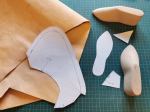
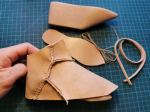
A marvelous shoe project (selected photos) – Emil Lagerquist added 26 new photos to the album: Post essay project: Reconstructing a rare painted medieval shoe. – It’s done! Pictures of the brightly painted reconstructed shoe at the back of the album – don’t miss out on the process that took me there, I hope you will enjoy it as much as I did. But the most satisfying thing about this project for me has been about how much I have learned and enjoyed exploring art, craft and archaeology at once.

Sundials, etc. – 

Czech scientists brew beer according to 3,000-year old recipe https://english.radio.cz/czech-scientists-brew-beer-according-3000-year-old-recipe-8732300

Scientific Study of the Tomb of the Black Prince https://courtauld.ac.uk/news-blogs/2021/scientific-study-of-the-tomb-of-the-black-prince/

The Hunterian Psalter

A selection of images from Glasgow University Library MS Hunter 229 (U.3.2) – The Hunterian Psalter is a twelfth century illuminated manuscript, thought to have been produced in England c. 1170. It is regarded as the greatest treasure of William Hunter’s (1718-83) magnificent library of books and manuscripts. This high quality volume of over 200 vellum leaves has not yet been digitised in its entirety, but a selection of images from the manuscript are presented here. This virtual display includes all the full page miniatures and a good sample of the historiated and decorated initials that adorn the pages of the text throughout. It has been mounted on the Special Collections web pages as part of the 2007 Hunterian Museum bicentenary, celebrating the arrival of Hunter’s collections at the University in 1807. The manuscript itself is on display as part of the Hunter: Man, Medic and Collector exhibition in the Hunterian Museum until October 2007. For a more detailed introduction to the Psalter, see the Book of the Month for May 2007. – https://www.gla.ac.uk/myglasgow/library/files/special/exhibns/psalter/psalterindex.html

Tile Painting – Reannag Teine – Powered by Restream https://restream.io/ – Many cultures had decorative tile work as a part of daily life: be it in public places or in the homes of the wealthy. In this class we will see several different cultures’ tile work and create one of your own on a pre-bisque fired tile. The result will be a tile usable as a trivet/coaster or for installing in a tile treatment. Participants can either watch along or contact at least week in advance at https://www.reannagteine.com/Educatio… or email pottery@reannagteine.com to purchase a supply kit and have it shipped to them. (Recorded during Known Worlde Science Symposium 2021) 🙂

Fire Starting: No Matches, No Lighter – The American Frontier – Townsends

medieval housebuilding – Johan Käll – A compilation of sessions where we build a medieval swedish style log house, based on surviving examples.

Repairing Pottery With Gold // Kintsugi Project Journal – The Creative Contessa – Join me in exploring the fine art of Kintsugi, a Japanese repair technique using gold that has existed since the late Middle Ages (15th century, or Muromachi Period). Don’t throw away your broken pottery – put it back together and make it more beautiful than ever! Embrace the imperfections!

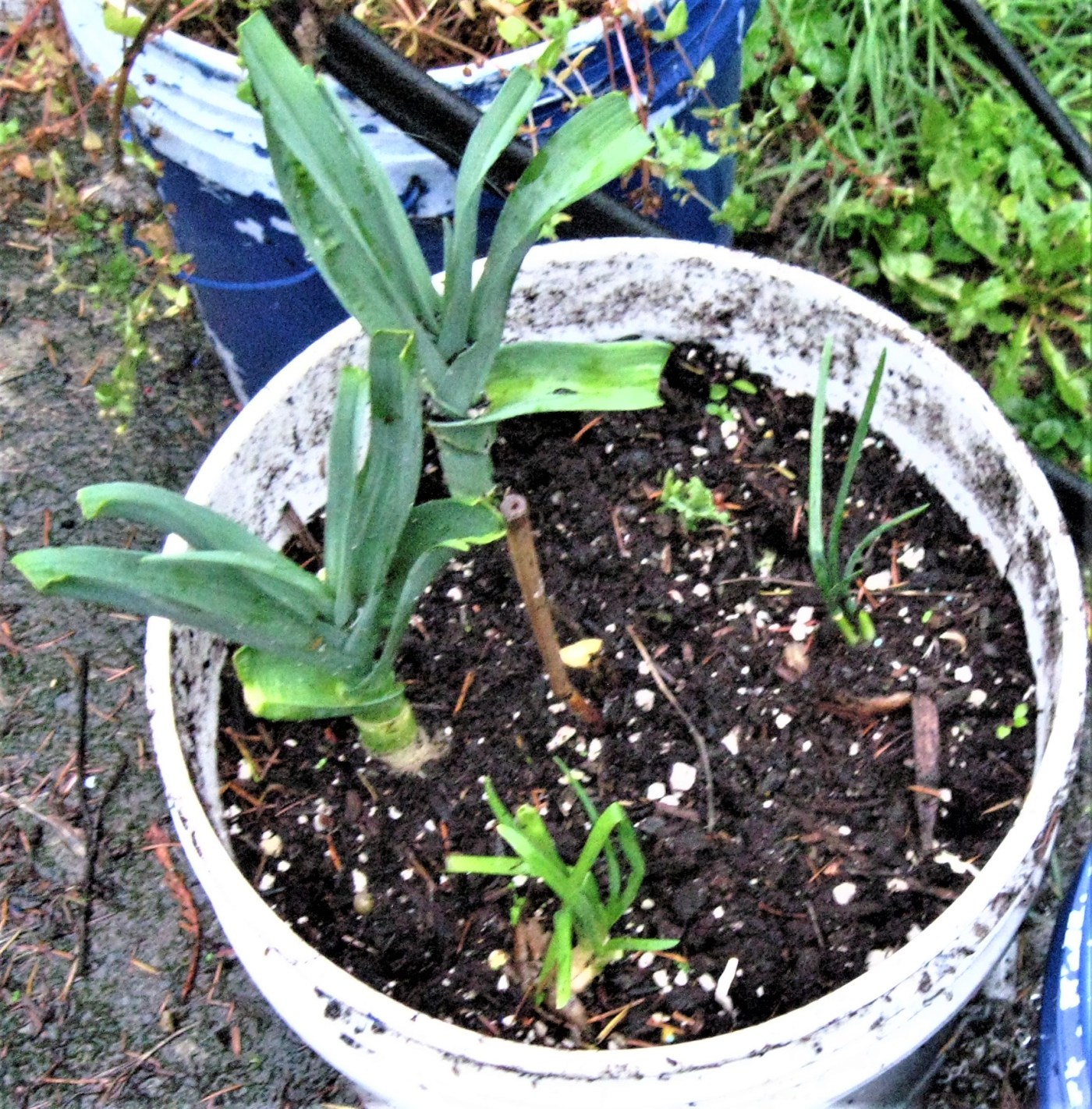
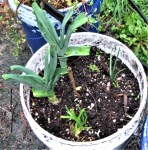
Herb Bunch – No workshop this week, but a lot of work in the garden. Anja had a bunch of tiny garlic cloves from the Farmer’s Market. We sorted the large ones out for cooking, but then still had a hundred or so. We then sorted elephant garlic from regular cloves and started planting. We’ve about 20 yet to go, but most of them are in, now.

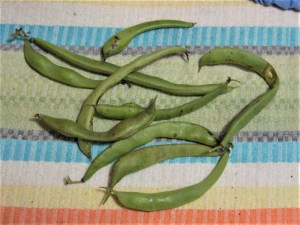
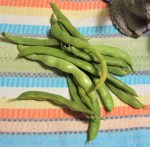
Also, the last of the beans were harvested. The storms this last week shredded the foliage, which was decomposing on the vines, so they were cut (leaving the base of the plant, dunno if they’ll vine more) and untangled from the climbing strings and the last beans cut free. Those were part of supper on Wednesday, along with some carrots and green onions.

On Thursday some other planting got done along with garlics. Anja had some iris tubers and planted 3 in a planter that will get used at her shop. The rest are going into a large bucket, the one that had a lot of Stinky Bob earlier in the year.

More seeds are being harvested and stored, as well.

Project Day – Anja was dealing with a blocked-up ear, so Loren ran the shop while she worked on a bookmark and this report. She also did a little embroidery and then sorted and prepped some dried herbs and seeds.

Helen Louise commented, “Just working on quilts for holiday gifts today… then taking the littles to Trunk or Treat and Halloween parties…”

Ailantha says, “Working on Archery finger guard for a granddaughter today. Pics soon.”

Arlys posted on Monday, “I didn’t do anything SCA yesterday, and was fb detained, but have been making colorful and shiny bead strands to decorate NIWA’s huge space at the Portland Holiday Market at the Expo Nov 18-20 because I promised the organizer I would do lots of shiny. She said I could sell them too. I currently have a large wad (technical term) of them done, with a few more to go. NIWA =Northwest Independent Writers Assocation. WE WRITE BOOKS!! 😃

Miscellaneous pix

Fashioning the Self in Slavery and Freedom – In her “Historical Correction” series, artist Maxine Helfman photographed black sitters in a style of portraiture that is historically associated with European elites. In particular, Helfman was inspired by the somber aesthetics of Dutch and Flemish “Old Masters,” like Frans Hals, Peter Paul Rubens, and Jan van Eyck. She asked the models adopt the austere and haughty bearing of an aristocracy, eliminating superfluous details so that viewers could focus on their grace and beauty. She shot from a slightly lower plane to place the models compositionally in positions of authority.

Music

𝔅𝔢𝔰𝔱𝔦𝔞𝔯𝔦𝔲𝔪 – 𝔐𝔲𝔰𝔦𝔠𝔞 𝔐𝔢𝔡𝔦𝔢𝔳𝔞𝔩𝔢 – Ensemble: LaReverdie – Album: Bestiarium
Video: Ms. Français 1586, F.103
http://www.facebook.com/musicamedievale

1 Chaconette – A la cheminée – Veritatem (Motette) / Anonimo Francese
2 Par mantes foys (Virelai) / Jean Vaillant
3 Ihr alteri weib frewet eb / Oswald von Wolkenstein
4 Aquila altera – Creatura gentile – Uccel di Dio (Madrigal) – Jacopo da Bologna
5 Aquila Altera / Dal Codex Faenza
6 Canto delle scolte / Anonimo Modenese
7 En ma forest (Pastourelle) / Anonimo Francese
8 L’autrier jost’una sebissa (Pastourelle) / Marcabru
9 Ich was ein chint so wohlgetan / Dal Codex Buranus
10 Lucida pecorella (Madrigal) / Donato da Firenze
11 Na coire ar na sleibhtibh (Double Jig) / Tradizionale Irlandese
12 Fuweles in die frith / Anonimo Inglese
13 Oseletto selvaggio (Madrigal) / Jacopo da Bologna
14 Bryd one breere / Anonimo Inglese
15 L’Aspido sordo (Madrigal) / Donato da Firenze
16 Ar bleizi-mor (Les Loups-de-Mer) / Tradizionale Bretone
17 I fu già bianch’uccel (Madrigal) / Donato da Firenze
18 Con braccia assai / Giovanni da Firenze
19 Wohlauff gesell wer jagen well / Oswald von Wolkenstein
20 Chosì pensoso (Caccia) / Francesco Landino

This image has an empty alt attribute; its file name is download.png

Links

Kašperk Castle – https://czech-archaeology-news.estranky.cz/articles/castellology-in-czech-republic/kasperk-castle.html

Did Vikings and their stowaway mice beat Portugal to the Azores? – Evidence from animal remains shows Norse seafarers settled on the islands centuries before Portuguese explorers – https://www.theguardian.com/world/2021/oct/31/did-vikings-and-their-stowaway-mice-beat-portugal-to-the-azores

This image has an empty alt attribute; its file name is download.png

Video Links

Major new excavation to reveal Gobekli Tepe secrets – Hidden History – Thanks to new excavations, could answers finally be coming as to how supposed hunter-gatherers constructed the incredible Gobekli Tepe and similar megalithic sites?

New and Updated Pages

Norse Clothing – https://wp.me/P8ngGY-4Sf

Funnies 

divider black grey greek key

Largesse, Gifts and Auction items
·       ASXLVIII = 88
·         ASXLIX = 794
·         ASL = 2138
·         ASLI = 731
·         ASLII = 304
·         ASLIII = 146
·         ASLIV & ASLV = 230
·         ASLVI = 177 plus 4 puppets, 4 powder fort, 8 cheese spice and 9 powder douce packets, 1 kiss-lock pouch, 10 tiny bobs, 7 pincushions, 3 pins, 3 snip case w/snips, lucet cords, 25 pouches for block-printing, 2 medium pouch, 4 small pouches, 12 bookmarkers, 14 unfinished pincushions, 1 sewing kit (except for bone needle), varnished stuff (124), 2 emery strawberries, 1 woolen spool-knit cord, 48 key bottle openers
Total as a Household = 4238 handed off


moving writing pen motif
In ministerio autem Somnium! Anja, graeca doctrina servus to House Capuchin
Page Created 10/25/21 & published ?/?/21 (C)M. Bartlett
Last updated 10/27/21

Activities through 10-24-21

A quiet week and then a quiet Project Day, except for the storm outside! No one showed for Sewing Workshop and we had to cancel Herbs due to a conflict…. but projects and research are ongoing…..

No Herbs Workshop this week again. Conflicts. <sigh> Garden work still has to happen, though.

Project Day is now open for in-person meet-ups as well as in the Virtual Realm! Potluck this month will be Virtual and Real-World! Herbs Workshop and Sewing are ongoing. Masks required.

When will the rest of these open up in person? We’ll keep right on with the virtual ones side-by-side with the actual. 

Sampler
  • Herb Bunch – At Ancient Light, Thursdays, 6am-9pm, starts this week!
  • Sewing Time – At Ancient Light, Saturdays, 3-5pm
  • Project Day – At Ancient Light, Sundays, 1 to 5pm
  • Cheese and Wine happens irregularly, usually announced with little notice on our Facebook group.
  • Next Potluck – 11/21, 12/19, 1/16
  • Winter Feast LVI, Norse Theme. Page here – https://housecapuchin.com/winter-feast/winter-feast-norse-feast-as-lvi-february-2022/ More pages coming!

Here is the direct Portfolio link which has all the past Project Day reports and various projects, original here:  https://housecapuchin.wordpress.com/portfolio/  and new one here:  https://housecapuchin2.wordpress.com/portfolio/ and number three is here: https://housecapuchin3.wordpress.com/portfolio/

Misc – Yseult posted this:

Pam Perryman – Our ever-helpful Eugene Textile Center just sent a newsletter with the following information about how to determine what the fiber content of a fabric is:
How to Identify Fiber Content
Everyone has run into that mystery yarn where the label is missing (or wrong!) and no one knows quite what it is actually made of. We get asked to identify yarn all the time, so we’d like to pass along some of our techniques for sleuthing fiber content.
The Quick and Dirty Burn Test
Okay, I’ll be honest, I love lighting yarn on fire, so this is my favorite testing method. There are three major categories of fiber: protein, cellulose, and synthetic. Each of these broad categories has a distinct smell and residue so that you can at least determine the basic category of your mystery yarn.
WARNING!
Please be careful if you light anything on fire! Keep a glass of water nearby and don’t burn near anything else that is flammable. The smoke from some fibers can be quite unpleasant or might even be toxic, so keep the area well ventilated.
Protein / Animal Fibers
When you light protein fibers on fire, they tend to extinguish after you remove the flame and they smell a lot like burning hair or feathers. They create a crunchy bead of reside that easily crumbles into a coarse ash.
Some examples of protein fibers: wool, mohair, silk, and soy
A key indicator: the remains of vegetation in a wool yarn
Cellulose / Plant Fibers
Cotton and other plant fibers burn quickly and brightly, but they don’t leave behind very much ash. It smells a lot like paper burning in a campfire. These fibers can keep burning after you remove the flame, so be careful!
Some examples of cellulose fibers: cotton, linen, hemp, raime, rayons (tencel, bamboo, modal, lyocell), and other plant materials
Synthetic / Plastic Fibers
Any fiber made with plastic will have a chemical smell when it burns and leave behind a sticky, hard, or other melted plastic kind of residue when burned.
Some examples of synthetic plastic-based fibers: acrylic, polyester, nylon, acetate, spandex, orlon/orlec, olefin, and many more
Getting to the Details
Often, the burn test is all that is needed to determine the basic type of fiber you are dealing with but sometimes you need more information (what KIND of cellulose is it?), or the results are confusing and you need to come at the problem from another direction.
Fiber Blends
The trickiest yarns to identify are fiber blends. Yarn manufacturers LOVE to mix everything together, making a simple test difficult because you will get multiple results. One common mixture is added nylon in wool for sock yarn or a polyester core on art yarn – just because you get a small hard bead doesn’t mean that the entire yarn is made of a synthetic fiber.
Dissolve it!
One way to tease out the composition of a blended fiber is to try dissolving it. Unravel a short length of yarn, place in a glass jar with your chemical of choice (vinegar for acid, bleach for alkaline is nice and easy). Leave for a day or two and see what’s left over.
Alkaline (lye or bleach): dissolves protein fibers
hydrochloric acid | HCl: dissolves silk, but not wool (use cation!!!)
Acids (diluted!): dissolve cellulose fibers
By looking to see what remains in your jar after a day or two, you’ll have a better idea of what the yarn is composed of.
Fiber Length & Type
Looking at a fiber’s length, luster, or general composition can help determine between yarns in the same category (like cotton vs linen). I like to use a little USB microscope or a pick glass.
Unravel a piece of yarn and tease some of the fibers out to see how long they are. Make sure you are not fooled by a cut end – I usually unravel a few inches so that I can get a good idea of the true length. Linen, hemp, and raime are long and strong fibers that are straighter than cotton. Cotton is shorter and MUCH more tender (this is also what makes it soft).
Wools tend to have some amount of crimp or frizz to them where hairs like mohair are smooth (but can be curly, which is different than crimpy)
Silks can be hard to identify simply from fiber length or shine because they have a lot of variation. The quintessential silk is long, straight and lustrous – however, silk noils, wild silks, gummed silk, etc all have characteristics that don’t go along with this. Silk will often have a special feel and crunching sound when you squeeze it.
Yards per Pound, or Weight
One final clue is the weight of the fiber. Every type of fiber weighs differently. Linen is heavier than cotton, alpaca is heavier than wool, and silk is lighter than rayon. If you can figure out the yarn’s yards per pound (use a yarn balance), you can compare it to a similarly sized yarn of a known type.
Have fun testing all the mystery yarn in your stash!

Possible Feast Goodie? I talked to him. We can get pewter versions for $1.50 with bales for $2. …maybe do a festoons class? Folks would have to sign up ahead.

James Coffman – Please excuse the little bit of hype I put into this yesterday, for something as small as a coin. But I think it is worth it. And after doing some reading you might well agree with me.
We stand ready to make these now if there is any interest out there. Also, I believe that these will make for a nice little gift for you friends.
Oh yeah, I did find someone making them online, but they are using only copper. Mine are silver.
I think unless asked for, we will be making the shields with a bale/loop for stringing as many were found that way historically.
As previously stated, I have been working on a historical piece of silver from the Viking Age.
A long time ago I ran across an academic article that I could not access. It dealt with what amounts to a miniature Viking shield in Silver, though sometimes in Bronze, and at least one example in Lead. There are also examples of Gilded-bronze, and at least one in Gold.
After purchasing the article, I was able to finally read in detail about this fascinating subject.
Here is a general summary and some personal thoughts. Any errors of detail and or misreading of elements from my sources are unintended and my fault. This summary was written rather quickly because of my excitement to share it.
I will note my sources at the end.
Miniature Viking Shields (Round Shields) have been found in Norway, Sweden, Denmark, Germany, Russia, Ukraine, Poland, and Finland. There has been a single find in England. The majority have been found in Denmark and Sweden. With the richest collection of finds occurring in and around Brika. To date at least 150 of this particular type have been found.
Most date to 900 to 1000 AD. (Possible some from the 800’s) And have been found as grave goods, in hoards, and single finds.
It is the context of the finds that help tease out the possible cultural meaning behind these little works of art. There are of course abundant theories from as far back as the 1940’s
Interestingly, there are Anglo-Saxon parallels of Bronze, and occasionally Silver. However, they date to an earlier era of 500-700 AD. Indications are that the context and usage of these shields are very much the same as found among the Vikings.
From some personal research I have found Late Viking era jewelry that is quite similar to the earlier shields. Though the design is often lacking whorls-other decorations are found, but still using punches. These pieces were found in a hoard containing a coin of William the Conquer. Thus, they can be dated to the late 11th Century. (Valbo Hoard)
Overall design consists of a raised boss and whorls of design around the boss to the edge of the piece. Most are repeatedly done with a punch design to create the edge and whorls. Sometimes just a pointed punch, sometimes a triangle/dotted punch. Some effort was made for a few to have a “handhold” on the reverse.
Average size is about 2-4 cm. Though I did see a confusing note about smaller ones. Many have bales or holes/perforations where a bale was or could be strung. Though a nearly similar number have no such attribute. This is an interesting note.
The finds include both burial inhumations and fragments from cremations. Intriguingly most have been found in the graves of women!
And despite the well-known issues of determining male/female Viking graves of late as part of the warrior women debate, the authors felt comfortable in stating this fact.
The authors writing the piece are passionate historians, one male and one female. With at least one of them a Viking reenactor. If memory serves.
Context.
A majority of the shields have been found as part of grave goods. Some as jewelry and attached to what appear to be strands of beads. Other seem to be laid on the body, perhaps sew onto clothing. Others were found in positions that indicate they were inside of pouches.
A few have been found in hoards. Though seldom more than just one. In one hoard two were found together with several other objects. And in at least one grave two were found on a single necklace. There was a greater assortment of jewelry included in this grave as well.
Often found side by side with other amulet like objects like Mjolnir or “Thor’s Hammers”. The shields have consistently been thought of as amulets of protection. A shield is a shield after all.
The attributes of the Norse pantheon are diverse with little to connect a shield directly to any particular deity, other than the obvious Valkyries.
Would the fact that the majority of shields found are placed with women have a specific meaning? We can’t say for sure.
Additionally, according to the material consulted, I would add that shields are sometimes part of female names in Viking mythos. Something is being indicated here, but we cannot reliably know for certain what it is.
Some have tried to connect the rise of Northern Christianity to the shields. As a level of protection for the deceased, but more subtle than a cross. Thus, not offending the pagan belief system or sensibilities. Save for a single shield find in Russia that has a very pronounced cross motif, I am of the opinion this is pure nonsense.
Incorporated into my sources is one that looks at shields in prose and poetry. And without delving too deeply it is sufficient to state that the lore is rife with everything from holding a “shield” over a cup as a blessing, to adding many “shields” to a grave as a salute of respect. Either symbolically or actually. Thus, honoring pledges made in life to accompanying the dead into the next world.
I did want to make some jokes about Viking Challenge coins, just could not find an in to do so.
Considering the affinity Vikings had for silver, seeing loose pieces of silver in any form makes we me think these shields especially the ones found in hoards also served as ready “cash”.
Or were they carried just in case for something ritualistic we are unaware of ? Did they have a function as a semi-votive offering?
Much is made of some of the lore to indicate the protection of the living from the dead. Full sized shields being placed over the body or head of the deceased. People are odd when it comes to death. And nearly all humanity has indulged in some form of ritual as concerns death.
This is some of my take on this subject. I intend to make MANY shields for the benefit of my customers. In the hopes that this will add to or at least enhance your persona/costume. And perhaps put a little cash in my coffers. Either way, reading and learning a bit more about Viking material culture is always exciting to me. I hope it is for you as well.
Works consulted.
Miniature Shields in the Viking Age:
A Reassessment
By Leszek Gardeła and Kerstin Odebäck
(Leszek is prolific as a writer, filmmaker)
Finding poetry in the ground – a kenning of silver from Neble, Zealand
By Peter Pentz

Classes – 

A medieval mother’s advice to her son // The Contessa’s Quickies #shorts – The Creative Contessa – A private letter from a medieval mother to her son offers a fascinating window into private life and parenting concerns in the 15th century.

1352: The Mystery Of The Black Death Woman | Medieval Dead | Chronicle – Chronicle – Medieval History Documentaries – During the 14th century, the bubonic plague ripped through Medieval Europe, killing over a third of the population of Britain. For the everyday medieval family, the epidemic was a ruthless terror for decades. So far, the only evidence of the dead in England is from London, but the team have come across some mysterious skeletons in a pit in Tadcaster, Yorkshire, that point towards a plague burial. What can the skeleton of one woman tell us about life during the worst epidemic in history?

Weave Along with Elewys, Ep. 22: Masku Humikkala 11th c. Finnish – Elewys of Finchingefeld – 11th century Finnish pattern from an Iron Age grave find in Humikkala. This pattern is more challenging, introducing weavers to half-turns in patterns. Special thanks to Mervi Pasanen for providing guidance and information about this piece. Their Facebook page can be found at https://www.facebook.com/Lautanauhat. Her books with Maikki Karisto can be purchased here: https://www.salakirjat.com/. You my find them elsewhere, but they will be MORE EXPENSIVE.
Other book referenced: Sarkki, S. (1979). Suomen Ristiretkiaikaiset Nauhat. Arkeologian Laitos. Helsinki, Helsingin Yliopisto.
Blog link: http://ladyelewys.carpevinumpdx.com/2021/10/22/finnish-masku-humikkala/

Early Week – A lot of leftovers were eaten, and a care package made up for Sash who works Sundays. A chowder got started on Tuesday, plus some harvesting and garden work happened.

Cookery – The chowder has been most of supper this week.

Wheat’s Evil Twin Has Been Intoxicating Humans For Centuries – https://www.atlasobscura.com/articles/wheats-evil-twin-has-been-intoxicating-humans-for-centuries

Chykens in Hocche (Chicken in Spiced broth) – Monk’s Modern Medieval Cuisine – Dr Monk brings to life another delicious recipe from Richard II’s cookery work, Forme of Cury (c.1390).

Why Vampires Hate Garlic – A Transylvanian Recipe from 1580 – Tasting History with Max Miller – Medieval Transylvanian Cookbook: http://www.fibergeek.com/leathernotebook/the-transylvanian-cookbook/

2-8. Ni amigo reconciliado, ni cordero dos veces asado – Fogones en la Historia – Receta de Pierna de cordero rellena asada, extraida de un tratado del sigloXVII – Neither friend reconciled nor lamb twice roasted – Stoves in History – Recipe for roasted stuffed leg of lamb, extracted from a seventeenth century treatise

Sewing – Mostly embroidery this week.

The last surviving sea silk seamstress – https://www.bbc.com/travel/article/20170906-the-last-surviving-sea-silk-seamstress

Italian Renaissance Headdress // The Contessa’s Quickies – The Creative Contessa – Discover my reconstruction of the reta, the quintessential Florentine hairnet, made from silk fingerloop braids and worn heavily for over 12 years!

Sundials, etc. – 

Worshipful Society of Apothecaries – https://en.m.wikipedia.org/wiki/Worshipful_Society_of_Apothecaries

The invention that saved a million ships (mostly OoP, but an interesting bit on a period lighthouse) – https://www.bbc.com/travel/article/20190620-the-invention-that-saved-a-million-ships

Martin Rundkvist – A few weeks ago at Husby in Glanshammar we found a die for the making of waffled gold foil, used to catch and scatter the light inside the cells of garnet cloisonné work. Here’s the die, an example of what garnet cloisonné can look like, and two pictures of waffled gold foil. This latter find is from the West Barrow in Old Uppsala, c. AD 600. Note the millimeter scale! Thank you Thomas Eriksson!

Roofing In The Wilderness – Wood Shingles Log Cabin Roof – Townsends Wilderness Homestead – Townsends – OoP but valid

Herb Bunch – Harvest on Tuesday and then more work on Wednesday. A bunch of the harvest got used up right away. More pictures in cookery.

Project Day – The day was quiet. Loren and Anja both worked on projects and photos, culminating in a batch of potted cheddar, made with bacon, shallots, white sharp cheddar and dark beer.

Recipes – Note, cheddar is OoP, but there are “potted cheese” recipes very late in period.

Potted Cheddar with Bacon and Shallots (doubled the recipe this time and used sharp white cheddar and dark beer)

  • Cook Time: 30 minutes
  • Total Time: 30 minutes
  • Yield: about 1 pint

Ingredients

  • 2 tablespoons butter
  • 8 ounces bacon
  • 2 medium shallots, sliced paper thin
  • 12 ounces sharp cheddar cheese shredded
  • 1 cup heavy cream
  • 2 tablespoons dry or cream sherry or even dark beer (have done it with all of these)

Method

  1. Melt butter in a pan and fry bacon over medium-high heat until cooked through and crispy.
  2. Remove the bacon from the pan, and set the strips on a rack to cool slightly and de-grease.
  3. Decrease the heat to medium-low.
  4. Toss the shallots into the hot fat, and sauté them until deeply fragrant and browned, about 15 minutes.
  5. Combine bacon and cheddar in a food processor and pulse until well-blended.
  6. Add the shallots and pulse until mixed, then the cream, then sherry to the bacon and cheddar, and continue to process them together until they form a smooth, spreadable paste.
  7. Spoon the cheese spread into a jar or into ramekins, and either serve right away or store, carefully covered, in the fridge for up to a month. Remember to bring the potted cheddar to room temperature before serving, and spread over crackers or bread as an appetizer or starter.

Miscellaneous pix

Music – Hymn to St Magnus “Nobilis humilis” – oxfordyouthchoirs OYC – members of Oxford Girls’ Choir with Richard Vendome (psaltery) sing “Nobilis, humilis”, (Uppsala Univ. Lib. Cod. C233 4°, 13th cent.) a hymn written in honour of St Magnus, Earl of Orkney, a Christian leader who was murdered in 1116 by his warrior cousin Hakon of Norway. This is an example of “gymel” (Latin “gemellus” = twin), two-part music, mainly in parallel thirds. The opening picture is based on a statue in the church of St Magnus the Martyr in the City of London.

Nobilis, humilis, Magne martyr stabilis,
Abilis, utilis, comes venerabilis,
Et tutor laudabilis, tuos subditos
Serva carnis fragilis mole positos.

Preditus celitis dono sancti spiritus,
vivere temere summo caves opere:
carnis motus premere studes penitus,
ut carnis in carcere regnet spiritus.

Turbidus, invidus, hostis Haco callidus
sternere, terere, tua sibi subdere
te cupit et perdere doli spiculo:
iuncto fraudis federe pacis osculo.

Gravia tedia ferens pro iusticia
raperis, traheris, demum ictu funeris
ab ymis extolleris ad celestia:
sic Christo coniungeris per supplicia.

Eya gloria signorum frequencia
canitur, agitur, Christus benedicitur
et tibi laus redditur in ecclesia:
O quam felix cernitur hinc Orchadia.

Omnibus laudibus tuis insistentibus
gratiam, veniam, et eternam gloriam
precum per instanciam pater optime,
hanc salvans familiam a discrimine.

𝔐𝔲𝔰𝔦𝔠𝔞 𝔐𝔢𝔡𝔦𝔢𝔳𝔞𝔩𝔢 – Ensemble: Sequentia
Album: Boethius: Songs of Consolation – Metra from 11th-century Canterbury
Video: Clm 15825, XIth cent. – MS Gg 5 35, XIth cent.
http://www.facebook.com/musicamedievale
Imprisoned in Pavia in the early 520s, Boethius could not have anticipated that his final work would become one of the most widely read books of the Middle Ages. The Consolation of Philosophy portrays his struggle to reconcile himself to his fate by exploring the ways of man, the role of Fortune, and the major questions of good and evil. Evidence that the poems of the Consolation were sung in the early Middle Ages survives in the form of musical notation added to over thirty extant manuscripts dating from the ninth through to the beginning of the twelfth century. Through scholarly detective work, the members of Sequentia, together with a Cambridge eminence in the medieval melodic tradition linked to Boethius’ work, Sam Barrett, have been able to produce a convincing reconstruction of this lost repertory. Barrett himself signs the main booklet essay and provides some fascinating insights therein.
from: http://sequentia.org Evidence suggests that the laments in the sixth century work of Boethius were sung, and this is an attempt at reconstruction, with the help of scholar Sam Barrett. They are based primarily on a fragment from the Cambridge Songs (compiled c.1040), boosted by a rediscovered Canterbury source. The instrumental pieces are unrelated, “reconstructed from a contemporary Anglo-Saxon repertory from neaby Winchester.”
The earlier Sequentia program based largely on the same Cambridge Songs source, and featuring previous attempts at reconstructing the Boethius melodies “Lost Songs of the Rhineland Harper” ⤳ https://youtu.be/JMdeNgocNrk


1 Carmina qui quondam
2 Heu, quam praecipiti
3 Tunc me discussa
4 Quisquis composito
5 O stelliferi conditor
6 Cum Phoebi radiis
7 Nubibus atris
8 Stans a longe (instr.)
9 Si quantas rapidis
10 Tuba (instr.)
11 Bella bis quinis
12 Vaga (instr.)
13 Quid tantos iuvat
Benjamin Bagby, voice, harps & direction
Hanna Marti, voice & harp
Norbert Rodenkirchen, flutes

This image has an empty alt attribute; its file name is download.png

Video Links & Podcasts

The Last Duel: A Movie Review – Medievalists – The latest medieval movie has just dropped into theatres, and that means that Danièle was first in line with Peter Konieczny to bring you the goods. This week, they discuss Ridley Scott’s The Last Duel, starring Jodie Comer, Matt Damon, Ben Affleck, and Adam Driver.

Would you buy this Iron Age hillfort for £100k? – Hidden History

Funnies 

Kate McNally – Okay, at the park with my grandsons. Ages 6 to 13, all boys. This random kid having his 6th day party is running around with his friends using toy guns to defend the climbing tower. My motley crew brought swords & shields and have taken in the kids sister as one of their own. They are steadily gaining ground and now have control of the monkey bridge.

divider black grey greek key

Largesse, Gifts and Auction items
·       ASXLVIII = 88
·         ASXLIX = 794
·         ASL = 2138
·         ASLI = 731
·         ASLII = 304
·         ASLIII = 146
·         ASLIV & ASLV = 230
·         ASLVI = 177 plus 4 puppets, 4 powder fort, 8 cheese spice and 9 powder douce packets, 1 kiss-lock pouch, 10 tiny bobs, 7 pincushions, 3 pins, 3 snip case w/snips, lucet cords, 25 pouches for block-printing, 2 medium pouch, 4 small pouches, 12 bookmarkers, 14 unfinished pincushions, 1 sewing kit (except for bone needle), varnished stuff (124), 2 emery strawberries, 1 woolen spool-knit cord, 48 key bottle openers
Total as a Household = 4238 handed off


moving writing pen motif
In ministerio autem Somnium! Anja, graeca doctrina servus to House Capuchin
Page Created 10/18/21 & published 10/25/21 (C)M. Bartlett
Last updated 10/25/21

Activities through 10-17-21

*

This is later than I meant, since I wasn’t at the shop Monday night….. Oops!

House Capuchin Shield2

We had a good week, good workshops and an awesome potluck! This coming week, Herbs, Sewing and Project Day will all be at the normal times. Herbs is also going to include a Cheese Night, since we’ll be starting a fig rennet cheese. Project Day will be back to the normal schedule.

When will the rest of these open up in person? We’ll probably keep right on with the virtual ones side-by-side with the actual. 

Cucumber pickle
  • Herb Bunch – At Ancient Light, Thursdays, 7am-9pm
  • Sewing Time – At Ancient Light, Saturdays, 3-5pm
  • Project Day – At Ancient Light, Sundays, 1 to 5pm (also online!)
  • Cheese and Wine happens irregularly, usually announced with little notice on our Facebook group. This weeks it’s Thursday evening.
  • Next Virtual Potluck – 11/21, 12/19, 1/16
  • Winter Feast LVI, Norse Theme. Page here – https://housecapuchin.com/winter-feast/winter-feast-norse-feast-as-lvi-february-2022/ More pages coming!

Here is the direct Portfolio link which has all the past Project Day reports and various projects, original here:  https://housecapuchin.wordpress.com/portfolio/  and new one here:  https://housecapuchin2.wordpress.com/portfolio/ and number three is here: https://housecapuchin3.wordpress.com/portfolio/

A Memory – Mistress Arlys said, “A friend found this in his photos.” …and the words of the original poster…. Michael Aaron Rogers – Sorting through the treasure trove of SCA pictures, ran across this one of Their Excellencies Gerhard and Amanda Kendal. This was taken at a wet September Crown hosted by Aquaterra. Early in the 2000’s, I believe.” …and the herald with them is our friend Ciaran, another whom I miss dreadfully. Ciaran ClaunaFerta

…another of Ciarain, who sometimes got called, “Keyring of Clown Ferrets!” 🙂

1996 Kingdom Heraldic Symposium in Adiantum

Creation of the Crowns of An Tir – Kingdom of AnTir, SCA – Duke Torgul, creator of the Crowns of An Tir, discusses his process. From The Sister’s Interview.

There’s a whole new group of “heritage minutes” on https://www.youtube.com/c/KingdomofAnTirSCA/videos

Classes – 

The Animated Bayeux Tapestry – Potion Pictures – The Animated Bayeux Tapestry was created as a student project while at Goldsmiths College. Just as the historic original embroidary does, the animation depicts the lead up to to the Norman Invasion of Britain in 1066. Starts about halfway through the original work at the appearence of Halley’s Comet and concludes at the Battle of Hastings. Marc Sylvan redid the soundtrack to include orignal music and sound effects.
Animation by David Newton
Music and sound design by Marc Sylvan

Medieval Beauty Treatments // The Contessa’s Quickies – The Creative Contessa – Explore some shocking authentic medieval beauty treatments that will sound familiar and horrify at the same time! Taken straight from a 12th century gynecology manual written by a female physician, Trotula of Salerno

How to Make Medieval Lucet Cord | How to Use the Lucet Fork – Lynne Fairchild – Lucet is a tool that makes a cord with a single string (a series of loops), which reportedly dates back to the Vikings. It was used regularly up into the 16th century. It makes a series of loop-like knots. It is a favorite to help keep your hands busy at SCA events. Want a simple project to keep your hands busy that you can put down anytime and come back to later? Then this is for you! I highly recommend using a rubber band and making a figure-8 over your thread when not working your lucet cord. The rubber band helps to keep the thread in place, so that you may put it anywhere (like a purse) without it being disturbed.

Cyril, Methodios, and the conversion of the Slavs, with Mirela Ivanova – Medievalists – A conversation with Mirela Ivanova on the creation of the Slavonic alphabet and the lives of its creators, the Byzantine missionaries Constantine-Cyril and Methodios. Despite the huge importance attributed to these men and their activities in modern scholarship, national narratives, and Slavic Orthodox identity, our knowledge about them rests largely on two texts whose interests are quite different from our own. What do we really know about them?
You can read the show notes at https://www.medievalists.net/2021/10/cyril-methodios-and-the-conversion-of-the-slavs-with-mirela-ivanova/

Were medieval peasants slaves? – Modern History TV – Jason Kingsley OBE, the Modern Knight, discusses social class and slavery in medieval England. Were peasants little more than slaves, and how could you win your freedom?

Early Week – Garden stuff is all, and a little embroidery. Tuesday night was Adiantum’s A&S on Paper Marbling

Cookery – Monday night we finally tried the lamb roll! Also baked up an eggplant dish and some veg.

Lamb roll (recipe below)

Eggplant

Handpies – On Wednesday a couples of sets of handpies got baked. One set were savory: cheese, lamb/pork/pinenuts/onion and spices. The other set was sweet, made from the stuffed french toast filling (spiced pears….) from our German Feast. We found it in the bottom of one of the freezers along with a cameline sauce….. Pie dough (also dug out of the freezer) was used for 1/2 the savories, and puff pastry for the other half and the sweets. No pix got made of the process.

Other things – Roasted garlic got made Thursday morning for a roasted garlic butter. Saturday evening Loren made bread and Anja took a bunch of stuff home to prep. She got the greens boiled, peeled a whole pint of little shallots (for potted cheese) and some other set-up stuff, then loaded up the various foods from home to bring back to the shop.

Sunday morning the egg porridge and the greens were set up to cook and the root veg to warm. Eventually, the nibbles tray got filled and the handpies plated. Oh, my it was all so good! More below.

Tasting History with Max Miller – Apple & Cheese pie 1553
Apple – A Global History by Erika Janik: https://amzn.to/3COmCui
Diary of Samuel Sewall: https://amzn.to/3AKDj9j
The Life and Repentance of Samuel Sewall by Eve LaPlante: https://amzn.to/3EUBUiU
Das Kochbuch der Sabina Welserin: http://www.daviddfriedman.com/Medieval/Cookbooks/Sabrina_Welserin.html

2-7. De señora a señora, empanadas y no ollas – Fogones en la Historia – Receta del Siglo XVII de empanada de pollo ensapado. De Francisco Martinez Montiño. – 2-7. From lady to lady, empanadas and not pots – Stoves in History – Recipe from the 17th century of sautéed chicken pie. By Francisco Martinez Montiño.

Sewing – Anja is still working on her sampler patterns and pulled out and set up some bookmarks.

Some nice re-draws to give you an idea.

HISTORY OF HATS – https://www.villagehatshop.com/content/50/history-of-hats.html
Chapter 1 – Ancient Egyptian – https://www.villagehatshop.com/content/51/gallery-chapter-1.html
Chapter 2 – Mesopotamian – https://www.villagehatshop.com/content/52/gallery-chapter-2.html
Chapter 3 – Ancient Greek – https://www.villagehatshop.com/content/53/gallery-chapter-3.html
Chapter 4 – Ancient Roman – https://www.villagehatshop.com/content/54/gallery-chapter-4.html
Chapter 5 – Byzantine and Ecclesiastic – https://www.villagehatshop.com/content/55/gallery-chapter-5.html
Chapter 6 – Saracenic or Moorish – The Turban – https://www.villagehatshop.com/content/56/gallery-chapter-6.html
Chapter 7 – Medieval or Gothic Europe – https://www.villagehatshop.com/content/57/gallery-chapter-7.html
Chapter 8 – European Helmets – https://www.villagehatshop.com/content/58/gallery-chapter-8.html
Chapter 9 – Renaissance Europe – https://www.villagehatshop.com/content/59/gallery-chapter-9.html

Viking costume Beyond the Myth – http://awanderingelf.weebly.com/blog-my-journey/category/viking-costume-beyond-the-myth

The Journal of Dress History – https://dresshistorians.org/journal/ – PDF Index of Articles – https://dresshistorians.org/wp/wp-content/uploads/2021/10/Index-of-Articles-October-2021.pdf

Herb Bunch – There was some harvesting during the early week since we’re just finishing up before the rains really hit. Still getting a handful of mixed berries about 3 times during the week. Moving the plants back and forth has started. We have a ton of garlic bulbs to plant, too.

Harvest

Incense – Thursday evening was on making incense. We did a blended one for Anja’s shop and then started on with a Makko base for sticks. It wasn’t firming up so we closed it up in an airtight container to sit for the week. After that we talked about the process for making “hand-dipped incense sticks”, which is really pretty dreadful.

Garden on Friday

Two more of Eleanor de Bolton’s garden pix, echoing Tacuinam Sanitatis

Project Day & Potluck – Got eaten by the potluck, at least the early part. Later in the day Anja and Loren put away food and Anja worked on this report.

Arlys says, “How To Make A Puffin: Start with a traditional Assisi pattern. Modify 3 sections of it to fit the space. SHAZAM!! POOF!!! PUFFIN!!!”

Egg porridge was set up, then the Wild Leaf Herb and Cheese, after that the root veg and the tripot was started with those three. Next was to slice the lamb roll and get it ready for warming. At that point the nibble tray got pulled out and put together.

Not long after that Ailantha and Helen Louise arrived. We worked on setting out food and talking about it. We ended up talking quite a bit about the feast, norse costume and how folks are arriving at answers to questions where there’s not a lot of evidence. They had to head back at about 4pm, but took the Coasties’ advice about the roads to head home. We had a lot of fun stuffing ourselves and trying each other’s foods. We all had various projects with us, but never really got them pulled out. 🙂

Egg porridge

Greens and Cheese

Nibbles

More main dish

Potluck Menu

Nibbles

  • White bean pickle
  • Pickled Brussels Sprouts
  • Pickled Mushrooms
  • Bread
  • Seed rolls
  • Butter
  • Roasted garlic butter
  • Skyr
  • Pickled herring
  • Fig jam
  • Blueberry jam
  • Smoked gouda
  • Chevre
  • Smoked salmon

Main

  • Wild Leaf Herb and Cheese Pottage 
  • Lamb roll
  • Buttered root veg
  • Egg porridge
  • Savory hand pies
  • pork pasties

Sweets

  • Comfits
  • Marzipan
  • fig tarts
  • Pear hand pies

Recipes

Kaupang, Pickled Kale Lamb from An Early Meal by Serra & Tunberg ©2013 ISBN 978-91-981056-0-5 pg.66 – https://housecapuchin.com/winter-feast/winter-feast-norse-feast-as-lvi-february-2022/foods-from-the-norse-viking-era/pickled-kale-lamb/

Ingredients

  • 4L of brine (7% salt-water)
  • 1 breast of lamb
  • Sauerkraut (preferably whole-leaf pickled kale)
  • 1TBSP dill seeds
  • 1 TBSP coriander seeds

Method

  1. Debone meat, reserve bones
  2. Place the meat in the brine for about 4 hours.
  3. Take out the meat, dry it off and place the meat with the inside up on a flat surface.
  4. [Anja’s note – I would use a meat mallet at this point to get the chunk evenly thick!)
  5. Spread the herb seeds over the meat.
  6. Cover the meat with the pickled kale leaves
  7. Roll up and tie (using only food-safe string!)
  8. Boil the meat roll together with the bones in fresh water for about 2 hours
  9. OR just boil the meat and serve it with a lot of pickled kale.

Quick Pickled Kale – Anja’s recipe

LofotenWild Leaf Herb and Cheese Pottage from An Early Meal by Serra & Tunberg ©2013 ISBN 978-91-981056-0-5 pg. 44

Ingredients

  • 3L of white goosefoot leaves – replaced with kohlrabi and mixed greens (about 1 pint cooked mixed greens
  • 2 TBSP salted butter
  • 7/8 cup crumbled fresh soft cheese (used 1 1/4 cottage cheese)
  • skimpy cup whey

Method

  1. Boil leaves for 5 minutes.
  2. Drain off the water.
  3. Chop finely.
  4. Melt butter in a pot. (put in a crockpot)
  5. Add cooked leaves, cheese and whey.
  6. Simmer briefly.
  7. Give it a stir.
  8. Serve.

Egg yolk porridge – Heidelberg Cod. Pal. Germ. 511 – (Assuming this is rather like a rice pudding but without the sugar.)

  • 19 Egg yolks
  • ½ cup Pecans
  • ½ cup Raisins
  • 1 cup Bread crumbs
  • Pinch salt
  • 1 tablespoon butter (for coating)
  • 2 TBPS butter (for topping)

Method

  1. Separate eggs and put into a large bowl.
  2. Stir until blended.
  3. Add pecans and raisins. Stir
  4. Add bread crumbs and salt. Stir.
  5. Melt butter in 4 cup crock. Slosh so sides get coated.
  6. Put mix into crock and smush down so the top is flat with no air pockets along the sides.
  7. Top with butter.
  8. Turn crock to high and cook for 3 hours until interior registers 165F+.
  9. Serve warm.
  10. When cooled the loaf can be sliced and put in the toaster to warm.

31 A dish of egg yolks

If you would make a good dish of egg yolks, add walnuts, raisins and a little white bread (semell) and pass it through a cloth together. Put it into a small pot, set it by the coals and stir it by itself. As soon as it thickens, take it off, and do not oversalt it.

Roasted Garlic Butter (since it was so good!) 

  • 16 cloves garlic (enough to cover the bottom of a 7×7 covered casserole)
  • Bacon fat (enough to cover the cloves… about a cup)
  • 1/2 pound butter

Method

  1. Set cloves in the casserole and plop the bacon fat on top.
  2. Roast in a 350F over until starting to brown (about an hour, but check at 1/2 hour!)
  3. When cloves are soft take out of oven and drain through colander. Reserve bacon fat for other frying! (don’t toss it, too yummy!)Put cloves into food processor and pulse until mostly mushed, then run until mushed.
  4. Melt 1/2 the butter in the nuker and put the melted butter, plus the rest into the food processor on top of the garlic.
  5. Pulse until the non-melted butter is chopped, then run on full speed until well-blended.
  6. Serve a room temperature and keep in an air-tight container.

Miscellaneous pix

Music

𝔐𝔲𝔰𝔦𝔠𝔞 𝔐𝔢𝔡𝔦𝔢𝔳𝔞𝔩𝔢 – Ensemble: Murmur Mori – Video: live at the “Abbey of Morimondo” (XIIth cent.) 02.10.2021 – http://www.facebook.com/musicamedievale


The ensemble was born in 2015, from an idea by Mirko Volpe and Silvia Kuro, with the purpose of creating “new ancient music”.
Taking inspiration from jester poetry of a popular nature, the project plunges its roots in the Middle Ages, when music was played for recreation, but was also a means of social criticism and had the fundamental role of knowledge propagator.
Among the woods of the Italian Alps grows Murmur Mori’s folk music.

1 Tutto lo mondo si mantien per fiore – lyrics: Bonagiunta Orbicciani (XIIIth cent.) – music: Mirko Volpe
2 Fortune Plango Vulnera – lyrics: Codex Buranus (XII/XIIIth cent.) – music: Silvia Kuro, Mirko Volpe
3 A la stagion che’l mondo foglia e fiora
lyrics: Compiuta Donzella (XIIIth cent.) – music: Mirko Volpe
4 O Fortuna velut Luna – lyrics: Codex Buranus (XII/XIIIth cent.) – music: Mirko Volpe
5 La Giullaressa – lyrics: Anon. Poetess (XVIth cent.) – music: Silvia Kuro, Mirko Volpe
6 La canzone della Cicala – lyrics/music: Mirko Volpe
7 Danza Bacchica – music: Mirko Volpe
8 Norma contro Natura – lyrics/music: Mirko Volpe
Buy: https://murmurmori.com
Fondazione Abbatia Sancte Marie de Morimundo: https://www.abbaziamorimondo.it

This image has an empty alt attribute; its file name is download.png

Links

This image has an empty alt attribute; its file name is download.png

Video Links

The mystery of the hidden vault beneath King Doniert’s Stone – Hidden History – What was King Doniert’s subterranean vault used for – and why did the king drown? This video is part of my ‘History of Cornwall Seriesplaylist, watch the other videos in this series here: https://www.youtube.com/playlist?list=PLl2UQeliZGi75KZVKy9g0RFuzBIPgPWRa

New and Updated Pages

Feast clothing page – https://housecapuchin.com/winter-feast/winter-feast-norse-feast-as-lvi-february-2022/clothing-appropriate-to-the-2022-feast-theme-norse-viking-era-generic/

Funnies 

divider black grey greek key

Largesse, Gifts and Auction items
·       ASXLVIII = 88
·         ASXLIX = 794
·         ASL = 2138
·         ASLI = 731
·         ASLII = 304
·         ASLIII = 146
·         ASLIV & ASLV = 230
·         ASLVI = 177 plus 4 puppets, 4 powder fort, 8 cheese spice and 9 powder douce packets, 1 kiss-lock pouch, 10 tiny bobs, 7 pincushions, 3 pins, 3 snip case w/snips, lucet cords, 25 pouches for block-printing, 2 medium pouch, 4 small pouches, 12 bookmarkers, 14 unfinished pincushions, 1 sewing kit (except for bone needle), varnished stuff (124), 2 emery strawberries, 1 woolen spool-knit cord, 48 key bottle openers
Total as a Household = 4238 handed off


moving writing pen motif
In ministerio autem Somnium! Anja, graeca doctrina servus to House Capuchin
Page Created 10/12/21 & published 10/19/21 (C)M. Bartlett
Last updated 10/20/21

Activities through 10-10-21 Fall Crown

Crown was amazing! …and thanks to the Sisters Interview crew there was a live feed! I’ve posted the link below. I hope they’ll keep doing things like this for those of us who rarely can make it to the events. There are several galleries of pictures on the Kingdom Facebook groups/pages.

Other than that, this week was fairly quiet, with a lot of writing happening and a good Herbs workshop on incense resins and blends. This coming week is potluck and we’re already starting on that.

Project Day is now open for in-person meet-ups as well as in the Virtual Realm! Potluck this month will be Virtual and Real-World! Herbs and Sewing Workshops are on-going. Masks are required.

When will the rest of these open up in person? We’ll probably keep right on with the virtual ones side-by-side with the actual. 

  • Herb Bunch – At Ancient Light, Thursdays, 6am-9pm, starts this week!
  • Sewing Time – At Ancient Light, Saturdays, 3-5pm
  • Project Day – At Ancient Light, Sundays, 1 to 5pm
  • Cheese and Wine happens irregularly, usually announced with little notice on our Facebook group.
  • Next Virtual Potluck – 10/17, 11/21, 12/19, 1/16
  • Winter Feast LVI, Norse Theme. Page here – https://housecapuchin.com/winter-feast/winter-feast-norse-feast-as-lvi-february-2022/ More pages coming!

Here is the direct Portfolio link which has all the past Project Day reports and various projects, original here:  https://housecapuchin.wordpress.com/portfolio/  and new one here:  https://housecapuchin2.wordpress.com/portfolio/ and number three is here: https://housecapuchin3.wordpress.com/portfolio/

Crown LVI Tournament – There was a live feed!

A funnyRosalie’s Medieval Woman is at Books@Stones Brisbane, QLD, Australia  · When a Plague Doctor tries to interest you in his sweet potato… fun at Love Your Bookshop Day 2021.

UPDATE- REOPENING PLAN REGARDING FOOD SERVED AT EVENTS. EFFECTIVE NOVEMBER 1, 2021. Post by: Attia Prima in Announcements https://antir.org/announcements/update-reopening-plan-regarding-food-served-at-events-effective-november-1-2021/

Badge of the Office of the Seneschal

Effective November 1, 2021, the Kingdom has decided to lift the food policy restrictions with the following exceptions:

  • Staff should be masked throughout the meal prep and cooking, including prep activity occurring off site.
  • Staff will be vigilant with respect to sanitizing and handwashing.
  • Food will be served by designated servers.
  • Serving utensils use is restricted to masked gloved servers.
  • Guests should be seated in family pods as much as possible with tables spaced out.

This policy will replace the current restriction on food served at events.  If you have any questions about this, please reach out to the Kingdom Seneschal’s office.

Attia

ANTIR’S VACCINATION OR TESTING IMPLEMENTATION POLICY https://antir.org/announcements/antirs-vaccination-or-testing-implementation-policy/?fbclid=IwAR0tJs_KowhZ6d4N3hc9jTp08Ei9W4TbygeINtit8Wr8TwCj9bnruablrE4

Badge of the Office of the Seneschal

This policy will be in effect for all activities including but not limited to Fighter Practice, Indoor and Outdoor events, Arts and Sciences Gatherings, and Business Meetings. This list is not all encompassing. All activities sponsored by the SCA are covered.

Starting November 1, 2021, all attendees will either show proof of full vaccination or show proof of testing within 72 hours of the activities pursuant to the Society’s Policy dated September 25, 2021.

1) Proof of being fully vaccinated must be in form of a government issued card (original or photograph or electronic record), or a negative COVID test must be issued from licensed medical provider and presented in a paper form or electronic form such that the event staff can verify its authenticity. Letterhead from a medical provider or an email address clearly identifying the medical provider as the sender of an electronic record shall constitute authentic proof. All proof of either vaccination or negative COVID test must be accompanied by government issued photo identification for all person 18 years and older Parents and guardians of minors must present their own identification for minors attending the activity in their care.

2) No persons should be documented that they have been vaccinated or tested. These records are not to be kept by any activity team.

2) Proof of vaccine or a negative test shall not be required for children under 12. Children that are aged 3 through 11 must wear a mask.

3) Any person challenging the event staff regarding the enforcement of this COVID policy shall be denied entry to or immediately removed from the activity. If this occurs the event steward/ branch seneschal is to inform the Kingdom Seneschal within 24 hours.

4) Persons with medical exemptions must provide negative test results. Persons with religious objections must provide negative test results. This is the current protocol required to attend an SCA event under the existing policy.

At Entrance to Activity:

  • Present vaccination proof or negative COVID test to the one person at gate checking these items. The activity organizer or designee must maintain a list of names of the persons conducting the check at entrance. Once the entrance is closed the said person(s) must sign a statement at the bottom of the list of names and times which reads:

I have monitored the event entrance at the times noted above, and I have verified that each person entering the event during that time to have shown me proper identification, along with either proof of being fully vaccinated or a negative COVID test taken within 72 hours of the start of the event.

  • The activity organizer or designee, shall forward the signed statement to the Kingdom Waiver deputy in accordance with the Kingdom’s Waiver policy.
  • If a person leaves the activity for any reason they must be subsequently checked again upon reentry.

As always, if you have any questions please email me directly gro.ritna@lahcsenes

Attia Prima, OP
Kingdom Seneschal, AnTir

Classes – 

A Brief History Of Henry Curtmantle – Henry II of England – Brief History

How Linen Is Made – Libeco Belgian Linen – Ever wondered where linen comes from? From which plant linen cloth is made? How linen is produced?

Dance Video – Turbo Renaissance dance lesson – The Contessa’s Quickies – The Creative Contessa – Learn the basic galliard dance step and get in your cardio in under one minute! Gagliarda, altadanza

Early Week – A little plant tending, a little sewing. We put an actual blog post out for the first time in a year! …and Anja started a new piece for the Bardic section.

Cookery – Mostly was reading and trying to find some better versions of the recipes online. Loryea worked on An Early Meal through Friday. Late in the week some prep started to happen.

Foods for Love! – https://medievalrosalie.livejournal.com/66691.html?fbclid=IwAR1BjbkCbbe–pWVwcNfHjAxitmSxcbWyMaWplmBGgT1tygENAMUET4XFxk

A sixteenth century bread https://www.culina-vetus.de/2021/10/11/sixteenth-century-spieskuchen/?fbclid=IwAR2-hZ0Qe4JDn-7d2fT47iNrKcJCthcCZrRTOGXrm9rP0jJd9LfQQh5mIzs

Roasted peas, didn’t quite work…. – https://www.culina-vetus.de/2021/10/11/failed-roast-peas-from-meister-hans/?fbclid=IwAR2tKQfRJyjOawZ7LPmjh7ycBIy-PU8WGqLfaSoO0lhyjWN9EkGc7zsOVhU

2-6. Más vale bollo en paz que hogaza en guerra – Fogones en la Historia – Receta del Siglo XVII de bollos pardos, unos deliciosos bollos de canela. Recogidos en el tratado de cocina de Francisco Martinez Montiño. 2-6. Better bun in peace than loaf in war – Stoves in History – 17th century recipe for brown buns, delicious cinnamon buns. Collected in the kitchen treaty of Francisco Martinez Montiño.

Sewing – A little embroidery happened during the week, then during Crown and the Sewing Workshop, and then in the chat on Sunday.

Sewing Tutorial – 14th Century Frilled Fillet for use with a Barbette – This is what she has on in the funny, above! – https://rosaliegilbert.com/tutorial_fillet_frilled.html?fbclid=IwAR0ietXs7oKjEIksGpQJDbf9zldU2WJkhiZsj1UuHJP56NVnzDQjZFGsmE0

By Diliff – Own work, CC BY-SA 3.0, https://commons.wikimedia.org/w/index.php?curid=31538980

Sundials, etc. – Loren and Anja got to the Getty webinar on Mechanical Clocks. It wasn’t worth it. The one expert on Illuminated Manuscripts was pretty good and came up with an interesting thought about time in the Middle Ages…. that it was seen as circular where we would say it was linear, and what did that do to their world view? Fascinating thought.

Orloi – The Prague Astronomical Clock, oldest working monumental clock in the world.

Anja – “Otoh, the ‘expert’ on mechanical clocks…. which is really what we were there for… was…. not expert… I actually knew more on most of it than she did. She also had an annoying habit of saying, “That’s a great question!” (at least 30 times in the talk!) when she was floundering for an answer. Pretty obvious…. She was talking at the “you tube level”, not at any kind of an expert level and some of her answers…. well, for example…. they asked her why the early monumental clocks had mostly astrological info on them and she responded with something along the lines of, “Well, uh, people really liked astrology and educated people studied it.” Not an helpful answer, really. (…and actually *way* off the mark. Yes, I do know….) The *really* bad part of that is that she had the questions well ahead of time. If she had been a student in one of my classes, the best grade she would have gotten was a “D”. ….for “dreadful”.”

Herb Bunch – 

Garden pix – Definitely autumn… garden is going to be slowly dismantled and moved around as the nights get colder. Some pots will go to the shop and some from the shop will go home, and many will get tucked up against the house for protection. We still don’t have the greenhouse tent up. Herbs Workshop is still on incense. We’re working on both ingredients and blends, hoping to make a batch of clearing this week and then next to try incense sticks.

Harvest 10/9

The finished birdies from last week.

Project Day – Anja and Arlys posted early. Anja said, “I got to watch Crown from Round 4 on! Since that time included Sewing Workshop, I spent the time either embroidering on my sampler or trying to untangle the floss from the zipper on my embroidery pouch! Long live Prince Sven and Princess Rauokinn!”, then Arlys posted, “I watched Court. Sent most of it ripping out a mistake and fixing it. Then discovered how rusty my long arm cross stitch is. More rippage….”

Alf and Lulie Heringstad are friends of Anja and Loren. They posted some pictures of their ancient breed Jacob sheep before their 2nd shearing of the year. See the multiple horns on some of them? They have a farm up in Washington where they raise and grow all kinds of heritage breeds and foods. Sunday was shearing day.

A bit after 3 Anja and Claire managed to get a chat doing and Helen Louise chimed in, but didn’t join, since she was working on a Shepherd’s Pie. Anja’s computer started to screw up while she was waiting on a customer and that pretty much ended it a bit after 4pm.

Anja got the lamb thawing. …and then sat and waited for Loren to get back…. Mostly working on the Charles Bridge story.

Recipes

Powder douce – G.R.H. Routiers#routiersGotujzKrasnalem

Powder douce, czyli słodko-pikantna mieszanka aromatycznych przypraw wg receptury z Le Ménagier de Paris 1392-94, w sam raz sprawdzi się do nacierania mięsa lub – po zmieszaniu z miodem i winem – jako marynata.

  • – 3 łyżeczki imbiru
  • – 2 łyżeczki cukru
  • – 1,5 łyżeczki cynamonu
  • – 1 łyżeczka goździków
  • – 1 łyżeczka gałki muszkatołowej

Składniki ucieramy w moździerzu i gotowe 🙂 Więcej przepisów na naszym blogu: https://grhroutiers.wixsite.com/…/cat…/gotuj-z-krasnalem

Powder douce#routiersGotujzKrasnalem

Powder douce, or a sweet and spicy blend of aromatic spices according to the recipe from Le Ménagier de Paris 1392-94, would be perfect for rubbing meat or – after mixing with honey and wine – as a marinade.

  • – 3 tbsp ginger
  • – 2 tbsp sugar
  • – 1,5 tbsp cinnamon
  • – 1 teaspoon of carnations (cloves)
  • – 1 teaspoon nutmeg

Ingredients we are running away in mortar and ready 🙂 More recipes on our blog: https://grhroutiers.wixsite.com/…/cat…/gotuj-z-krasnalem

Miscellaneous pix

Music

𝔖𝔢𝔠𝔲𝔩𝔞𝔯 𝔐𝔲𝔰𝔦𝔠: Robin Et Marion, Llibre Vermell and other music from XIVth cent. – 𝔐𝔲𝔰𝔦𝔠𝔞 𝔐𝔢𝔡𝔦𝔢𝔳𝔞𝔩𝔢
Ensemble: Early Music Quartet, Studio der frühen Musik
Album: Robin Et Marion • Llibre Vermell U.A. – Weltliche Musik Um 1300
Video: Ms-Bodl-264 (XIVth cent.)
http://www.facebook.com/musicamedievale

This recording dates back to 1966 and concerns secular music of the XIVth century. It was one of the first recordings, perhaps the first, to investigate and perform medieval music pieces that have come down to us, fundamental for early music’s knowledge such as the Llivre Vermell de Montserrat and Le Jeu de Robin et Marion. It will be easy for you to notice how the performance choices presented for the first time to the public in this recording have subsequently remained almost unchanged over the years, despite the fact that they belong to a repertoire that has been extensively re-proposed by early music ensembles.
1 Pierekins de la Coupele – Chançon faz non pas vilaine
2 Moniot d’Arras – Ce fu(t) en mai
3 Anon. – Souvent souspire
4 Anon. – La Chasse: Se je chant
5 Anon. – He, Marotele / En la praerie / Aptatur
6 Anon. – O natio / Hodie perlustravit
7 Anon. – El mois d’avril / O quam sancta / Et gaudibit
8 Anon. ca 1300, Bamberg, Dombibliothek, Codex Bamberg Ed. IV 6 – L’Autre jour/Au tens pascour/In seculum
9 Anon. – Mout me fu grief / Robins m’aime / Portare
10 Adam de la Halle – Le jeu de Robin et Marion
11 Anon., Italy, XIVth c., Brit. Lib. Add. 29987 f. 56-64v – Trotto
12 Anon., ca 1300, Cambridge, King’s College, Muniment Roll 2 W. 32 – Bryd one brere
13 Meister Alexander – Hie vor dô wir kînder wâren
14 Pseudo-Neidhart – Winter dîner künfte
15 Anon. Llibre Vermell de Montserrat – Song: O Virgo splendens
Virelai danse: Stella splendens
Song: Laudemus virginem
Song: Splendens ceptrigera
Ballad/danse: Los set goyts
Virelai: Cuncti simus concanentes
Virelai/danse: Polorum regina
Virelai: Mariam matrem virginem
Motet: Imperayritz de la ciutat joyosa
Virelai: Ad mortem festinamus

Baglama – Thomas Binkley (10)
Baritone Vocals – Karl Heinz Klein (10)
Chalumeau – Caroline Butcher (3, 11)
Choir – Münchener Marienknaben, Conductor: Kurt Rith (15)
Countertenor Vocals – Grayston Burgess (15)
Flute – Lore Wehrung* (1, 10, 15)
Chitarra Saracena – Thomas Binkley (3, 15)
Lute – Thomas Binkley (1, 2, 13)
Mezzo-soprano Vocals – Andrea Von Ramm (1, 4, 5, 6, 7, 8, 9, 10, 13, 15)
Portative Organ – Andrea Von Ramm (11)
Percussion – Horst Huber (1, 2, 3, 5, 8, 10, 11, 15)
Citole – Thomas Binkley (11)
Rebec – Sterling Jones (2, 3, 5, 10, 11, 12)
Shawm – Thomas Binkley (10)
Tenor Vocals – Nigel Rogers (1, 2, 4, 10, 12), Willard Cobb (4, 5, 7, 8, 9, 10, 14, 15)
Trombone – Franz Eder (6, 7)
Viol – Sterling Jones (1, 8, 9, 14)

This image has an empty alt attribute; its file name is download.png

Links

This image has an empty alt attribute; its file name is download.png

Video Links

An Introduction to Calverley Old Hall – The Landmark Trust – Find out about out next project at Calverley Old Hall in Leeds – a medieval manor rich on history and architectural features

New and Updated Pages

The Legend of the Charles Bridge …and eggs! – https://wp.me/P8ngGY-565

Funnies 

divider black grey greek key

Largesse, Gifts and Auction items
·       ASXLVIII = 88
·         ASXLIX = 794
·         ASL = 2138
·         ASLI = 731
·         ASLII = 304
·         ASLIII = 146
·         ASLIV & ASLV = 230
·         ASLVI = 177 plus 4 puppets, 4 powder fort, 8 cheese spice and 9 powder douce packets, 1 kiss-lock pouch, 10 tiny bobs, 7 pincushions, 3 pins, 3 snip case w/snips, lucet cords, 25 pouches for block-printing, 2 medium pouch, 4 small pouches, 12 bookmarkers, 14 unfinished pincushions, 1 sewing kit (except for bone needle), varnished stuff (124), 2 emery strawberries, 1 woolen spool-knit cord, 48 key bottle openers
Total as a Household = 4238 handed off


moving writing pen motif
In ministerio autem Somnium! Anja, graeca doctrina servus to House Capuchin
Page Created 10/5/21 & published 10/12/21 (C)M. Bartlett
Last updated 10/12/21

Activities through 10-3-21

*

Boy, oh boy! There are a *lot* of food pictures this week! It’s harvest season, so a lot of things are getting processed and put by. Lots of planning is going on from various people involved in making foods for the feast. If you want to get in on trying something, pick a recipe. If you have questions, I’m working on sourcing ingredients. 

Kohlrabi

Loryea is here for the month, so she and Anja have been talking over various dishes. Project Day is now open for in-person meet-ups as well as in the Virtual Realm! Potluck this month will be Virtual and Real-World! Herbs and Sewing are on-going. Herbs Workshop is continuing with incense materials. Sewing is a BYOP. Masks are required.

  • Herb Bunch – At Ancient Light, Thursdays, 7-9pm,
  • Sewing Time – At Ancient Light, Saturdays, 3-5pm
  • Project Day – At Ancient Light, Sundays, 1 to 5pm
  • Cheese and Wine happens irregularly, usually announced with little notice on our Facebook group.
  • Next Virtual Potluck – 10/17, 11/21, 12/19, 1/16
  • Winter Feast LVI, 2/13/22, Norse Theme. Page here – https://housecapuchin.com/winter-feast/winter-feast-norse-feast-as-lvi-february-2022/ More pages coming!

Here is the direct Portfolio link which has all the past Project Day reports and various projects, original here:  https://housecapuchin.wordpress.com/portfolio/  and new one here:  https://housecapuchin2.wordpress.com/portfolio/ and number three is here: https://housecapuchin3.wordpress.com/portfolio/

Happy Birthday Loren! You’re One in a Minion!

Maestra Rafaella has left us. 😦

Kendryth Filia Gerald said – Here’s the website of her stuff. It is vast, varied, and far-ranging:

Classes – Tuesday was Anja’s marzipan class for Adiantum A&S. First try on the “Pirate Marzipan”, so-called because Volker Bach got it our of a manuscript from the Caribbean from 1722. …and it’s black. 🙂 Unfortunately the class didn’t get recorded.

Early Week – Mostly embroidery and a bit of plant tending.

Cookery – Another farmer’s market haul this week. Anja spent a good while processing Wednesday evening and that went on even into Saturday. Dilly beans happened on Saturday and the last greens were chopped. We bought some skyr last week, but still haven’t made any. Yes, we’re going to use the commercial stuff as a starter. Planning to do the lamb roll this coming week, and made some scalded milk cheese (acid set) for the Wild Greens recipe below. Still no goosefoot, so it’ll be kohlrabi and leek.

Kale pickle (for the Norse lamb roll)

Lemongrass Chicken

Chicken and Vegetable Soup

Other Veg


Other stuff

Dilly Beans – These are a combo of farmer’s market and home-grown. 

Eat Like a Medieval Saint With Her Recipe for ‘Cookies of Joy’ – St. Hildegard was a mystic, healer, and passionate proponent of spelt and nutmeg. – https://www.atlasobscura.com/articles/medieval-cookie-recipe

Rice – From Historical Italian Cooking / Cucina Italiana Storica
A fundamental ingredient in the Middle Ages and Renaissance is rice, generally considered a good food and an excellent medicinal remedy. We also find it in some ancient Roman recipes, but it appears more rarely than in the following periods.
The Byzantine physicians Anthimus (6th century) and Paulus Aegineta (7th century) recommend two different recipes for rice: the first is a puls, prepared with overcooked and mashed rice in the same way as we have seen in the past for the preparation of Cato’s puls Punica; the second, instead, is a ptisane, a medicinal remedy prepared by overcooking and straining a cereal to obtain the juice, meant to be drunk.
This is the recipe by Anthimus.
“Rice is good if well cooked; if rawer, it is harmful. Rice benefits the ones who suffer from dysentery, if well cooked and eaten in this way. Simmer it [the rice] in pure water and discard it when it starts boiling, then cook [the rice] with goat milk. Place the pot on charcoal to cook slowly until the rice dissolves. Eat it hot, not cold, without salt and oil.”
The complete article is available on Patreon, with the translation of Anthimus’ De Observatione Ciborum and several other translations of dietetic and culinary sources, in addition to articles about ancient and medieval food. – https://www.patreon.com/historicalitaliancooking
Image: rice from a 14th-century Tacuinum Sanitatis.

Tudor Syrup – The Tudor Travel Guide – Tudor Syrup – The Tudor Travel Guide is delighted to be able to collaborate with Brigitte Webster from TudorExperience.com in our Great Tudor Bake Off series, featuring Tudor cookery demonstrations. – In this video, learn how to make a traditional Tudor Syrup, packed full with leafy greens. Discover the foods Tudors believed had medicinal properties, and how they incorporated them in their cooking.

Medieval Partytime! – Medievalists – Want to party like it’s 1399? This week on The Medieval Podcast, Peter Konieczny joins Danièle to walk back through the centuries to the medieval world of parties, from crashing a celebration in early medieval Baghdad to trying to impress your dining partner in late medieval England. Show notes – https://www.medievalists.net/2021/09/medieval-partytime/

Da bob….

Sewing – Mostly mundane this week, but a little progress on the sampler and the bob got finished.

Repensando a Idade Média – A DRESS FOR A QUEEN – THE RETURN HOME OF A DENMARCHESE MEDIEVAL RELIST: Among the scarce indumentary that arrived from the Middle Ages, one of the best preserved pieces is undoubtedly a golden brocade (*) dress dated to the th century and may have belonged to Margaret, queen of Norway and then Denmark and Sweden , between 1363 and 1412. According to tradition, this dress would protect women in work from complicated birth. This resulted in his relic veneration, which will certainly help to explain survival until today, although he has already made a lot of changes. This extraordinary piece of clothing was stored in the treasure of Roskilde Cathedral until 1659, when the Swedes took it to Uppsala as the fruit of pillaging along with several other works of art and relics after invading Denmark. The play now returns home to an exhibition at Christiansborg Palace in Copenhagen. Decorated with gold brocade and red silk, probably produced in northern Italy, specifically in the Lucca region, the dress needed approximately eleven meters of fabric to be made and its golden plot contains about 75 % gold, 21 % silver and 4 % copper, small with a thin web of yellow silk, standard in’S ‘. BUT… WHICH MARGARIDA? While there is no solid evidence that it actually belonged to him, it was for centuries identified as the wedding dress worn by Queen Margaret at the age of 10 when she was married to King Haakon VI of Norway in 1363, and more late associated with funeral dress, although it was not closed in the tomb with the remains of the monarch. However, latest studies using carbon-14 and observation of wear and fibre patches have not only confirmed that it was actually used several times in life by someone, but they have allowed the age of textiles to be more accurate for early century XV between 1403 and 1439. Not enough to date the manufacturing season – cutting and decorative patterns seem to point to fashion in the second half of the th century – at least deny the initial chances that it was your wedding dress. Thus, based on this new date, three stronger hypotheses emerge: or it really belonged to Margaret at a more mature age; as it may also have been used by Filipa de Lencastre (not to confuse with the queen of Portugal, wife of D. John I, who was the aunt of Filipa we refer to), married to King Eric of the same kingdoms of Denmark, Norway and Sweden. Finally there is also the hypothesis, formulated by Janet Arnold and Arne Danielsson, that it would belong to another Margaret (1456-1486), daughter of the Danish king Christian I and wife of James III, King of Scotland. KALMAR UNION PATROCINATOR: Margaret (or Margarete) Valdemarsdotter, was the youngest daughter of the royal couple Valdemar IV ′′ Atterdag ′′ of Denmark and Helvig of Schleswig, and the only one of the heirs still alive upon her father’s death. Still in childhood she became queen of Norway in 1363 and was, due to the premature death of her son, regent of Denmark, and later of Sweden, eventually joining the three Scandinavian thrones in dynastic union in the person of her nephew – grandson Eric VII of Pomerania, succession official by the so-called Kalmar Union in 1397. Although she was not officially recognized as monarch of any of these kingdoms in her own right and had diminished power (not even coined in her name, one of the greatest symbols of sovereignty), she was recognized as ′′ lady and lord and guardian of the whole Kingdom of Denmark ′′ and ′′ mighty lady and just lord of Norway “, even using a royal seal with the coat of arms of the three kingdoms from 1391 In fact, his government action – framed in the family context of a male heir’s mother condition – reflected in practice more effective power than it appeared. If in Denmark and Norway their regency was accepted more naturally, in Sweden a request for help from the nobility against King Albert, then dethroned and imprisoned by Margaret’s troops in 1389. His release would come 6 years later, after Alberto delivered Stockholm as compensation, rather than paying a ransom, and after intense negotiations between each other, Margaret and the Hanseatic League, which held the privilege of trade not only in that city but in other southern port urban areas of Sweden. Marking yet another example of a woman of power in the Middle Ages, among others who had been checking since the th century and continued by the late medieval, Margaret eventually tried to overcome, in practice, a certain idea of a royal conception that the mentality of the time reserved for female heirs: the role of the king’s wife and / or mother of the heir to the throne. Mentality that several queens throughout the medieval era had already tried to hit, ruling in their own right and establishing sovereignty equal to any other male figure, as was the case with Teresa in Portugal, Urraca in Castile, Joan II in Naples, Matilda in England or Tamar in Georgia * brocade – weaving technique consisting of two separate layers of thread, connected to plot and urdidura, the pattern of which is composed by alternating layers to the surface. – Pedro Alves. Link to the original news: https://www.medieval.eu/royal-golden-dress-from-ca-1400…/ BIBLIOGRAPHIC SOURCES: – DANIELSSON, Arne, ′′ Queen Margareta’s golden shortcut; – feldated in 100 years?”. 65:1, 1-18, 2008. n https://www.tandfonline.com/…/10.1080/00233609608604396 – DERRY, T.K., “History of Scandinavia: Norway, Sweden, Denmark, Finland, and Iceland”, University of Minnesota Press, 1979. – ETTING, Vivian, “Queen Margrete I (1353-1412) and the Founding of the Nordic Union”, BRILL – The Northern World, Volume IX, 2004. ISBN: 978-90-04-13652-6. – JACOBSEN, Grethe, “Less Favored – More Favored: Queenship and the Special Case of Margrete of Denmark, 1353-1412”, Edição: Medieval female regents. Biblioteca Nacional da Dinamarca. – MONTER, William, “The Rise of Female Kings in Europe, 1300-1800”, Yale University Press, 2012. ISBN: 9780300173277. -SAWYER, Birgit & Peter, “Medieval Scandinavia: From Conversion to Reformation ca 800-1500”, University of Minnesota Press, 1993. – WARD, Jennifer, “Women in Medieval Europe: 1200-1500”, 2nd Edition, Routledge, 2016. ISBN-13: 978-1138855670. More – https://denstoredanske.lex.dk/syning

Making a 15th / 16th Century Chemise | DIY with 4 Pieces of Fabric – Lynne Fairchild – The Italian chemise of the 15th and 16th centuries is also known as a camicia. It can also be referred to as a smock, shift, or undershirt. Historically, the chemise was made out of linen and typically had embroidery on it. ❤️ SUBSCRIBE IF YOU LIKE THIS VIDEO AND WANT MORE – https://www.youtube.com/c/LynneFairchild ❤️ Suggestions for cheaper (and not historically accurate) options are also included in this video, as well as tips for quickly sewing together a chemise. When it comes to sewing, we all start somewhere. This step by step demonstration is to help those who may be new to sewing and/or historical reenactment. Learning how to sew a chemise was one of the first things that I learned how to do after joining the SCA, when I was a teenager. Suggested items for purchase: – Muslin: https://amzn.to/3mNCsQS – Linen: https://amzn.to/3mQAKOD – Wide Single Fold Bias Tape: https://amzn.to/38tgfiP – Single Fold Bias Tape: https://amzn.to/3jzlILr – Ribbon: https://amzn.to/38qXo7R – Elastic: https://amzn.to/3jvb3RF – Thread: https://amzn.to/3jxnbBW Image credits: 1. Blouse. c. late 16th century. Metropolitan Museum of Art. https://www.metmuseum.org/art/collect… 2. Camicia. c. 1575-1600. Museum of Fine Arts, Boston. http://realmofvenus.renaissanceitaly…. 3. Portrait of a Young Woman, by Vittore Carpaccio. c. 1510. Web Gallery of Art. https://www.wga.hu/html_m/c/carpacci/… 4. Judtih, by Vincenzo Catena. c. 1520-1525. Web Gallery of Art. https://www.wga.hu/html_m/c/catena/ju… 5. Woman with a Mirror, by Vecellio Tiziano. c. 1514. Web Gallery of Art. https://www.wga.hu/html_m/t/tiziano/1…

Making a 15th / 16th Century Chemise | DIY with 4 Pieces of Fabric – Lynne Fairchild – The Italian chemise of the 15th and 16th centuries is also known as a camicia. It can also be referred to as a smock, shift, or undershirt. Historically, the chemise was made out of linen and typically had embroidery on it. – Suggestions for cheaper (and not historically accurate) options are also included in this video, as well as tips for quickly sewing together a chemise. – When it comes to sewing, we all start somewhere. This step by step demonstration is to help those who may be new to sewing and/or historical reenactment. Learning how to sew a chemise was one of the first things that I learned how to do after joining the SCA, when I was a teenager.

Sundials, etc. – 

Hedeby Chest lock, based on the Winchester lock – Sven Skildbiter – The chest was found in the harbour of Hedeby in Germany, dropped in clear water, judging from the position of where it was found it was probably dropped over the side from a ship, loaded down with a stone (granite weighing 16.4kg), the lock plate missing, indicating that it had been stolen, broken into, emptied and disposed of into the water of the harbour. Since the lock is missing and a hole remains, there are two hasps on the lid (at different levels on the lid), we can determine that the lock was a double hasp slide lock. The video is how the lock works. The lock I chose to use as a reference is the Winchester Catherdral, Green Cemetary (9thC)(Goodall in Biddle 1990) 1003-5, 1016-17, Figs. 317-18, 3686). Thanks to Morgan for Filming and Editing. Thanks to Driffa, John Russell and Gaz B for lock fittings. Yes I will putting a ‘how to’ in Viking Volume 2. – https://www.youtube.com/watch?v=3ipbSaxj_lc

Herb Bunch – Anja was offered some plant starts by a lady on a local list. She had gotten a set of starts done up at home, but put them under a towel as the nights got colder. Those got brought to the shop on Sunday, so they wouldn’t get too cold.

Project Day – We started a day early, although it was mostly talking! Helen Louise and John stopped at the shop for a couple of hours on Saturday, browsed and then Helen and Anja sat down and talked food and feast for a long time. They did get to try the Pirate marzipan!

Helen Louise (from Saturday’s visit) “Thank you for the lovely visit. John enjoyed meeting you all and we had a fantastic day.”

On Sunday Helen Louise dropped in before the day started. Anja was processing pix for the first while.

Helen Louise – “Cleaning house today and harvesting honey from the hives… a lovely pork roast is planned for dinner.”

Later, Loryea stopped by for a couple of hours. We sampled marzipan, talked feast and potluck foods and she went home with Anja’s copy of “An Early Meal”.

Isabeau posted, “A new to me pattern weight. 8 squares. Pretty hefty.”

Recipes

LofotenWild Leaf Herb and Cheese Pottage from An Early Meal by Serra & Tunberg ©2013 ISBN 978-91-981056-0-5 pg. 44

Ingredients

  • 3L of white goosefoot leaves – replaced with kohlrabi and mixed greens
  • 2 TBSP salted butter
  • 7/8 cup crumbled fresh soft cheese (used some scalded milk cheese)
  • skimpy cup whey

Method

  1. Boil leaves for 5 minutes.
  2. Drain off the water.
  3. Chop finely.
  4. Melt butter in a pot.
  5. Add cooked leaves, cheese and whey.
  6. Simmer briefly.
  7. Give it a stir.
  8. Serve.

Miscellaneous pix

Bloshka – The Frilled veil or Cruselers (de. Krüseler) – this woman’s headdress, which was fashionable in Europe in the 14th – 15th centuries. It is a white veil (one or several layers of veils) with a ruffled edge (a goffered frill). This type of headgear is called differently: a goffered veil, a frilled veil, or a fluted veil, or the Kruseler (Krüseler).The materials used for the Cruselers were silk, linen or cotton, which were shaped with starch, curling irons, or pressing. The number of veil layers could be different. In the dress code of Speyer (1356), for example, four layers of cloth were allowed, in Frankfurt (1356) 6 layers of ruffles were allowed, while in Ravensburg (1371) up to 19 ruffles were allowed.Such the Cruselers was mainly worn on the territory (modern countries) of Germany, Austria, the Netherlands, Belgium, Switzerland. In Germany were very popular “Kruseler-Püppchen” – clay dolls in the fashionable Kruseler veil.

Other Misc.

Music

ℑ𝔫𝔰𝔱𝔯𝔲𝔪𝔢𝔫𝔱𝔞𝔩 𝔪𝔲𝔰𝔦𝔠, from the XIIIth century – 𝔐𝔲𝔰𝔦𝔠𝔞 𝔐𝔢𝔡𝔦𝔢𝔳𝔞𝔩𝔢 – Ensemble: Atrium Musicae de Madrid – Album: Thibaut de Navarre – Video: Ms. Stowe MS 17 (XIII cent.) – http://www.facebook.com/musicamedievale

It has often happened that I received requests from our community to look for medieval instrumental music. I found this beautiful record made by Gregorio Paniagua, the eldest of the Paniagua brothers, all engaged since the 1960s in the search for medieval music. In this work, the Atrium Musicae ensemble, founded by Gregorio Paniagua in 1964, has interpreted and created instrumental versions of some melodies by Thibaut de Navarre (XIIIth cent.), also called “the Troubadour”.

  • 1 Quant Fine Amor Me Prie Que Je Chante – Amors Me Fet Conmencier Une Chançon Nouvele – Chançon Ferai Car Talent M’en Est Pris
  • 2 Dame, Cist Vostre Fins – Sire, Nel Me Celez Mie – Phelipe, Je Vous Demant
  • 3 J’Aloie L’Autrier Errant Sanz Conpaignon – L’Autre Nuit En Mon Dormant
  • 4 Dex Est Ensi Comme Li Pellicans – Empereres Ne Rois N’Ont Nul Povoir – Tout Autresi Con L’Entre Fet Venir
  • 5 Contre Le Tens Qui Devise Yver – Por Froidure Ne Por Yver Felon – Por Mau Tens Ne Por Gelee
  • 6 L’Autrier, Par La Matinee – Robert, Veez De Perron – Je Mi Cuidoie Partir – Por Conforter Ma Pesance Faz Un Son
  • 7 Coustume Est Bien – Par Dieu, Sire De Champagne Et De Brie
  • 8 Une Dolor Enosee S’Est Dedenz Mon Cuer – Fueille Ne Flor Ne Vaut Riens En Chantant
  • 9 De Bone Amour Vient Seance At Biauté – Li Douz Pensers Et Li Douz Souvenirs – Ausi Comme Unicorne Sui
  • 10 Je N’os Chanter Trop Tart – Dame, Ensi Est Q’il M’Encouvient Aler – Au Tens Plain De Felonnie
  • 11 Seigneurs, Sachiez – Rois Thiebaut, Sire, En Chantant Responnez – Bons Rois Thiebaut, Sire, Conseilliez Moi
  • 12 Sires, Fer Faites Me Jugement – Amors Me Fet Conmencier

Instruments and musicians: https://cutt.ly/1Qigo0a

This image has an empty alt attribute; its file name is download.png

Links

L’Anse aux Meadows – L’Anse aux Meadows is the only-known site of Viking settlement and the earliest European settlement in North America. – https://www.historyhit.com/locations/lanse-aux-meadows/

Did a Native American travel with the Vikings and arrive in Iceland centuries before Columbus set sail? https://www.ancient-origins.net/human-origins-science/did-native-american-travel-vikings-and-arrive-iceland-020316

Ancestor of Mediterranean mosaics discovered in Turkey https://phys.org/news/2021-09-ancestor-mediterranean-mosaics-turkey.html

Ancient gold Kazakh treasures shed light on Saka people https://www.bbc.com/news/uk-england-cambridgeshire-58487544

The Norman Conquest https://www.historic-uk.com/HistoryUK/HistoryofEngland/The-Norman-Conquest/

This image has an empty alt attribute; its file name is download.png

Video Links

Christians and Jews in 13th-century England, with Adrienne Williams Boyarin – Medievalists – One of the things that’s unfortunately true about the Middle Ages is that there was a mistrust of difference, especially when it came to religion. But what caused a lot of anxiety, mistrust, and tension wasn’t always the differences: it was the similarities. This week on The Medieval Podcast, Danièle speaks with Adrienne Williams Boyarin about the ways in which Christians and Jews dealt with similarity and difference in thirteenth-century England.
You can get the show notes – https://www.medievalists.net/2021/09/christians-and-jews-in-13th-century-england-with-adrienne-williams-boyarin/

Laughter, Satire and Medieval Parody – Medievalists – What made medieval people laugh? To find out, Lucie Laumonier talks with Bryant White, a PhD student in French studies at Vanderbilt University. Bryant’s research focuses on medieval satire and parody where he analyses representations of the clergy.
Learn more at https://www.medievalists.net/2021/09/laughter-satire-and-medieval-parody/

New and Updated Pages

Marzipan – https://housecapuchin.com/projects-over-period-of-time/marzipan/

Funnies 

divider black grey greek key

Largesse, Gifts and Auction items
·       ASXLVIII = 88
·         ASXLIX = 794
·         ASL = 2138
·         ASLI = 731
·         ASLII = 304
·         ASLIII = 146
·         ASLIV & ASLV = 230
·         ASLVI = 177 plus 4 puppets, 4 powder fort, 8 cheese spice and 9 powder douce packets, 1 kiss-lock pouch, 10 tiny bobs, 7 pincushions, 3 pins, 3 snip case w/snips, lucet cords, 25 pouches for block-printing, 2 medium pouch, 4 small pouches, 12 bookmarkers, 14 unfinished pincushions, 1 sewing kit (except for bone needle), varnished stuff (124), 2 emery strawberries, 1 woolen spool-knit cord, 48 key bottle openers
Total as a Household = 4238 handed off


moving writing pen motif
In ministerio autem Somnium! Anja, graeca doctrina servus to House Capuchin
Page Created 9/25/21 & published 10/5/21 (C)M. Bartlett
Last updated 10/7/21

Activities through 9-26-21

Your scribe felt seriously not well all the tail end of the week. That’s why this is late and content-light. Not an excuse, just why. I’ll do better next week! 
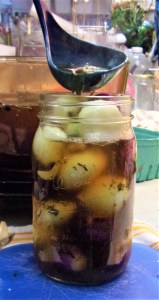
Project Day is now open for in-person meet-ups as well as in the Virtual Realm! Potluck this month will be Virtual and Real-World! Herbs Workshop and Sewing Workshop are in person. Masks required All other meetings are on hold for the moment.

Brothed
  • Herb Bunch – At Ancient Light, Thursdays, 7pm-9pmSewing Time – At Ancient Light, Saturdays, 3-5pm
  • Project Day – At Ancient Light, Sundays, 1 to 5pm
  • Cheese and Wine happens irregularly, usually announced with little notice on our Facebook group.
  • Next Virtual Potluck – 10/17, 11/21, 12/19, 1/16
  • Winter Feast LVI, Norse Theme. Page here – https://housecapuchin.com/winter-feast/winter-feast-norse-feast-as-lvi-february-2022/ More pages coming!

Here is the direct Portfolio link which has all the past Project Day reports and various projects, original here:  https://housecapuchin.wordpress.com/portfolio/  and new one here:  https://housecapuchin2.wordpress.com/portfolio/ and number three is here: https://housecapuchin3.wordpress.com/portfolio/

Misc – Kingdom of An Tir – SCA

Greetings An Tir,‎

Today the Society released the policy regarding requiring proof of vaccination or testing ‎within a 72 hour period for attendance to any activity sponsored by the SCA. ‎We WILL be applying this policy in An Tir. This implementation will occur in phases, and ‎you can expect updates regarding this requirement.‎ As some of you know, the Principality of Tir Righ already has a requirement for proof of ‎vaccination for attendance to any indoor event, and that has been implemented for Fall Crown. ‎King County, Washington has also followed suit and it will be in place for 12th night. ‎‎ ‎Please read and become familiar with this policy. This will be in place for every SCA ‎activity including, but not limited to, Fighter Practices, Indoor Events, Arts and Sciences night, ‎and Business meetings. ‎As always, please email me directly at seneschal@antir.org if you have any further ‎comments or questions.‎ Attia Prima, OPKingdom Seneschal, An Tir

Edited to Add the Copy of the Policy: Proof of fully vaccinated status or negative COVID test.

In addition to the existing policy allowing Kingdoms to establish a mask policy, Kingdom Seneschals in ‎consultation with the Crown shall have the discretion to implement the following policy requiring proof ‎of COVID vaccination or a negative COVID test taken within 72 hours of an event start time from all ‎event attendees:‎‎

1.‎ Events are any activities defined in Corpora II.A, Society Events Defined.

‎‎2.‎ Proof of being fully vaccinated must be in form of a government issued card (original or ‎photograph) or an electronic record.‎‎

3.‎ Proof of negative covid test must be issued from a licensed medical provider and presented in ‎such paper form or electronic form that the event staff can verify its authenticity. Letterhead from ‎a medical provider or an email address clearly identifying the medical provider as the sender of an ‎electronic record shall constitute authentic proof. ‎‎

4.‎ All persons over the age of 18 must present government issued photo identification along with the ‎proof of being fully vaccinated or a negative COVID test. Parents and guardians of minors must ‎present their own identification along with proof of being fully vaccinated or a negative COVID ‎test for all minors attending an event in their care.

‎‎5.‎ Proof of vaccine or a negative test shall not be required for children under 12. Children that are ‎aged 3 through 11 shall wear a mask.‎‎

6.‎ In addition to the normal sanctions process, anyone challenging event staff regarding the ‎enforcement of this COVID policy shall be denied entry to or be immediately removed from the ‎event.‎‎

7.‎ The Kingdom must have one person at a time checking the proof of being fully vaccinated or a ‎negative COVID test at an event. The event organizer, or their designee, shall maintain a list of ‎names and times of the person(s) conducting the check at the entrance. Once the entrance is ‎closed at the event, said person(s) will sign a statement at the bottom of the list of names and ‎times, which reads: ‎‎“I have monitored the event entrance at the times noted above, and I have verified that ‎each person entering the event during that time to have shown me proper identification, ‎along with either proof of being fully vaccinated or a negative COVID test taken within ‎‎72 hours of the start of the event.” ‎The event organizer, or their designee, shall forward the signed statement to the Kingdom ‎Seneschal, or their designee, who shall maintain such records in accordance with the standards for ‎retention of waivers.‎‎

8.‎ Kingdom Seneschals shall notify the Society Seneschal where local, state, provincial, or national ‎law supersedes this policy.

‎‎9.‎ This policy shall not apply to Lochac and Drachenwald.‎

COVIDSafe Proof of Fully Vaccinated Status or Negative COVID Test Policy Resolution - SCA.org

Online Education

Other Educational Events

A Master List for finding classes, webinars and other things – https://moas.eastkingdom.org/list-of-online-webinars/?fbclid=IwAR20OE8b6vvYKvmwrqwpule27szarZ7EPV-8R72F1eV2CxcdmOXQhZf9ayk

10/1-10/3 2021 – Daigaku-Ryo: Pan-Asia University = Constantinople to Heiankyō 2021 – October 1, 2021 — October 3, 2021 – http://daigaku-ryou.org/

 Other Good Stuff

KWAS – The Known World Arts and Sciences Display is now live! Go to https://sites.google.com/view/kwasdisplay/home and click on “Display Hall” in the upper right corner to see the contributions.

Knowne Worlde Entertainment Guide – KWEG – Entertainment List – https://docs.google.com/spreadsheets/d/1xEZAwCca4IQham3TpxfWnonQscG668mmYgIMA18YZ-E/edit

SCA Iberia put out a whole bunch of videos from their most recent event! https://www.youtube.com/channel/UC2RmLGx_KiNzoFiM6GAu5Hg/videos

Cookery – Most of this week’s stuff is below in project day and recipes.

There is a page of online period cookbooks! – https://www.angelfire.com/md3/openhearthcooking/aaCookbooks.html?fbclid=IwAR0WbgZVc59MyJJd5xRHDC3OsBB3UsNZhX5-tJhAj598mXM6mUKZ8PandaY

Folger’s Shakespeare Library – Before Farm to Table – This is a series of articles, recipes and papers – https://beforefarmtotable.folger.edu/investigations/

A Tasting History about one of the recipes from An Early Meal! – Viking Blood Bread – Tasting History with Max Miller

Viking Blod Mead available at Curiada: https://www.curiada.com/collections/max-miller?utm_source=Partnership&utm_medium=Max&utm_campaign=Max-Episode-Viking-Blood-Bread
LINKS TO SOURCES**
An Early Meal by Daniel Serra and Hanna Tunberg: https://amzn.to/3DJI19d
Beowulf: https://amzn.to/3jH4P1a
The Prose Edda by Snorri Sturluson: https://amzn.to/2YsbyEc
Heimskringla by Snorri Sturluson: https://amzn.to/3BAwtmG

A Mini Royal Feast – Monk’s Modern Medieval Cuisine – What’s on the menu at the wedding of Henry IV and Joanna of Navarre in 1403? – In this video Dr Monk cooks Vyaund Ryal (Dish Royale) which ties all the dishes together.

Christmas Cuskynoles – Monk’s Modern Medieval Cuisine – These delicious medieval Christmas pastries date back to the thirteenth century. Fruity and spicy, they’re not unlike modern mince pies. Follow along with Dr Christopher Monk, medieval cultural historian, as he shows you how he makes them.

Sewing – Moar sampler

Herb Bunch – Thursday evening’s class was short, but on incense resins, where they come from and what kind of plants, also how the various resins are related in scent, texture, etc.

Project Day – Was pretty quiet. Anja went to Moot for the first hour.

The Canning Jewel

Juliana – “Sending you some photos of a new “wig bubble” project. I got to looking at photos of The Canning Jewel (google it). It is an Elizabethan period pendant made of gold, pearls and jewels. I got to wondering if there was a cheap, easy way to copy such fancy stuff. So here are my pendants. (At least the ones that turned out) Maybe you can share at your work party today.” These are awesome!

Ailantha – Had to be out most of the day today. Sorry I missed this today. Not doing much project work this week as we sort, organize, and purge our craft/sewing stockpile.

Isabeau – Today I’m working on additional pattern weights of different sizes. I did 10 squares. So i thought id try less squares to see what i get. Why not, right? I’m trying 5 square. It’ll be a pyramid.

Helen Louise – Hi all, today I’m making a baby quilt from Paula Arndt beautiful fabrics on spoon flower LillyOak, for a professor at the U of O who just had a baby girl. Hubby is out if town, so now I can get really down to finish this off…

She also dropped a set of pix for a 17th century gown for us to comment on.

Arlys – PROJECT DAY PROJECT: the pattern for an Assisi medallion.

Anja worked on her sampler during moot and make pickling broth later, to go over the pickled onions. Some of these will probably show up at the feast since we’re within the 6 month block, already.

Miscellaneous pix

Music – ℜ𝔦𝔠𝔥𝔞𝔯𝔡 ℭ𝔬𝔢𝔲𝔯 𝔡𝔢 𝔏𝔦𝔬𝔫 – 𝔐𝔲𝔰𝔦𝔠𝔞 𝔐𝔢𝔡𝔦𝔢𝔳𝔞𝔩𝔢 – Ensemble: Alla Francesca
Album: Richard Cœur De Lion
Video: (read the info) http://www.facebook.com/musicamedievale

The ensemble “Alla Francesca” in this work performs music from the time of Richard the Lionheart, including the famous “Ja Nuns Hons Pris”, written by Riccardo himself during his imprisonment in Dürnstein Castle. In this video I have selected some photos of three very important castles in the life of Richard I of England: the first (which appears from 0:00 to 35:54) is the famous Château-Gaillard, the historic and majestic fortress built by Riccardo between 1196-1198, during the war against the king of France Philippe Auguste; the second castle (from minute 35:54 to 45:00) is that of Dürnstein, where Richard was imprisoned on his return from the third crusade. Finally, from minute 45:00 to 51:14, there is Châlus Chabrol, a fortress that Richard besieged in 1199 and where he died for an arrow shot from the walls while the king supervised the siege. Richard’s bowels are now buried right in the chapel of Châlus Chabrol, his heart is in Rouen while his body rests in the abbey of Fontevrault together with those of his parents, Henri II and Aliénor d’Aquitaine inside a splendid effigy from which his face can be clearly distinguished and that in this video I left in transparency under all the photographs as if he were a king who finally rests after a life of battles, songs, intrigues …
The ensemble “Alla Francesca” has chosen the stupendous abbey of Fontevrault to record this splendid musical work dedicated to Riccardo; I am thrilled to know that the echoes of these melodies, certainly familiar to the king, have resounded among the vaults of Fontevrault once again, 797 years after Riccardo’s death, right next to him.
PS: the miniature that appears at the end I found it instead from a manuscript (circa 13th century) and there is represented King Richard during his imprisonment in Dürnstein and next to him the moment of his death, pierced by an arrow, in Châlus Chabrol.

1 Lai Du Chèvrefeuille – Marie de France/Anonymous
2 L’Autrier M’En Aloi – Anonymous
3 Ja Nuns Hons Pris – Richard Cœur-De-Lion
4 Chanterai Por Mon Coraige – Guiot De Dijon
5 Li Nouviautz Tanz – Chastelain De Couci
6 Vocis Tripudio – Anonymous
7 A Vous, Amours – Chastelain De Couci
8 Canticum Exercuit / Canticum Letitie – Anonymous
9 Bien Me Deüsse Targier – Conon De Béthune
10 Quant Voi La Flour Boutener – Gace Brulé
11 Redit Etas Aurea – Anonymous
12 Christus Patris Gratie / Vineam Meam Plantavi / Offerat Ecclesia – Anonymous
13 Can Vei La Lauzeta – Bernart de Ventadorn
14 Fortz Chausa Est – Gaucelm Faidit

Alla Francesca: Brigitte Lesne, Emmanuel Bonnardot, Pierre Hamon, Raphaël Boulay

This image has an empty alt attribute; its file name is download.png

Links

Mass Graves of 13th-Century Crusaders Reveal Brutality of Medieval Warfare – https://www.smithsonianmag.com/smart-news/mass-graves-of-13th-century-crusaders-reveal-brutality-of-medieval-warfare-180978712/

Tartessos – https://www.atlasobscura.com/articles/tartessos-casas-del-turunuelo?fbclid=IwAR0y1c_O7ctalbZmOmrsA0ZHuUG0JJExd9O_fv0mEhztzRPuOZQn7_EvNIA

Archaeologists Found 600-Year-Old Artifacts Beneath the Floors of An English Hall – https://explore.top10answers.com/archaeologists-found-600-year-old-artifacts-beneath-the-floors-of-an-english-hall

To Save Norway’s Stave Churches, Conservators Had to Relearn a Lost Art – https://www.atlasobscura.com/articles/stave-church-tar-conservation

17th-Century Warship Pulled From Icy Baltic Sea Is Almost Perfectly Preserved – https://mymodernmet.com/sunken-swedish-warship-vasa/

Ancient “singing linden” voted Tree of the Year – https://english.radio.cz/ancient-singing-linden-voted-tree-year-8729300

New and Updated Pages

A new landing page for garb – https://housecapuchin.com/clothing-inspirations/

More links added

More links added

Funnies 

divider black grey greek key

Largesse, Gifts and Auction items
·       ASXLVIII = 88
·         ASXLIX = 794
·         ASL = 2138
·         ASLI = 731
·         ASLII = 304
·         ASLIII = 146
·         ASLIV = 230
·         ASLV & ASLVI = 177 plus 4 puppets, 4 powder fort, 8 cheese spice and 9 powder douce packets, 1 kiss-lock pouch, 9 tiny bobs, 7 pincushions, 3 pins, 3 snip case w/snips, lucet cords, 25 pouches for block-printing, 2 medium pouch, 4 small pouches, 12 bookmarkers, 14 unfinished pincushions, 1 sewing kit (except for bone needle), varnished stuff (124), 2 emery strawberries, 1 woolen spool-knit cord, 48 key bottle openers
Total as a Household = 4238 handed off


moving writing pen motif
In ministerio autem Somnium! Anja, graeca doctrina servus to House Capuchin
Page Created 9/25/21 & published 9/29/21 (C)M. Bartlett
Last updated 9/29/21

Blog at WordPress.com.

Up ↑