Search

House Capuchin 3

An historical recreation household centered on the Central Oregon Coast (households are not official groups of the Society for Creative Anachronism and do not represent the views or policies of SCA, Inc. )

Archives

Activities through 9-19-21 Coronet (sortof) Potluck

House Capuchin Shield2

*

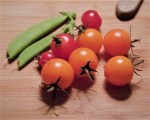
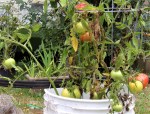
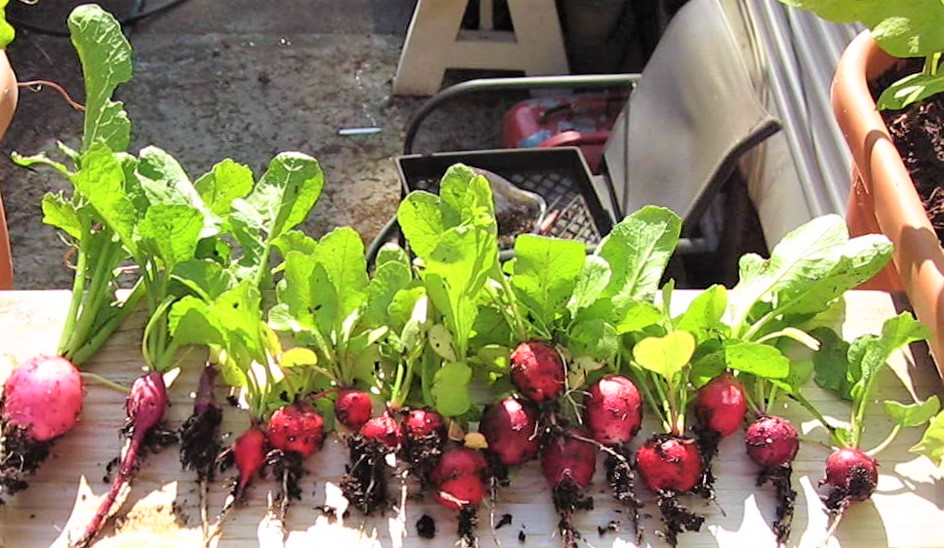
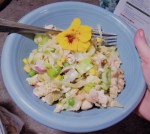
Finally tourist season is winding down. We had some rain this week and the garden is happy. Potluck took advantage of the garden produce in one of our dishes. Not a lot else was going on, although various House members talked about projects.

Project Day is now open for in-person meet-ups as well as in the Virtual Realm! Potluck this month will be Virtual and Real-World! Sewing and Herbs workshops are open for both. Masks are required. All other meetings are on hold for the moment.
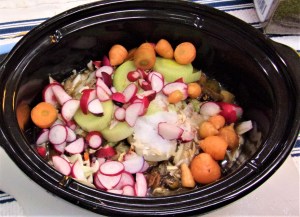
That’s so pretty!

When will the rest of these open up in person? We’ll probably keep right on with the virtual ones side-by-side with the actual. 

  • Herb Bunch – At Ancient Light, Thursdays, 6am-9pm, starts this week!
  • Sewing Time – At Ancient Light, Saturdays, 3-5pm
  • Project Day – At Ancient Light, Sundays, 1 to 5pm
  • Cheese and Wine happens irregularly, usually announced with little notice on our Facebook group.
  • Next Virtual Potluck – =10/17, 11/21, 12/19, 1/16
  • Winter Feast LVI, 2/13/22, Norse Theme. Page here – https://housecapuchin.com/winter-feast/winter-feast-norse-feast-as-lvi-february-2022/ More pages coming!

Here is the direct Portfolio link which has all the past Project Day reports and various projects, original here:  https://housecapuchin.wordpress.com/portfolio/  and new one here:  https://housecapuchin2.wordpress.com/portfolio/ and number three is here: https://housecapuchin3.wordpress.com/portfolio/

Summits Coronet 9/18/21 – Only fighters and necessary officers could attend, but we were all cheering them on, anyway!

Huzzah for the new Tanist and Tanista of The Summits Viscount Luciano Foscari and Signora Tessina Felice Gianfigliazzi!! Huzzah!!
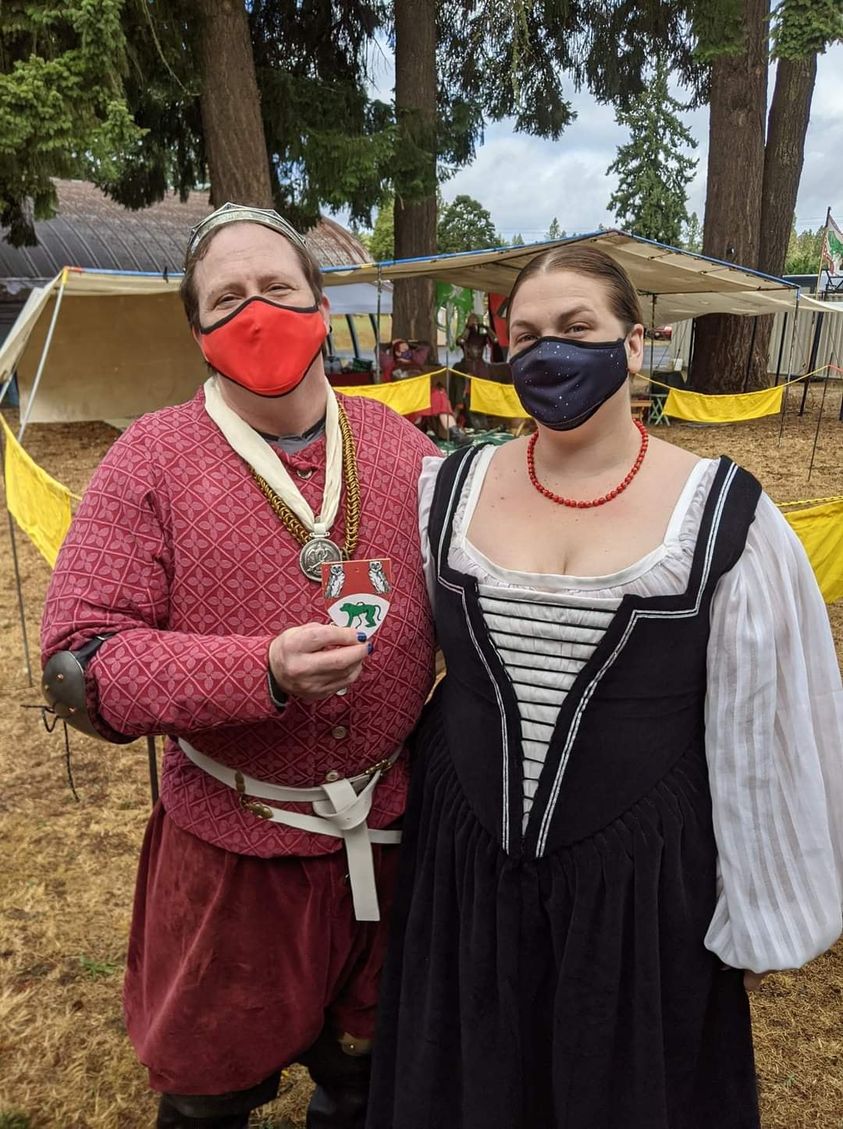
 

Misc – A grin

Other Educational Events

A Master List for finding classes, webinars and other things – https://moas.eastkingdom.org/list-of-online-webinars/?fbclid=IwAR20OE8b6vvYKvmwrqwpule27szarZ7EPV-8R72F1eV2CxcdmOXQhZf9ayk

10/1-10/3 2021 – Daigaku-Ryo: Pan-Asia University = Constantinople to Heiankyō 2021 – October 1, 2021 — October 3, 2021 – http://daigaku-ryou.org/

 Other Good Stuff

KWAS – The Known World Arts and Sciences Display is now live! Go to https://sites.google.com/view/kwasdisplay/home and click on “Display Hall” in the upper right corner to see the contributions.

Knowne Worlde Entertainment Guide – KWEG – Entertainment List – https://docs.google.com/spreadsheets/d/1xEZAwCca4IQham3TpxfWnonQscG668mmYgIMA18YZ-E/edit

SCA Iberia put out a whole bunch of videos from their most recent event! https://www.youtube.com/channel/UC2RmLGx_KiNzoFiM6GAu5Hg/videos

Dance Vids – Pavane

SAINT PAUL’S ANGLICAN CHURCH – Pavane Belle qui tiens ma vie by Thoinot Arbeau – Consort 8 – Courtly Ayres & Dances – Danced by Fiona Garlick and John Barnard of The Early Dance Consort.

The lovely Pavane “Belle qui tiens ma vie” comes from a French dance treatise Orchésographie, published in Lengres in 1589, and written by Jehan Tabourot, a canon of the church, under the pseudonym “Thoinot Arbeau”. Arbeau provides wonderful insights into the social dances of the mid-to late 16th century, along with instructions using a unique printing system which correlates notes of the dance tunes with their steps. He is credited with the composition of this chanson in four parts, and includes the appropriate drum rhythm to be played throughout. The Pavane was danced “walking with decorum and measured gravity”. It opened grand balls at court, heralded entrances and processions, and was played “when a maiden of good family is taken to Holy Church to be married”.

Approche donc ma belle Come my beauty,
Approche, toi mon bien, come my wellbeing,
Ne me sois plus rebelle Don’t reject me,
Puisque mon cœur est tien. for my heart is yours,
Pour mon mal apaiser, To appease my pain,
Donne-moi un baiser. give me a kiss.

This performance was part of Consort 8’s COVID-safe concert.

Pavana Lesquercarde

Classes – 

Wacky theories from the Middle Ages – Medievalists – Tight hose caused the Black Death, licking a bear into existence, and the Ordeal of Water. In this episode, Danièle tells us about some of the stranger ideas that came up in the Middle Ages.

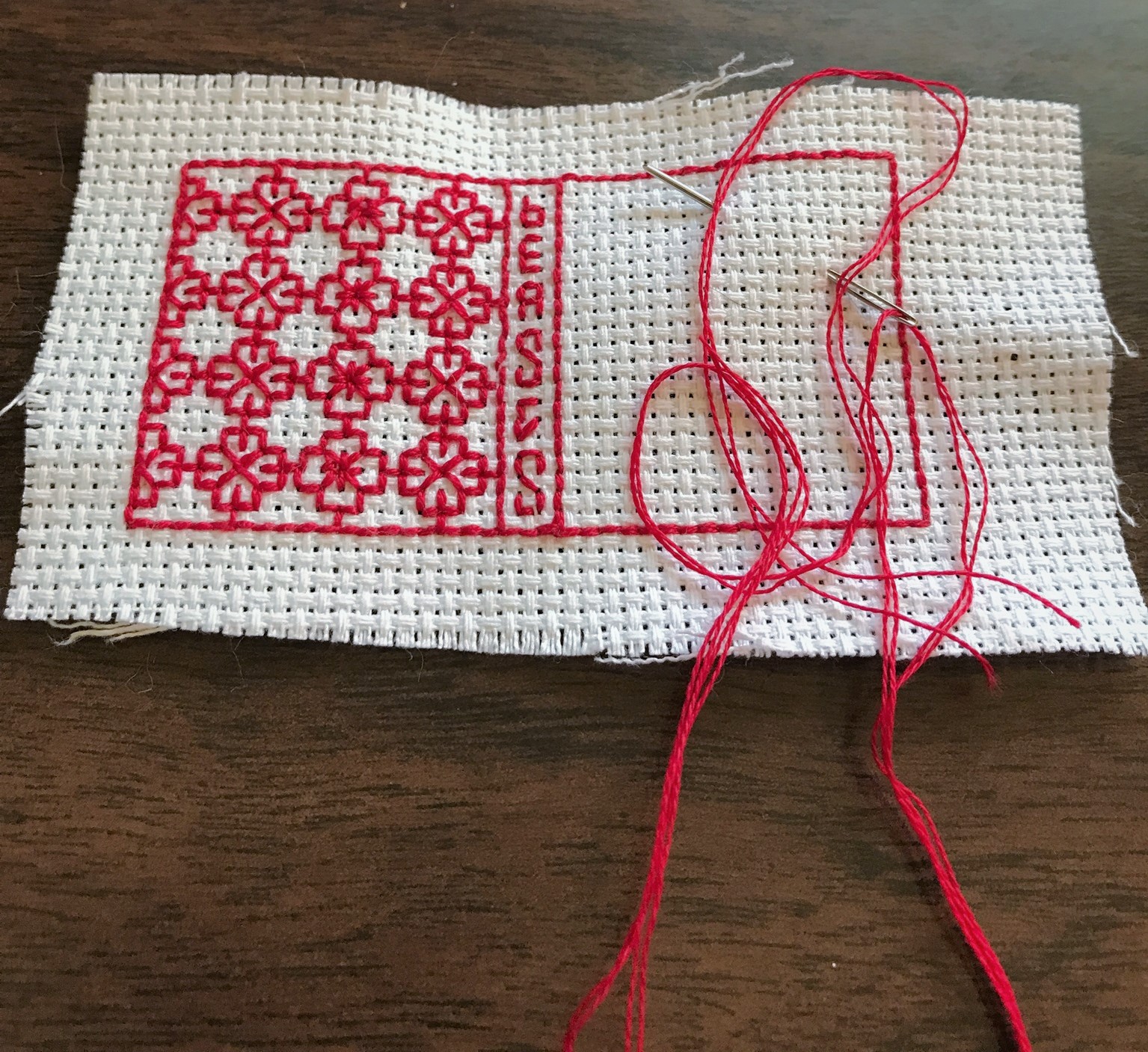
Early Week – A soup/stew got made early on in the week, specifically for the potluck. More on that below. Anja was doing more embroidery, then on Wednesday got a block of time to type up some recipes…. …and on Thursday to try to track down more sources. Friday was typing more recipes and on Saturday Loren got some more ingredients.

Cookery – A bunch of recipes from “An Early Meal” have gotten posted. I don’t know why, but not all of them are making it into the menu, so look at this page for the links. https://housecapuchin.com/winter-feast/winter-feast-norse-feast-as-lvi-february-2022/foods-from-the-norse-viking-era/

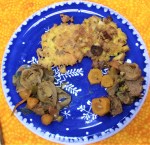
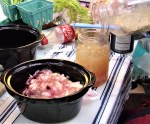
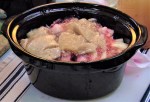
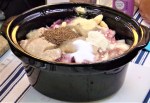
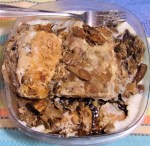
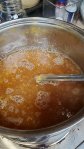
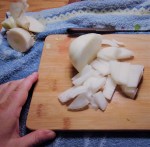
The stew was a little more “scraped icebox” that usual. The pork roast from last week was the base. It had caraway, onions and mushrooms in it and then a veg mix went in that was a couple kinds of summer squash, canned mushrooms, corn, peas and green beans plus some butter. An onion and a half, a turnip and a bunch of carrots, plus varied greens including beet tops, dandelion, plantain, sorrel and lettuces, plus marjoram, garlic, and someo other things.

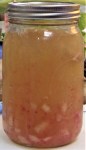
On Wednesday a batch of chicken got done so’s to have broth for borscht and chicken for mortar chickens.

Wednesday night, Thursday and Friday were all typing recipes and trying to work out ingredients. There are a lot of ingredients that are going to need further research for sources or substitutes.

Saturday morning was buying some more ingredients.

Pork Stew
Tudor Elizabethan Applesauce, a.k.a. Applemoyse – Lynne Fairchild – Applemoyse, or appelmoise, is a 16th century Tudor / Elizabethan applesauce receipt (recipe). This particular recipe is from 1575 in William How’s book, A Proper New Booke of Cookery.

Ingredients:

  • 4 apples
  • egg yolk
  • 1 Tbsp rose water
  • 3/4 cup sugar
  • 1 Tbsp unsalted butter
  • 1/2 tsp cinnamon
  • 1/2 tsp ginger

Instructions:

  1. Take the apples and make applesauce. In other words, peel, core, and slice the apples.
  2. Put the apples in a pot with 3/4 cup of water.
  3. Let the water simmer for about 20-30 minutes.
  4. Then, drain any excess water.
  5. Remove the apples from heat.
  6. Mash the apples (or use a food mill).
  7. Stir in the egg yolk quickly (the residual heat of the pan will cook it – beware of scrambled egg).
  8. Then, add in the rose water, sugar, and butter.
  9. Put back on medium heat, stirring regularly, until you have a fluffy, yellowish pudding.
  10. Serve in 4 small bowls.
  11. Sprinkle with cinnamon (Ceylon is preferred) and ginger on top.

Yield= 4 servings

Feeding A Medieval KnightTasting History with Max Miller – Chewtes on Flesshe Day

MMMK – Medieval Chicken Meatballs – My Modern Medieval Kitchen – My Modern Medieval Kitchen making a modern version of medieval chicken meatballs

MMMK Cherry Pie ver 1. – My Modern Medieval Kitchen making Cherry Pie – Source: Middelaldermad by Bi Skaarup og Henrik Jacobsen

MMMK Cherry Pie ver 2 – My Modern Medieval Kitchen – making a modern version of ‘Cherry Pie’

Source
The Opera of Bartolomeo Scappi (1570)
Recipie: Book VI.128 (page 583 in my edition of the book)

Ingredients
Cherries
Butter
Marzipan
Egg yolks
Mostaccioli (or just Cinnamon bisquits)

Pie dough
Here is how I make mine https://youtu.be/9riSdHOf8hc

Sewing – Just a little embroidery with some mundane sewing.

Sundials, etc. – Adiantum’s A&S was Tuesday evening and about medieval coins.

Making Simple Prehistoric-style Leather ShoesSally Pointer – Drawing broad inspiration from prehistoric shoes, including the current world’s oldest shoe from Areni-1, I’m making a pair or very simple but comfortable leather shoes to wear with my Neolithic outfits.

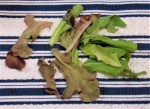
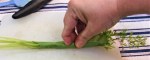
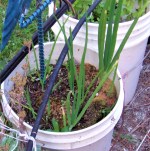
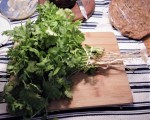
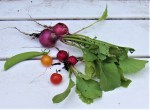
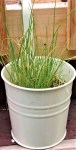
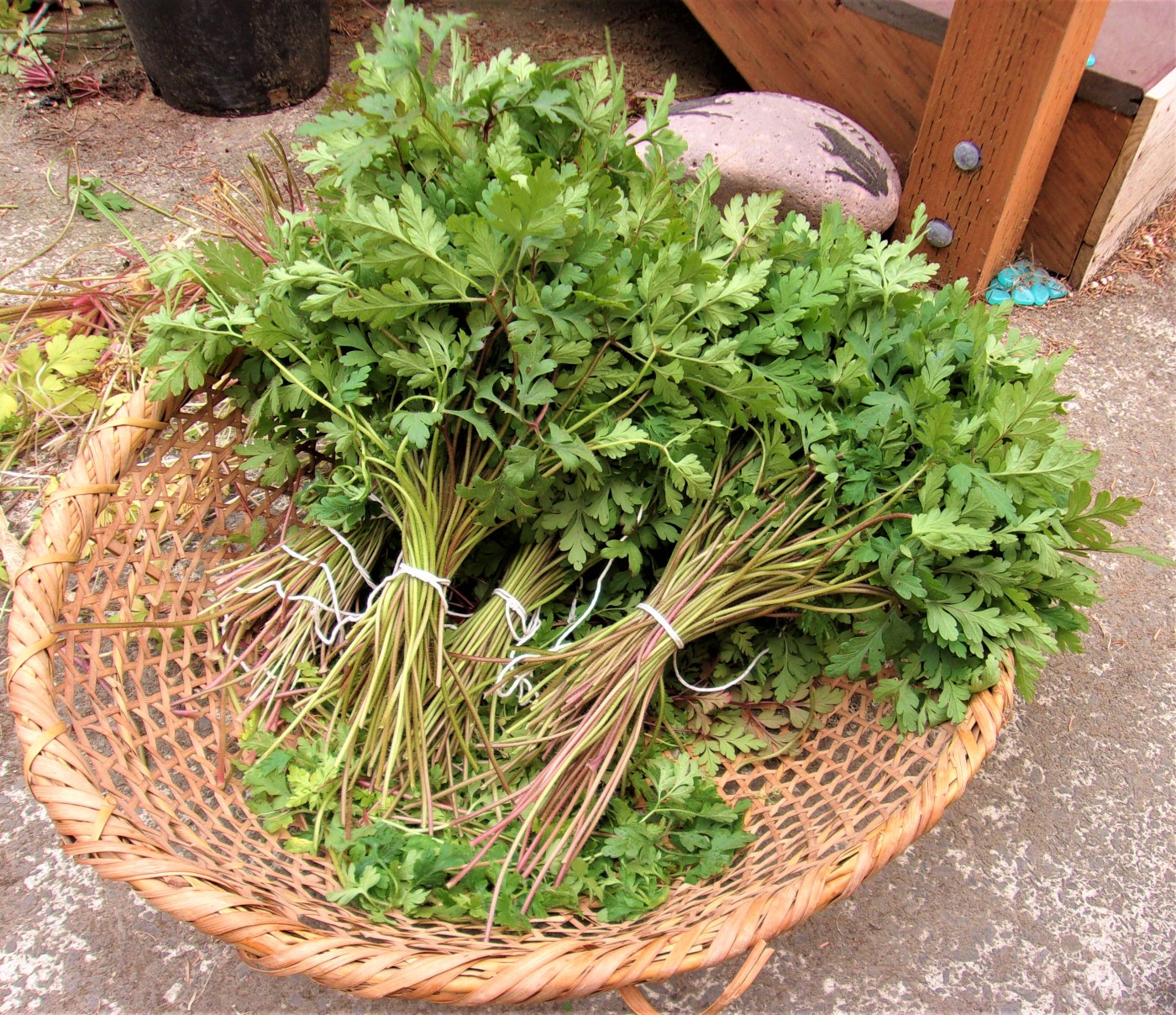
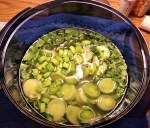
Herb Bunch – Harvest ahead of the rain. Some of this went into the “thinnings” soup.
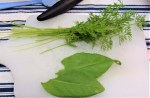
We have a couple of people hunting goosefoot or lamb’s quarters for one of the dishes. Apparently, it’s easily wild-crafted (if you know what you’re looking for) and called “bathua” in Indian/Pan-Asian store freezers. Yarrow leaf is also required for another dish. That one probably needs to be wild-crafted.

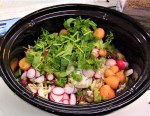
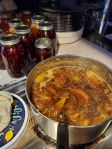
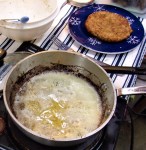
Project Day – Anja started with the borscht and then the vegetable thinnings stew, both in the tripot, plus the pork stew just needed warmed, ditto. Pix under the recipes, and pork stew by the description above. By 3:40 the whole tripot was going. Next on the agenda was mortar chickens again. Loren was running back and forth, washing vegetables and dishes while Anja was chopping and compounding. Took a break for nibbles and picture processing then got back to it. Finally everything was cooking or ready to cook, but the soups were taking awhile. We finally nuked each of them for 10 minutes and that got them farther down the road. We sat down to eat at 7pm.
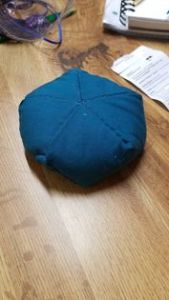
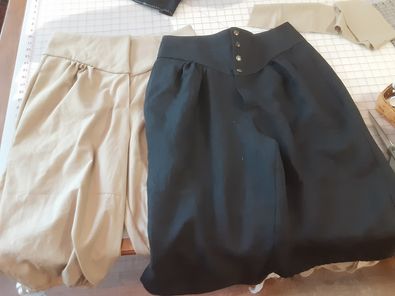
Pattern weight. Hand sewn, sand filling

Isabeau – I’m still at work, day 10. Co worker, opposite shift, has covid. Finally getting to work on my adapted pincushion

Ailantha – Idk. I missed the day playing leaky pipe plumber games instead. Next week, I hope!
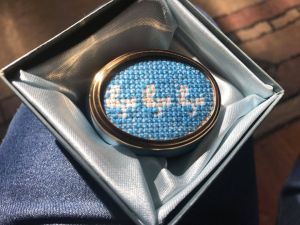
Arlys – PROJECT DAY: finished embroidering this Assisi ducky slip and put all the parts together for a holiday gift.

Helen Louise – Sounds lovely… not feeling up to doing much today.

Rosamonde Sherwood – Berry pie with berries husband picked. I put a powdered sugar/butter/rosewater & flour crust on top colored w a bit of ube. Should have thickened the berries a bit more……

Potluck Menu

Nibbles (no pix)

  • Bean pickle
  • Cuke pickle
  • black olives
  • green olives
  • fig jam
  • hot pepper jam
  • regular butter
  • Pickled eggs
  • Cubed cheddar
  • garlic butter
  • herb butter
  • bread

Main

  • Pork/Veg stew
  • Borscht
  • Mortar chickens
  • Thinnings soup – Cabbage, small veg, tops, in pork broth.

Afters

  • Strawberries in cream
  • Comfits
  • Marzipan

Anja says – Other than I think I salted the thinnings stew twice… at least… It’s pretty tasty. We’ve been eating off the pork stew during the week, so I knew that was ok. The borscht needs sour cream, I’m afraid, and I forgot to check whether we had any. The mortar chickens worked better this way, with larger chunks, they cooked faster and were quite tender. I used quite a bit of horseradish in them and that, combined with aniseed, salt and saffron sounds like a weird combo, but it works.

…and on Monday discovered a really tasty way to do the leftovers, plain english muffin, buttered and toasted in the oven, then a cold patty set on it and closed up into a sandwich. *Yum*!

Recipes
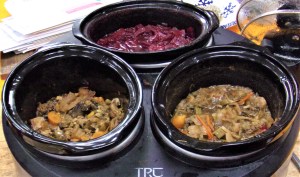
Tripot – Borscht at the top, pork stew to left, veg thinnings to right.

Simple borscht

  • 1 flat of chicken thighs
  • Water
  • salt
  • 3 beets
  • 1 onion
  • Caraway
  • Powdered horseradish (1 tsp)
  • 1/4 cup barley
  • sour cream

Method

  1. In a large pot put the chicken with water to cover and some salt. Don’t overdo the salt. You can always add. Tough to subtract!
  2. Cover and bring to a boil, then reduce to simmer for 45 minutes to an hour. Check internal temp of chicken. Must be at least 165F.
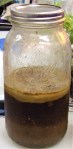
  3. Drain broth to a large jar (I used an ½ gallon) and fridge.
  4. Put chicken in an airtight container and fridge for up to 5 days.
  5. Peel and chop onion and beets.
  6. Put into a pot (I used a crockpot).
  7. Add caraway to taste. (I used 1 TBSP.)
  8. Degrease chicken broth. Grease should have risen to the top and congealed and can be scraped out with a spoon. Save, if you use schmaltz, otherwise discard grease.
  9. Add enough of chicken broth to cover the vegetables and put on the heat (crock on high).
  10. Put the rest of the chicken broth in a smaller container and reserve for other uses. Save out the “bits” that settled at the bottom of the bottle and add that to the crock.
  11. After two hours, stir well, and check to see whether the veg are cooked. If they are, turn down to warm. Taste and add salt and horseradish.
  12. Take ¾ cup of the broth from the crock and put it into a microwave-safe bowl. Add barley and zap for 5 minutes.
    Test one grain. If crunchy, zap for 5 more. Test. Repeat until soft.
  13. Add to crock and stir.
  14. Shred one chicken thigh, minus bones, fat, gristle and skin
  15. Taste and add caraway, salt, horseradish to taste.
  16. Serve hot with a dollop of sour cream.
    Note – If cooking in a crockpot, you can put everything but the barley in at once…. Still cook the barley separately. 
Tripot – Borscht at the top, pork stew to left, veg thinnings to right.

Vegetable Pottage

  • 1 cup pork broth (from roast drippings/stew)
  • 2 cups cole slaw mix (includes carrot)
  • 10 string beans
  • carrot thinnings (handful)
  • tough old (missed!) radishes
  • 6, 1/2 inch rounds of leek from the white end
  • 1 TBSP dried shallots
  • 1tsp salt

Method

  1. Chop everything and put in crockpot.
  2. Cook on high for 4 hours.
  3. Stir
  4. Taste
  5. Add seasonings, if necessary.

Note – This was really pretty until the pork broth was stirred into it and made it very dark. 

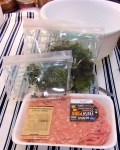
Mortar Chickens, Meister Hans 1460 cookbook

  • 2 Chicken thighs, cooked and cooled,
  • 1 egg
  • medium pinch Saffron
  • 1 tsp Horseradish or pepper
  • 1 tsp Aniseed
  • Fat or oil (used bacon fat)

Method

  1. Muddle the egg.
  2. Sprinkle ground saffron onto egg and let sit for a few (best overnight!) for the saffron to “color”.
  3. Mix egg and spices.
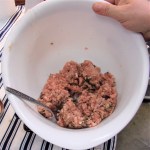
  4. Skin and bone the chicken , then chop it well. Add egg mix and process until well mixed.
  5. Divide into 6 sections for patties or 12-15 for “nuggets”.
  6. Scoop out with a large spoon to get a consistent size
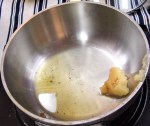
  7. Heat ½ inch oil/grease.
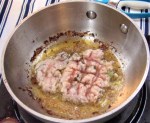
  8. Drop patties/nuggets onto oil. This was done at “5” on my burner. The oil should foam around the patties.
  9. Use something like a potato masher to flatten the patties once they’re in the pan.
  10. Loosen from pan within a minute. At about 3 minutes it will be browning on the bottom and can be carefully flipped to the other side. These are *very* tender and will tend to fall apart if you handle them like a burger!
  11. Fry until done (check inside temp with thermometer…. 165F-180)
  12. Serve each on ½ a roll and garnish with spring onion rings.

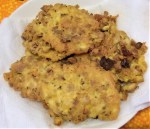
Recipe #62 Von mörser hüner die mach also – Of mortar chickens, make them thus

Take a roasted chicken, dismember it small and take the sheer meat of it. And take a thin batter of eggs and of pepper, anise, pepper and saffron and pound it all together in a mortar. Fry it in a little fat, those are mortar chickens.

Miscellaneous pix
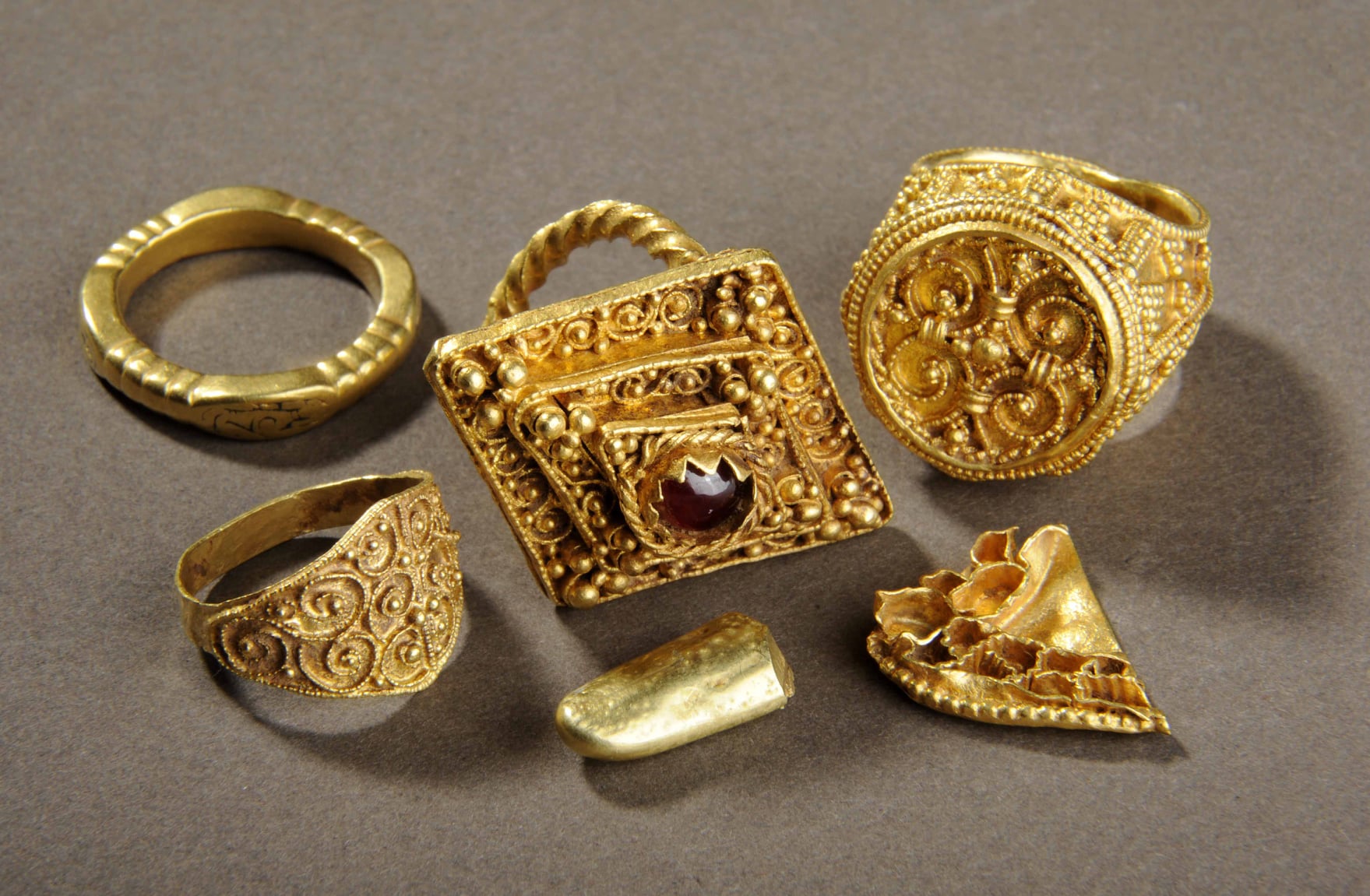
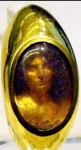
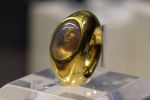
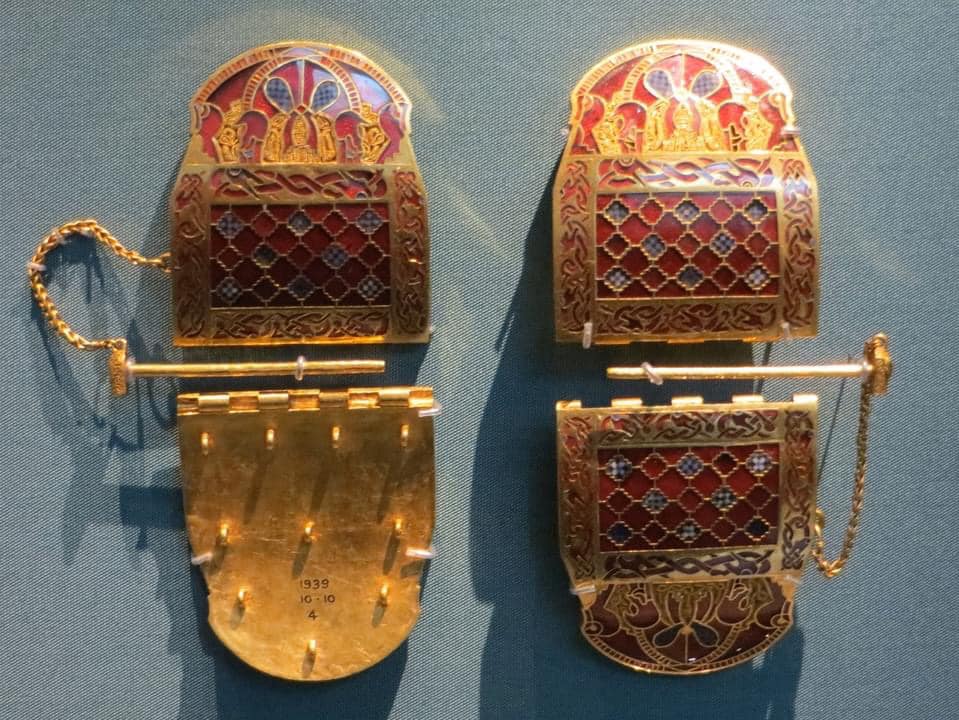
The West Yorkshire Hoard, which was first unearthed on 14 September 2008 in the Leeds area.
This was an unusual collection of seven items: four gold rings, a fragment of gold brooch, a bit of gold ingot and (the odd one out) a lead spindle whorl.
And not a single coin in sight to help date it!
The chunky-looking gold ring on the right is considered 10th-century in style; the earliest pieces are 300 years older than that, which means that the person who collected – or inherited – this stash of treasure had the rights to some very valuable property.
The burial pit itself showed signs of repeated disturbance – that’s led to the theory that whoever buried the hoard, in the 10th century or later, kept coming back whenever they needed the portable wealth that the gold and gemstones offered them.
If that’s the case, the ’hoard’ represents the last few bits that never did get ’cashed in’.
Why the owner failed to return is a mystery – but the political instability of northern England in the 10th and 11th-centuries probably offers the best explanation. The so-called Northumbrian Priests Law of c.1023 forbids travel in and out of York on holy days including Sunday, but makes an exception ’in cases of hostility’.
A thousand years later, their loss is our gain.
Photo from Leeds Museums and Galleries.

Music𝔄𝔪𝔬𝔲𝔯𝔰 𝔢 𝔇𝔢́𝔰𝔦𝔯𝔰 – Medieval Love Songs – 𝔐𝔲𝔰𝔦𝔠𝔞 𝔐𝔢𝔡𝔦𝔢𝔳𝔞𝔩𝔢 – Ensemble: Ensemble Für Frühe Musik Augsburg
Album: Amours & Désirs
Video: Ms. U 964 (XIIIth cent.)
http://www.facebook.com/musicamedievale

1 Ce Fu En Mai – Moniot D’Arras (Dance Song)
2 En Un Vergier Lez Une Fontenele – Anonym. (Chanson D’ Histoire, Chanson de Mal-mariée)
3 Lucis Orto Sydere – Anonym. (Pastourelle In Latin)
4 Por Coi Me Bait Mes Maris – Anonym. (Ballade, Chanson de Mal-mariée)
5 L’ Amours Dont Sui Epris – Blondel de Nesle(Chanson Courtoise)
6 La Uitime Estampie Royal – Anonym. (Instrumental)
7 Contre Le Dous Tans Novel – Jehan Bodel (Pastourelle)
8 Jherusalem, Grant Damage Me Fais – Anonym. (Chanson de Croisade / Woman´s Complaint)
9 Volez-oïr la Muse Muset – Colin Muset (Reverdie)
10 Par Un Tres Bel Jour De Mai – Jean Erart (Pastourelle)
11 De Ramis Cadunt Folia – Anonym. (Love Song In Latin)
12 L’ Autrier Par La Matinee – Thibaut de Champagne (Pastourelle)
13 La Septime Estampie Royal – Anonym. (Instrumental)
14 Bele Yolanz En Ses Chambres Ses Seoit – Anonym. (Chanson de Toile)
15 Eccs Letantur Omnia – Anonym. (Love Song In Latin)

This image has an empty alt attribute; its file name is download.png

Links

Renaissance shield stolen by Nazis returned to Czechia by Philadelphia Museum of Art – https://english.radio.cz/renaissance-shield-stolen-nazis-returned-czechia-philadelphia-museum-art-8728711

Reenactment of Prague’s Battle of White Mountain to Take Place on September 18-19 – https://praguemorning.cz/reenactment-of-pragues-battle-of-white-mountain-to-take-place-on-september-18-19/

Viking Age head-coverings – https://ciarsstitchintime.wordpress.com/2013/10/24/viking-age-head-coverings/

Wenceslas IV visits Pálava wine festival – https://english.radio.cz/wenceslas-iv-visits-palava-wine-festival-8728359

This image has an empty alt attribute; its file name is download.png

Video Links

Picatrix: A Medieval Treatise on Astral Magic – Medievalists

Did ANNE BOLEYN have a PSEUDO PREGNANCY in 1534? Causes of pseudo pregnancies. Six wives documentary – History Calling – The second wife of Henry VIII is generally assumed to have had three pregnancies; one which resulted in the birth of Elizabeth I in 1533, one which ended in an unrecorded miscarriage or stillbirth in the summer of 1534 and one which ended in a miscarried son in January 1536. These are also the pregnancies frequently shown in films, TV shows and documentaries about Henry’s doomed Queen, such as The Tudors and Wolf Hall. There is debate however, as to whether Anne Boleyn’s second pregnancy was real, or if she mistakenly thought she was expecting again; a condition known as a pseudo pregnancy (or pseudocyesis). Indeed her step-daughter, Queen Mary I, would later experience one of the most famous cases of pseudo pregnancy in history, due to the extreme psychological stress she felt around the need to produce an heir. In Anne’s case, the Imperial Ambassador, Eustace Chapuys, reported that by September 1534, Henry was beginning ‘to entertain doubts as to his mistress’ reported pregnancy’ and this comment has fueled speculation that Mary was not the only Tudor Queen affected by pseudocyesis. In this six wives documentary from History Calling, we’ll look at the evidence for Anne’s middle pregnancy, the causes of pseudo pregnancies and how likely it is that she suffered from this phenomena. In the course of the video, I’ll also reveal how many pregnancies Anne Boleyn had and discuss the theory that she was pregnant in the summer of 1535.

New and Updated Pages

New stuff on the feast foods page, lots of sub-pages, recipes! – https://housecapuchin.com/winter-feast/winter-feast-norse-feast-as-lvi-february-2022/foods-from-the-norse-viking-era/

Funnies 

divider black grey greek key

Largesse, Gifts and Auction items
·         ASXLVII = 24
·         ASXLVIII = 88
·         ASXLIX = 794
·         ASL = 2138
·         ASLI = 731
·         ASLII = 304
·         ASLIII = 146
·         ASLIV & ASLV = 230
·         ASLVI = 177 plus 4 puppets, 4 powder fort, 8 cheese spice and 9 powder douce packets, 1 kiss-lock pouch, 9 tiny bobs, 7 pincushions, 3 pins, 3 snip case w/snips, lucet cords, 25 pouches for block-printing, 2 medium pouch, 4 small pouches, 12 bookmarkers, 14 unfinished pincushions, 1 sewing kit (except for bone needle), varnished stuff (124), 2 emery strawberries, 1 woolen spool-knit cord, 48 key bottle openers
Total as a Household = 4238 handed off

moving writing pen motif
In ministerio autem Somnium! Anja, graeca doctrina servus to House Capuchin
Page Created 9/13/21 & published 9/20/21 (C)M. Bartlett
Last updated 9/2021
Activities through 9-12-21

So disappointing to have to skip Crown and Shrewbury and (this coming week) Coronet. ….but we have a potluck this week and at least some of Coronet will end up online on the Summits Facebook page. …as much as they can get to go out, at least.

Project Day is now open for in-person meet-ups as well as in the Virtual Realm! Potluck this month will be Virtual and Real-World! Herbs Workshop and Sewing Workshop are real world. All other meetings are on hold for the moment.

When will the rest of these open up in person? We’ll probably keep right on with the virtual ones side-by-side with the actual unless this stupid virus gets worse again…. which it might, ghastly thought….

  • Herb Bunch – At Ancient Light, Thursdays, 6am-9pm, starts this week!
  • Sewing Time – At Ancient Light, Saturdays, 3-5pm
  • Project Day – At Ancient Light, Sundays, 1 to 5pm
  • Cheese and Wine happens irregularly, usually announced with little notice on our Facebook group.
  • Next Virtual Potluck – 9/19, 10/17, 11/21, 12/19, 1/16
  • Winter Feast LVI, Norse Theme. Page here – https://housecapuchin.com/winter-feast/winter-feast-norse-feast-as-lvi-february-2022/ More pages coming!

Here is the direct Portfolio link which has all the past Project Day reports and various projects, original here:  https://housecapuchin.wordpress.com/portfolio/  and new one here:  https://housecapuchin2.wordpress.com/portfolio/ and number three is here: https://housecapuchin3.wordpress.com/portfolio/

Misc – Sisters Interiew with TEs Glymm Mere https://www.facebook.com/watch/live/?v=588283852305866&ref=notif&notif_id=1631153004730538&notif_t=live_video_explicit

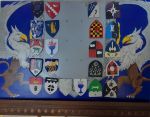
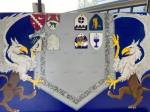
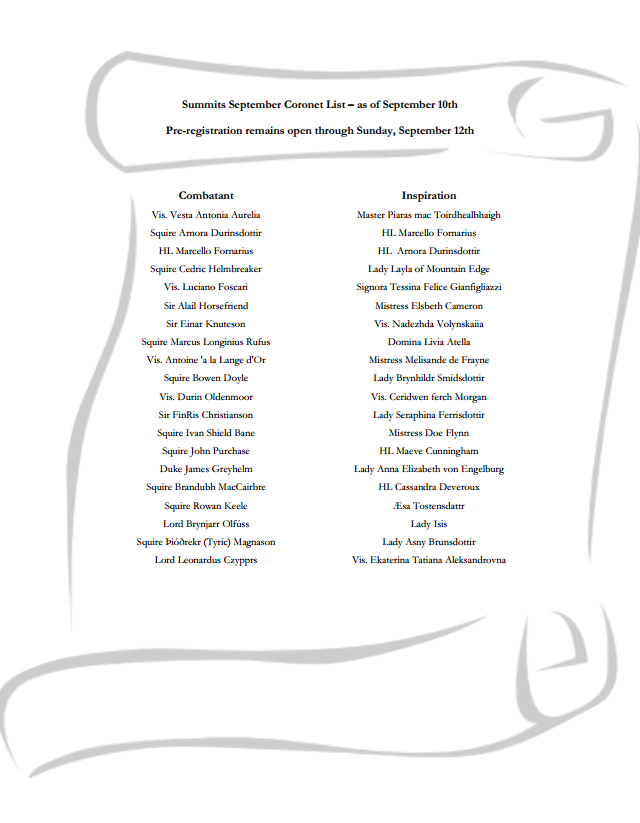
Combatants & Inspirations for Summits Coronet

Online Education

Other Educational Events

A Master List for finding classes, webinars and other things – https://moas.eastkingdom.org/list-of-online-webinars/?fbclid=IwAR20OE8b6vvYKvmwrqwpule27szarZ7EPV-8R72F1eV2CxcdmOXQhZf9ayk

10/1-10/3 2021 – Daigaku-Ryo: Pan-Asia University = Constantinople to Heiankyō 2021 – October 1, 2021 — October 3, 2021 – http://daigaku-ryou.org/
 Other Good Stuff

KWAS – The Known World Arts and Sciences Display is now live! Go to https://sites.google.com/view/kwasdisplay/home and click on “Display Hall” in the upper right corner to see the contributions.

Knowne Worlde Entertainment Guide – KWEG – Entertainment List – https://docs.google.com/spreadsheets/d/1xEZAwCca4IQham3TpxfWnonQscG668mmYgIMA18YZ-E/edit

SCA Iberia put out a whole bunch of videos from their most recent event! https://www.youtube.com/channel/UC2RmLGx_KiNzoFiM6GAu5Hg/videos

Dance footwork fundamentals: Piva! – The Creative Contessa – Learn how to do the piva, a primary step unit in fifteenth century Italian dance. Instruction includes primary source evidence for the step, exercises on doing the piva in different styles and mesure, and historical tidbits about quattrocento Italy.

Classes – 

Medieval(ish) on the Cheap Episode 2 // Dining with the Contessa – The Creative Contessa – Creating a medieval(ish)/Renaissance-(esque) tableware kit on a shoestring budget, including cheaposimilars and cheaporeplicas! Shopping tips and information on authentic medieval dining/production practices! A shopping guide for medieval recreationists who want to have the right look, but cannot invest in expensive historic replicas, with a focus on drinking, serving and eating vessels. We discuss extant archeological pieces and provide suggestions for alternatives that fit every budget. Flatwear (spoons/knives), tablecloths, and trenchers – all discussed! The perfect guide for thrifting for medieval items.

Making a net bag for a Roman Legionary – Sally Pointer – Step by step construction of a spiral net bag. This one is going to a Roman display but the same method makes excellent shopping and storage bags in any cordage.

The restoration of Astley Castle | The Landmark Trust – The Landmark Trust – In July 2012, the Landmark Trust opened the newly-restored Astley Castle near Nuneaton, Warwickshire to the public. The castle, which dates back to the 1200s, was damaged by fire in 1978 and had fallen beyond a normal conservation approach. This film shows how Landmark finally found a solution by inserting modern accommodation within the ancient walls.

priorattire – Another in the Dressing up series – this time an earlier medieval set, 12th century! enjoy!
please note, that as always, all comments that are rude, or simply do not add to the discussion and education, will be deleted. genuine remarks and questions etc are welcome and will be answered as far as I can catch up with them! 🙂
clothing etc by us – http://www.priorattire.co.uk

Early Week – Various plant tending & harvesting things got done. Anja worked on her sampler and some associated scissor bobs.

Cookery – I took a class this afternoon (9/11) on potatoes…. something that made me grin and shake my head was the response in Europe to them… feed ’em to pigs… they’re poisonous… only fit for barbarians… it’s all a conspiracy to kill us off…. Hmm….. sound familiar? …and muhgawd, there are potatoes that are poisonous (wild), but if you eat certain kinds of clay, you don’t get sick. <gleep> Them’s famine foods for fair! –

Eat like an ancient Roman by recreating bread from Pompeii https://www.popsci.com/diy/how-to-make-pompeii-bread/

Cobnut Cakehttps://britishfoodhistory.com/2021/09/07/cobnuts-filberts-hazelnuts-cobnut-cake/

Italian Cheese FrittersFRITTERS MADE WITH EGG WHITES, SIFTED FLOUR AND FRESH CHEESE Follow the directions and method described in the preceding recipe [Elderflower Fritters], but add neither milk nor elderflowers to these fritters. … Italian Cheese Fritters

Cleaning funky medieval glass flasks // The Contessa’s Quickies! – The Creative Contessa – How to clean gutterals/kuttrolfs/kutterolfs, etc. – glass flasks in use from Ancient Rome to the 17th century!

The Lost Episode of Tasting History: Prince Biskets – Tasting History with Max Miller

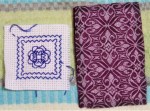
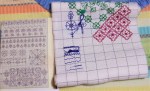
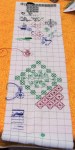
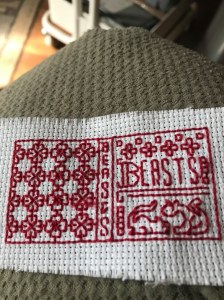
Sewing – On Tuesday (her weekend) Anja did a bit of embroidery, working on both the sampler and some scissor bob designs. There were lots of ends to trim, yet, and that happened Wednesday evening, with more sewing and photos on Saturday for Sewing workshop. The two students were mundanes, who wandered in a found the embroidery fascinating

Sampler

As of 9/12/21

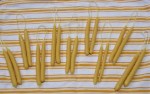
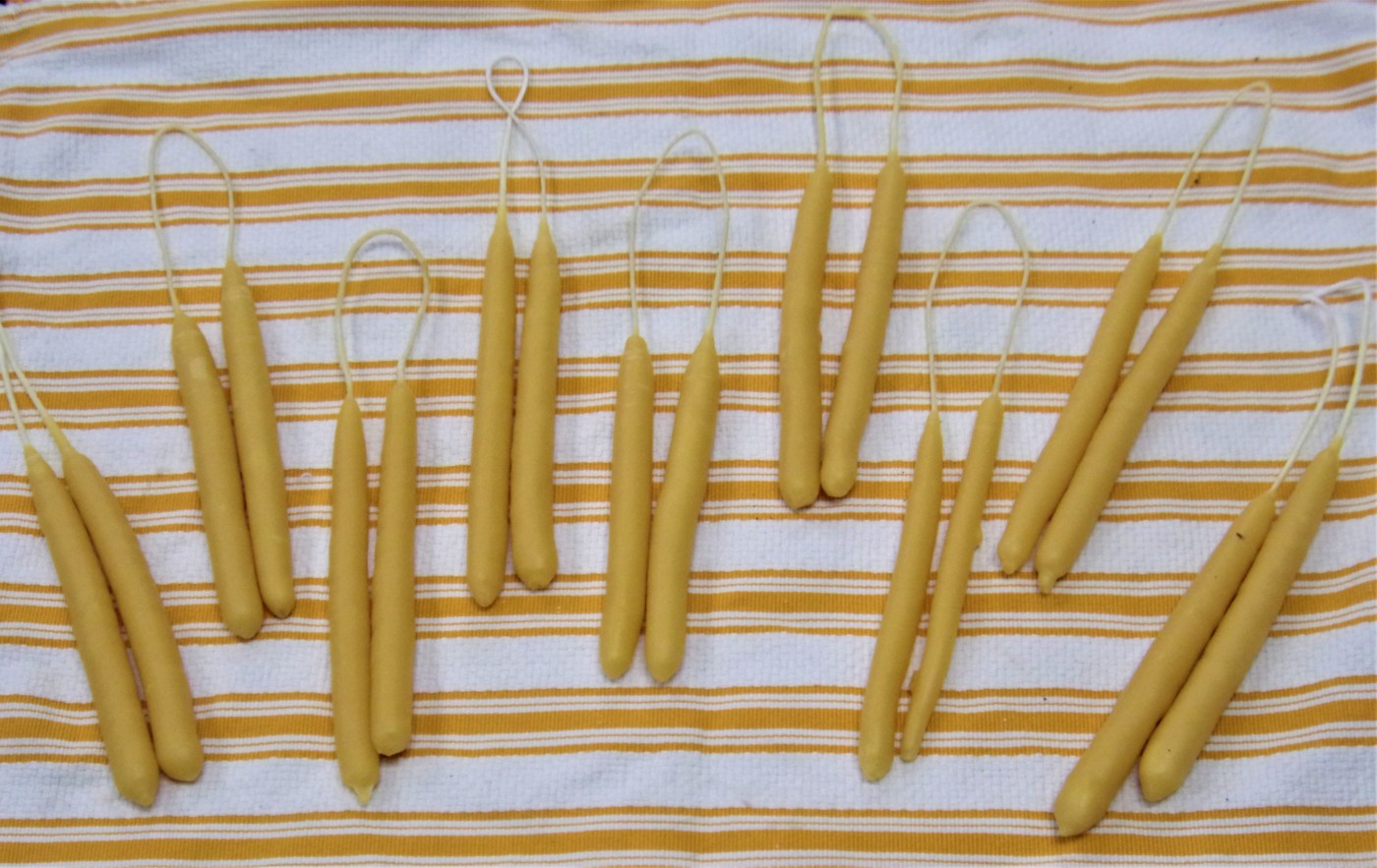
Herb Bunch – We spent time during the workshop looking at plants around the shop and the attendee went home with a couple of succulent starts. We also (finally) got some candles dipped.

gallery

Candle dipping

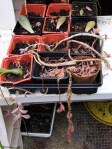
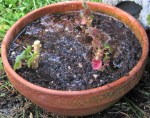
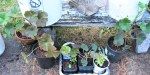
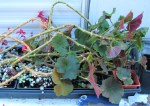
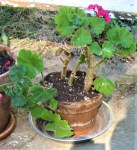
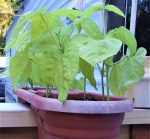
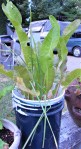
Window plants (mostly new starts and most of the photos through glass….)

Project Day – 

Helen Louise posted before the meetup started. She did some beautiful outfits for Shrewsbury… and then we didn’t do Shrewsbury.

Anja spent part of the afternoon on photos, but got together with Claire for about a hour of online chat, mostly about camping.

Isabeau says, “We spent the day putting back together a new to us pickup!” …and, “We just got a 1/4 of a cow and 1/2 a pig. 😋 it’s ALL frozen solid! 👀🤣😂🤣😂

Recipes

Confraria Gastronômica do Barão de GourmandiseNostradamus cherry jelly – (translation by google)

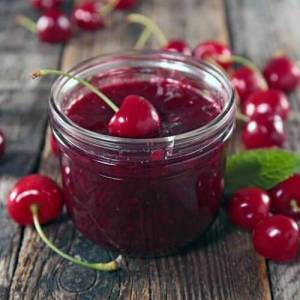
Yesterday I made a post about Nostradamus’s recipe book and magic potions (if you missed it, see via the link https://m.facebook.com/story.php?story_fbid=259111906215202&id=100063491832953). In it I quoted as an example the famous cherry jelly that the prophet of predictions recommended, and some people sent a message asking for more details …. So today the post is all about this.

Before he became famous for the prophecies, Nostradamus had already written the Traité des fardemens et confitures, which can be translated as a manual of cosmetics and canning. In this work he details the preparation of magic potions (many creams and fruit preserves that he ensures to satisfy the taste and have therapeutic properties.

One of them in particular receives a lot of praise from many experts, who treat it like the ′′ perfect ′′ jelly, which in this case is made with cherries.

The sweet is described in Nostradamus’s reception as ′′ excellent flavor, clear transparency and red glitter, like that of a thin ruby, with cherries kept preserved for a long time “. He adds that the jelly,” of excellence supreme can be offered to a king.”

Ingredients:

  • half a kilo of sugar
  • 2 kilos of cherries with stalk

Preparo:separe the most mature and prettiest cherries you can find and boot the stalk. Place the sugar in a metal pan and over it smash the cherries without stalk with your hands clean the pot to fire (high) and keep it in the boil until the volume is reduced by half, constantly messing with a clean spatula. stretch a clean cloth over an empty container and pour the contents of the boil. twist the cloth over the container to extract all the liquid from the mixture, make sure that only the lumps and cherries remain in the cloth. return the filtered liquid to the fire (low) and monitor the baking so that it doesn’t dry too much, mess with the spatula or with a silver spoon be careful not to boil too much so it doesn’t dry and burn better that the jelly gets a little ′′ raw ′′ ′′ than over-boiled as sugar tends to resect the mixture a bit during storage to know if the mixture reached the right point drop a shred on a cold surface like marble and observe the consistency. the drop must remain firm without moving or dripping to the sides and must show a red like that of a perfect Bordeaux red wine when you’re sure to have reached the point, pour the mixture into the compote vasilhams. When the mixture cools you’ll see that you made a perfect cherry jam, impossible to overcome in taste, excellence and beauty.

I add as a tip to Nostradamus’s comments for you to check out if it was successful: ′′ If you let the contents of the bottle be illuminated by the sun’s rays, you will see the beauty of a ruby. Jelly should be offered to a prince when he is annoyed with the heat so he can appreciate his delights and purity.”

Observation. The recipe does not indicate to include more cherries inside the jellies pot, but if you like them and have them, put some without lumps when the jelly is already in the pot, before closing.

Miscellaneous pix

Music – 𝔗𝔥𝔢 𝔇𝔞𝔫𝔱𝔢 𝔗𝔯𝔬𝔲𝔟𝔞𝔡𝔬𝔲𝔯𝔰 – 𝔐𝔲𝔰𝔦𝔠𝔞 𝔐𝔢𝔡𝔦𝔢𝔳𝔞𝔩𝔢 – Ensemble: Martin Best Medieval Ensemble
Album: The Dante Troubadours
Video: Ms. 8530
http://www.facebook.com/musicamedievale

2021 is celebrating Dante’s 700th year anniversary and many events dedicated to the poet are taking place here in Italy. Among the many audio publications dedicated to Dante, I chose this one by Martin Best, an English musician active in the field of early music since the 60s. In this work, Best and his ensemble have combined pieces of some troubadours mentioned in Dante’s works with some Italian Istampitte and Salterelli, contemporary with the poet.
For the images of the video I chose the version of the Divine Comedy of the Ms-8530 because images inside are simply beautiful, moreover the manuscript was made in the fourteenth century, the century in which Dante lived.


1 Lamento Di Tristano – Anon. Italy
2 Leu Chansoneta – Guiraut de Bornelh
3 Ges De Disnar – Bertran De Born
4 Si Us Quer Conselh, Bel Ami Alamanda – Guiraut de Bornelh
5 Chasutz Sui De Mal En Pena – Bertran De Born
6 Lo Ferm Voler – Arnaut Daniel
7 Chanson Do Lh Mot Son Plan E Prim – Arnaut Daniel
8 Can Vei La Lauzeta – Bernart de Ventadorn
9 Trotto – Anon. Italy
10 Pois Tornaz Sui En Proensa – Peire Vidal
11 Kalenda Maya – Raimbaut De Vaqueiras
12 Salterello – Anon. Italy
13 Non Allegra Cant Ni Critz – Gaucelm Faidit
14 Nuls Om En Ren – Aimeric de Belenoi
15 Ai, Lemozi – Bertran De Born
16 Lauda Novella – Anon. Italy
17 Ben An Mort – Folquet De Marseilla
18 Istampitta (Lamento di Tristano) – Anon. Italy

Martin Best Mediaeval Ensemble: Martin Best, Jremy Barlow, David Corkhill, Alastair McLachlan (intruments: pipe, tabor, rebec, guitarra moresca, finger cymbals, lute, timbrel, voice, dulcimer, oud, tambura, nakers, psaltery, bells)

This image has an empty alt attribute; its file name is download.png

Links

Everyday Magic in the Middle Ages https://www.medievalists.net/2021/09/everyday-magic-middle-ages/

13th Century Magical Merlin Manuscript Shares Original Legendhttps://www.ancient-origins.net/artifacts-ancient-writings/merlin-manuscript-0015772

Two Rare Swords found in 6th-century Underground Tunnel Tomb in Japan https://www.ancient-origins.net/news-history-archaeology/two-rare-swords-found-6th-century-underground-tunnel-tomb-japan-006879

Sheep to Stones to Sheep – https://www.medievalists.net/2021/09/legendary-daoist-master/?fbclid=IwAR3fA4PoJ1Njt6v2hQZ7d_ZQwPRK1uhxYj6kFdncny_YCd0Cc3pPUprF4W8

This image has an empty alt attribute; its file name is download.png

Video Links

1461: The Year That Shocked Medieval England | Medieval Dead | Chronicle – Chronicle – Medieval History Documentaries
On Palm Sunday 1461, the bloodiest battle in all of English history took place in a small Yorkshire town. The Battle of Towton saw over 28,000 people die during one of the largest snowstorms in British history. If these fallen soldiers could speak, what would they tell us? They would recount extraordinary tales of pagan rituals, plague, and the cruel land in which ordinary folk struggled just to stay alive. Now, centuries after they were buried, the medieval dead are about to rise from their graves. This series reveals true stories of medieval life by examining the skeletal remains that lie buried below the earth’s surface.

The EXHUMATION Of Anne Boleyn – TheUntoldPast – Anne Boleyn was Henry VIII’s ill-fated second Queen/wife who met her end inside the Tower of London on a scaffold facing a swordsman. Anne Boleyn’s execution is one of the most significant and shocking events in English History, with her downfall being expertly manipulated by Thomas Cromwell. Henry VIII had already had his eye set on Jane Seymour, and needed Anne out of the picture, so Cromwell imprisoned her and had Anne placed on trial from treason and other charges.
She was brutally executed on Tower Green in front of a small crowd, and then she was buried inside the Chapel of St Peter ad Vincula inside of the Tower’s walls. During the Victorian period, there was a significant amount of restoration carried out on the chapel, and they then exhumed the body of Anne Boleyn and doctors recorded what it was like. They noted it had a very small neck, and also she had died from the beheading during the Tudor period. Anne’s grave had also been disturbed by another burial.
She was then re-laid to rest inside of the Chapel, along with Henry VIII’s fifth wife Catherine of Aragon and a number of other Tudor nobles who were executed inside the Tower of London.
So join us today as we look at, ‘The Exhumation of Anne Boleyn.’

Funnies 

divider black grey greek key
Largesse, Gifts and Auction items
·         ASXLVII = 24
·         ASXLVIII = 88
·         ASXLIX = 794
·         ASL = 2138
·         ASLI = 731
·         ASLII = 304
·         ASLIII = 146
·         ASLIV & ASLV = 230
·         ASLVI = 177 plus 4 puppets, 4 powder fort, 8 cheese spice and 9 powder douce packets, 1 kiss-lock pouch, 9 tiny bobs, 7 pincushions, 3 pins, 3 snip case w/snips, lucet cords, 25 pouches for block-printing, 2 medium pouch, 4 small pouches, 12 bookmarkers, 14 unfinished pincushions, 1 sewing kit (except for bone needle), varnished stuff (124), 2 emery strawberries, 1 woolen spool-knit cord, 48 key bottle openers
Total as a Household = 4238 handed off


moving writing pen motif
In ministerio autem Somnium! Anja, graeca doctrina servus to House Capuchin
Page Created 9/6 & published 9/13/21 (C)M. Bartlett
Last updated 9/13/21

Activities through 9-5-21 Crown (not)

House Capuchin Shield2

For a holiday weekend, it was pretty quiet. I kept thinking how sad I was that Taran’s elevation wasn’t happening. No Shrewsbury. No coronet except for people who are required…. no invites to feasts and such. <sigh>

So we’re doing things on our own. We had a good project day and a good long video chat. Various projects got worked on during the week, although we didn’t have Herbs Workshop again. <sigh>

Project Day is now open for in-person meet-ups as well as in the Virtual Realm! Potluck this month will be Virtual and Real-World! Herbs and Sewing are ongoing, but not well-attended.
When will the rest of these open up in person? We’ll probably keep right on with the virtual ones side-by-side with the actual. 

  • Herb Bunch – At Ancient Light, Thursdays, 6am-9pm, starts this week!
  • Sewing Time – At Ancient Light, Saturdays, 3-5pm
  • Project Day – At Ancient Light, Sundays, 1 to 5pm
  • Cheese and Wine happens irregularly, usually announced with little notice on our Facebook group.
  • Next Virtual Potluck – 9/19, 10/17, 11/21, 12/19, 1/16
  • Winter Feast LVI, Norse Theme. Page here – https://housecapuchin.com/winter-feast/winter-feast-norse-feast-as-lvi-february-2022/ More pages coming!

Here is the direct Portfolio link which has all the past Project Day reports and various projects, original here:  https://housecapuchin.wordpress.com/portfolio/  and new one here:  https://housecapuchin2.wordpress.com/portfolio/ and number three is here: https://housecapuchin3.wordpress.com/portfolio/

Misc – This guy is working from outside of our period, but he’s talking about how and why interest and passion develop in us. – What We Hand Down To Our Children – Townsends

September 10-12 – Known World Cooks and Bards 2021 http://tilted-windmill.com/kwcb2021/

Other Educational Events

A Master List for finding classes, webinars and other things – https://moas.eastkingdom.org/list-of-online-webinars/?fbclid=IwAR20OE8b6vvYKvmwrqwpule27szarZ7EPV-8R72F1eV2CxcdmOXQhZf9ayk

10/1-10/3 2021 – Daigaku-Ryo: Pan-Asia University = Constantinople to Heiankyō 2021 – October 1, 2021 — October 3, 2021 – http://daigaku-ryou.org/

 Other Good Stuff

KWAS – The Known World Arts and Sciences Display is now live! Go to https://sites.google.com/view/kwasdisplay/home and click on “Display Hall” in the upper right corner to see the contributions.

Knowne Worlde Entertainment Guide – KWEG – Entertainment List – https://docs.google.com/spreadsheets/d/1xEZAwCca4IQham3TpxfWnonQscG668mmYgIMA18YZ-E/edit

SCA Iberia put out a whole bunch of videos from their most recent event! https://www.youtube.com/channel/UC2RmLGx_KiNzoFiM6GAu5Hg/videos

Dance Vids – History & Dance Steps of Il Torneo Amoroso – Lynne Fairchild – Il Torneo Amoroso was a late 16th century / early 17th century dance published in Cesare Negri’s dance treatise called Le Gratie d’Amore. Il Torneo Amoroso translates to English as the Love Tournament. This particular dance style was known as combat dance, which was popular during the Elizabethan age. This dance is danced by a couple (two people: one in the lord’s position and one in the lady’s position). It has courting, an argument, and the make-up after the argument.
Also, learn some history about this dance master, as well as different interpretations (and Italian to English translation) of Il Torneo Amoroso (the 7th dance in Negri’s treatise). Plus, instructions of how to do the various dance steps in this dance.

Classes – 

How Natural Perfumes Are Made In India Using A Centuries Old Method https://www.facebook.com/watch/?v=1779779619077701

Hurlbats: Late Medieval Throwing Axes – Lynne Fairchild –
The hurlbat, also known as a Wurfbeil, was a throwing axe used in the late Medieval period. The throwing cross was also known as a Wurfkreuz. The hurlbat was developed in the Germanies, in the late 14th century as a disposable cavalry weapon. However, over the next two centuries, the hurlbat slowly lost favor to the simpler “Wurfkreuz”, or throwing cross. The hurlbat was a throwing axe made entirely of metal, fitted with blades or spikes such that it should cut or pierce a target in any orientation when thrown. Historic examples of hurlbats that still exist range from the 13th to the 17th century. Hurlbats and Wurfkreuzen are wonderful tools for teaching thrown weapons to beginners in the SCA.
⏰ Timestamps ⏰
0:00 Demonstration
0:06 Introduction
0:26 Francesca (Francisca) axe / Viking axe
2:11 Goosewing axe
3:34 Early Hurlbats (Wurfbeil)
4:16 Later Hurlbats
5:10 Larger Hurlbats
5:38 Smaller Hurlbats
6:01 Throwing Crosses (Wurfkreuz)
7:40 Thrown weapons for beginners
8:24 Where to purchase hurlbats
9:52 More information

The Medieval University – Medievalists – It’s back to school time. This week, Danièle tells us about life in the medieval university. What did students learn, what was expected of them, and how they really behaved.

Hallstatt 123 – Elewys of Finchingefeld – How to weave a gorgeous tablet weaving pattern from 500 BC Austria.  Several pieces of tablet weaving were found in a salt mine in Austria and have been recreated by expert tablet weavers.  I will show you how easy it is to re-create this pattern.

Blog link:  http://ladyelewys.carpevinumpdx.com

Nile Floods and Mamluk Farmers – Medievalists – Have you ever wondered what life was like for Mamluk farmers? In this episode, Lucie Laumonier talks with Omar Abdel-Ghaffar, a PhD candidate at Harvard University about Nile floods, landscapes and village communities in late medieval Egypt.

Early Week – Not much going on except for watering and tending plants. Tuesday evening Anja started some embroidery and did a lot of mundane sewing over the next two days.

Pork roast with onions, mushrooms and caraway

Cookery – Since we were having a mini-potluck on Sunday, Anja started planning. She was figuring on a nibbles tray, then a pork roast with casik and a mixed veg bowl. Potted cheese was on the agenda, too, so the supplies were bought on Friday (we had the shallots) …and things went sideways on Saturday and then the expected company couldn’t come, after all… The pork roast got cooked, anyway.

White Garlic Sauce by Mistress Leoba of Lecelade https://leobalecelad.wordpress.com/2021/09/06/white-garlic-sauce/

T2-1. Berenjenas rellenas – Fogones en la Historia – Esta receta del siglo XVII te dejará preso el corazón, ya que era una de las verduras de moda. Stuffed aubergines – Stoves in History – This 17th century recipe will leave your heart captive, as it was one of the fashionable vegetables.

Ancient Roman Peas – Historical Italian Cooking – Today we prepare ancient Roman peas from the 5th book of De Re Coquinaria, dedicated to legumes, a cold dish perfect for summer.

Ingredients:

  • dried peas
  • olive oil
  • white wine vinegar
  • eggs
  • onions
  • salt

For more info about this recipe check out our blog: https://historicalitaliancooking.home.blog/english/recipes/ancient-roman-peas/

A Very Versatile Spice // Saffron!!! – The Creative Contessa – A compact video on saffron’s history and uses and where to buy quality saffron cheaply! Learn how to use this amazing spice in modern cooking and how it has been used from ancient times through the middle ages and the modern day. Fabric dyestuff, manuscript illumination, medicine, perfume, food dye, flavor giver – saffron is an amazing spice with a fascinating history. Also, an unboxing of bulk saffron ordered from Costco, with an exploration of the active ingredients of quality saffron and the properties you should look for when purchasing.
Edit: It has been brought to our attention that we said stamen when it should have been stigma! Thank you for helping us keep facts straight!

Sewing – The mending pile is decimated. Some embroidery got started Tuesday evening and then during workshop time (nobody but Anja). More done in chat on Sunday. Pictures didn’t turn out. 😦

Contessa Quickies: Medieval Needle Case – The Creative Contessa – #shorts – Objects from daily medieval life – medieval needle cases!

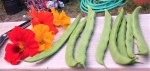
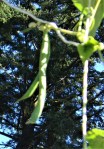
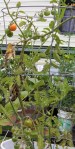
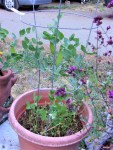
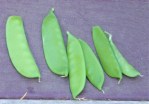
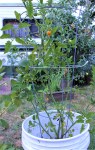
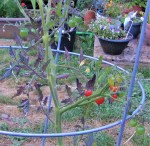
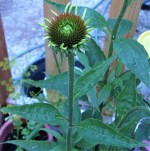
Herb Bunch – Mostly watering this week, but we have achieved beans! Not that the pictures are any good. It’s difficult to get pix to focus…

We also are starting to collect seeds, not just angelica and calendula but garlic and fairy fishing poles

Project Day – Chat started late, but ran until 6:30!

Arlys says, “To borrow Ellen’s phrase–a loverly box of Yum! (referring to the largesse pic that was used for the event copy) I’ll try to catch up later. Finished the IB book cover embroidery–now we’re at page folding, which is really boring! Here’s the finished embroidery. Cuz kitties!!”

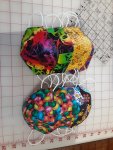
Helen Louise – Just making masks and surgery caps for a friend today…
Anja – Direly necessary these days.
Helen Louise – surgery caps are expensive to buy, so I really don’t mind making her a batch.
Anja – Those’re nice fabrics, too, something you often don’t see.

Amy DeWilde – Still working on pot holders. Bright orange is on the needles now. Have purple and tangerine scans to work on. One scan makes 3 pot holders with some peaches and cream left over.

The Tudor Travel Guide – posted on Facebook on 9/5/21

Today is the anniversary of the death of Katherine Parr. In 1548, at the age of 36, Katherine died at Sudeley Castle Having been delivered of a girl, who the couple named, Mary, on 31 August the dowager queen soon showed the deadly signs of the dreaded puerperal fever.

Katherine’s body was wrapped in cere and waxed cloth, and put into a lead envelope for burial. The only English queen to be buried on private land, she lies at peace within the heart of the chapel at Sudeley Castle, in Gloucestershire. Sadly, her repose has not always been so peaceful. After a lifetime of drama and the desecration of her body after death, Katherine now rests ‘neath starry skies’.

Her presence, however, is still felt at Sudeley. Along with the hauntingly beautiful remains of Richard III’s original state apartments, the chapel, which was rebuilt during the nineteenth century, contains a beautiful tomb that commemorates Katherine’s burial at Sudeley. What is left of her remains (which is not much by all accounts!) are interred in the family vault beneath the floor of the chapel.

To find out more about the life and death of this remarkable woman, head over to a blog I wrote a few years ago. It is one of my most popular blogs, probably on account of the gruesome story of Katherine’s afterlife! 😱 – https://thetudortravelguide.com/2018/11/24/sudeley-castle-and-the-remarkable-life-and-death-of-katherine-parr/

Music – 𝔊𝔲𝔦𝔩𝔩𝔞𝔲𝔪𝔢 𝔡𝔢 𝔐𝔞𝔠𝔥𝔞𝔲𝔱 – Motets, Ballades, Virelais, Rondeaux – 𝔐𝔲𝔰𝔦𝔠𝔞 𝔐𝔢𝔡𝔦𝔢𝔳𝔞𝔩𝔢
Ensemble: The Collegium Musicum Of The University Of Illinois
Album: Motets, Ballades, Virelais, Rondeaux
Video: Ms. Français 1586 (XIVth cent.)
http://www.facebook.com/musicamedievale

This album was recorded in 1956 and it’s probably one of the earliest audio recordings of medieval music material.
It is part of the vast discography of Thomas Binkley (1932-1995): musician, musicologist and professor of the Schola Cantorum Basilensis, playing the lute in this record. The songs of this old recording are extremely fascinating probably thanks to the style of the singers and the good taste in production, really far from the modern, pompous and glossy “plastic” productions.
The songs are all by Guillaume de Machaut, who wrote a lot of music of all genres. We have: Rondeau, a vocal musical form that developed originally as monophonic music (in the 13th century) and then as polyphonic music (in the 14th century); the Motet, a vocal musical composition of highly diverse form and style. The late 13th century theorist Johannes de Grocheo believed that the motet was “not to be celebrated in the presence of common people, because they do not notice its subtlety, nor are they delighted in hearing it, but in the presence of the educated and of those who are seeking out subtleties in the arts”; the Ballade, “dancing songs” widely used in popular poetry and song; Lai, a narrative lyric poem written in octosyllabic couplets that often deals with tales of adventure and romance and Virelai, a form of song, usually with three stanzas and a refrain that is stated before of the first verse and again after each.
I advise anyone wishing to deepen the fixed forms of medieval music, only sketched out above, to do a little research on the internet.

1 Motet “Pour Quoy Me Bat Mes Maris? Lasse! Comment oublieray”
2 Ballade “Ma Cherie Dame”
3 Ballade “Tres Douce Dame Que J’Aour”
4 Virelai “Tres Bonne Et Belle”
5 Rondeau “Douce Dame, Tant Com Vivray”
6 Ballade “De Toutes Flours”
7 Virelai “Douce Dame Jolie”
8 Motet “Je Sui Cilz”
9 Rondeau “Rose, Liz, Printemps, Verdure”
10 Ballade “Mes Espiris”
11 Lai “Loyaute, Que Point Ne Delay”
12 Ballade “Amours Me Fait Desirer”
13 Virelai “Se Je Souspir Parfondement”
14 Virelai “Plus Dure Que Un Dyamant”

Composed By – Guillaume de Machaut
Directed By, Recorder – George Hunter
Contralto Vocals – Jantina Noorman
Lute – Thomas Binkley
Tenor Vocals – Richard Krause
Vielle – Jack Hunter, Sterling Jones

This image has an empty alt attribute; its file name is download.png

Links

This image has an empty alt attribute; its file name is download.png

Video Links

  • Making a dead-eye – https://www.facebook.com/125068434229063/videos/2098172280490676
  • How to Build a Wooden Boat – Dave LeBlanc sent me this video about how to build a small wooden boat. I enjoyed it so much I thought you might also. Lots of interesting tricks to be gleaned. He did not mention where he found it or who it is by, so if you have any info on that I would like to update the post with proper credits. (So far we have one suggestion this may be the work of Silje Ensby, that brilliant filmmaker who does so much good work with the traditional boat builders at Hardanger fartøyvernsenter. @hardangermaritime) – https://www.facebook.com/125068434229063/videos/223455482918953/

Deadeyes

Funnies 

divider black grey greek key

Largesse, Gifts and Auction items
·         ASXLVII = 24
·         ASXLVIII = 88
·         ASXLIX = 794
·         ASL = 2138
·         ASLI = 731
·         ASLII = 304
·         ASLIII = 146
·         ASLIV & ASLV = 230
·         ASLVI = 176+1doll plus 4 puppets, 4 powder fort, 8 cheese spice and 9 powder douce packets, 1 kiss-lock pouch, 9 tiny bobs, 7 pincushions, 3 pins, 3 snip case w/snips, lucet cords, 25 pouches for block-printing, 2 medium pouch, 4 small pouches, 12 bookmarkers, 14 unfinished pincushions, 1 sewing kit (except for bone needle), varnished stuff (124), 2 emery strawberries, 1 woolen spool-knit cord, 48 key bottle openers
Total as a Household = 4237 handed off


moving writing pen motif
In ministerio autem Somnium! Anja, graeca doctrina servus to House Capuchin
Page Created 8/30/21 & published 9/6/21 (C)M. Bartlett
Last updated 9/6/21

Activities through 8-29-21

House Capuchin Shield2

Sorry that this is so late! I’ve been spending time on putting together what we have for feast pages. There’s a lot more to come, to put it mildly.

This week was mostly plants, herbs and cookery until Sunday’s Project Day, when we had a really good session (online) about clothing and foods, now that we have a theme and a date.

Project Day is now open for in-person meet-ups as well as in the Virtual Realm! Potluck this month will be Virtual and Real-World! Herbs Workshop is Thursday evening 7-9. Masks are required. All other meetings are on hold for the moment.
When will the rest of these open up in person? We’ll probably keep right on with the virtual ones side-by-side with the actual. 

  • Herb Bunch – At Ancient Light, Thursdays, 6am-9pm, starts this week!
  • Sewing Time – At Ancient Light, Saturdays, 3-5pm
  • Project Day – At Ancient Light, Sundays, 1 to 5pm
  • Cheese and Wine happens irregularly, usually announced with little notice on our Facebook group.
  • Next Virtual Potluck – 9/19, 10/17, 11/21, 12/19, 1/16
  • Winter Feast LVI, Norse Theme. Page here – https://housecapuchin.com/winter-feast/winter-feast-norse-feast-as-lvi-february-2022/ More pages coming!

Here is the direct Portfolio link which has all the past Project Day reports and various projects, original here:  https://housecapuchin.wordpress.com/portfolio/  and new one here:  https://housecapuchin2.wordpress.com/portfolio/ and number three is here: https://housecapuchin3.wordpress.com/portfolio/

It looks like Winter Feast is on! We’re going to do a Norse, viking-era theme this time. The main page is here – https://housecapuchin.com/winter-feast/winter-feast-norse-feast-as-lvi-february-2022/

with two more pages, one of costume here – https://wordpress.com/page/housecapuchin.com/18739

… and one for foods here – https://wordpress.com/page/housecapuchin.com/18748

More pages coming!

Online Education

Pennsic University – Links are only up through August! https://www.youtube.com/channel/UCcPqyAoBz-iFNF3T-kQt0eQ/videos

Other Educational Events

A Master List for finding classes, webinars and other things – https://moas.eastkingdom.org/list-of-online-webinars/?fbclid=IwAR20OE8b6vvYKvmwrqwpule27szarZ7EPV-8R72F1eV2CxcdmOXQhZf9ayk

10/1-10/3 2021 – Daigaku-Ryo: Pan-Asia University = Constantinople to Heiankyō 2021 – October 1, 2021 — October 3, 2021 – http://daigaku-ryou.org/

 Other Good Stuff

KWAS – The Known World Arts and Sciences Display is now live! Go to https://sites.google.com/view/kwasdisplay/home and click on “Display Hall” in the upper right corner to see the contributions.

Knowne Worlde Entertainment Guide – KWEG – Entertainment List – https://docs.google.com/spreadsheets/d/1xEZAwCca4IQham3TpxfWnonQscG668mmYgIMA18YZ-E/edit

SCA Iberia put out a whole bunch of videos from their most recent event! https://www.youtube.com/channel/UC2RmLGx_KiNzoFiM6GAu5Hg/videos

Classes – 

Box padlock and how it works. – Sven Skildbiter – Box padlock and how it works. Using the box padlock to lock a hasp on an Oseberg 178 replica chest. – https://www.youtube.com/watch?v=7FnhYjQHkXU&t=46s

Dante’s Florence – Medievalists – We travel to medieval Florence with the famous writer Dante Alighieri. Elisabeth Trischler, a PhD candidate at the University of Leeds, talks with Lucie Laumonier about the city of Florence and how it inspired Dante’s Divine Comedy.

Baskets in History | Medieval & Renaissance Baskets – Lynne Fairchild – Learn about the different types of baskets and which basket types were the most popular in medieval Europe. What different materials were used for making baskets?

Early Week – Boxing up the doll to send out and some mundane sewing is about all this week.

Cookery – Various foods happened with the farmer’s market purchases. On Tuesday it was curd cakes with a bit of lovage. On Friday some sauteed veg, but also a period-style “green soup”. We have shallots for potted cheese! Sunday evening we tried a recipe for rice fritters, but afterwards got told by the translator that “dry and grind” doesn’t mean rice flour, but soggy rice. Hmm… They were good through. Recipes below.

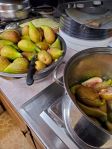
We were gifted some green figs. Cheese this week!

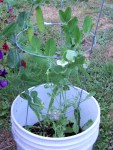
…and the bean trellis is done and there are tiny beans on the vines!

If you haven’t looked at Eleanor de Bolton’s Cardoon Rennet Cheese, you should! https://m.facebook.com/eleanor.debolton.5/albums/1006820773491916/

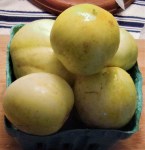
Cooking White Gourds and Yellow Cucumbers, 16th cent French recipe – Eleanor Bolton – I had a bunch of over ripe cucumbers, so tried out a 16th cent recipe from France for ‘Yellow Cucumbers’. Pretty darn tasty. And of course had to try the accompanying white gourd recipe. Big thank you! To Liz for her cooking guidance ❤️

In Search of Medieval Breakfast (Making Let Lardes) – Monk’s Modern Medieval Cuisine – Dr Christopher Monk explores what medieval folk may have eaten for breakfast, then cooks a fourteenth-century dish that has become a favourite for his own breakfast?

How to Make a MEDIEVAL TRENCHER – Torte Bread – Tasting History with Max Miller – Before plates, people ate on trenchers, a thick slice of stale bread. Today, after a rant about Medieval Times, I make medieval trenchers and look at the history of baking bread in the middle ages.

Links to ingredients:
Bob’s Red Mill Stone Ground Whole Wheat Flour – https://amzn.to/2xSRWvM
Bob’s Red Mill Dark Rye Flour – https://amzn.to/2UQ4Y6d
Bob’s Red Mill Oat Flour – https://amzn.to/3aTjTSu

TORTE BREAD (For Trenchers)
INGREDIENTS

  • 250g Stone Ground Whole Wheat Flour
  • 125g Dark Rye
  • 125g Oat Flour
  • 2.5 tsp Dry Yeast (1 packet)
  • 2.5 cups warm water
    (Instead of Dark Rye and Oat Flour, you can use 250g of any other whole wheat flour you wish)

METHOD

  1. Mix ingredients together in a large bowl and work to bring together into a ragged dough.
  2. Place dough on a lightly floured surface and knead for 15 – 20 minutes (10 minutes in a stand mixer).
  3. Place dough in a lightly oiled bowl and allow to rise for an hour+ (dough will not double in size but should puff up).
  4. Knock air out of the dough and form into a ball. Allow to puff up for 20 minutes.
  5. Place a baking sheet into the oven and preheat to 450F.
  6. Score the loaf and put it in the oven for 10 minutes, then drop the temperature to 375F for 20 minutes or until the loaf is baked through.
  7. Remove the loaf from the oven and allow to cool completely. Once cool, do not wrap the loaf, but leave out to become stale (3-5 days). Then slice horizontally into 1-2 inch thick trenchers. This loaf should make 2 to 4.

Sewing – Mostly mundane stuff…. Trying to find enough muslin to make a new barbette and fillet. I know I had it at one point, but it’s gotten moved. No one showed up for workshop.

Prior Attire Historical Costuming Portfolio: Medieval – priorattire – A portfolio of images representing the work we have done over the last few years – from Viking to late 15th century. Images show mostly commissioned work, but there are also a few of my own garments or stock items shown. we trade at major UK re-enactment markets, but items can be commissioned all year round – drop us a line! – http://www.priorattire.co.uk

7 Tips for Making Children’s Historical Clothing Last Longer + a Bonus | Youth Garb – Lynne Fairchild – In history, children were dressed to look like miniature adults. However, with historical reenactment, it sometimes seems daunting to make a nice historical ensemble for a child, just to have them immediately grow out of the ensemble. Here are 7 tips of mine for making your children’s garb last longer (through a growth spurt or two). This includes tips for Viking clothing, medieval tunic dresses, and 16th century skirts.

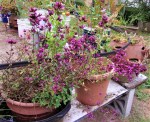
Herb Bunch – Various things are ripening fast and the fall raspberry crop is starting. The farmer’s market yielded some good stuff this week again. No workshop this week….

8/24 (Tuesday)

8/25 – Our garden and farmer’s market

Harvest 8/26-9

Project Day – Two people chimed in early

Amy DeWilde – Still having fun working on pot holders, orange is the color of the day. Bright orange.

Arlys – Making an itty bitty bookcover for an itty bitty book which will be 1.5″ x 1.5″ and filled with itty bitty miniatures. I haven’t decided how thick it will be. The back cover and spine are finished; the cover will have the title and embellishments. This is the cover. Folded, it’s 1 1/2″ sq. Even has the title on the spine.

…and since the vote went with Norse, Viking era, for the feast theme and big discussion about clothing happened. I’m collecting resources for a page on this. You can find those links below. 

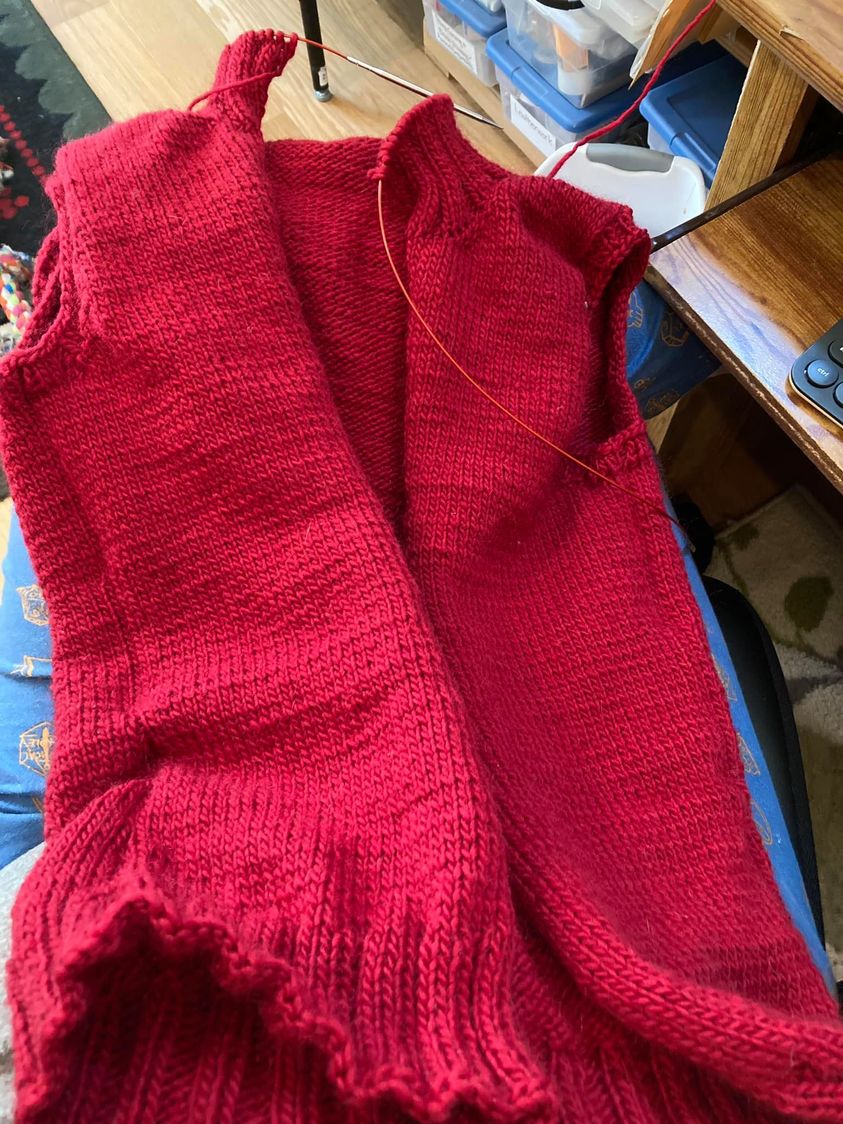
Claire o’Tarran – Doing the same thing I’ve been doing for weeks. Working on mom’s Christmas present (which was supposed to be a birthday present but I slacked off on starting it last winter due to being intimidated by adult sweaters and did other things). It’s a vest. At this point I must finish collar (9” and folded so double thick), button bands and pockets. I think I can definitely get it done soon, which is good, because there other Christmas knitting on the list.

Recipes

Two egg dishes… one from memory and one from the Heidelberg Codex Pal Germ 551

Egg & Cheese dish

  • Butter
  • 4 eggs
  • double handful of grated cheese
  • 1/2 cup of cottage cheese
  • Spring onion or chopped onion
  • Dollop of cream
  • Salt & pepper to taste

Method

  1. Melt butter in an oven-safe dish. Pour off excess and set aside.
  2. Mix eggs with cream, cottage cheese, salt and spring onion.
  3. Pour into baking dish.
  4. Add grated cheese. Press down into egg. If it looks like you need more cheese, so for it. As long as it’s not sticking up above the egg….
  5. Pour some reserved butter on the top.
  6. Bake at 350 until a thermometer reads at least 165 in the center. The center should be set and not runny.
  7. Serve warm or cold.

57 Of rice fritters Redaction – Makes 2

  • 2 medium eggs
  • 6 TBSP rice flour
  • Salt and pepper to taste
  • Garlic powder for savory or cinnamon or nutmeg for sweet.
  • Bacon grease or butter for frying (about 2 TBSP per cake)

Method

  1. Put the eggs in a bowl and stir with a fork.
  2. Add spices and stir
  3. Stir in rice flour. If you use larger eggs you will need more flour. My guess is ½ again as much. You’re looking for a not-too-stiff batter.
  4. Melt butter or bacon grease in a pan.
  5. Add ½ the batter and press down.
  6. Let it cook until light brown on the bottom and flip.
  7. Let cook until light brown on the other side and serve.
  8. Repeat with the other ½ of the batter.
  9. Use like a trencher for savory or strew with sugar and add a pat of butter for sweet.

Note – Serve these warm. They get hard when cold. Re-heating turns them into rocks.

57 Of rice (fritters) – Heidelberg Cod Pal Germ 551

If you would make a dish of rice, boil the rice in water and do not let boil strongly (vast syedenn). Dry it nicely and put into into a grinding bowl (reib scherbenn). Grind raw egg with it and do not make it too thin. Put fat into a pan and pass it (the rice) through your hand like a fried dough fritter (gepachenn kuchenn), and when it is fried, put sugar on it.

….and after consulting with the translator, it should have been wet, partly cooked rice…..

Miscellaneous pix

Sons of Norway District 1 – Sharing Norwegian Heritage and Culture – From Carol E Skog – Sons of Norway Vennekretsen USA Enthusiastic, am sharing information concerning a friend of mine’s latest project, Icelandic Captain Gunnar Marel Eggertsson’s new ‘Iceland Knarr’ Project.

Gunnar is a direct descendent to Leif Ericksson, Eric the Red’s son. Gunnar will build a full sized replica of the ‘Hedeby 3 Knarr’ Viking merchant ship, discovered in the Hedeby Harbor in Schleswig-Holstein, Germany in 1980.

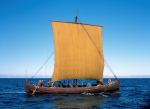
Knarr is the Old Norse term for a type of ship built for long sea voyages and used during the Viking expansion. The knarr was a cargo ship; the hull was wider, deeper and shorter than a longship, and could take more cargo and be operated by smaller crews. They were built with a length of about (54 ft), a beam of (15 ft), and a hull capable of carrying up to 24 tons. It was primarily used to transport trading goods like walrus ivory, wool, timber, wheat, furs and pelts, armor, slaves, honey, and weapons. It was also used to supply food, drink, weapons and armor to warriors and traders along their journeys across the Baltic, the Mediterranean and other seas. Knarrs routinely crossed the North Atlantic carrying livestock such as sheep and horses, and stores to Norse settlements in Iceland, Greenland and Vinland as well as trading goods to trading posts in the British Isles, Continental Europe and possibly the Middle East. They may have been used in colonizing, although a similar small cargo vessel (the byrthing) is another possibility.

Only one well-preserved knarr has been found, discovered in a shallow channel in Roskilde Fjord in Denmark in 1962. Known as Skuldelev 1, it was placed among two warships, a Baltic trader, and a ferryboat. Archaeologists believe that the ships were placed there to block the channel against enemy raiders. Today all five ships, known as the Skuldelev ships, are exhibited at the Viking Ship Museum in Roskilde.

Gunnar shall hand build his ‘Iceland Knarr’ with same materials and the Scandinavian clinker tradition (lapstrake), the same ancient Norse manner the ‘Hedeby 3 Knarr’ Viking merchant ship was constructed. Historically, Knarr ships were the largest cargo carrier merchant Viking ships. Knarr’s were exceptionally sea-worthy, capable of traveling 75 miles (121 km) per day. Ancient Norse Knarr ships were built in Hedeby, an important Danish Viking Age trading area, during 8th to 11th centuries. Hedeby is located on the southern end of the Jutland Peninsula, known now as modern Schleswig-Holstein, Germany.

Iceland’s history reveals Norse Knarr ships transported about 15,000 Norse settlers during 874-930, the ‘Icelandic Age of Settlement.’ Gunnar plans on building ‘Iceland Knarr’ in Hedeby, the historically important area of Viking Knarr shipbuilding. When Captain Gunnar Marel Eggertsson’s ‘Iceland Knarr ship is completed, he plans on sailing the historic journey from Hedeby to Iceland without any modern navigation tools. Gunnar will prove the Knarr’s excellent sailing capabilities in difficult oceans. Gunnar an experienced Captain, sailed the Norwegian Gaia Viking ship for a 14 month journey 1991-92 from Norway, past Iceland to North America and down it’s coast to South America’s Rio de Janeiro, Brazil. Gunnar Marel raised by a few generations of Shipwrights from his father’s lineage has an extensive knowledge of Viking Ship history. He is a Master Ship Builder as well as a competent Viking ship builder.

In 1996 he began building a replica of the 9th century Gokstad, a perfectly preserved Viking Ship in Gokstad near Sandefjord, Norway. The Gokstad ship was excavated from a Viking Burial mound. Gunnar used traditional Norse methods hand building his replica Gokstad Viking ship, naming his ship, “Islendingur.” When completed he proved its’ sea worthiness, sailing it to and around the British Isles, back to Iceland.

After which, Captain Gunnar Marel Eggertson sailed ‘Islendingur’ year 2000 along the same route from Iceland to North America, commemorating Leifur Eiriksson’s historical journey, year 1,000. Gunnar’s direct 33rd generation ancestor on his mother’s lineage, Þjóðhildur Jörundardóttir was Leifur Eiriksson’s mother. “Islendingur’ is centrally exhibited in Vikingaheimer (Viking World) Museum in Iceland.

Iceland’s history reveals Leifur Eiriksson would have sailed a Viking merchant Knarr Ship to North America, as Knarr merchant ships are deeper and wider than other Viking ships. Knarr’s are able to carry a crew of 10-20 people, livestock and their goods. Knarr’s were the Viking ship, important in the transportation of Norse people doing Iceland’s settlement 874-930.

Music – Murmur Mori – Joi, Solatz e Dolor (FULL ALBUM) – 𝔐𝔲𝔰𝔦𝔠𝔞 𝔐𝔢𝔡𝔦𝔢𝔳𝔞𝔩𝔢

This image has an empty alt attribute; its file name is download.png

Links

Why battles could be so decisive in the Middle Ages https://www.medievalists.net/2019/08/why-battles-could-be-so-decisive-in-the-middle-ages/

Transcending Time at the Getty Museum – An upcoming exhibition explores the patterns of medieval patronage through books of hours – https://blogs.getty.edu/iris/transcending-time-at-the-getty-museum/

This image has an empty alt attribute; its file name is download.png

Video Links

Dressing up an Elizabethan lady 1570-80 – priorattire – https://www.youtube.com/watch?v=HDZXA6IWkIo&t=3s

Sisters Interview with HL Jadwiga, An Tir – rauokinn

New and Updated Pages

Basic Winter Feast LVI page – https://housecapuchin.com/winter-feast/winter-feast-norse-feast-as-lvi-february-2022/

Funnies 

divider black grey greek key

Largesse, Gifts and Auction items
·         ASXLVII = 24
·         ASXLVIII = 88
·         ASXLIX = 794
·         ASL = 2138
·         ASLI = 731
·         ASLII = 304
·         ASLIII = 146
·         ASLIV & ASLV = 230
·         ASLVI = 176+1doll plus 4 puppets, 4 powder fort, 8 cheese spice and 9 powder douce packets, 1 kiss-lock pouch, 9 tiny bobs, 7 pincushions, 3 pins, 3 snip case w/snips, lucet cords, 25 pouches for block-printing, 2 medium pouch, 4 small pouches, 12 bookmarkers, 14 unfinished pincushions, 1 sewing kit (except for bone needle), varnished stuff (124), 2 emery strawberries, 1 woolen spool-knit cord, 48 key bottle openers
Total as a Household = 4237 handed off


moving writing pen motif
In ministerio autem Somnium! Anja, graeca doctrina servus to House Capuchin
Page Created 8/22/21 & published 8/30/21 (C)M. Bartlett
Last updated 8/29/21

Activities through 8-22-21

Still not very many people coming to in-person. We may shut those down again, except for Herbs. This surge of the Plague is worrying. Lots of links this week. The little slavic traditional doll is finished. The bean trellis is partway up. …and Duchess Lao’s Tales of the Monkey King have been digitized! They found some old tapes and they’re starting to put them up on Youtube!

We have a volunteer to be “‘crat” for the Feast, so we’re working on a theme. So far it’s 5 votes for Norse, two for Italian, one for German Renn and one for Anglo-Saxon.

  • Herb Bunch – At Ancient Light, Thursdays, 6am-9pm, starts this week!
  • Sewing Time – At Ancient Light, Saturdays, 3-5pm
  • Project Day – At Ancient Light, Sundays, 1 to 5pm
  • Cheese and Wine happens irregularly, usually announced with little notice on our Facebook group.
  • Next Virtual Potluck – 9/19, 10/17, 11/21, 12/19, 1/16
  • Winter Feast 2022 is looking to happen. Updates soon!

Here is the direct Portfolio link which has all the past Project Day reports and various projects, original here:  https://housecapuchin.wordpress.com/portfolio/  and new one here:  https://housecapuchin2.wordpress.com/portfolio/ and number three is here: https://housecapuchin3.wordpress.com/portfolio/

Misc – Duchess Lao! – Tales of the Monkey King: Part 1 – Heather Daveno – In the mid 1980s, Heather Daveno presented a seven hour, One Monkey Show in the style of a pre-Chinese opera. Portions of the live performance were later recreated at KLTV Public Access in Longview WA. In May-June 2021, the tapes were discovered and remastered into digital.

Online Education

Pennsic University – Links are only up through August! https://www.youtube.com/channel/UCcPqyAoBz-iFNF3T-kQt0eQ/videos

Other Educational Events

A Master List for finding classes, webinars and other things – https://moas.eastkingdom.org/list-of-online-webinars/?fbclid=IwAR20OE8b6vvYKvmwrqwpule27szarZ7EPV-8R72F1eV2CxcdmOXQhZf9ayk

10/1-10/3 2021 – Daigaku-Ryo: Pan-Asia University = Constantinople to Heiankyō 2021 – October 1, 2021 — October 3, 2021 – http://daigaku-ryou.org/

 Other Good Stuff

KWAS – The Known World Arts and Sciences Display is now live! Go to https://sites.google.com/view/kwasdisplay/home and click on “Display Hall” in the upper right corner to see the contributions.

Knowne Worlde Entertainment Guide – KWEG – Entertainment List – https://docs.google.com/spreadsheets/d/1xEZAwCca4IQham3TpxfWnonQscG668mmYgIMA18YZ-E/edit

SCA Iberia put out a whole bunch of videos from their most recent event! https://www.youtube.com/channel/UC2RmLGx_KiNzoFiM6GAu5Hg/videos

Dance Vids – Medieval dance teaching – Saltus Gladii – Medieval dance in medieval castle performed by Saltus Gladii.

Classes – “It is a little Book, as you see, of no great bulk, yet a brief of the whole world, and a whole language: full of Pictures, Names, and Descriptions of things. The Pictures are the representation of all visible things, (to which also things invisible are reduced after their fashion) of the whole world. Which such Book, and in such a dress may (I hope) serve To entice witty children to it, that they may not conceit a torment to be in the school, but dainty fare. For it is apparent, that children (even from their infancy almost) are delighted with Pictures, and willingly please their eyes with these lights: And it will be very well worth the pains to have once brought it to pass, that scare-crows may be taken away out of Wisdom’s Gardens.” – Bohemian church bishop Jan Komensky (Comenius), “Orbis Pictus” (1658).

The History of 14th – 16th Century Complex Shields & How to Use Them – Lynne Fairchild – This was a virtual class taught by THL Reinhold von Glier on medieval and Renaissance complex shields, teaching both the history as well as demonstrating how to use them. These shields may be used in either fencing and/or heavy fighting (aka heavy weapons or heavy combat).

Early Week – Cleaning up from all the cookery was a big thing for a couple of days. Eating up leftovers, too!

Cookery – Farmer’s Market on Wednesday!

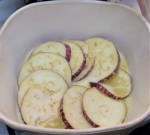
Tuesday was all starts and putting things together. (below in Herbs) Wednesday we hit up the farmer’s market for fruit and vegetables….and a cookie. 🙂 On Sunday peach jam and baked eggplant…

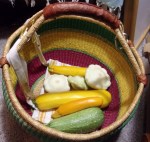
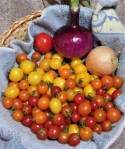
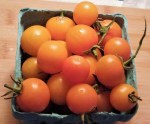
Farmer’s Market stuff (some is with what it ended up as)

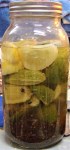
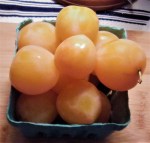
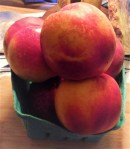
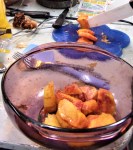
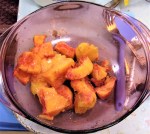
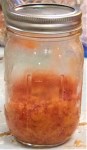
Friday and Saturday we processed some of what we weren’t going to eat. On Friday the pickling cukes and one lemon cuke got turned into pickle, but we didn’t have onion to push them down into the brine. That had to wait until Sunday. On Saturday the golden plums were starting to go, so the ones that were going off got made into a plum nuker jam with the addition of a little tapioca and the subtraction of skins, stems and seeds and on Sunday a couple of the peaches got the same treatment. 

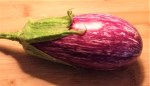
Sunday cookery – This ended up being an eggplant and eggs from the Farmer’s Market, I didn’t get a picture of the casserole with the eggs, just skipped from the topping through to the finished meal. 

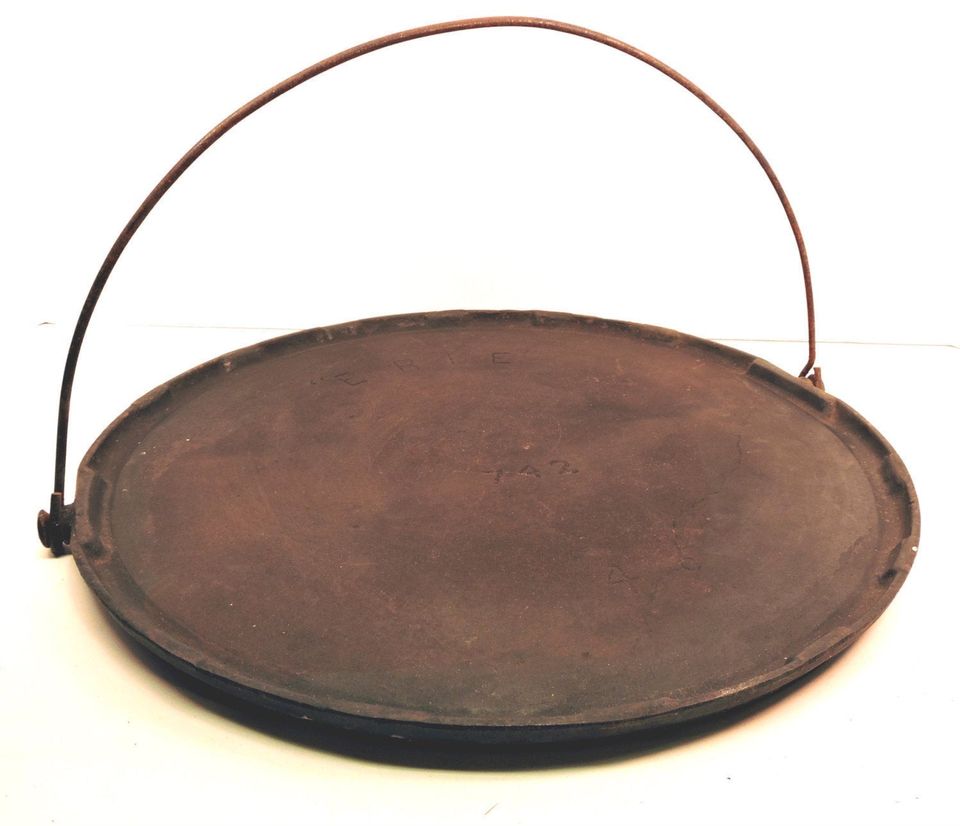
Diana Shell Wertz – The girdle or griddle is one of the oldest utensils, common to all the Celtic countries, from Brittany to Ireland. The word probably comes from the Old French, gre’dil, meaning grid-iron, although the hot stones used for baking by the early Gaels were called greadeal. It is used for ccoking bread, bannocks or scones, and is sprinkled only with flour before cooking; if a batter is used, the griddle is slightly greased. In some cottages the griddle is rested on a tripod over the peat embers not suspended.

Froissart, the fourteenth-century chronicler, writes that the Scottish soldier always carried a flat piece of metal and a wallet of oatmeal, as part of his equipment. With a little water he could always make himself an oatcake over a wood fire, which contributed to his remarkable stamina.

Oatcakes are very good with fish, especially herrings, either smoked or fresh, with onions and butter : also served with soups, buttermilk, , or with jam, honey or marmalade for breakfast.
It’s easier to make 1 large oatcake at a time, and cut it into quarters (or farls) for cooking, as the mixture stiffens if left too long. After cooking they can be stored in a tin, and either be lightly toasted, or heated in a slow oven to crisp them.
A heavy skillet (cast iron) can be used instead of a girdle, or they can be baked in a moderate oven (325 f. ) for about 20 monutes. This quantity makes a large Bannock the size of a dinner plate (or 4-8 smaller ones) The girdle must be heated before baking.
4 oz. (2/3 cup) medium oatmeal
2 teaspoons melted fat, (Bacon drippings are good)
a pinch of bicarbonate of soda
additional oatmeal for the kneading
pinch of Salt
about 1/4 cup of Hot Water,..
Mix the Oatmeal with the salt and bicarbonate of soda in a basin (bowl of some sort) then make a well in the middle (my mother used to use her knuckles to do this while making her buttermilk pancakes,… lowering her knuckles into the center peak of the flower mound (she sifted it into her wooden bread bowl, and spun them (at the wrist) down into the mound of flour in a clockwise direction to create a ‘well’) and pour in the melted fat and stir it around (My mother would have used her fingertips but since this is Melted fat and not cold lard/shortening,… I’d use a wooden spatula) then add enough water to make a stiff paste.
Scatter a board or table thickly with Oatmeal, turn out the oatmeal (i.e. Dump it onto the table/board and roll it into a ball. Knead well with the hands well-covered in oatmeal. (professional bakers tend to just ‘strew’ oatmeal across the dough,.. but ‘strewing’ is difficult to explain) (so just keep dipping your hands into dry oatmeal to keep the dough from sticking to them (resulting in a yuck mess) Press down a little and keep the edges as regular as possible (Ok,.. on That, I’m baffled) Then roll out to 1/4 inch in thickness, and shape by putting a dinner plate on top and cutting around the edges (this is what makes no sense,
…why trim off perfectly edible food just to end up with a perfect roundel if all you’re planning to do is cut it in quarters and eat it anyway,… You waste the trimmed dough. Granted, my Grandma Shell used a teacup to cut out her teacakes and a teacup saucer to trim around to make her fried peach pie crust,.. but she took up all the ‘trimmings’ and re-kneaded and re-rolled them and kept using the dough till none was left) Sprinkle finally with a little meal (oatmeal) , then cut in quarters or less (eighths ?) Place on a warmed griddle (with a pancake-turner) or pan and cook until the edges curl slightly. In Scotland they were finished on a toasting stone, but a medium hot griddle to crisp the other side is adequate. Mix another bannock while the oatcake is finishing.
(Hmmmm,… this does not sound like there is an intention of using the plate-trimmed dough from the first one) So y’all are gonna have to experiment with it,…. I actually have one griddle that’s somewhat larger the others, I just work out a round that will be smaller than it.
~~ Recipe from a 1970 cookbook called “A Taste of Scotland”


Strawberry The Medici Archive Project
Strawberries were something of a delicacy in the seventeenth-century and in June 1618 it looked as though the Medici court in Florence might have found a way to ensure a supply. The Medici diplomat, Alessandro Senesi, wrote from Mantua, “we have here at Palazzo Te, a sort of strawberry, a few of which I am sending to show you. If they travel well (which I don’t believe they will) we can also ask for the plants.” Along with the strawberries, the Duchess of Mantua and Montferrat, Caterina de’ Medici, was sending “many things” to her brother, Grand Duke Cosimo II, all packed in labelled cases.
Doc ID: 5520
ASF, Mediceo del Principato, Vol. 2951. @archiviodistatofirenze
Transcribed by Molly Bourne (2002)
**All of the documents we share can be found on MIA or BIA When referencing them please also include the scholar who first published them to BIA/MIA as well as the permalink to the document.**
To learn more about us, support our work and become a Friend of the Medici click on the link in our bio.
The Medici Archive Project is an independent research institute specialising in the digital preservation and study of the archival collection of the Medici Grand Dukes of Tuscany.
Follow us to see more documents from the Medici Archival collection.
Wild Strawberries and a Carnation in a Wan-Li Bowl, c. 1620, Jacob van Hulsdonck @ngadc

Veal with Fennel Flower Sauce – Medieval  – Historical Italian Cooking

OOP, but oh, yum! – The Sweet History of Lemonade – Tasting History with Max Miller – Includes some historical bits…. they had powdered lemonade in ancient Egypt? 

Sewing – Tuesday evening the Adiantum A&S night was on hats. While that was going Anja finished the little rolled fabric doll that’s been on a back burner for a bit. No one was in for Sewing, so Anja did some mending.

Italian Renaissance Gown/Gamurra/Cotta // Dressing the Contessa – The Creative Contessa – How to put on the gamurra/camora/cotta, the middle layer of being properly dressed in the 15th century, specifically the Florentine variety! This video shows how to lace the gown and sleeves up and provides details on construction, materials and techniques, along with the culture and history surrounding this gown. (more on youtube)

Embroidery Frames in History | How to Dress a Slate Frame – Lynne Fairchild – Various embroidery frames have been used over the centuries, including the slate frame, scroll frame, and tambour frame. Learn how to recognize these different types of embroidery frames and when they were popular to use, from the medieval period to the Renaissance and Elizabethan times to the Edwardian and Victorian eras to the present! Also, watch a step by step demonstration on dressing a slate frame.
A slate frame is my preferred frame for blackwork embroidery, as it does not warp the linen fabric like a modern adjustable hoop does.

New series – Foundations of Late Medieval Clothing and Musical Style – Vox Vestitus 1415 – The Singer Sews – I outline what to listen for in late medieval music while I hand-stitch a pair of hose and show off my medieval foundation garments! Turn on captions for jokes and cheat codes.

Interesting history site, mostly clothing. I see this one quoted all over. Better to go back to source than keep quoting.
Stuff that applies to us….
14TH CENTURY – Aquamanile
14TH CENTURY – Bycocket
14TH CENTURY – Chaperon
14TH CENTURY – Chausses
14TH CENTURY – Crespine
14TH CENTURY – Escoffion
14TH CENTURY – Glasses
14TH CENTURY – Gorget
14TH CENTURY – Houppelande
14TH CENTURY – Wimple
15TH CENTURY – Baby Walker
15TH CENTURY – Double Apron
15TH CENTURY – Ferronnière
15TH CENTURY – Hanging Pockets
15TH CENTURY – Hennin
15TH CENTURY – Partlet
15TH CENTURY – Robe À Tassel
15TH CENTURY – Swirling Hat
15TH CENTURY – Turban
16TH CENTURY – Arcelet And Attifet
16TH CENTURY – Gable Hood
16TH CENTURY – Jerkin
16TH CENTURY – Le Chaperon À Bavolet
16TH CENTURY – Peascod Belly
16TH CENTURY – Pluderhosen
16TH CENTURY – Ruff Collar
16TH CENTURY – Toque Hat
16TH CENTURY – Vertugadin
16TH CENTURY – Zibellino
16TH CENTURY – Zimarra

Sundials, etc. – 

The Quest to Recreate a Lost and ‘Terrifying’ Medieval Mead – https://www.atlasobscura.com/articles/how-to-make-medieval-mead-bochet

Natural Dyeing with Lungwort: Exploring a Magical Lichen – HistoryScienceFiber – Lungwort, aka Lobaria pulmonaria, is a large leafy-like lichen. In areas where it grows plentifully, such as the Pacific Northwest, it can be foraged from the forest floor and dyes a rich orangey brown. In some parts of the world, is it more rare and of conservation concern so please check your region before foraging. Easy to dye with as it requires no mordant, working with this lichen is a fun way to celebrate and learn about our forests as it gives your fiber an unbelievably rich forest smell. – https://www.youtube.com/watch?v=Whgr4ycHrKw

Herb Bunch – Starts and repotting starts was a big thing on Tuesday. The vivipary tomato fell in and may have destroyed the little seedlings in the process. We’re waiting to see if anything else comes up! …and Wednesday turned into a gymkana. The park where Anja and Loren live ran out of regular water, so had to switch to a well and *lots* of restrictions on water usage. They packed up the starts and some of the more delicate plants and took them in to their shop in town, which is on city water…. which is restricted somewhat, but mostly for lawn-watering and car-washing.

Anja found this on Wikipedia (referring to the eggplant in cookery….)

Wikipedia – “The aubergine (eggplant) is unrecorded in England until the 16th century. An English botany book in 1597 described the madde or raging Apple: This plant groweth in Egypt almost everywhere… bringing foorth fruite of the bignes of a great Cucumber…. We have had the same in our London gardens, where it hath borne flowers, but the winter approching before the time of ripening, it perished: notwithstanding it came to beare fruite of the bignes of a goose egge one extraordinarie temperate yeere… but never to the full ripenesse.” – The Herball, or Generall Historie of Plantes Archived 2014-01-02 at the Wayback Machine, by John Gerarde, year 1597 page 274.

A dish based on a remembered recipe happened with this fruit. (see “Cookery”)

Trellis – Got worked on all week. Loren is a perfectionist. It only got this far on Sunday. More next week!

Project Day – Started with Anja gathering Youtubes. The necessary Feast discussion got going. Anja got the eggplant dish set up for baking. Had a good chat with Claire, got onions into the pickles and peach jam going. Rafny was making blackberry syrup. Ailantha was working on pears.

Anja asked Ailantha to elaborate on the Fliedermice

“I thought I had several of the finger puppets left. Usually we have some Fliedermice boys with bycocket hats and girls with hennin, dragons, and unicorns. I found only this lonely little damsel. She’s rather bedraggled from being packed away in a chest full of cup and ball games,but you can get a bit of an idea of what they look like from her. I’m going to start with a couple of unicorns I think.. depending on what fabric bits I have handy first. As you can see, Fliedermice are field mice with very large soft floppy leather ears and tail.”

Arlys is talking about making some miniature books. 

Helen Louise finished a cloak and made banana bread.

Recipes

Baked Eggplant (from a remembered description in an herbal)

  • Small covered casserole
  • Stick butter
  • 1 small eggplant
  • shredded cheese (I think I used about 2 cups)
  • 1/2 tsp garlic powder
  • 1/2 tsp salt
  • 2 eggs
  • Topping (I used Everything Bagel Topping)

Method

  1. Melt butter in casserole and swish around so it climbs the sides.
  2. Slice eggplant and layer into casserole.
  3. Salt and garlic sprinkled on the first layer.
  4. Then cheese, then eggplant, then end with cheese.
  5. Whisk eggs, then pour over casserole. (Wouldn’t you know I forgot the eggs until after I put topping on!)
  6. Sprinkle a little more cheese.
  7. Sprinkle topping on.
  8. Bake at 350 until done. (165F on a thermometer)

Miscellaneous pix

Attire’s Mind – posted by Rosemond Sherwood on Facebook on 8/15/21 – Another ring, this time one with quite a story along with it’s astonishing appearance. The ring was in the family tomb of Titus Carvilius, in Grottaferrata, Italy, but not actually on his body. Titus had died quite young, he was barely 18. It is not clear whether he perished from a fall on horseback or poison. His mother, the noble Aebutia Quarta, was devastated, and arranged for her son to have the richest funeral and burial she could afford. This gold ring carries within it a bust of young Carvillo that is a gold microfusion made upon a wax model, with a technique called “a cera persa” Since the bust is so dimensional, the polished quartz crystal that is over it creates a hologram effect, as though the face were moving within the ring. Collection of the Museo Archeologica Nazionale di Palestrina.

Jean Louis Philips – Usually, gargoyles on the facades of Gothic temples are located so that the rainwater from the roofs flows through their mouths. But one of the gargoyles of the Fribourg monastery, on the contrary, holds hands and feet behind the wall, and the water flows from behind it. According to city legend, during the construction of this cathedral, the city council increased the work of masonry without a pay increase. The stone cutters have done the job, but placed this sculpture in front of the city council windows.

Music

VZEL DABEL BABU NA PLECE (the devil carried a woman over his shoulder0 – dg4654ds64tds15tr1ds – Vzel ďábel babu na plece – Rožmberk Consort – Hudba za vlády českých králů

Fairy Dance – Saltarello (medieval dance) – Yerasimos Dimovasilis –
Fairy Dance live at Paou Monastery Festival, Pelion 4-9-2016

Medieval Music – ‘Hardcore’ Party Mix – VacnaPaul – The most rhythmic, upbeat, party medieval music out there, put together in a mix.

This image has an empty alt attribute; its file name is download.png

Links

This image has an empty alt attribute; its file name is download.png

Video Links

The Women in Medieval Armored Combat – Medievalists – A new documentary follows the lives of women who fight in an extreme and full-contact sport, Medieval Armored Combat. This week, Danièle talks with filmmaker Adrian Cicerone about his new film Steel Song.

Funnies 

divider black grey greek key

Largesse, Gifts and Auction items
·         ASXLVII = 24
·         ASXLVIII = 88
·         ASXLIX = 794
·         ASL = 2138
·         ASLI = 731
·         ASLII = 304
·         ASLIII = 146
·         ASLIV & ASLV = 230
·         ASLVI = 176+1doll plus 4 puppets, 4 powder fort, 8 cheese spice and 9 powder douce packets, 1 kiss-lock pouch, 9 tiny bobs, 7 pincushions, 3 pins, 3 snip case w/snips, lucet cords, 25 pouches for block-printing, 2 medium pouch, 4 small pouches, 12 bookmarkers, 14 unfinished pincushions, 1 sewing kit (except for bone needle), varnished stuff (124), 2 emery strawberries, 1 woolen spool-knit cord, 48 key bottle openers
Total as a Household = 4237 handed off


moving writing pen motif
In ministerio autem Somnium! Anja, graeca doctrina servus to House Capuchin
Page Created 8/18 & published 8/24/21 (C)M. Bartlett
Last updated 8/24/21

Activities through 8-15-21 Potluck

House Capuchin Shield2

Nice Potluck this week! Still all in the Virtual World. No one’s been showing up at the shop. Lots of people were doing interesting cookery this week. More recipes below and lots of process pix! More Herb and Garden things… and lots of links.

Herbs Workshop and Project Day are/can be in-person.

When will the rest of these open up in person? We’ll probably keep right on with the virtual ones side-by-side with the actual. …and Crown having been cancelled and Coronet limited to essential people because of the Plague, we’re going to be keeping an eye on things.

  • Herb Bunch – At Ancient Light, Thursdays, 6am-9pm, starts this week!
  • Sewing Time – At Ancient Light, Saturdays, 3-5pm
  • Project Day – At Ancient Light, Sundays, 1 to 5pm
  • Cheese and Wine happens irregularly, usually announced with little notice on our Facebook group.
  • Next Virtual Potluck – 9/19, 10/17
  • Winter Feast 2022 is looking to happen. Updates soon!

Here is the direct Portfolio link which has all the past Project Day reports and various projects, original here:  https://housecapuchin.wordpress.com/portfolio/  and new one here:  https://housecapuchin2.wordpress.com/portfolio/ and number three is here: https://housecapuchin3.wordpress.com/portfolio/

Misc – Principality of the Summits – IMPORTANT CORONET UPDATE

Greetings Summits,

The health and safety of the populace is foremost in our minds as we look toward September Coronet and watch the spread of the Delta Variant. Given this concern the following changes are being made to September Coronet:

  • Coronet will be a single day event, being held on Saturday September 18th
  • Attendance is being limited to essential attendees. This means Their Highnesses, tournament entrants and consorts, minimal retinue/court staff, required Principality officers (Seneschal, Lists, Earl Marshal, Herald, and Social Media), tournament marshals and heralds, as well as essential event staff.
  • Pre-registration is required for all attendees and you will not be allowed onsite without it. (People who are currently pre-registered and will not meet the criteria of an essential attendee will be notified via email)
  • Registration for the tournament will be available before the event.
  • All participants are requested to avoid opportunities for exposure where possible in the 10 days leading up to Coronet (September 8th through September 18th). We’re not asking you to stay home from work. We are asking that you skip large gatherings, county fairs, concerts, and the like.
  • All branches are required to suspend activities in the 10 days leading up to Coronet – September 8th through September 18th.
  • Masks are to be properly worn (covering your nose and mouth) by all attendees at all times except while eating and drinking. Mask wearing during rounds will be left up to the tournament entrants. (Similar to how the Olympics was managed)
  • There will be no site fee. Summits is covering the costs for this event.
  • The Summits Facebook Page will be continuously updated during the tournament, and we are looking into livestreaming portions of the event.
  • Existing restrictions against communal food and water will be observed.

Thank you for your understanding. We feel these revisions are necessary though realize they will be disappointing to many. These changes are disappointing to us as well. We had hoped to have a traditional Coronet with all the usual activities and community.

Please reach out with any questions.

Kenric & Dagma
rPrince & Princess of the Summits

Cassandra Deveroux
Seneschal, Summits

Other Educational Events

A Master List for finding classes, webinars and other things – https://moas.eastkingdom.org/list-of-online-webinars/?fbclid=IwAR20OE8b6vvYKvmwrqwpule27szarZ7EPV-8R72F1eV2CxcdmOXQhZf9ayk

Pennsic University – Links are only up through August! https://www.youtube.com/channel/UCcPqyAoBz-iFNF3T-kQt0eQ/videos

10/1-10/3 2021 – Daigaku-Ryo: Pan-Asia University = Constantinople to Heiankyō 2021 – October 1, 2021 — October 3, 2021 – http://daigaku-ryou.org/

 Other Good Stuff

KWAS – The Known World Arts and Sciences Display is now live! Go to https://sites.google.com/view/kwasdisplay/home and click on “Display Hall” in the upper right corner to see the contributions.

Knowne Worlde Entertainment Guide – KWEG – Entertainment List – https://docs.google.com/spreadsheets/d/1xEZAwCca4IQham3TpxfWnonQscG668mmYgIMA18YZ-E/edit

SCA Iberia put out a whole bunch of videos from their most recent event! https://www.youtube.com/channel/UC2RmLGx_KiNzoFiM6GAu5Hg/videos

Classes – 

Natural Dyeing with Marigolds: Rich Colours from the Garden – HistoryScienceFiber – Come explore the rich potential of natural dye pigments in this popular garden flower. From rich golds, mossy greens and dark chocolate tones, marigold flowers are wonderful additions to the colours you can forage and grow yourself. Totally sustainable and a great hobby for children, come explore natural dyeing! I’ve used a similar dye process for dyeing with tansy and goldenrod so you can take a look at the colours that are possible and see how you might want to plan out your future dye garden, whether in pots or beds. (More info and watch on YouTube, playback disabled) – https://www.youtube.com/watch?v=Q2Gyy4dspS4

The Luttrell Psalter – A Year in a Medieval English VillageCrowsEyeProductions – Completed over 10 years ago and now remastered, the Luttrell Psalter film brings the famous 14th century illustrations to life and shows a year of working and living in a medieval village. Guided by the detailed and often humorous images of everyday life from the Luttrell Psalter, the Luttrell Psalter Film gives a unique glimpse of a year in the life of a medieval English village. Filmed over four seasons, it shows the changing landscape with its fields and flowers, and the daily activities which dominated the lives of our forefathers. This 20-minute film draws on over 35 different images from the margins of the manuscript, allowing the people from the Psalter to walk out from its vellum pages. Have a look through the original manuscript on the British Library website and see how many scenes you recognise: http://www.bl.uk/manuscripts/Viewer.aspx?ref=add_ms_42130_f060r 1325-1340, Contents: ff. 1r-12v: Calendar, with the feasts of the following English saints included: Edward (18 March); Augustine (26 May); Translation of Thomas of Canterbury (7 July); Wilfrid (12 October); Hugh, Bishop of Lincoln (17 November); Edmund (20 November); Thomas of Canterbury

More on the clothing here: https://luttrellpsalter.wordpress.com/2010/12/30/the-luttrell-psalter-film-clothing-part-1/

Medieval Disabled Bodies – Medievalists – Lucie Laumonier talks to Adelheid Russenberger, a PhD candidate in history at Queen Mary University of London, England, about medieval disabilities and what it meant, in the Middle Ages, to be disabled. You can get the show notes at https://www.medievalists.net/2021/08/medieval-disabled-bodies/

The Non-Binary Viking Grave: What Do We REALLY Know? – The Welsh Viking – That Viking age grave they found in Finland (in 1968) that’s been all over the internet this week? Yeah, I’ve heard of it. It’s… it’s kinda my thing to read up on the latest archaeology, especially if it’s Norse and Viking related! What did the grave contain? What does DNA and genetic testing actually tell us about the person buried in it? Is the jewelry, weaponry and clothing important? Were there two swords in the same grave? Is the person non-binary? Well you’ll just have to watch the video and find out, won’t you? Eh? *NOTE: Being non-binary is NOT a choice. Using the term ‘non-binary’ as a label and self-description is a choice, is what I mean.* (more info and links on the YouTube)

Early Week – A little clean-up from Sunday’s cooking… a little garden tending…. A little working on plants for sale.

Cookery – We actually started last week, wanting to get one set of dishes out of the way. Midweek we got pictures of a lovely salad that came out of our garden. (below in “Potluck”).

Anja’s been doing some research into marzipan and other sweets of that type. Halvah, a middle-eastern sesame seed version, was the most recent, but she’s also setting up to try the cashew and cocoa one from the 1700’s.

Wheats for Flour in Medieval Europe – Lynne Fairchild – When I was doing research and recreating a 16th century recipe for Jumbles by Thomas Dawson, I wanted to use a more historically accurate flour than the modern bleached all-purpose flour that can be found at any local grocery store today. Here is the information that I have found so far regarding historical wheats. For more information on the 16th century Jumbles recipe, please visit: https://www.youtube.com/watch?v=UoNaz5orWUQ , https://bakingdelightes.blogspot.com/2020/03/jumbles-making-anise-seed-pretzels.html

The Cookbook of Nostradamus: Prophecies in the Kitchen – Tasting History with Max Miller

Sewing – All mundane except for research.

Accessories and dress details 1350-1355 Paris, france-bnf-francais 1586 poesies

Getting Dressed in the 14th Century – Ploughman – CrowsEyeProductions – A 14th century English ploughman dresses ready for work. Based on illustrations in the Luttrell Psalter.  http://www.bl.uk/manuscripts/Viewer.aspx?ref=add_ms_42130_f170r

Weave Along with Elewys, Ep 20: Cambridge Diamonds – Elewys of Finchingefeld – The Cambridge diamonds pattern, a 6th century Anglo Saxon find, has a unique weaving technique, alternating idling packs of cards. I show you how to make all the mistakes…sigh…and eventually get it right in the end. (More info and links on the YouTube)

Sundials, etc. – 

Matt Bunker – album: Viking Age finds from Valsgärde. – Games pieces, glass, from boat grave 3 at Valsgärde. 10th century. Pieces for Tafl or Tablut.

Although it’s more famous for it’s Vendel period boat burials, there are several Viking Age burials at Valsgärde. The objects from these burials are in the collection of the Gustavianum – Uppsala University Museum.

If you like my museum photo work, either for study purposes or just for enjoyment, you can always support my never ending quest to visit all the museums to photograph ALL the early medieval things: – https://www.buymeacoffee.com/medicusmatt

Herb Bunch – 

Friday Morning

Saturday and Sunday

Gardening – Eleanor de Bolton – Used & Quoted with permission

Bottle gourd harvesting time! ❤️Had fun trying to recreate the images from the tacuninum sanitatis, now for the cooking 😊.I planted these as more an exploration of medieval garden veggies, but I think they may become part of my yearly garden rotation. A more drought and heat tolerant back up to zucchini and cucumbers.
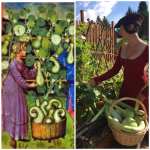
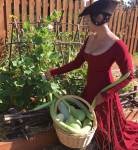
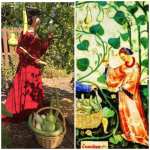
Project Day – Ailantha chimed in early on, while Anja was running back and forth cooking. She was at it all day, too!

Helen Louise sent a pic of her baking.

Potluck – We ended up working on food all day, between Loren having to run home for some things that were forgotten and being horribly tired and dragging, it took a bit! Of course, we started last week. Anja started with the tri-pot, having pulled out a frozen vegetable soup, some brussel sprouts and a cabbage and onion dish. Loren made a batch of bread and then Anja fried the mortar chickens.

…and working on things during the week including a lovely salad and some halvah. 

Potluck day – Nibbles and Sweets

Potluck – Mortar Chickens – 4 small chicken breasts made 11 patties, but there was too much egg…. 

Potluck – Feast

Potluck Menu

Pickled eggs in the middle, from upper right….washed curds with garlic and dill, fig jam, butter, cheese, pickled beans, black olives, pickled brussels sprouts

Nibbles

  • Pickled eggs
  • Bean pickles
  • Fig jam
  • Pepper jam
  • Bread
  • Butter
  • Black olives
  • Washed curd with garlic and dill
  • Light bohemian rye bread

Main

  • Fennel sausage patties
  • Girdle cakes (oat and barley with dill)
  • Mortar Chickens (rye bread trencher and spring onion topping)
  • Vegetable Soup
  • Cabbage and onion cooked in wine
  • Brussels sprouts
My plate

Afters

  • Halvah
  • Shortbread
  • Naughty Cake

Recipes

Cabbage and onion cooked in wine – This is a simple dish that you see referenced and never turned into a recipe! The period version would have been chopped and put in a sealed crock in the edge of the fire, pretty much to steam slowly. I added a little salt, cumin and caraway to give it some extra flavor.

  • Bag of coleslaw mix
  • 2 onions
  • 1/2 cup wine
  • Tsp salt
  • 1/4 tsp ground cumin
  • 1/2 tsp ground caraway
  • Optional – whole caraway to sprinkle serving dish)
  • butter pats (for individual servings)

Method

  1. Cut up onions so they are no more than bite-sized.
  2. Put coleslaw & Onions in a 2 quart pyrex or other microwave safe dish.
  3. Pour wine over.
  4. Nuke for 10 minutes.
  5. Stir well
  6. Add spices

Mortar Chickens, Meister Hans 1460 cookbook

  • Chicken breast, cooked and cooled
  • 1 egg
  • medium pinch Saffron
  • 1 tsp Horseradish or pepper
  • 1 tsp Aniseed
  • Fat or oil (used bacon fat)

 Method

  1. Muddle the egg.
  2. Sprinkle ground saffron onto egg and let sit for a few (best overnight!) for the saffron to “color”.
  3. Mix egg and spices.
  4. Using a food processor (or a small knife and then a mortar) chop the chicken to mush.
  5. Add egg mix and process until well mixed.
  6. Chill mix if you’re going to try to roll this out.
  7. Divide into 6 sections for patties or 12-15 for “nuggets”.
  8. Roll into balls and smash flat, about 1/2 inch at most.
  9. Heat oil/grease. You need at thin layer and will have to add fat between patties.
  10. Drop patties/nuggets onto oil. Not at a high temp, or they’ll burn to the pan very fast. I used “3” on my dial of 3-8.
  11. Loosen from pan within a minute. At about 3 minutes it will be browning on the bottom and can be carefully flipped to the other side. These are *very* tender and will tend to fall apart if you handle them like a burger!
  12. Fry until done (check inside temp with thermometer…. 165F-180)
  13. Serve each on ½ a roll and garnish with spring onion rings.

Recipe #62 Von mörser hüner die mach also – Of mortar chickens, make them thus

Take a roasted chicken, dismember it small and take the sheer meat of it. And take a thin batter of eggs and of pepper, anise, pepper and saffron and pound it all together in a mortar. Fry it in a little fat, those are mortar chickens.

Loren’s basic bread loaf recipe for a 2 pound breadmaker

  • 1 1/2 cups warm water
  • 1/4 cup plain sugar
  • 1 Tbsp salt (approx or less)
  • 2 1/2 tspn yeast
  • 1 Tbsp bacon fat (or less to taste)
  • 4 Cups Unbleached cheap white flour

Mix it all together until it resembles bread dough, let it rise a couple times, somewhere warm, like in an oven at 125, until it looks like something that should be cooked, then scorch it at 350 degrees for about half an hour until it appears edible. Modify these directions as needed to make it work.

[Anja’s translation: He uses a bread maker on dough cycle, so dump stuff into the bucket and turn the thing on. Check it after about 10 minutes (this depends on your breadmaker, during the 2nd mixing…..) to make sure the flour is all “in”. When the cycle ends, shape it and let rise in a 125 oven for 15-30 minutes. Bake at 350 for 20-25 minutes. ]

Variations

  • Seed bread – Add ½ cup of “seeds”, usually a mixture of millet, flax and sunflower for us, but your mileage may vary.
  • Italian Seasoning Bread – Add one packet of 4 seasons Italian Salad Dressing mix, plus 1 TBSP minced garlic.
  • Olive/Caper – Add 1 can of olives, drained, ½ that of capers – bread comes out flat.
  • Sesame – Add ½ cup of sesame seeds. Brush with butter and sprinkle with seeds
  • Rye/Caraway – Replace 2 cups of the white flour with rye and add 1 1/2TBSP caraway seed. This dough usually takes additional water. Check after the first “rumpus” of the bread maker (on mine, after 10 minutes)

Miscellaneous pix

Posted on Facebook on 8/9 – Marie Hilder – Mail is one of the lesser known finds from Mound 1 (‘THE’ Sutton Hoo burial). Although badly corroded, enough survives to suggest the Sutton Hoo mail was tnic-length or even longer. It was folded and placed at the end of the (probable) coffin and underneath a large silver dish with control stamps of the Byzantine Emperor Anastasius I (reigned 491–518). If well-treated, the Sutton Hoo mail could have been made anytime in the later 5th or 6th-century, which would make it the same age as the Byzantine silver dish it was buried under. There’s a chance – impossible to prove – that the mail was even made in the Eastern Mediterranean. This was a valuable piece. Among the Franks at this time, a good ‘mail shirt’ was worth twice as much as an embellished helmet, three times a sword without a scabbard, and six times a shield and spear. From Anglo-Saxon Wessex (late 7th-century) comes a law code of King Ine which values a ‘byrnan’ the same as a man’s wergeld (the value placed on his life). So the impression we have from documentary sources is that iron armour was rare and expensive in the 6/7th-century. Mail was available only to high-ranking warriors, like the man buried in Mound 1 at Sutton Hoo. So where do the famous Sutton Hoo shoulder clasps fit into all this? There may be a clue in the Strategikon, the handbook of military tactics ascribed to the Byzantine Emperor Maurice and probably written between 575 and 628 (making it contemporary with Sutton Hoo). The Strategikon recommends wearing small pennons at the shoulders in order to impress the enemy – which is immediately reminiscent of the Sutton Hoo shoulder clasps, which were used perhaps to close a padded chest protector worn on top of the iron shirt. What was this chest protector most likely made from? Well, layered quilted linen is effective in warding off blows from edged weapons and from arrows – more so than leather. Any chest protector could be fitted onto the body in two sections which opened and closed at shoulder level, and the sides tightened with straps. This suggestion is consistent with the traces of leather and textile found with the iron ‘chain work´at Sutton Hoo and also in the Benty Grange (Derbyshire) burial, also 7th-century. A textile cuirass would also work better with the shoulder clasps. Body armour came in many forms in Early Medieval Europe. We need only consider the terms used in the poem ’Beowulf’ to realise that. Here, in addition to the famous byrnies, we find words for protective battle wear such as: licsyrce (body shirt) and beadobrægl broden (woven battle garment). The presence of mail in the Sutton Hoo grave raises other important considerations about the grave assemblage. How was the mail acquired? If the buried man or one of his ancestors had fought as a mail-clad warrior, where did he fight? Because this is the gear of an elite warrior in the Germanic-Byzantine military world. Indeed, the primary theatre of war for northern Germanic tribes in the 6th-century was in Byzantine-ruled Italy. The image projected by the Mound 1 assemblage was therefore that of a top military commander in this world – perhaps identifiable by his shoulder clasps as a high-ranking member of a particular tribal or military order. Wear that gear in Britain – the iconic helmet, a mail tunic, and jeweled shoulder claps to close a torso protector – and that man would be the image of the imperial splendour of Rome and Constantinople. A king in other words. But, as author Noël Adams concludes, this is all speculation. “To our distant modern eyes, however, it seems that one clear message conveyed by the Mound 1 burial to those who conceived and witnessed it is summarised by the words ascribed by Ennodius to Theodoric the Great as he donned his armour for battle: “Let them at least say, ‘How splendid he looks in death‘, if they have not the chance to admire me fighting”. The full article, ‘Rethinking the Sutton Hoo Shoulder Clasps and Armour’ by Noël Adams is on the Academia site or you can read it here: https://studylib.net/…/rethinking-the-sutton-hoo… The photos of the mail shirt fragment and the shoulder clasps are from the British Museum. The photos showing the reconstructed textile body protector are shared courtesy of Paul Mortimer, aka King Rædwald of East Anglia – the Sutton Hoo king.

Music

Sicilian Medieval Music – Musica Medievale – Ensemble: Al Qantarah – Fabio Tricomi Album: Abballati, abbalati! Video: Frédéric II, traité de fauconnerie (XII/XIIIth cent.) http://www.facebook.com/musicamedievale

Since ancient times, Sicilian culture has been shaped by the influence of foreign powers which often co-existed: those of the Hellenic world, the Italic civilisation, the Arabic presence and the Norman conquest. These intertwining influences led up to mediaeval times, the historical pivot’ around which the project for this disc rotates. Thus Sicily appears as a crossroads of races, traditions, varied and often exotic ethnic roots giving it a multi-layered and cosmopolitan quality which has become ever richer over the centuries and has made of the island a sort of bridge (in fact “AI Qantarah” is a river in eastern Sicily whose name in Arabic means’ the bridge) and a unique contact point for the various foreign civilisations which have become an essential part of the Sicilian territory. Sicily has adopted as its own the musical traditions and styles of Arab, Byzantine, Provencal and Norman cultures, conserving their intrinsic qualities and forms along with elements springing from the origins of Sicily itself. When one considers Mediaeval Sicily, it is natural to turn to the age of Frederick II and the great stimulus his reign gave to the sciences and arts. The Sicily of Frederick’s times was an admirable example of both tolerance and intellectual fervour: the lively and progressive scientific and philosophical climate left by the Arab community after the Norman conquest, the refined and invaluable literary works written by the residents of the Court, found an ideal meeting point in the personality of Frederick. These facts further motivate the choice to record this disc in the Ursino Castle which Frederick himself had built at Catania by the architect Riccardo da Lentini, 13th century. The pieces from this disc comes from two collections: the 12th century “Troparium de Catania” and the “Corpus of Sicilian Folk Music”. The use of these sources guarantees a good assortment of contexts, ranging from the religious to the lay, from the cultured to the popular tradition. The instruments used are chosen to reflect the variety of the repertoire, so that alongside cultivated mediaeval instruments copied from the iconography that has reached us, we find those of Sicilian and Middle Eastern tradition. It should be pointed out that the variety of instruments used and the rather daring use of middle eastern instruments are sustained by the frescos of the 13th century Palatine Chapel in Palermo, second only in importance in musical iconography to the contemporary miniature of the “Cantigas de Santa Maria”. Frederick II is directly alluded to in the piece Dolce lo mio drudo. While the Sicilian quality of the “Corpus Favara” is unquestionable, the Catanese quality of the “Tropari” is derived from the fact that the pieces, stylistically similar to sacred music commonly played all over Europe in those times, were copied in Sicily for use in liturgical services in the Catania cathedral. The three Tropari conserved in Madrid, usually defined ‘SicilianNorman’, contain liturgical sequences, conductus and dramas, genres which had only just appeared in the 12th century. The inclusion in the repertoire of a contrafactum of a text by Giacomo da Lentini “Ben m’è venuto” with a melody by the Provencal troubadour Peire Cardinal (J. Schultze, “Sizilianische Kontrafakturen”), documents a musicological hypothesis according to which the Sicilian poets of the 13th century set their own verse to music.

  1. Surat Mariam – 1 pt.
  2. Trad. Salemi, F. 744: Canto di Carnevale/Trad. Messina: Tammuriddara/Trad. Castellammare del Golfo, F. 605:Assummata di lu corpu di la tunnara/Trad. Persia: Navaii
  3. Anon. XII sec.: Congaudentes jubilemus
  4. Peire Cardinal / Giacomo da Lentini: Ben m’è venuto
  5. Trad. Catania: Assolo di marranzanu
  6. Trad. Palermo, F. 141: A la viddanisca
  7. Anon. XII sec.: Natali regis glorie
  8. Anon. XV sec.: Dolce lo mio drudo
  9. Trad. Trapani, F. 224: Vicariota
  10. Anon. XII sec.: Exultantes et letantes/Trad. Maletto: Ballettu
  11. Trad. Resuttano: Sugnu vinutu di luntana via
  12. Anon. XII sec.: In hoc anni ciruclo
  13. Anon. XII sec.: Benedicamus Domino
  14. Trad. Montedoro, F. 364: Montedoro
  15. Trad. Partanna, F. 763: Richiami
  16. Anon. XII sec.: Resonet intonet
  17. Trad. Persia/Palermo, F. 740: Parandoush / Chiovu ‘Abballati
  18. Anon. XII sec.: Eia fratres
  19. Surat mariam – 2 pt.

Performers

  • Fabio Accurso: ‘ud, voice, daf
  • Roberto Bolelli: voice, scattagnetti
  • Farzaneh Joorabchi: voice, setar
  • Nico Staiti: tammureddu, riqq, daf
  • Donato Sansone: friscalettu, symphonia, daf, voice
  • Faisal Taher: voice
  • Fabio Tricomi: vielle, lyre, tar, ‘ud, friscalettu, pipe & tabor, zarb, tammureddu, daf, marranzanu, voice
  • Buy: https://cutt.ly/0QGxgK6
This image has an empty alt attribute; its file name is download.png

Links

This image has an empty alt attribute; its file name is download.png

Video Links

How the Mastermyr lock works, version 2. – Sven Skildbiter – This version of the lock has the key raising the spring up and over the slide stop. Thanks to Gaz and Driffa for parts of the lock. Thanks to Morgan for filming and editing this video. Yes, it will appear in one of my forthcoming books.

Pay Day in the 15th Century, or: The Contessa’s Pageboy is Such a Ham! – The Creative Contessa – My youngest is a ham…. a complete ham….

Palaeolithic Crafts at Creswell Crags – Sally Pointer – Sally Pointer and the Ancient Craft team demonstrate palaeolithic crafts at the ice age heritage site of Creswell Crags. For more information about the site, please see https://www.creswell-crags.org.uk/ Dr James Dilley/Ancient Craft has his own YouTube channel, please have a look at his excellent videos, he’s well worth subscribing to! https://youtube.com/c/ancientcraftUK

Medieval knight vs modern vehicle, who would win? – Modern History TV – A lighthearted look at whether a medieval knight might be able to kill a car with a single handed sword! #medieval #destruction #sword Jason Kingsley’s my car windscreen needed replacing so he took the chance of testing it out with a medieval sword.

Funnies 

divider black grey greek key
Largesse, Gifts and Auction items
·         ASXLVII = 24
·         ASXLVIII = 88
·         ASXLIX = 794
·         ASL = 2138
·         ASLI = 731
·         ASLII = 304
·         ASLIII = 146
·         ASLIV & ASLV = 230
·         ASLVI = 176 plus 4 puppets, 4 powder fort, 8 cheese spice and 9 powder douce packets, 1 kiss-lock pouch, 9 tiny bobs, 7 pincushions, 3 pins, 3 snip case w/snips, lucet cords, 25 pouches for block-printing, 2 medium pouch, 4 small pouches, 12 bookmarkers, 14 unfinished pincushions, 1 sewing kit (except for bone needle), varnished stuff (124), 2 emery strawberries, 1 woolen spool-knit cord, 48 key bottle openers
Total as a Household = 4237 handed off


moving writing pen motif
In ministerio autem Somnium! Anja, graeca doctrina servus to House Capuchin
Page Created 8/12/21 & published 8/17/21 (C)M. Bartlett
Last updated 8/18/21

Activities through 8-8-21

For some reason some the embedded links aren’t showing as such and are not playable. I’m going to publish, hoping they’ll show up. …and some did, but some didn’t. I’ll be re-doing those links this evening and updating!

House Capuchin Shield2

OK, busy week again. No one at workshops other than mundanes, but things are getting done. Largesse labels are the big hold-up. The printer is acting strange with cardstock.

Sunday was different. A number of people were online for Project Day, some discussing, some just mentioning their projects. Chat was open for an hour, but the learning curve meant that we missed someone.

More Herb stuff this week, workshop on Thursday, SewingWOrkshop on Saturday and both Projects and Potluck on Sunday!

Project Day is now open for in-person meet-ups as well as in the Virtual Realm! Potluck this month will be Virtual *and* Real-World! Herbs Workshop will re-start, in person, around the beginning of July. All other meetings are on hold for the moment.

When will the rest of these open up in person? We’ll probably keep right on with the virtual ones side-by-side with the actual. 

  • Herb Bunch – At Ancient Light, Thursdays, 6am-9pm, starts this week!
  • Sewing Time – At Ancient Light, Saturdays, 3-5pm
  • Project Day – At Ancient Light, Sundays, 1 to 5pm
  • Cheese and Wine happens irregularly, usually announced with little notice on our Facebook group.
  • Next Virtual Potluck – 6/20, 7/18, 8/15, 9/19, 10/17
  • Winter Feast 2022 is looking to happen. Updates soon!

Here is the direct Portfolio link which has all the past Project Day reports and various projects, original here:  https://housecapuchin.wordpress.com/portfolio/  and new one here:  https://housecapuchin2.wordpress.com/portfolio/ and number three is here: https://housecapuchin3.wordpress.com/portfolio/

Misc –  Bartholomew Baby project – Babies are underway! These are 5″.

Yes, is looks like a table leg. No, those are 5 inch Bartholomew Babies being created by Alan the Bowyer. (photo also by him)

An interesting (wordless) video of a recreation of an Iron Age village in the Czech Republic. It starts very slowly, but there are some interesting views of tools and everyday objects, including loom, potter’s wheel and various carpentry benches. …and sheep. Another article about the village talks about the heirloom breed of sheep from the area.

Online Education

Homessic 2022 is starting – https://docs.google.com/spreadsheets/d/1UCuIfAjNBd3YB_T5VIp5OIkZbdMwSW0gJnLM1EmAHy8/edit?fbclid=IwAR25mv26no-GFzALljkFUYa_8NPJ8_pDPNm9mvWUc0LbvOtLBKLLStH0Hmc#gid=0

Pennsic University – Links are only up through August! https://www.youtube.com/channel/UCcPqyAoBz-iFNF3T-kQt0eQ/videos

10/1-10/3 2021 – Daigaku-Ryo: Pan-Asia University = Constantinople to Heiankyō 2021 – October 1, 2021 — October 3, 2021 – http://daigaku-ryou.org/

Other Educational Events

A Master List for finding classes, webinars and other things – https://moas.eastkingdom.org/list-of-online-webinars/?fbclid=IwAR20OE8b6vvYKvmwrqwpule27szarZ7EPV-8R72F1eV2CxcdmOXQhZf9ayk

 Other Good Stuff

KWAS – The Known World Arts and Sciences Display is now live! Go to https://sites.google.com/view/kwasdisplay/home and click on “Display Hall” in the upper right corner to see the contributions.

Knowne Worlde Entertainment Guide – KWEG – Entertainment List – https://docs.google.com/spreadsheets/d/1xEZAwCca4IQham3TpxfWnonQscG668mmYgIMA18YZ-E/edit

SCA Iberia put out a whole bunch of videos from their most recent event! https://www.youtube.com/channel/UC2RmLGx_KiNzoFiM6GAu5Hg/videos

Dance Vids – 

You can dance if you want to! Beginner Pavanne & Galliard – The Creative Contessa – A beginner-level Renaissance dance class, with cultural and historical notes! Enjoyed by everyone from peasants to monarch this class includes primary source readings and fundamental footwork tips to help you become a better dancer.

***If you wish to learn such dances live, sign up for dance classes with the Creative Contessa at https://forms.gle/ZaSmsNvih21VKtZd9. @@@@If you wish to support more such content from the Creative Contessa, then become a Patron on Patreon and benefit from a host of other perks! https://www.patreon.com/thecreativeco…

Classes – 

Minimum Effort Stinging Nettle Fibre – Sally Pointer – I’m preparing for a stone age event and need some nice flexible stinging nettle fibre without putting too much effort into it. This technique gives useful fibre without the need to ret, scrape, boil or otherwise process, just pick, split, peel dry and roll until the fibres are as ready as you want them to be.

The Boleyns of Hever with Dr Owen Emmerson and Claire Ridgway – The Tudor Travel Guide – The Boleyns of Hever with Dr Owen Emmerson and Claire Ridgway

To Purchase your copy of ‘The Boleyns of Hever’:


Early Week – Plant work was all that went on in the early part of the week. We’re still dealing with car issues.

Cookery – Ended up all on Sunday. Sausage patties, girdle cakes and shortbread. 

Sausage – Pork spiced with fennel, cinnamon, clove, cardamom and salt. 

Girdle cakes from a kit – barley and oat flour with dill

Shortbread – Standard 1,2,3 mix (one sugar, two butter, three flour)

Oops…. nabbed some before photos! …but this was a perfect batch!

How to make a London Possett – https://rarecooking.com/2021/07/26/how-to-make-a-london-possett/

Sewing – Single person at the workshop was mundane. Pillowcases, masks, pouches were worked on. Anja finished a pouch with tassels. More feast pouches threaded. She got started on the mask made from a piece of her embroidery.

Getting Dressed in 7th Century Britain – CrowsEyeProductions – A woman dresses in the fashion of Anglo Saxon East Anglia, to attend an important funeral.

  • Anglo Saxon woman: Sarah Cliffe
  • Funeral guests: Judith Jones, Steve Jones Rædwald of East Anglia: Neil Parker
  • Director: Nicole Loven
  • Costumier: Pauline Loven
  • Voice-over: Nicole Loven
  • Beowulf reading: Philip Stevens
  • Make-up: Oliver Helm https://www.instagram.com/oliver.helm…
  • Music: Gaia by Kyle-Preston
  • Set construction: Keith Loven
  • Tablet-woven braid – Penelope Lydiate
  • Location: The Saxonhouse http://www.saxonhouse.co.uk/

Thanks to: David Clayton, Adam Daubney, Steve Jones, Judith Jones, Keith Loven

This video, like all Crow’s Eye Productions’ works, is protected by copyright under the UK Copyright, Designs and Patents Act 1988 and internationally under the Berne Copyright Convention. It may not be reproduced or adapted, in whole or in part, without the written permission of Crow’s Eye Productions.

15th Century German Bycockets | Medieval Hat – Lynne Fairchild – Bycockets were medieval headwear worn beween the 13th and 16th centuries in Western Europe. Some German bycocket hats had a distinct feature on them during the 15th century. – https://www.youtube.com/watch?v=wQU9vzff1j8

Herb Bunch – Tuesday/Wednesday were starts and harvest. Herb Robert was the big one, but bits and pieces are getting done as Anja has time. Sweetgrass from the bucket at home was one. Sweetgrass at the shop, in a low planter was Saturday. Processing to dry was on Sunday. No one for the workshop on Thursday, but had a long talk with someone who wants to join the group that day. Headers were getting set up for herbs that had been bagged the week before.

Later week

Project Day – 

Arlys – Dunno if I’ll make it. Project today is to clean off the pile of to-do notes on my desk and try to get some positive closure on that worthy-of-a-paper-shredded issue I alluded to elsewhere. Everyone have a wonderful day! Hugs!

Amy DeWilde – I am still working on pot holders. Not enough turquoise to do one more pot holder, trying to decide on what color to work with next. Orange, raspberry, or tangerine.

The “vivipary” tomato on 8/2 (new pic in Herbs)

Anja – I was out working on the garden this morning, harvested calendula seed and ate strawberries and peas. That Sweet 100 tomato plant isn’t one. The ‘maters are almost as big as baseballs! The “sungold” looks to be a cherry tomato. 🙂 There’s a new experiment tomato. One on the shelf developed vivipary and I planted it. Hoping to get pix tonight again. This pic is from last week. There were 1/2 a dozen tiny sprouts this morning. [pic in Herbs]

Tamra and Anja had some fun in chat discussing silk and silkworms. 

Isabeau said, “We had happy birthday celebration for Coleman today! Yahoo!!”

Ailantha said, “I’m going to be doing figs and peaches today. And maybe drying some zuchinni chips too.” …and then she and Anja went off into a discussion of figs, fig newtons (fig keplers? according to Loren) fig rennet cheese and she fell down *that* rabbit hole. 🙂 …and grape vines. Anja makes wreaths of the trimmings. 

Helen Louise said, “Made pants today!”

Recipes

Fig Newtons (Loren says these have to be figs kepler…..)

Anja – Recipe?

Ailantha – I’m terrible about recipes. I use one a couple times and then fly by the seat of my pants lol.

  1. This one is about 4 1/2 cp flour, 2 cps sugar, 1 1/2 cp butter ( NOT margarine) a couple tbsp vanilla, a tsp of salt and blend all together till like sand.
  2. Then I add just enough water to pull it together into a dry dough that can be rolled out. I think I used about a cup of water. That amount varies as the weather shifts. The flour seems to be dryer during a droughth than it is during monsoon season.
  3. I pressed the bottom crust into a buttered pan, using my fingers to flatten it about 1/3-1/2 inch thick.
  4. Spread fig jam at about 1/4 inch over the crust. This is adaptable so vary thickness as you desire.
  5. Roll remaining dough into a rectangle. Lay that over the fig jam layer and cut away excess so you’ve created a layered pastry.
  6. Use any remaining dough to make shortbread cookies. They can be any thickness you prefer and left plain or dusted with sugar, cinnamon sugar, or cardamom sugar.
  7. Bake the fig newton’s at 350° f for about 30 minutes, or until crust JUST begins to show browning at the edges.
  8. Cut into desired size while still very warm, as the crust is softer then and not likely to Crack as you cut them.
  9. The crust may be a little crunchy at first, but will soften after just a few hours if kept covered with a lid, saran wrap, or placed in a tin. If tinning, use parchment or wax paper to separate layers to prevent them sticking together.
  10. Cookies are baked at same temp for only 5-10 minutes, depending on thickness. Those also are done when they only barely show a tinge of light brown at the edges.

Anja – Good enough recipe for me! Thanks!

Ailantha– you’re welcome

Sausages

  • 1 pound pork
  • 1/8 cup minced fennel
  • 1 tsp pepper
  • 1/2 tsp salt
  • 1/2 tsp cinnamon
  • 1/4 tsp clove
  • 1/4 tsp mace

Mix, patty up and fry on butter. Makes 8 patties.

Girdle Cakes [Kit version 2/20] adapted fromhttps://www.dublininquirer.com/2019/03/06/how-to-cook-medieval-legume-girdle-breads  Makes 2 cakes

Ingredients – Kit

  • 1/3 cup. wheat, barley or oat flour
  • 1/3 cup pea, bean or garbanzo flour)
  • 1/2 tsp. salt
  • 2 tsp of caraway seed, mustard seed or other flavoring. (opt)

For Feast Day

  • 1 egg
  • 3/8 cups water
  • Unsalted butter
  • Salt

Method

  1. Whisk the flours together, then mix in the salt and seasonings.
  2. Put in a Ziploc.

On feast day….

  • Put 3/8 cup water and 1 egg into a small bowl and whisk together.
  • Pour contents of ziplock into liquids and whisk.
  • Let stand at room temp for an ½ hour to an hour.
  • Mix thoroughly.
  • Heat butter in a non-stick frying pan over a moderate heat.
  • Spoon ½ of the batter into bubbling butter.
  • Cook on one side until golden, approximately 5 minutes, then turn over and repeat. Salt top and cut into ¼’s.
  • Repeat step 9 with other ½ of batter.
  • Salt, if desired.

Note – The original of this recipe with the amounts suggested above supposedly made a dough. No, it made a *batter*, so these instructions reflect that. The standing time stiffens it up, but still a batter. 

To make kits

  • Print copies of the “On Feast Day” instructions
  • Collect various flours, salt and seasonings.
  • Mark what flours and seasonings you’re using on each instruction sheet.
  • Measure into a ziploc and add the copy of the instructions.
  • Keep the kits in an air-tight container. Adding water and egg and frying is easy!

Miscellaneous pix

We generally don’t tout things for sale, but this one is too good…. https://www.oldtownroad.net/products/badge-of-honor-plague-doctor-vaccine-enamel-pin

MusicPastorelle, dal medioevo ad oggi – Musica Medievale – Selection of various recordings http://www.facebook.com/musicamedievale

  1. L’autrier jost’una sebissa, Marcabru – Clémencic Consort
  2. L’autrier par la matinee, Thibaut de Champagne – Alla Francesca
  3. La Bergera, tradizionale piemontese – La Lionetta

A Crimean Guitaurists’ take on Greensleeves – https://www.youtube.com/watch?v=pdlrm9DeF9g 
 

This image has an empty alt attribute; its file name is download.png

Links

This image has an empty alt attribute; its file name is download.png

Video Links

The Voynich Manuscript (page has two embedded video lectures) – https://www.medievalists.net/2021/08/the-voynich-manuscript/

Funnies 

divider black grey greek key
Largesse, Gifts and Auction items
·         ASXLVII = 24
·         ASXLVIII = 88
·         ASXLIX = 794
·         ASL = 2138
·         ASLI = 731
·         ASLII = 304
·         ASLIII = 146
·         ASLIV & ASLV = 230
·         ASLVI = 176 plus 4 puppets, 4 powder fort, 8 cheese spice and 9 powder douce packets, 1 kiss-lock pouch, 9 tiny bobs, 7 pincushions, 3 pins, 3 snip case w/snips, lucet cords, 25 pouches for block-printing, 2 medium pouch, 4 small pouches, 12 bookmarkers, 14 unfinished pincushions, 1 sewing kit (except for bone needle), varnished stuff (124), 2 emery strawberries, 1 woolen spool-knit cord, 48 key bottle openers
Total as a Household = 4237 handed off


moving writing pen motif
In ministerio autem Somnium! Anja, graeca doctrina servus to House Capuchin
Page Created 8/7/21 & published ?/?/21 (C)M. Bartlett
Last updated 8/9/21


Activities through 8-1-21

House Capuchin Shield2

Summer in a tourist town is nuts. It really showed on Project Day where Anja was more focused on the shop than the computer stuff until 3pm and even when the chat was going on and Loren was minding the shop, gut pulled away 1/2 a dozen times.

This week, Herbs is on Thursday, Sewing on Saturday and then the usual Sunday Project Day. Project Day is now open for in-person meet-ups as well as in the Virtual Realm! Potluck this month will be Virtual and Real-World! All other meetings are on hold for the moment.

KODAK Digital Still Camera

When will the rest of these open up in person? We’ll probably keep right on with the virtual ones side-by-side with the actual. 

  • Herb Bunch – At Ancient Light, Thursdays, 6am-9pm, starts this week!
  • Sewing Time – At Ancient Light, Saturdays, 3-5pm
  • Project Day – At Ancient Light, Sundays, 1 to 5pm
  • Cheese and Wine happens irregularly, usually announced with little notice on our Facebook group.
  • Next Virtual Potluck – 8/15, 9/19, 10/17
  • Winter Feast 2022 is looking to happen. Updates soon!

Here is the direct Portfolio link which has all the past Project Day reports and various projects, original here:  https://housecapuchin.wordpress.com/portfolio/  and new one here:  https://housecapuchin2.wordpress.com/portfolio/ and number three is here: https://housecapuchin3.wordpress.com/portfolio/

King – An Tir

An Tir, We are moving closer to the time where we hope for the return and reuniting with friends and family from afar. As we approach this time, we need to be aware and mindful of the outside factors that may impact our plans and which may, in the more extreme cases, potentially postpone them. As always, logistics, policy, politics, health, infection rates, and financial barriers are considerations behind Our decisions to re-open and continue Our Kingdom’s progress toward sustainable event planning, and reinstating Kingdom level eventing.

At the core of Our current considerations is the upcoming potential to hold Our Crown tournament, Sept 4.Our position has always been to resume as normal within Our typical Kingdom calendar, upon reopening. We hoped to bring our Kingdom back together with the fewest issues or complexities that changing key event dates, or combining events could potentially cause. At this time, We believe the best path forward considering the developing trajectory of current concerns of COVID-19, is to cancel the current plans for Our Crown Tournament, and postpone to a later date.We have maintained since the beginning that one of the conditions required to hold Our Crown Tournament is that the International border must be open for non-essential travel. With that in mind, the potential need to postpone Our September Crown tournament and not proceed to Our final step of event openings has always been present and possible. Currently there are considerations that remain, and this has prompted this decision.

As the time has come closer, We have considered deadlines and the work being done to prepare for this event. We are aware of the complexities and impact this will have on the people involved, the local groups, and those planning to attend.

We want to thank the event team and those involved in the planned execution of this event, for their hard work under the expected difficulties the first major events were likely to face.

We have heard your voices, and We have taken your words to heart. Many wish for a return, and others ask for caution and delay; We weigh all of these considerations when We plan how to move forward for this great Populace that We have vowed to protect with all of Our power. We will be reviewing the potential dates to hold Our postponed Crown Tournament, and We will announce our planned new date as soon as possible via the kingdom webpage, and We will communicate as best as is possible across all available social media platforms.

Thank you for your understanding, as We navigate these delicate actions toward our long awaited return.

Christian III Rex

Helene III Regina

Misc – 

Online Education

Homessic 2022 is starting – https://docs.google.com/spreadsheets/d/1UCuIfAjNBd3YB_T5VIp5OIkZbdMwSW0gJnLM1EmAHy8/edit?fbclid=IwAR25mv26no-GFzALljkFUYa_8NPJ8_pDPNm9mvWUc0LbvOtLBKLLStH0Hmc#gid=0

Other Educational Events

A Master List for finding classes, webinars and other things – https://moas.eastkingdom.org/list-of-online-webinars/?fbclid=IwAR20OE8b6vvYKvmwrqwpule27szarZ7EPV-8R72F1eV2CxcdmOXQhZf9ayk

10/1-10/3 2021 – Daigaku-Ryo: Pan-Asia University = Constantinople to Heiankyō 2021 – October 1, 2021 — October 3, 2021 – http://daigaku-ryou.org/

 Other Good Stuff

KWAS – The Known World Arts and Sciences Display is now live! Go to https://sites.google.com/view/kwasdisplay/home and click on “Display Hall” in the upper right corner to see the contributions.

Knowne Worlde Entertainment Guide – KWEG – Entertainment List – https://docs.google.com/spreadsheets/d/1xEZAwCca4IQham3TpxfWnonQscG668mmYgIMA18YZ-E/edit

SCA Iberia put out a whole bunch of videos from their most recent event! https://www.youtube.com/channel/UC2RmLGx_KiNzoFiM6GAu5Hg/videos

RUM, the Royal University of the Midrealm has a lot of good classes on their YouTube channel – https://www.youtube.com/c/RoyalUniversityoftheMidrealmRUM/videos

Dance Vids – 

How to Dance Korobushka, a Russian Dance | SCA Dancing – Lynne Fairchild – The Russian dance known as Korobushka originally started as a poem in the 19th century. Although this fun dance is outside of the time period for the SCA, it is still an easy dance that can be found at many SCA events. Written dance instructions can be found here: http://www.pbm.com/~lindahl/dance/Korobushka.html

FULL HOUR: Beginner medieval/Renaissance footwork fun! – The Creative Contessa – Improve dexterity, mobility, balance and strength through Medieval/Renaissance dance footwork drills! Good for dancers as well as (HEMA) martial artists!

Classes – 

It’s A New World After All: Developing A Central American Persona by Ilhuicacihuatl de Xochimilco – Barony of Terra Pomaria – It’s A New World After All: The Process of Developing A Central American Persona by Ilhuicacihuatl de Xochimilco, called Doña Yzma We are very excited to bring you this New World class! In this class Doña will speak to us about research into her Aztec persona. Doña Yzma has been working hard in “New World” research as we in our Society welcome its expanded mission that includes all cultures pre-17th century. These classes are open to anyone and everyone, whether you want to learn more about your heritage, plan on becoming a Terra Pomariain Sergeantry candidate or gain knowledge that will benefit you and or the Society. Thegn Clovis de Walton

Fun with medieval glassware! – The Creative Contessa – The history of medieval glass flasks and their very practical uses! Heraldry too!

Medieval on the cheap: Tableware! – The Creative Contessa – Creating a medieval/Renaissance tableware kit on a shoestring budget! Shopping tips and historical practices!

The Beginnings of England with Marc Morris – Medievalists – The roots of some important English traditions and political institutions began in one of those historical pockets of huge change but scarce written material in the centuries after the Romans left and the Normans arrived, making it challenging to find answers. Enter Dr. Marc Morris.
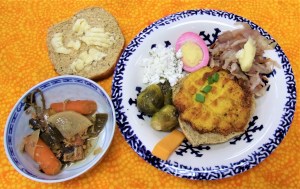
You can get the show notes at – https://www.medievalists.net/2021/07/the-beginnings-of-england-with-marc-morris/

Early Week – Mostly went into making and re-potting starts. Pix below. Amy dropped by the shop on Thursday to say she’s making potholders. Over the weekend, the sorting of plants that are ready for sale got going and one has left the building, already. (Sale of starts funds purchase of unusual seeds and herb plants.)
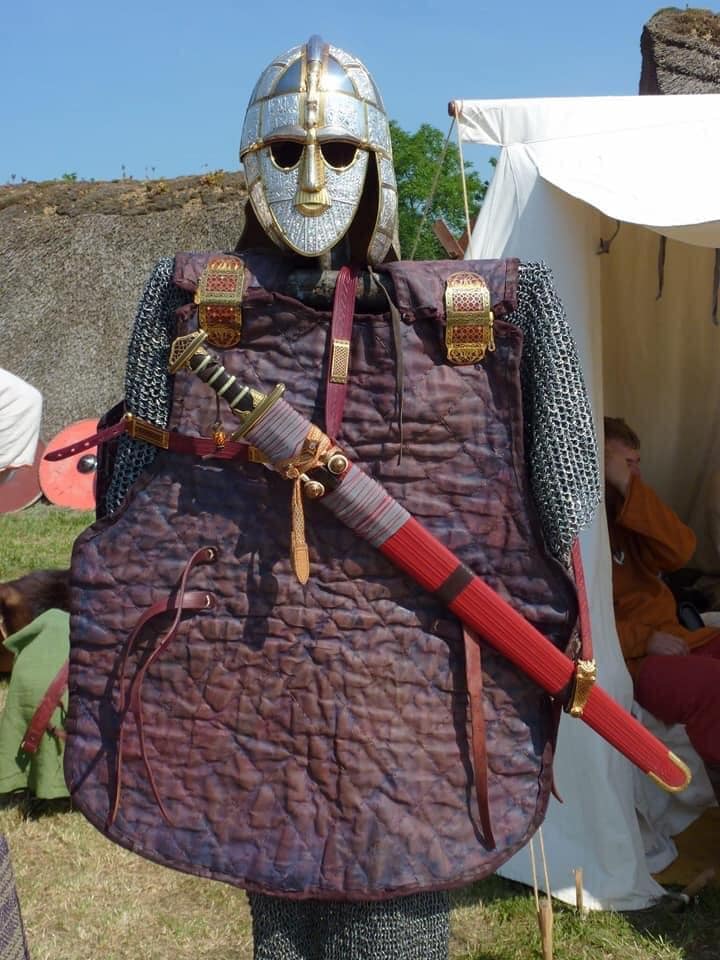
Another subtlety

Cookery – The fennel was harvested to use in sausage on Thursday, although we still don’t have the ground pork. Maybe Monday night. Saturday evening’s supper included a salad of fresh-from-the-garden peas, radishes and lettuce. On Sunday sorrel and thyme were harvested, plus some oregano, marjoram and nasturtiums. A soup was made of chicken, sorrel, onion, marjoram, peas, corn, broadbeans, leeks and some fresh peas from the garden, plus a few greens.

*

*

*

*

Fennel

Pottage

From our Adiantum mother, Dame Yseult (used with permission) Originally posted on Facebook.

I just finished reading Michael Pollan’s book Cooked: A Natural History of Transformation (Penguin, 2013), and it’s fascinating. As Pollan says in the intro to the book, “The premise of this book is that cooking – defined broadly enough to take in the whole spectrum of techniques people have devised for transforming the raw stuff of nature into nutritious and appealing things for us to eat and drink – is one of the most interesting and worthwhile things we humans do.” He focuses on four transformations, characterized by the ancient four elements: fire (grilling), water, (braising), air (baking), earth (fermenting). The style is chatty, but there’s an amazing amount of information packed into the narrative. In the chapter on Fire, Pollan talks about the more masculine, performative act of grilling meat and then, in Water, moves on to the more feminine, behind-the-scenes aspects of braising meat and vegetables in liquids. One of the things I really appreciated was his breaking down of braising as a series of steps with infinite variations: you start with a plant combo, sauté it in some fat, brown some pieces of meat, put it all in a pot, add some liquid, and then simmer it for a long time. With that concept you can make up your own dishes. Each culture tends to have its own flavor signature for the vegetable/flavoring piece: Mirepoix in France – onion-carrot-celery sautéed in butter Soffritto in Italy – onion-carrot-celery in olive oil (maybe add garlic, fennel, or parsley) Sofrito in Spain – onion-garlic-tomato in olive oilTomato-lemon-oregano in Greece Onion-lard-paprika in Hungary Cumin-coriander-cinnamon-ginger-onion-fruit in Morocco Asian mirepoix – onion-garlic-ginger Tarka in India – onions and spices sautéed in ghee (clarified butter)Lime-chili in Mexico “Holy Trinity” of Cajun cooking – onion-garlic-bell pepperHe also has interesting things to say about salting meat before browning it. I’m a fairly low-salt cook, but . . .“Animal flesh contains all the salt our bodies need, and roasting meat preserves most of the salt in it. It was only with the advent of agriculture, when people began relying on a diet of grain and other plants, and took to boiling much of their food (leaching the salt from it in the process), that deficiencies of sodium became a problem. This is when salt – the only mineral we eat deliberately – became a precious commodity”Of course, people who eat modern, processed food get an excess of sodium, but “if you don’t eat a lot of processed foods, you don’t need to worry about it. Which means: Don’t ever be afraid of salt!” Salting too close to the cooking of the meat can dry it out: “Initially, salt draws moisture out of the cells of muscles, which is why, if you haven’t salted your meat well in advance of cooking it, you’re probably better off not doing it at all. But as the salt draws water out of the meat, a king of osmotic vacuum forms in the cells. Once the salt has been diluted by the water it has attracted to it, this salty liquid is drawn back into the cells (along with any spices or other flavorings present in it), greatly improving the meat’s flavor. Put simply, salting early helps meat later absorb flavors, including but not limited to the flavor of salt.”For me, the best part of the chapter on Air, baking with sour dough starter, was the information about the difference between whole grain flour and white flour. “The quest for an ever-whiter shade of bread, which goes all the way back to the Greeks and Romans, is a parable about the folly of human ingenuity…After figuring out an ingenious system for transforming an all but nutritionally worthless grass [primitive wheat] into a wholesome food, humanity pushed on intrepidly until it figured out a way to make that food all but nutritionally worthless yet again!” Bleached white flour has little food value, since the germ of the seed and the bran have been removed. I knew that, but by the time Pollan gets through with the full explanation of what has been removed, I only want to eat whole-grain bread.The chapter on Earth deals with the fermentation of plants (pickling) and animals (cheese), and the brewing of alcohol (mostly beer). I was much less familiar with pickling, so that was a real eye-opener. All three processes involve so many different types of microbes and yeasts that it’s well nigh miraculous how the various transformations happen.This is an easy book to read. You can read at and contemplate each chapter or part of a chapter separately, ponder it, and then move on to the next anecdote and info dump. It gave me a really good overview of what we do to plants, animals and fungi to make them edible. But the most mind boggling idea was not that humans are different from animals because we cook our food, but that we may well have developed our larger brains and therefore intelligence >because< we cook. We have, in effect, created a variety of ‘external stomachs’ that partially process our food for us before we eat it so that we don’t have to devote as much time and energy to eating and digesting as animals do. That frees up time and energy for culture, civilization, etc., etc. . . . and writing about books!
Scampi – Ancient Roman Recipe – Historical Italian Cooking –  Today we prepare ancient Roman scampi from the 9th book of De Re Coquinaria, the widest source of ancient Roman recipes conventionally attributed to Marcus Gavius Apicius.

Ingredients:

  • scampi
  • olive oil
  • garum
  • white wine vinegar
  • honey
  • black pepper
  • cumin
  • rue

Other dishes

Salad In Tudor England And EuropeThe Tudor Travel Guide

Sewing – Mostly mundane, but found some fabrics to make wine bottle bags for largesse. Some pouches got string on Sunday, although we can’t find the starfish charms for the pulls.

Trapunto QuiltingRuth Singerhttps://ruthsinger.com/2014/03/21/trapunto-quilting-2/

Natural Dyeing with Tansy: Get Five Different Colours from One Pot – HistoryScienceFiber – Find out how to get five different colours dyeing with tansy flowers from just one pot. From bright yellow to rich green and chocolate brown, tansy is deep, stable dyer that is so easy to dye with. Invasive in many areas, harvesting tansy can actually be helpful to native plant and fungi species which have a hard time competing with it. Come and check out this spectacular and easy dyer- the tansy plant. You can subscribe to my channel for more videos on how to forage and naturally dye: https://www.youtube.com/channel/UCvbKXT6vA-cfcQ4ll3a6-XA

Please never cook using any of your dye equipment and always store your plants, lichens and mushrooms safely. Always be careful when working with hot liquids and don’t ever leave your heating sources unattended.

Playback is disabled here. Please go to: https://www.youtube.com/watch?v=Yl4roCVi8Ng

Planted sprouting tomato

Herb Bunch – On Tuesday Anja managed to spend a couple of hours, mostly repotting starts and making new ones with some help from Loren bringing heavy pieces and doing the watering. The shop geraniums have been trimmed back (not just dead leaves and flowers, but leggy stems) and the pieces repotted, plus the old stems cut up for starting, as you can see in the first set of pix, below. The Gigantor succulent has lost most of the large-enough “babies” and those got potted up, too, along with jade plants and some other succulents. She did some weeding, but only a small amount was needed, and some harvesting of peas and tomatoes which made a nice appetizer for supper. We didn’t find the radishes until later. 🙂

Anja says – On Saturday Loren brought me a tomato that had been sitting and asked what was wrong with it. It had started to sprout inside, what is called, “vivipary”. You can eat them, but I saved it to plant at home, to see if I can get some plants from it. It’s late in the season, but possible, especially if we can manage to get the money together to do our greenhouse room. You can see in the pic that one sprout has pierced the skin and is trying to grow!

Geranium Starts – The hard part with these is remembering which end is supposed to be up!

More starts

More Geraniums

Vegetables and Herbs, growing and some ready to harvest

Other

Radishes (Friday)

Some plants in front of the shop. 

Project Day – The shop was very busy, even for a summer Sunday, so Loren and Anja kept getting pulled away from projects. Anja got the stitching done on the needlebook, so all that’s left there is the spine loop and tassel. At that point she started threading the little feast pouches. Tamra and Anja spent an hour chatting during the afternoon. That’s the regular 3pm chat during Project Day. Last of all Anja started getting the necessary photos done.

Music

Instrumental music from the XIIIth century – Medieval Musica – Ensemble: Atrium Musicae de Madrid Album: Thibaut de Navarre Video: Ms. Stowe MS 17 (XIII cent.) http://www.facebook.com/musicamedievale

 It has often happened that I received requests from our community to look for medieval instrumental music. I found this beautiful record made by Gregorio Paniagua, the eldest of the Paniagua brothers, all engaged since the 1960s in the search for medieval music. In this work, the Atrium Musicae ensemble, founded by Gregorio Paniagua in 1964, has interpreted and created instrumental versions of some melodies by Thibaut de Navarre (XIIIth cent.), Also called “the Troubadour”.

  1. Quant Fine Amor Me Prie Que Je Chante – Amors Me Fet Conmencier Une Chançon Nouvele – Chançon Ferai Car Talent M’en Est Pris
  2. Dame, Cist Vostre Fins – Sire, Nel Me Celez Mie – Phelipe, Je Vous Demant
  3. J ‘ Aloie L’Autrier Errant Sanz Conpaignon – The Other Night In My Sleeping
  4. Dex Est Ensi Comme Li Pellicans – Empereres Ne Rois N
This image has an empty alt attribute; its file name is download.png

Links

This image has an empty alt attribute; its file name is download.png

Video Links

A comic medieval tale: The Decameron, Day IX, Novella I – The Creative Contessa – A dynamic reading of a hilarious medieval tale involving a clever lady and her foolish suitors, in Shakespearean-style English, from a translation of Bocaccio’s “The Decamaron” executed by John Florio in the early 1600s.

The Slavonic Hillfort Pohansko of the Great Moravia Empire – Καρελ Μπιαλεκ – Pohansko near Břeclav is a large Slavonic Great Moravia hillfort from 9th century. It’s situated in the south-eastern part of the Czech Republic, in the vicinity of the confluence of the rivers Morava and Dyje, near the Czech-Austrian borders. Excavations uncovered many scattered archaeological findings from various periods of prehistorical age, but the main and continuous settlement there can be dated between 6th and 10th centuries, the time of the Slavonic expansion. Hunting lodge Pohansko One of the saletes of the Lednice-Valtice area is the Empire manor Pohansko, which was built between 1810 and 1812 according to the plans of Josef Hardmuth.

Funnies 

divider black grey greek key

Largesse, Gifts and Auction items
·         ASXLVII = 24
·         ASXLVIII = 88
·         ASXLIX = 794
·         ASL = 2138
·         ASLI = 731
·         ASLII = 304
·         ASLIII = 146
·         ASLIV & ASLV = 230
·         ASLVI = 176 plus 4 puppets, 4 powder fort, 8 cheese spice and 9 powder douce packets, 1 kiss-lock pouch, 9 tiny bobs, 7 pincushions, 3 pins, 3 snip case w/snips, lucet cords, 25 pouches for block-printing, 2 medium pouch, 4 small pouches, 12 bookmarkers, 14 unfinished pincushions, 1 sewing kit (except for bone needle), varnished stuff (124), 2 emery strawberries, 1 woolen spool-knit cord, 48 key bottle openers
Total as a Household = 4237 handed off


moving writing pen motif
In ministerio autem Somnium! Anja, graeca doctrina servus to House Capuchin
Page Created 7/26/21 & published 8/3/21 (C)M. Bartlett
Last updated 8/3/21

Activities through 7-25-21

House Capuchin Shield2

Letter O cat rat chase trap

Our time is getting eaten by this being a tourist town. Even during Project Day, less that half the time was spent on our own projects. At least the rose trellis went up! …and there was a good discussion of the Winter Feast.

It’s almost 100% positive that we should do the feast. We have someone to pay the hall deposit, and a crew of 6 for the kitchen and/or pre-cooking. What we don’t have is someone to run the kitchen or run the event. Anja can do one or the other, but not both.

We heard from Amor this week. He’s been dealing with Puka’s health problems is why he hasn’t said much.

Sewing Time re-started this week. Project Day is now open for in-person meet-ups as well as in the Virtual Realm. Potluck this month will be Virtual and Real-World. Herbs Workshop has re-started. Masks required! Other meetings are on hold for the moment.

When will the rest of these open up in person? We’ll probably keep right on with the virtual ones side-by-side with the actual. 

  • Herb Bunch – At Ancient Light, Thurdays, 6am-9pm,
  • Sewing Time – At Ancient Light, Saturdays, 3-5pm
  • Project Day – At Ancient Light, Sundays, 1 to 5pm
  • Cheese and Wine happens irregularly, usually announced with little notice on our Facebook group.
  • Next Virtual Potluck – 8/15, 9/19, 10/17, 11/21, 12/19
  • No Winter Feast in 2021. We’ll revisit for one in 2022 sometime in the next two months.

Here is the direct Portfolio link which has all the past Project Day reports and various projects, original here:  https://housecapuchin.wordpress.com/portfolio/  and new one here:  https://housecapuchin2.wordpress.com/portfolio/ and number three is here: https://housecapuchin3.wordpress.com/portfolio/

Online Education

10/1-10/3 2021 – Daigaku-Ryo: Pan-Asia University = Constantinople to Heiankyō 2021 – October 1, 2021 — October 3, 2021 – http://daigaku-ryou.org/

Other Educational Events

A Master List for finding classes, webinars and other things – https://moas.eastkingdom.org/list-of-online-webinars/?fbclid=IwAR20OE8b6vvYKvmwrqwpule27szarZ7EPV-8R72F1eV2CxcdmOXQhZf9ayk

 Other Good Stuff

Knowne Worlde Entertainment Guide – KWEG – Entertainment List – https://docs.google.com/spreadsheets/d/1xEZAwCca4IQham3TpxfWnonQscG668mmYgIMA18YZ-E/edit

SCA Iberia put out a whole bunch of videos from their most recent event, and keeps adding more! https://www.youtube.com/channel/UC2RmLGx_KiNzoFiM6GAu5Hg/videos

Classes – No new classes that I found this week. Lots of links below.

Dance Vids – 

FULL HOUR live Medieval folk dance class: Saltarello – The Creative Contessa – A medieval/Renaissance folk dance called the saltarello – leader follower. Basic steps, smooth hopping exercises, leader/follower drills, and several potential figures for the dance. Music is Saltarello by Gaita Medieval Music, available on their Queen of Measures and Trobyll me the Bordon albums at www.gaita.co.uk  or spotify (but if you wish to support them, buy the album from their website – Spotify pays them mere pennies…).

FULL HOUR Class: Medieval/Renaissance Footwork Drills, July 21 – The Creative Contessa – Medieval/Renaissance footwork drills class aimed at improving dexterity, mobility, balance and strength – good for dancers as well as (HEMA) martial artists! Music is by Gaita Medieval Music and is available from their website www.gaita.co.uk  and through spotify.

Early Week – Most of the activity was cleaning up from the cooking over the weekend and eating up leftovers.

Cookery – We’re steadily harvesting small amounts from the garden of strawberries and greens and this week, peas. The raspberries are done, ate the last on Saturday. Peas got chopped and went in with a pot of the leftover roast pork, leeks and other vegetables mid-week. Anja often harvests by grazing on the garden before we head for the shop in the morning! We re-stocked on some of our favorites for potlucks, by doing a big canned goods trip. Pickled beets, various olives, canned beans for bean pickles, canned mushrooms to make mustard-mushroom pickle or mushrooms pickled in wine are all back on the shelf.

Catterick A1 dig: Oldest pistachio nut found down wellhttps://www.bbc.com/news/uk-england-york-north-yorkshire-57862964

Medieval Pork Roast with Green Sauce – Historical Italian Cooking – Today we prepare medieval pork roast with green sauce from a 15th-century cookbook, the Registrum Coquine by the German cook Johannes Bockenheim, who worked at the court of Pope Martin V.

Ingredients

Pork roast:

  • pork tenderloin
  • bay laurel leaves
  • olive oil

Sauce:

  • sage
  • parsley
  • rue
  • saffron
  • white wine
  • salt

History’s Most Expensive Spice: SaffronTasting History with Max Miller

Confraria Gastronômica do Barão de GourmandiseTHE SECREDS OF THE BANKET GRAVED IN STONE AT SEVILHA CATHDRAL, SPAIN, HAVE BEEN REVEALED!
For nearly 500 years, the arch connecting the largest Gothic cathedral in the world with its Renaissance sacristy gives visitors a sumptuous, although little glimmerized – and even less studied – view of religious generosity. The 68 beautifully carved food dishes that adorn Seville cathedral arcade offer much more than bread and wine…
There are pigs and strawberries, eggplants, clams and oysters. There are peaches, radishes, a skinny hare with a knife next door, a squirrel served over a bed of hazelnuts and a plate of lemons where a small snake passes. There are also cakes and cookies and more exotically a plate of freshly imported peppers from Mexico, which had fallen into the hands of Hernán Cortés and his men just over a decade before the notchers started working.
Dishes, which often become obscured when the sacristy’s huge wooden doors are opened, are the subject of a new book by a Spanish art historian who has spent the last 11 years trying to unravel the secrets and meanings of the stone buffet of the cathedral.
People really don’t see the sculptures because of the doors and because they are too busy looking at the sacristy dome. the sculptures have been there for 500 years and have never been properly studied. They went unnoticed, as well as being seen as a novelty.
The archery, carved between 1533 and 1535, offers what Juan Clemente Rodríguez Estévez, titular professor at the University of Seville (https://www.us.es/…/dir…/juan-clemente-rodriguez-estevez), calls it ′′ instantaneous of a seminal moment “. These sculptures of dead nature, he suggests, they are chapters of the social, religious, economic and cultural history of Seville and Spain as a whole.
The Americas were a new and lucrative discovery, the end of the seven century reconquest, which culminated in the expulsion of the Jews, was just four decades away, and the Reformation was sweeping Europe.
Contemporary theologians and mystics focused on the importance of the eucharist and sought to portray communion as ′′ a great party to which all were invited.
His book, ′′ The Universal Feast: Art and Food in Renaissance Seville examines how food was used to strengthen the Catholic identity, used as an image of the abundant joys of life after death and even as a bridge between Europe and the Americas.
Pork, unsurprisingly, appears three times among the 68 dishes, but olive oil – a basic food from Andalusia since Roman times – curiously absent. Rodríguez’s theory is that it may have been left out by order of Baltasar del Río, a bishop who was instrumental in creating the arch. Although he excelled in the church of Rome and Seville, Del Río belonged to a family of conversations – Jews converted to Catholicism – and his father was judged by the Inquisition in the late th century.
Knowing his roots, the bishop may have opted to exclude oil because it was used by Jews who, like Muslims – but unlike Catholics – did not fry food in pig fat.
Being a converse, Del Río would have to be very careful with the foods that were represented in the arch. They all needed to be really catholic. But there are some foods that have Jewish influence, like eggplants.
Eggplants arrived in Europe through Islam and became appreciated by Muslims and Jews. The presence of the eggplants shows how normalized they have become so far.
Bread in the center of the arch can also be a reference to Del Río’s decision to found a brotherhood to help feed the poor in Seville.
There was a terrible famine in 1521 and he ordered cheap wheat to be bought so the poor had bread when wheat prices increased. If you look at the middle of the bow, you can see the buns.
The chillies, which Rodriguez considered strawberries until one of the botanicals he consulted corrected, are the Americas only crop.
No more Americas food because it was early. At that time, corn was mostly used for animal feed, and the potato had not arrived in Spain because the conquest of Peru happened in the 1530 s, so Peru’s ships were just beginning to arrive.
Traffic wasn’t all single hand though. As Rodríguez highlights, the Augustinian friars who followed the Dominicans and Franciscans in the Americas built three churches in Mexico in the 1560 s, whose doors were decorated with food dishes. The goal was to celebrate the eucharist and help explain the importance of communion to a conquered people who did not know bread and wine.
Rodríguez is delighted with the fruits of more than a decade of research and wishes to emphasize that he has a great debt to botanists, zoologists and other experts he has consulted on his physical and intellectual journeys.
The book made with Rodríguez’s decades of research helps to understand food in a cultural context that reveals trivia that goes unnoticed to us.

Sewing – Anja’s been working mostly on a lot of mundane sewing, but is learning how to use the narrow hem tool on the sewing machine. Sewing Workshop has re-started as of this week. 3pm on Saturdays…. This week was pouches. Anja had pulled out her forehead cloth to work on, but didn’t get time. This workshop has both SCAdians and mundanes at various points….

3 new natural dyes vids up here – https://www.youtube.com/c/HistoryScienceFiber/videos

Sundials, etc. – The rose trellis went up today

Handcraft Your Own Leather Canteen – Townsends

Herb Bunch – No Workshop this week. Pix from Friday. Rose trellis pix above.

Project Day – We started the day with some discussion about the February Winter Feast. It’s fish or cut bait time because we need to secure the hall.

Ailantha posted – Busy morning here. After fair fiasco of yesterday I promised grand daughter I’d make her kettle corn and elephant ears today. Her mom helped with the kettle corn. And I made blueberry muffins for breakfast. Granddaughter’s taken the kettle corn back to her archeological dig to share with the others. Elephant ears don’t travel well, so she ate hers, I sent some with my son and his group as they head to the fair today. And we have a few left for we older folk here at home. Just get her off for the drive back to the high desert. Now I’m going to sit down for a bit with an elephant ear and a cold drink in front of the fan before starting the next project.

After an inquiry about how she’s doing… “We are just really drained. Retrospectively, we were not hurt, most of us far enough away from the incident to not be in any real danger. But the adrenaline surge and heat exhaustion of the day has left us all just limp.”

There was a question about the Bartholomew baby blanks. They’re being working on this week and hopefully we’ll be able to start dressing them, soon.

Loren worked on the trellis for the rosebush while Anja was tending plants. The rosebush barrel also has garlic, potatoes and thyme growin in it, plus what I think is a rather stressed re-grown celery.

Helen Louise posted – Heading down to Brookings for a mini vacation… got a few things finished first. Boys cape, girls dress and a 1970s linen blouse. I brought blue linen to make hubby a roman tunic while we hang out down here… hope you all have fun on project day…

Isabeau posted – Today’s project is pulling EVERYTHING from the 2nd bedroom. It was my sewing room and third kiddo is moving back home for a stretch. My “studio” will be in the garage. The “surplus” filled a 17 ft. Uhaul and going in a storage unit. Such an undertaking. Hurray for Coleman, Brad, and Chase for being the mules of the operation. Next week, making the new space operational and workable.

Recipes

CURD FRITTERS – https://www.plimoth.org/learn/plimoth-online-historyhome-tm/recipes – For process pix go here:

Curds are a soft cheese like cottage cheese or ricotta. These fritters are a lot like thin pancakes or crepes.  This recipe is from the 1594 cookbook The Good Huswifes Handmaide for the Kitchin. pp. 47-48.

To make Curde Frittors 

Take the yolks of ten Egs, and breake them in a pan, and put to them one handful Curdes and one handful of fine flower, and sttraine them all together, and make a batter, and if it be not thicke ynough, put more Curdes in it, and salt to it.  Then set it on the fyre in a frying pan, with such stuffe as ye will frie them with, and when it is hot, with a ladle take part of your batter, and put of it into the panne, and let it run as smal as you can, and stir then with a sticke, and turne them with a scummer, and when they be fair and yellow fryed, take them out, and cast Sugar upon them, and serve them foorth.

Modern Version
5 eggs
½ cup curds (ricotta, washed cottage cheese or other soft cheese)
½ cup wheat flour
salt
cooking oil or butter
sugar (optional)

Make a thin batter with the eggs, curds and flour. Season with salt. Heat a small amount of cooking oil in your frying pan. When the oil is hot, pour in the batter and tip the pan to make the batter spread very thin (that’s what “let it run as small as you can” in the recipe means). They should be like crepes. When brown on one side, use your knife to flip them over or slide them onto a plate and flip them over into the pan. Add more oil to the pan when needed. Serve with sugar sprinkled on the top if you wish. 

You can make these sweet, as suggested in the origina,l or savory by adding 1/4 cup of chopped fresh herbs.

Miscellaneous pix

Proof that Solo Cups are historically accurate for outdoor drinking parties!
Marie Lescadieu – folio 88v – This image illustrates drunkenness (Lat. ebrietas) in a Tacuinum Sanitatis from Italy in the 1390s
Bibliotheque Nationale du France, Paris MS. Nouvelle acquisition latine 1673
The Tacuinum is a Latin translation of an Arabic book on the medical implications of various foods, activities, winds, and kinds of clothing. The man without a dagger stands ready to punch. Is he grabbing his opponent at the neck, or trying to catch his opponent’s dagger hand? The artist does not make it clear.

Music

Chansons De Trouvères” with lyrics and musical notation – Musica Medievale – Ensemble: Paul Hillier & Andrew Lawrence-King Album: Chansons De Trouvères Video: Mss. 844-845-846 (XIII/XIV cent.) http://www.facebook.com/musicamedievale

 In this wonderful album Paul Hillier and Andrew Lawrence-King perform music by Moniot d’Arras, Thibaut de Navarre, Colin Muset and Gace Brulé; trouvéres of northern France. The interpretation of the pieces is elegant, minimal and intimate, perhaps at times even in contrast with the themes treated by some trouvéres, Colin Muset for example. After a lot of research I was able to find the manuscript sources of all the songs on this album: in my opinion, being able to listen and read them together is a wonderful experience.

  1. Volez Vous Que Je Vous Chant – Anonymous
  2. Les Oxelés De Mon Paix – Gace Brulé
  3. Ce Fu En Mai – Moniot D’Arras
  4. Ausi Conme Unicorne Sui – Thibaut de Navarre
  5. Deus Est Ensi Conme Li Pellicanz – Thibaut de Navarre
  6. Cançon Ferai, Que Talenz M’en Est Pris – Thibaut de Navarre
  7. En Mai, Quant Li Rossignolez – Colin Muset
  8. A La Douçor De La Bele Seson – Gace Brulé

Quant Voi La Flor Nouvele – Anonymous

This image has an empty alt attribute; its file name is download.png

Links

The Giant Jelling Viking Stone Ship – https://www.heritagedaily.com/2021/07/the-giant-jelling-viking-stone-ship/139717?fbclid=IwAR3ei3bzQaNtOaTlklydEScIfMwedfRRm3plg8SQnsN070tY-DDXebOINE0

Charles Bridge (includes the good animation of the building of the bridge!) – https://czech-archaeology-news.estranky.cz/articles/czech-archaeology-news-2021/charles-bridge.html

Pohansko near Břeclav, early medieval fortified settlement – https://czech-archaeology-news.estranky.cz/articles/history-of-czech-archaeology/pohansko-near-breclav–early-medieval-fortified-settlement.html

Archaeological find of the church in Vyšehrad Castle (Prague) 2014 – https://czech-archaeology-news.estranky.cz/articles/history-of-czech-archaeology/archaeological-find-of-the-church-in-vysehrad-castle–prague–2014.html

This image has an empty alt attribute; its file name is download.png

Video Links

Meet Mistress Kemp at New Inn, Peasenhall – The Landmark Trust – Meet Mistress Kemp from the New Inn at Peasenhall and find out all about life in medieval Inn – how travelers fared and food was prepared in a busy kitchen.

Funnies 

Funny GIF – https://cdn.kaotic.com/2021/07/6ade80eb209e_4360.gif?fbclid=IwAR3ua6SCdUxYwe09PJUOvbMDZrjNY4Pf3QG5vT50kUSDUSLL9IcnBrAl-FE

divider black grey greek key

Largesse, Gifts and Auction items
·         ASXLVII = 24
·         ASXLVIII = 88
·         ASXLIX = 794
·         ASL = 2138
·         ASLI = 731
·         ASLII = 304
·         ASLIII = 146
·         ASLIV & ASLV = 230
·         ASLVI = 176 plus 4 puppets, 4 powder fort, 8 cheese spice and 9 powder douce packets, 1 kiss-lock pouch, 9 tiny bobs, 7 pincushions, 3 pins, 3 snip case w/snips, lucet cords, 25 pouches for block-printing, 2 medium pouch, 4 small pouches, 12 bookmarkers, 14 unfinished pincushions, 1 sewing kit (except for bone needle), varnished stuff (124), 2 emery strawberries, 1 woolen spool-knit cord, 48 key bottle openers
Total as a Household = 4237 handed off


moving writing pen motif
In ministerio autem Somnium! Anja, graeca doctrina servus to House Capuchin
Page Created 7/24/21 & published 7/26/21 (C)M. Bartlett
Last updated 7/26/21

Blog at WordPress.com.

Up ↑